
REMOTE WORK

New Zealand moves visitor visa applications online, changing the process for Indian tourists and business travellers
New Zealand has moved most visitor visa applications to its enhanced Immigration Online system, ending the use of several older online forms and selected paper applications. The transition, completed between September 24 and October 8, 2026, affects Indian tourists, business travellers and people visiting family. Applicants who started applications in the old system but did not submit them before the deadline must begin again using the new platform.

Trump's Iran war pause is as costly as new strikes
Gulf energy producers are facing higher operational costs due to the ongoing conflict with Iran. While crude oil exports have shown a recovery, incidents in the Strait of Hormuz remain frequent, increasing risk levels. The United States is building military forces in the Middle East but is refraining from direct action for now. Diplomacy efforts by other nations are ongoing, but significant issues remain unresolved.

Jensen Huang case: Nvidia CEO love affair scandal revives push for tougher US line on China
Huang, who co-founded Nvidia and turned it into the world's leading supplier of the processors that power artificial intelligence, admitted on Sunday to an affair with Alice Huang, a former executive at Singapore-based Megaspeed whom US intelligence officials believe was working for Chinese intelligence.

Two former SpaceX engineers built a 25-pound machine that turns seawater into drinking water at the push of a button; here's how it works
It was co-founded by Jonathan Criss and Andrew Harner. Both are former SpaceX engineers. Criss is the company's CEO, and Harner is the COO. They gained engineering experience at SpaceX, and then applied aerospace-level precision and efficiency to the systems. It was reportedly designed for people who are outdoor enthusiasts, boat owners and living in remote locations.

₹85,000 Temple: Deepinder Goyal’s wearable is a health-tech gamble
Deepinder Goyal’s ₹85,000 Temple wearable aims to track real-time body performance and brain blood circulation, but its technology lacks meaningful scientific validation. While doctors question its claims, the device could open new possibilities in preventive healthcare. Its long-term success may depend on credibility, clinical evidence and affordability.
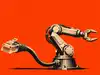
When AI starts operating machines, the network becomes industrial infrastructure
As manufacturing and automation expand together, networks built to serve billions of people will increasingly serve tens of billions of machines and AI agents as well. Treating those connections as industrial infrastructure, and planning them for that scale, will determine how well physical AI works once deployments move from individual use cases to whole industrial environments.
- Go To Page 1

Once compared to Virat Kohli, this World Cup winner shares parents' new Himalayan dream home in Pithoragarh
Unmukt Chand Pithoragarh house: Former India Under-19 World Cup-winning captain Unmukt Chand has shared pictures of his parent's new hilltop home in Pithoragarh, Uttarakhand. Built by his parents over two years on ancestral land, the house overlooks the Panchachuli mountain range. Chand described it as a tribute to his family's roots and a special gift for his son, Krishay. He was once compared to Virat Kohli.

'The end customer is Alibaba': Anonymous claim links Malaysia’s YTL AI Cloud to Nvidia–Megaspeed scandal - what’s actually proven
Nvidia Jensen Huang Megaspeed investigation: An anonymous employee cited by short seller Culper Research has claimed Alibaba was the end customer behind a data centre project involving YTL and Megaspeed. The allegation adds to scrutiny of Megaspeed’s Nvidia-powered cloud business as the chipmaker’s board investigates national security concerns involving CEO Jensen Huang.
Horoscope Today, November 10, 2026: Libra Rethinks Love and Commitment, Scorpio Confronts Unfinished Matters and Sagittarius Enters a New Phase
Today's cosmic energy centers on resource administration, personal executive presence, and behind-the-scenes research as the Moon enters Scorpio. Libra sees a 2nd house focus, encouraging portfolio organization and sweet speech; Scorpio experiences a 1st house transit in their sign, boosting leadership, authority, and personal appeal; and Sagittarius sees a 12th house transit, favoring quiet planning, remote work, and careful budget management.

Healthcare needs stronger partnerships between hospitals and insurers
Aditya Birla Health Insurance CEO and Manipal Hospitals MD-CEO argue that India's healthcare system must move beyond transactional relationships between hospitals and insurers towards patient-centric partnerships. They call for greater clinical coordination, digital integration, transparency and preventive care, with success measured by better health outcomes rather than individual claims or procedures.

Horoscope Today, November 9: Libra Takes the Lead, Scorpio Focuses on Important Work, Sagittarius Builds Connections
Today brings focus to personal confidence, quiet reflection, and community networking. The Moon is shining brightly in Libra under the Visakha Nakshatra, enhancing personal charm, deep background research, and futuristic team projects. While social alliances and long-term goal planning bring success, avoid impulse spending and informal lending. Libra can step into leadership roles with grace; Scorpio can handle confidential research and prioritize rest.

Why Mississippi, Alaska Senate election results are not yet out; check the real reason behind these two US states not declaring winners
As counting issues linger, the Senate races in Mississippi and Alaska remain unresolved. Mississippians await results due to ongoing processing of absentee and provisional ballots, positioning Democrat Scott Colom and Republican Cindy Hyde-Smith in a fiercely competitive race. In Alaska, the situation is prolonged with its ranked-choice voting system.

Care comes at a cost: India's ageing population exposes a broken caregiving system
India's rapidly ageing population is driving demand for caregivers, but the sector faces a shortage of trained workers, low wages, poor working conditions and uneven recruitment standards. High costs burden families, while inadequate training and job security undermine care quality. Experts call for professional recognition, better pay and structured training.

Laid-off employee attends 55 interviews in seven months but receives no job offers; Netizens explain why taking a 50% pay cut makes sense
A laid-off jobseeker's Reddit post has sparked discussion about the increasingly difficult employment market after revealing that 175 job applications, 55 interviews and 25 final-round appearances have resulted in zero job offers. With unemployment benefits exhausted after nearly seven months, the individual has turned to an AI agent to find suitable vacancies, customise resumes, prepare for interviews and track applications. The post also prompted other users to share their experiences of repeated rejections, referrals and the challenges of securing a job despite extensive preparation.

MIT scientists scanned a larval zebrafish brain 200 times per second; ultraviolet light triggered electrical activity that spread across its brain
A groundbreaking microscope developed by MIT enables ultra-fast imaging of neuronal activity in zebrafish brains, achieving scans at an impressive 200 frames per second. Although only 25% of neurons have shown responses thus far, this represents a pivotal stride in neuroscience. Researchers aspire to leverage this technology for insights into neuron interactions within networks, potentially broadening its application to more sophisticated animal models in future investigations.

Horoscope Today, November 7, 2026: Libra Reconsiders Relationships, Scorpio Embraces Change and Sagittarius Seeks Fresh Inspiration
The Moon moves from Virgo into Libra by afternoon, bringing a shift in planetary focus toward personality, privacy, social connections, and career responsibilities. The planetary influences highlight the 12th house of foreign connections and subconscious activities for Libra, the 11th house of gains and social networks for Scorpio, and the 10th house of career and public standing for Sagittarius. The Moon subsequently moves into Libra's 1st house, Scorpio's 12th house, and Sagittarius's 11th house.
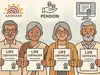
Digital life certificates cross 40 lakh in first 5 days of campaign, up 60% from last year
Nearly 40 lakh digital life certificates have been generated by pensioners in the initial days of the campaign. This represents a 60% increase compared to the same period last year. Face authentication has significantly improved, accounting for 80% of the certificates generated recently. The government aims to simplify the process for pensioners, allowing digital submission of life certificates. Efforts are underway to improve access to pension services across various locations.

Manipur gunfight kills 3 cadres as govt forms peace panels across districts
A gunfight in Taodaijang village resulted in the deaths of three militants and injuries to six others. The clash involved the NSCN (IM) and the Zuf (J) along with other factions. Following the incident, the Government of Manipur has initiated the formation of District Level Peace Committees. These committees aim to enhance community dialogue and restore harmony in conflict-affected areas.

Ellen producer Matthew Wright’s sudden death: family shares new details about his final hours
In a heartbreaking turn of events, Matthew Wright, the esteemed producer behind The Ellen DeGeneres Show, has died at the age of 52. His family shares that he passed away peacefully in his sleep on October 30. Colleagues, including Ellen DeGeneres, celebrated his warmth and humor, while Andy Lassner recounted Wright's visit to The Jennifer Hudson Show just hours before his passing, leaving a void in the hearts of many.

Digital recruitment is creating a new cybersecurity risk for employers
Online hiring has made it easier for companies to reach candidates across locations, but it has also exposed recruitment processes to identity fraud, manipulated assessments and misuse of personal information. HR teams are increasingly responsible for protecting the integrity and security of the hiring process.

Gurgaon work from home advisory: Half of government & private office staff to work remotely amid pollution; check exemptions and deadline
The Gurugram district administration has directed government and private offices to allow only 50% of their staff to work from the office, with the remaining employees working from home, from November 5 to 20. The measures, announced to curb air pollution, also include restrictions on construction and demolition activities across the district. The order has been issued in compliance with directions from the Commission for Air Quality Management (CAQM).

Washington DC power outage update: Pepco says power restored for all customers in Foggy Bottom after over 1100 hit, GWU classes canceled
On November 2, more than 1,100 customers were without power in Foggy Bottom due to an issue at Pepco's I Street Substation. D.C. Fire and EMS responded to reports of smoke from manholes in the area. George Washington University canceled most classes during the outage and monitored Pepco's restoration efforts closely. By 2:20 pm, power was fully restored, allowing classes to resume the following day.

How did Matt Wright die? What we know about the former ‘Ellen Show’ producer’s death at 52
Matt Wright, who worked as an executive producer for The Ellen DeGeneres Show, passed away on October 30, 2026. His unexpected death occurred while he was working remotely in Los Angeles. A GoFundMe campaign was launched to assist his family with funeral and memorial expenses. Ellen DeGeneres and former colleague Andy Lassner shared heartfelt tributes and memories of Wright.

OpenAI CEO Sam Altman questions why people keep so much RAM in their computers; but what happens when the internet goes down?
Altman questioned the efficiency of people keeping large amounts of DRAM in personal computers when that memory is being used only around 5% of the time. He argued that from a global resource-allocation perspective, memory could be used more efficiently in cloud data centres, where multiple users can access shared computing resources.
Who was Matt Wright? Ellen DeGeneres breaks down over death of her former Executive Producer
Ellen DeGeneres is grieving the loss of her longtime producer Matt Wright, who passed away recently. Wright contributed significantly to The Ellen DeGeneres Show for over 15 years as an executive producer. His family created a GoFundMe to help cover costs for funeral arrangements and a memorial service. DeGeneres remarked on his bond with Stephen tWitch Boss, who died in December 2022.

Govt set to tweak MSP norms for periodic price hikes of minor forest products
The Centre is planning to restructure the minimum support price mechanism for minor forest produce. This change aims to provide periodic hikes to benefit tribal communities relying on forest produce. TERI has been tasked to study the current MSP framework and assess potential rationalization. Concerns regarding stagnant MSP rates sparking exploitation among forest-dependent communities have been raised in parliamentary discussions.

Horoscope Today, November 3, 2026: A Career Shift Awaits Leo, While Cancer and Virgo Face Important Choices
The Moon transits into Leo today, illuminating financial security, leadership presence, and quiet background strategy. While Jupiter in Leo inspires confidence and ambitious growth, retrograde Mercury and Venus in Libra advise reviewing financial agreements and avoiding unverified commitments. Debilitated Mars in Cancer urges emotional composure. Today brings resource management focus for Cancer, executive energy for Leo, and contemplative preparation for Virgo.

Smart fridge, security camera, video doorbell, router, car, thermostat: Everyday devices hackers can exploit and how to protect them
Cyberattacks involving supermarket refrigerators and freezers have raised concerns about the security of everyday internet-connected devices. From smart appliances and security cameras to routers, thermostats and connected cars, several products could be vulnerable to hacking. Here is what cybercriminals could do after accessing these devices and the precautions users can take to protect themselves.

In 1902, Wyoming’s Kirwin mining camp grew to about 200 people; by 1907, a deadly snowslide destroyed the last company buildings and the boom faded
Kirwin, a once-bustling mining community nestled in the Absaroka Mountains of Wyoming, experienced a fleeting boom in the early 1900s. The settlement featured essential amenities like hotels and stores catering to miners' needs. However, a devastating snow slide in February 1907 crippled the town’s infrastructure, leading to a rapid decline in mining activity and a mass exodus of its residents.
Load More

