
RELIC

'Two rulers, one fort': Pakistan minister invokes Humayun, Sher Shah at SCO Civilisational Forum
Pakistan Climate Change Minister Musadik Malik invoked Mughal Emperor Humayun and Sher Shah Suri while describing Purana Qila as a symbol of India's layered history at the SCO Civilisational Dialogue Forum in Delhi. Visiting India for the first time since the 2025 Pahalgam attack, Malik called for dialogue between distinct identities and diverse civilisations.


Floppy disks, paper strips and ageing computers: America's aviation system is stuck in the past
America's aviation network cannot afford to remain trapped between obsolete technology and an unfinished upgrade. The next major disruption may again begin with something as small as a router. Its consequences, however, could be anything but small.

Metal-detecting grandmother mistakes medieval gold cross worth over $26,000 for costume jewelry, now ‘gutted’ she may never see it again
Shelley Couzins, a grandmother from Lordswood, discovered a medieval gold cross during a metal detecting expedition. After five hours of searching, her detector signaled a significant find buried deep in the soil. The artifact, valued at £20,000, featured images of Jesus and the Virgin Mary. Despite feeling heartbroken about surrendering it, she hopes it will be preserved in a museum.
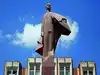
A very real visit to a country that doesn't really exist
Transnistria, located between Moldova and Ukraine, declared independence in 1990 but is still not internationally recognized. The region maintains a unique identity, heavily influenced by its Soviet past and Russian support. A visit highlights notable sites like Bender Fortress and Tiraspol, showcasing Soviet monuments and a rich cultural heritage. Despite aspirations for independence, Transnistria's existence relies on external backing and regional dynamics.

‘Doomsday: Friday, November 13, 2026’: Why a 1960 Science journal paper predicted humanity would be ‘squeezed to death’
In the year 1960, a bold prediction warned of a looming population crisis by 2026. However, population growth rates have taken a favorable turn, declining significantly over the decades. Countries that previously imposed strict population controls are now promoting family growth. Experts advise caution against trusting outdated forecasts blindly, advocating for a scientific approach to understanding demographic trends to avoid repeating past mistakes.
- Go To Page 1

Dario Amodei says AI could make cancer, Alzheimer’s ‘relics of the past’ in less than a decade as Anthropic expands AI-driven drug discovery push
Anthropic is collaborating with several pharmaceutical companies to utilize AI in drug development processes. These partnerships aim to improve the efficiency of drug discovery, addressing complex challenges in medical research. Notable projects include redesigning therapeutic molecules and accelerating antibody designs for various diseases. Anthropic has also initiated its own research on rare childhood muscular dystrophies, targeting potential clinical trials by late 2028.

Ground has shifted under Modi govt's feet, regime not here to stay: Sonia Gandhi
Sonia Gandhi reflects on her life and conveys her belief in the youth's desire for justice and fairness. She critiques the Modi government's insecurities and asserts that it is not here to stay. The memoir discusses the resilience of democracy in India amidst rising authoritarianism. Gandhi notes the importance of the opposition’s INDIA alliance in challenging the BJP’s dominance.
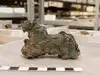
For over a century, an unremarkable lump sat in a British Museum drawer; a 2013 X-ray revealed a rare Celtic brooch buried with a Viking-era Norwegian woman
A fascinating discovery at the British Museum includes a lump of soil, wood, and metal that holds a Celtic brooch from the eighth or ninth century. This ancient jewelry is linked to Viking burial traditions. Following their raids, Vikings astutely transformed sacred church artifacts into symbols of status, indicating a timeline of activity in Britain that may precede prior assumptions.

Pema Khandu inaugurates Buddha relic exposition at Tawang Monastery after 13 years
Arunachal Pradesh Chief Minister Pema Khandu attended the inauguration of the sacred relics of Lord Buddha. The relics, returning after thirteen years, will travel through three districts for devotees. Chief Minister Khandu expressed gratitude to Prime Minister Narendra Modi for supporting the event and promoting the state's cultural potential. A new Arunachal Buddhist Confederation will be established to unite local Buddhist traditions and institutions.
Who sent $2 bn military equipment to Iran past US blockade? More than 5,000 agencies
Iran has developed a clandestine network involving over 5,000 agencies to import military equipment and evade sanctions. This network functions despite ongoing US naval blockades and sanctions since the war began. Extensive investigations reveal significant transactions and military logistics supporting their activities. The secretive agencies have been linked to the Islamic Revolutionary Guard Corps and elite controlled businesses.
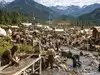
In 1862, gold drew thousands of miners to Florence, Idaho; much of the richest ground was worked out that year, and old diggings remain
Florence, Idaho, surged to fame in 1862 amid a major gold rush that saw a flood of miners flocking to the area. The initial excitement transformed the town into a lively mining community, albeit briefly. By year-end, however, the gold deposits were largely depleted, prompting many miners to leave in search of greener pastures. Today, Florence stands as a testament to the fleeting fortunes of American mining towns.

So, it's trendy-ing, grey is the new black: Indian women challenge beauty norms through silver transitions
Women in India are increasingly embracing grey hair, challenging traditional beauty standards associated with aging. This movement showcases many women documenting their transition to natural colors, which defies societal norms. While the beauty industry has historically pressured women to cover their grey, attitudes are slowly changing among younger actresses. Notable figures like Revathi and Neha Dhupia represent this evolving perspective on beauty and age.

RJ Mitte’s one wish before his death that he wanted included in his will revealed in resurfaced interview
RJ Mitte, best known for his role as Walter White Jr. in Breaking Bad, tragically took his own life at the age of 34. A passionate advocate for the representation of disabled individuals in entertainment, Mitte's desire to keep mementos from the show, particularly his crutches filled with poignant significance, was revealed in interviews.

This brain gene can move through human DNA — and scientists found it inside a virus
Researchers at Cornell University identified the BC200 gene, which originated from a transposon in human DNA. This gene displays unusual mobility, retaining its ability to move within the genome while functioning in brain cells. The presence of BC200 in molluscum contagiosum virus raises questions about its evolutionary history and potential roles in human health.
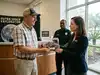
Florida collector found a Moon rock at garage sale, refused to mail it, later hand-delivered it to Louisiana museum
A Florida collector stumbled upon a missing Apollo 17 lunar sample while sifting through items at a garage sale, drawn by an ordinary wooden plaque. Unbeknownst to him, this unassuming find held monumental significance. After realising its historical value, he promptly contacted Louisiana officials and returned it to a state museum, leaving the mystery of its disappearance unsolved.

Hey Siri, how did Apple’s early lead in AI turn into a race to catch up?
Apple helped popularise voice assistants, then fell behind as rivals raised the bar. Fifteen years after Siri’s iPhone debut, a long-delayed overhaul puts its comeback to the test.

Billionaire couple bought a $40 million abandoned power plant site. Now they are spending $410 million turning it into a public park
Austin and Allison McChord purchased an abandoned power plant in Norwalk with plans for transformation. Their vision includes creating a public park named Manresa Wilds over 125 acres of land. The project aims to restore natural habitats while providing recreational spaces such as trails and a community pool. Despite community concerns leading to some reduced plans, significant progress is anticipated by 2027.

After a 1990 explosion left Houston's grain silos largely unused, Moody National planned a 17-acre development to turn the 132-foot structures into an artistic waterfall landmark
How is this Houston developer repurposing historic grain silos into a waterwall? Read here

Until June 2019, the system sending launch orders to US nuclear forces ran on 8-inch floppy disks; the Air Force kept them partly because they could not be hacked online
The U.S. Department of Defense has relied on outdated technology for critical systems, including nuclear command. Recent reports highlight the extensive maintenance costs associated with these legacy systems. Many systems have yet to be modernized, exposing them to security vulnerabilities over time. While a shift to digital technology may seem beneficial, expertise to maintain older systems remains scarce.

A vacant 1918 dairy factory sat unused for a decade; entrepreneurs Michael Downing and Robert Baum transformed it into a 52-room Chicago boutique hotel
The FieldHouse Jones hotel, located in the heart of Chicago, stands as a testament to creative redevelopment, having transformed an old Borden Dairy Depot into a modern haven while honoring its historical roots. This approach reflects a nationwide initiative to breathe new life into aging industrial buildings, with developers recognizing the value of large, robust structures for crafting innovative hospitality spaces and revitalizing communities.

In 1873, San Francisco tested underground cable cars for hills too steep for horse-drawn streetcars; the city’s cable cars still climb those streets today
San Francisco's cable cars represent a rich part of the city's heritage, facing elimination on two notable occasions. Inventor Andrew Smith Hallidie brought them to life, inspired by a tragic streetcar incident involving horses. In 1947, homemaker Friedel Klussmann spearheaded a movement to save these iconic vehicles, preserving public interest. Unfortunately, cuts in the 1950s left only three lines operational, emphasizing the importance of community action in safeguarding history.

The Buddha comes alive in relics from Piprahwa in this truly immersive exhibition in Delhi
An exhibition in Delhi celebrates the Buddha's relics. The Piprahwa bone relic, reliquaries, and jewels are on display. These artifacts were saved from auction and are now reunited. The exhibition traces the history of the relics from the Buddha's time to their modern-day veneration. Visitors experience the relics and learn about their journey.

India, Sri Lanka connected by deep civilisational, spiritual bonds: PM Modi on relics exposition
India and Sri Lanka share deep civilisational and spiritual bonds. Prime Minister Narendra Modi thanked Sri Lankan President Anura Kumara Dissanayake for inaugurating the exposition of holy Devnimori relics of Lord Buddha in Colombo. This is the first international exposition of these sacred relics outside India.

Sacred relics of Buddha not merely artefacts, but part of India's revered heritage: PM
Prime Minister Narendra Modi inaugurated the Piprahwa Relics exposition. He stated Bhagwan Buddha's wisdom belongs to all humanity. The sacred relics are a revered part of India's heritage. After 125 years, these relics have returned home. The Piprahwa site is linked to Bhagwan Buddha's early life. The Godrej Group facilitated the relics' return.

PM Modi to inaugurate exposition of Buddha-linked Piprahwa relics, repatriated gems in Delhi
Prime Minister Narendra Modi will inaugurate a grand exposition of sacred Piprahwa relics, including bone fragments believed to be of the Buddha. Discovered in 1898, these significant artifacts, recently repatriated, highlight India's role as Buddhism's birthplace. The exhibition, "The Light and the Lotus," opens to the public on January 4th.

PM lauds Bhutanese leadership for welcome accorded to Buddha's relics from India
In a heartfelt ceremony, Bhutan joyfully welcomed the sacred relics of Lord Buddha, deepening the spiritual ties with India. Prime Minister Narendra Modi expressed his gratitude for the warm hospitality shown during this momentous occasion. These revered artifacts are now housed at Tashichhodzong in Thimphu, standing as a beacon of peace and kindness.

Buddha relics from India sent to Bhutan for exposition from Nov 8-18
Holy relics of Lord Buddha from India are now in Bhutan for a special exposition. This event is part of a Global Peace Prayer Festival in Thimphu. The relics were ceremoniously received by Bhutanese officials. This marks a significant moment of spiritual unity between India and Bhutan. The exposition aims to promote peace and celebrate shared heritage.

India to organise exhibition of Lord Buddha relics in Russia
India is sending sacred relics of Lord Buddha to Russia. The Ministry of Culture is organizing an exhibition in Kalmykia from September 24 to October 1. Uttar Pradesh Deputy CM Keshav Prasad Maurya will lead the delegation. The relics, discovered in Uttar Pradesh, were secured by the Ministry of Culture.
Load More

