
RAILROAD ENGINEERING

In 1927, railroad engineer Olive Dennis invented a train window vent that brought in fresh air without cold drafts, helping make American rail journeys more comfortable
In 1927, engineer Olive Dennis made a lasting impact on train travel with her innovative window ventilator. By traveling thousands of miles on trains, she closely analyzed passenger feedback and needs, which inspired her improvements in seating, lighting, and restroom cleanliness, responding to competition from cars and buses. Dennis's pioneering contributions also included air-conditioning systems for railroad cars, defying gender norms in engineering of her time.

The advice ‘buy good businesses’ cost Warren Buffett $11 billion. Why that advice is not enough on its own
The price of a share is not a fact. It is a forecast, and it is yours. Buffett pulls apart the one forecast he got badly wrong, then turns to the people who live off forecasts nobody can test. The promoters who pay for firms with their own inflated paper. The bosses whose repurchases reveal more about a share price than about worth. The managers who are paid whether the year went well or badly. And then he lists all that investing truly demands. Four items, and skill is not among them.

In 1793, England completed an inclined plane that carried canal boats 207 feet uphill on wheeled cradles before returning them to the water
Around 200 years ago, a brilliant team of engineers in England created the Hay Inclined Plane, revolutionizing canal boat transport. This ingenious design enabled boats to move between the River Severn and the Shropshire Canal bypassing locks. By harnessing gravity and the power of counterweights, the system enhanced transport efficiency. As railways became more prevalent in the 19th century, its importance waned.

Voters fear the America they've known is slipping away. On that, the left and right agree
US Midterms latest: Many voters turned out for the midterm elections, driven by a heightened awareness of political issues. Individuals from various backgrounds shared their concerns regarding the direction of the country. While some were motivated to support Democrats, others maintained loyalty to Republicans. This election illustrates the stark divisions among voters, many of whom were voting for the first time. The outcome could shape the political landscape significantly in the coming years.
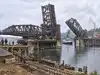
In 1887, Michigan began building a railway bridge that could open in different ways for passing ships; three bridge designs worked together in one crossing
The Sault Ste. Marie International Railroad Bridge, completed in 1887, features a combination of four bridge designs. This structure was upgraded multiple times to accommodate larger ships navigating the Soo Locks, which remain crucial for iron ore transport. It is noteworthy that the bridge has never been widely recognized despite its engineering significance. Engineers added a swing section in 1895 and a vertical lift section by 1959.
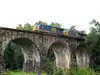
In 1835, Maryland built a curved railway bridge from 63,000 tons of granite - critics thought it would collapse, but trains still cross it today
The Thomas Viaduct, completed in 1835, stands as a testament to innovation in American railway engineering. Built with 63,000 tons of granite featuring a curved design, this bridge overcame early doubts about its strength. It was recognized as a National Historic Landmark in 1964, emphasizing its cultural importance. Today, it exemplifies how historic structures can be preserved while supporting contemporary transportation needs.
- Go To Page 1

In 1913, a Corning physicist baked a cake in a cut-down railway-lantern glass jar; the experiment helped lead to heat-resistant cookware
In the early 1900s, the invention of heat-resistant glass marked a significant advancement, initially intended to safeguard railway lanterns from damage due to thermal shock. This remarkable creation serendipitously led to the formulation of PYREX cookware after a 1913 baking trial. Scientists at Corning fine-tuned this glass and launched a pie plate in 1915, which quickly became a staple in American kitchens.
In 1841, Squire Whipple found a cheaper way to build long iron bridges; more than 100 of his designs later crossed America's canals and growing railroad lines
In the early 1800s, Squire Whipple revolutionized bridge engineering with his mathematical approach. His creation, the Whipple truss bridge, ingeniously incorporated cast and wrought iron, making construction both economical and sturdy. Whipple published pivotal calculations that elevated bridge engineering to a refined science. Dishearteningly, he did not receive any financial reward from the State of New York for his innovations, yet his designs continue to inspire countless bridges.

In 2005, the US required reflective markings on freight cars to improve visibility at crossings; nearly 1 in 4 crossing collisions involved vehicles hitting trains
At night, freight trains can easily go unnoticed, leading to numerous accidents at highway-rail crossings. To address this safety concern, federal regulators introduced mandatory reflective striping on freight cars and locomotives. The goal was to reduce the frequency of collisions between vehicles and trains at these crossings. While experts still discuss the regulations' impact, data shows a notable decrease in these incidents since the measures were enforced.

In 1876, Washington, D.C., opened an incline plane that lowered canal boats to the Potomac River inside a water-filled tank weighing about 400 tons when full
In the 1870s, the Chesapeake & Ohio Canal encountered serious challenges when attempting to move boats to the Potomac River. To overcome this, engineers developed the Georgetown Incline Plane, a cutting-edge caisson system that streamlined boat transport. This revolutionary method greatly outperformed labor-intensive processes. However, structural issues and the emergence of railroads ultimately led to its decommissioning.
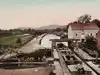
In 1824, construction began on New Jersey’s Morris Canal, where 23 inclined planes carried boats up and down hills; some lifts spanned up to 100 feet
Constructed in the early 1830s, the Morris Canal stands as a significant achievement in New Jersey's engineering history. It uniquely utilized hydraulic inclined planes, facilitating boat movement across challenging elevations without the need for standard locks. This canal played a pivotal role in transporting anthracite coal to iron manufacturing sites until railroad supremacy led to its decline by the 1920s.

AI's race to transform the world before the money runs out
Cumulative spending globally on data centers alone could top $30 trillion by 2050, according to a projection by PwC, almost matching the value of outstanding US Treasuries. It "dwarfs" what was spent in the railroad or dotcom booms, even after adjusting for inflation, PwC said.

Artificial Intelligence: Which jobs are going to be replaced by AI? Which age group will be exposed the most? Here's what experts say
Which jobs are not safe from AI? Questions are being raised over the nature and magnitude of impact of Artificial Intelligence in coming times.

AI's race to transform the world before the money runs out
Investment in AI technology continues to rise, surpassing historical investments seen in railways and the internet. Major AI firms are expected to spend trillions to develop their infrastructures in the coming years. However, economists express concerns regarding the expected productivity gains and their potential to materialise.

In 1950s America, Ronald Read began buying everyday blue-chip stocks; decades later, the janitor left behind an $8 million portfolio
Ronald Read did not work in finance. He spent about 25 years at a Vermont gas station before working as a janitor at J.C. Penney for another 17 years. He left the store in 1997. Yet Read quietly built an investment portfolio worth millions. After his death in 2014 at age 92, his estate was valued at nearly $8 million, including stocks and property.

In 1871, Switzerland put a toothed rail between normal train tracks so carriages could climb steep Mount Rigi; 155 years later, the same system still works
Since 1871, the distinctive rack-and-pinion grip system on Switzerland's Rigi railway has revolutionized mountain travel. Created by engineer Niklaus Riggenbach to address slippage on steep inclines, this innovation has efficiently ferried tourists to an impressive height of 1,797 meters. With similar railways emerging across Europe, ongoing enhancements like modern electric railcars ensure this historic line remains a vibrant link to the past.
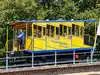
In 1888, a German city built a railway that climbs without an onboard engine: 1,849 gallons of water weigh one car down enough to pull the other 272 feet uphill
The Nerobergbahn in Wiesbaden, established in 1888, stands as Germany's oldest water-ballast rack railroad. This unique railway operates without motors, utilizing gravity and water to propel two carriages that pull each other up and down the tracks. Its eco-friendly design eliminates fuel consumption and emissions, making it a sustainable choice for transportation. With varying capacities for passengers, the railway runs from April to October, drawing approximately 300,000 visitors each year.
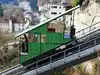
In 1899, a Swiss city built a railway powered by wastewater; wastewater makes one car heavy enough to pull the other uphill without using a motor
Opened in 1899, Fribourg's funicular uniquely connects the upper and lower districts by harnessing the power of gravity and wastewater rather than a motor. An essential transit link for locals, it overcame modernization threats through community dedication, preserving its historic design and function after extensive renovations in 1998, supported by city government funding.
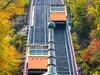
Pittsburgh’s Monongahela Incline has carried riders up Mount Washington since 1870 and still operates as part of the city’s regular transit network
Monongahela Incline in Pittsburgh is a historic cable car system operating since 1870 and continues to serve commuters. It offers scenic views of the city's skyline while efficiently transporting passengers up Mount Washington. The incline became electric-powered in 1935 and was preserved by remaining a vital part of public transport. Today, it runs every fifteen minutes and attracts over half a million riders each year.
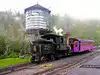
In 1869, New Hampshire opened a cog railway where normal trains could not climb; more than 150 years later, its toothed track still reaches Mount Washington’s 6,288-foot summit
In 1869, New Hampshire’s Mount Washington Cog Railway became the world’s first mountain-climbing cog railway, using a toothed track to reach the 6,288-foot summit. Explore the remarkable history of this historic railway, its 37.4% Jacob’s Ladder grade, extreme Mount Washington weather, pioneering railroad engineering, and how the 157-year-old Cog Railway continues operating today. Discover the engineering innovation that made this steep ascent possible.
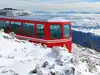
In 1891, engineers built a railway up a Colorado mountain too steep for normal trains; its toothed track still carries passengers to the 14,115-foot summit
Engineers developed a unique cog railway for Pikes Peak's steep inclines. This innovative system allowed trains to climb slopes ordinary railways could not manage. The Pikes Peak Cog Railway began operations in 1891, carrying millions of passengers safely. Technology has modernized the line over the years, with new trains introduced recently. Its fundamental engineering principle remains unchanged since its inception.
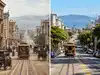
In 1873, San Francisco tested underground cable cars for hills too steep for horse-drawn streetcars; the city’s cable cars still climb those streets today
San Francisco's cable cars represent a rich part of the city's heritage, facing elimination on two notable occasions. Inventor Andrew Smith Hallidie brought them to life, inspired by a tragic streetcar incident involving horses. In 1947, homemaker Friedel Klussmann spearheaded a movement to save these iconic vehicles, preserving public interest. Unfortunately, cuts in the 1950s left only three lines operational, emphasizing the importance of community action in safeguarding history.
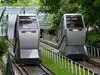
In 1900, Paris built a railway up Montmartre Hill so visitors could avoid the climb; the tiny funicular carried 3.6 million passengers in 2025
Since its launch in 1900, Montmartre's funicular railway has offered a quick ascent to one of Paris's most enchanting neighborhoods. Transitioning from water power to an electric system, this charming transport mechanism has efficiently carried millions of passengers, highlighting both its engineering ingenuity and its essential role in the city's transport network. The funicular elegantly sidesteps the steep steps for easy access to breathtaking views.
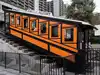
In 1901, Los Angeles opened Angels Flight up a 33% Bunker Hill slope; by 1952, the short railway was credited with more than 100 million passengers
For over 120 years, Angels Flight has delighted visitors as a historic funicular railway in Los Angeles. Constructed by Colonel J.W. Eddy, it first opened its doors on December 31, 1901. Despite facing destruction, lengthy storage, and a heartbreaking accident, it emerged again in 1996. Today, it continues to ascend a steep hill, offering passengers both nostalgia and stunning views.
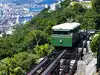
In 1888, Hong Kong opened a cable railway up Victoria Peak after sedan chairs made the steep climb slow and difficult; the Peak Tram still carries visitors up the mountain
The iconic Peak Tram of Hong Kong, which began operations in 1888, creates a mesmerizing optical illusion as it climbs the steep mountain slopes. Before its arrival, locals relied on sedan chairs to tackle the difficult ascent. As Asia's very first funicular system, it transformed transportation and mirrored the social divide of colonial times.
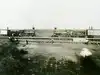
In 1896, 40,000 people traveled to the middle of nowhere in Texas to watch two trains crash intentionally. Two died in the 'The Crash at Crush' event
An 1896 Texas event featured two steam locomotives colliding at high speed. This spectacle, organized by the Katy Railroad, drew thousands of paying spectators. The collision caused both locomotives and their boilers to explode unexpectedly. Fatalities and injuries occurred, and a photographer was permanently blinded. Despite the tragedy, the event generated significant publicity for the railroad.
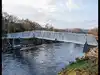
In 2011, Axion built a 90-foot plastic bridge over Scotland's River Tweed. 1 year later, ASME reported its six sections took just 4 days to assemble on-site in Edinburgh
Engineers have developed recycled structural composites from materials such as milk jugs and detergent containers. The technology, pioneered at Rutgers University, creates strong construction components from plastic waste. Military testing showed the material could handle extremely heavy vehicles. Now, recycled plastic bridges offer a practical idea for two problems at once: growing plastic waste and aging U.S. infrastructure.

In 1881, a rich silver vein turned Lake Valley, New Mexico, into a town of about 4,000; by 1902 only 150 remained, and the last residents left in 1994
Silver mining in Lake Valley began in the 1870s and boomed after a major discovery in 1881. Lawlessness and a railroad spur followed the profitable mining operations. Demonetization and a devastating fire emptied the town by the late 1890s. The town continued to shrink, with the last residents leaving in 1994. Today, Lake Valley is preserved as a historic townsite.

An engineering mistake in 1905 accidentally created California’s largest lake — and it changed the desert forever
In 1905, an engineering blunder redirected the Colorado River into a desert basin, unintentionally giving rise to California's Salton Sea. Initially, this man-made lake flourished as a vibrant resort destination, attracting countless visitors. However, over time, rising salinity and dwindling water levels have altered its appeal. Despite these challenges, the Salton Sea continues to serve as a crucial habitat for migratory birds along the Pacific Flyway.
Load More

