
QUANTUM PHYSICS
Quantum could solve AI energy drain, says tech founder
Quantum computers could curb the vast energy demands of artificial intelligence data centres with their ability to run complex calculations, one of the tech's pioneers told AFP. Australian startup Diraq is conducting the first field test worldwide putting a small quantum computer based on a silicon chip in a commercial data centre in Sydney. Diraq's computer installed in Equinix's Sydney data centre has eight quantum bits, or qubits, on a silicon chip.

Gold vs silver ETFs: Where should investors put their money this Dhanteras? Experts share their strategies
Gold vs silver ETFs: Dhanteras marks a crucial day in the Diwali festivities, traditionally inspiring purchases of gold and silver. Financial experts suggest a diverse approach, prioritizing gold while also incorporating silver ETFs into investment strategies. Notably, gold has shown stable returns since the last Dhanteras, making it an attractive option for new investors looking to build their portfolios gradually. Despite market ups and downs, the long-term potential for both metals is encouraging.

ETMarkets Smart Talk| Gold, silver or copper? Tata MF fund manager suggests a 50:30:20 commodity allocation: Tapan Patel
In this edition of ETMarkets Smart Talk, we speak with Tapan Patel, Fund Manager – Commodities at Tata Asset Management, who shares his outlook on gold, silver, copper and crude oil, explains the changing dynamics driving commodity prices, and suggests a 50:30:20 allocation to gold, copper and silver, respectively, for investors looking to build a commodity portfolio for the long term.
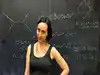
Is Sabrina Pasterski the next Einstein? Meet the physicist who built her own aircraft at 12 and is exploring Einstein’s biggest unanswered questions about gravity
Sabrina Pasterski's journey from building an aircraft as a teenager to studying Einstein's biggest unanswered questions has drawn attention to her work in physics. The MIT graduate now researches quantum gravity, black holes and space-time at Canada's Perimeter Institute. She also leads an $8 million research initiative exploring how gravity and quantum mechanics could fit together.

DRDO showcases indigenous chips for advanced radar, electronic warfare and missile systems
At the Emerging Science, Technology and Innovation Conclave (ESTIC) 2026, held at Bharat Mandapam in New Delhi from October 27 to 29, DRDO displayed Monolithic Microwave Integrated Circuits (MMICs) and Infrared Focal Plane Arrays (IRFPAs), developed by its Solid State Physics Laboratory (SSPL), Delhi.
German startup NVision shows new path to quantum computing chips in Nature paper
Startups and tech giants such as Microsoft and IBM alike are racing to build quantum computers that hold the promise of solving problems that would take conventional machines thousands of years. But NVision, which has raised more than $155 million in funding from firms such as Abbott Laboratories, made the discovery published on Wednesday while working in an entirely different field: improving medical devices.
- Go To Page 1

QClairvoyance's quantum chemistry bet: Transitioning from research to pharma partnerships
QClairvoyance Quantum Labs has performed chemically precise simulations of eight small molecules on an actual quantum computer, marking progress towards drug discovery applications.

AI models have produced proofs challenging major theories in maths, computing, physics: OpenAI
OpenAI has claimed its AI models have disproved the Exponential Time Hypothesis, which impacts computer science research. The findings include proofs related to harmonic analysis and quantum field theory, influencing various scientific domains. Researchers will verify these claims, and OpenAI plans to share the results for independent examination. The company is also funding a conference to discuss the implications of these discoveries.
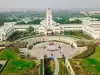
BITS Pilani revamps UG curriculum to prepare students for AI era: Vice Chancellor
BITS Pilani has revamped its undergraduate curriculum to prepare students for a future dominated by artificial intelligence. This innovative approach prioritizes academic flexibility while integrating research and real-world industry applications. Students will engage in various activities that promote both physical and mental well-being, earning a total of 30 Points of Experience. The curriculum now also highlights crucial areas like AI and data science, enhancing practical learning and encouraging interdisciplinary collaborations.
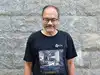
He is first Indian scientist to win Oskar Klein Medal: Meet physicist Ashoke Sen, who found new ways to understand black holes, gravity & string theory
Indian physicist Ashoke Sen has become the first Indian to receive the 2026 Oskar Klein Medal for his pioneering contributions to string theory, black-hole physics and quantum gravity. The ICTS-TIFR professor delivered the memorial lecture, ‘Gravity from strings and strings from gravity’, in Stockholm on October 22. Sen has also received the Padma Shri, Padma Bhushan and the 2012 Breakthrough Prize in Fundamental Physics.
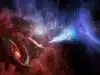
Physicists trap a single antimatter particle for months to understand how matter began to dominate the universe after big bang
Northwestern University scientists have trapped a single positron, the antimatter counterpart of an electron, for months while cooling it to nearly absolute zero and controlling its quantum states. The breakthrough could enable an unprecedentedly precise comparison of the magnetic properties of matter and antimatter, potentially revealing gaps in the Standard Model of particle physics and offering clues to why the universe contains far more matter than antimatter.
Army invites applications for 75-day internship programme in defence technologies
According to programme details shared by Northern Command, the 75-day internship will comprise 15 days of online learning and 60 days of physical internship, they said.
India to take a leap in quantum, NM-ICPS 2.0 in works: DST Secy Waghmare
India aims to become a leader in quantum technology among Global South countries. The Centre is preparing for NM-ICPS 2.0, building on the first phase ending December 2027. Efforts include developing quantum-resilient encryption techniques for critical database systems. Research and development spending has increased significantly, with a target of reaching 2% of GDP by 2035. The government is focusing on partnerships with industries to further support technological advancements.
Samsung Semiconductor, IISc set up quantum research lab
The lab, established with funding from Samsung Semiconductor India's corporate social responsibility (CSR) programme, will support research in qubit characterisation, cryogenic electronics, quantum-device reliability, single-photon sources and detectors, and the integration of advanced semiconductor materials with quantum systems.
IBM executive warns of risk of quantum computing hacks
Organisations are unprepared for the risks posed by quantum computing, IBM's Europe and Africa vice-Wednesday, referring to the high-speed technology that could crack security encryptions and enable large-scale cyberattacks. I would say less than 10 percent today," Curioni said on the sidelines of a London conference organised by the American technology pioneer.
DRDO successfully tests Quantum Key Distribution(QKD) platform in live network
The DRDO has successfully tested a Quantum Key Distribution platform in a live network environment. This advancement enhances India's capabilities in quantum-secured communications for critical military applications. The technology ensures secure communication for artillery and armored weapon tests while providing eavesdropping detection capabilities. Additionally, free-space QKD technology is being developed to facilitate communication in challenging terrains without optical fibers.
ISM 2.0 to catalyse investments, boost self reliance: NITI Aayog's Abhay Karandikar
India's recently unveiled India Semiconductor Mission phase 2 or ISM 2.0 which focuses on design and Intellectual Property (IP) creation, helping complete the value chain and making the country Atmanirbhar (self-reliant). The new phase is focused on producing semiconductor equipment and materials in India as well as designing full-stack semiconductor intellectual property. The Union Cabinet had also approved the Research, Development and Innovation (RDI) Scheme, aiming to boost private sector investment.
Meet Laurent Simons, 16-year-old Belgian prodigy who completed PhD in quantum physics at 15, now pursuing second doctorate in medical science
The academic journey of Laurent Simons did not begin with his PhD. Simons started moving through education at an extraordinary pace when he was still a young child. Today, his interests have expanded from quantum physics to medicine, AI, and research connecting physics with the human body. He started primary school when was four years old. He then progressed through secondary education much faster than the usual academic path.

2026 Nobel Prize: Who is Francis Halzen and what is the IceCube Observatory?
Francis Halzen has been awarded the 2026 Nobel Prize in Physics for his work with the IceCube Neutrino Observatory. His contributions helped in the discovery of high-energy neutrinos from astrophysical sources. Halzen, a prominent physicist, is affiliated with the University of Wisconsin–Madison. The IceCube Observatory has played a crucial role in understanding cosmic neutrinos and their origins. The award adds to Halzen's distinguished reputation in the field of physics.

2026 Nobel Prize Predictions: From GLP-1 drugs and CAR-T therapy to gene editing, these breakthroughs could take centre stage
Predictions for the 2026 Nobel Prizes in science highlight significant contributions in areas like GLP-1 research and cancer therapies. Carl June is mentioned for his role in developing CAR-T cell therapy for cancer treatment. Researchers Emmanuel Mignot and Masashi Yanagisawa are noted for their work on orexin related to sleep regulation. Optical coherence tomography and lipid nanoparticle technology are also strong candidates for recognition.

Meerut blue drum murder case: Muskan, boyfriend Sahil convicted for killing husband Saurabh Rajput
According to prosecution details, Muskan, in collusion with her partner Sahil, hatched a criminal conspiracy to murder Saurabh Rajput. Following the killing, the duo attempted to dispose of the evidence by concealing his body inside a sealed blue drum.
India’s international trade in times of AI
The Age of AI needs trade governance that deploys natural intelligence in conjunction with artificial intelligence for a quantum jump in speed and quality of decision making.

Honkai Star Rail 4.6: Here is the release date, end time and maintenance timings
Honkai: Star Rail 4.6 will release on September 27, 2026 at 11:00 PM ET (UTC-4). It will witness the debut of Pearl. The release timeline of Pearl banner in Honkai Star Rail is September 27, 2026 to November 10, 2026 (Phase 1 &2).
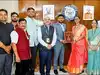
DRDO signs first deep-tech pact with Zero mK India for indigenous dilution refrigerator
DRDO has signed an agreement with Zero mK India for the development of a dilution refrigerator. This project will support quantum applications and enhance India's technological capabilities. The agreement is part of a larger Rs 500-crore initiative for deep-tech innovations. Monitoring will be conducted by the director of DRDO's Solid State Physics Laboratory and his team. This collaboration aims to reduce dependence on foreign cryogenic infrastructure for quantum technologies.
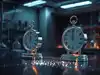
This atomic clock is so precise it can detect how gravity changes time. Scientists now want to take it outside the lab and measure tiny shifts across Earth
Researchers at Singapore's Centre for Quantum Technologies have developed a highly accurate lutetium-based atomic clock. This clock has a reported frequency uncertainty of 1 × 10⁻¹⁹, making it one of the most precise clocks available. The team successfully demonstrated the clock’s sensitivity to minute differences in gravitational potential. Future plans involve creating a transportable version of the clock for various scientific applications.
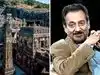
‘My Devi comes to me’: The 4-word answer by world's greatest mathematician, Ramanujan that filmmaker Shekhar Kapur connects to Kailasa Temple, a UNESCO site's mystery
Filmmaker Shekhar Kapur recently reflected on the astonishing precision of Kailasa Temple at Ellora, carved downward from a single piece of basalt using hammers and chisels. He questioned how ancient craftsmen avoided even minor errors and connected the temple’s geometry with ancient Indian mathematics, music and philosophy. Kapur also recalled mathematician Srinivasa Ramanujan, who reportedly answered questions about his remarkable solutions by saying, “My Devi comes to me,” linking knowledge with a deeper idea of wisdom.

Shekhar Kapur joins LTM as strategic advisor to drive AI-powered storytelling
Business creativity firm LTM has appointed Shekhar Kapur as Strategic Advisor. Kapur will guide LTM's BlueVerse Craft unit in AI-enabled creative development. He will explore new technology applications in storytelling and content production. This collaboration aims to expand human creativity and brand engagement with content. The move supports enterprises in the AI era's growing content demands.

No signal underground: Scientists challenge a decades-old idea about how quantum reality breaks down. Schrödinger’s cat has a new problem
A deep-underground experiment in Italy has challenged a decades-old theory that gravity may destroy quantum superpositions. After 62 days of measurements at Gran Sasso, researchers found no trace of the faint radiation predicted by the model. The result does not explain why quantum behavior fades in everyday objects, but it rules out one proposed gravity-driven mechanism, giving physicists new limits in the search for an explanation of quantum decoherence.
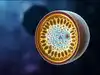
Your cells’ tiny power stations may be doing something quantum: scientists find a mysterious vibration that could influence how the body produces energy
Researchers detected an unusual vibration within human and mouse cell mitochondria. This signal appeared in living samples but vanished when structures were disrupted. Infrared light exposure at specific frequencies increased cellular ATP production by about ten percent. The findings suggest a possible quantum interaction between light and molecular vibrations. Further independent testing is required to confirm these intriguing observations.
Load More

