
POLLUTION SPIKE

Delhi’s Diwali pollution started before the fireworks. What five years of action have achieved
Delhi’s air was already severely polluted before Diwali, with average PM2.5 levels in the week before the festival reaching 236 micrograms per cubic metre, nearly double the 2025 level, according to CSE. The findings suggest firecrackers and stubble burning worsen an existing crisis rather than create it, with vehicles, industry, construction, waste burning and pollution from neighbouring NCR districts keeping baseline pollution high.

Delhi's air woes drive demand for hill getaways, resort stays
Hotels and alternative accommodations are reporting increased bookings from Delhi as air quality deteriorates. Popular destinations for travelers include the hills for cleaner air and cooler weather. Younger travelers are opting for short getaways to leisure destinations nearby. Remote workers are also seeking overseas trips during this polluted period. Overall, there is a noticeable rise in demand for escapes from the city.
ET Graphics: Why emergency traffic curbs in 2026 failed to clear Delhi's toxic winter air
A CSE analysis finds that Delhi's emergency traffic curbs failed to ease congestion or improve air quality in early winter 2026, while Diwali firecrackers triggered a sharp pollution spike. The report examines the contribution of transport, stubble burning and other sources, emerging pollution hotspots and the need for year-round emission control.

Mystery of Delhi's missing PM2.5 data
If data went missing, so, too, it seems, did political will and judicial authority that were supposed to make this Diwali different. According to Indian Institute of Tropical Meteorology, more than 80% of Delhi pollution the day after Diwali was due to firecracker emissions. Despite this, politicians fell back on pointing to sources beyond Delhi's borders

Noida, Ghaziabad schools to hold classes up to Class 5 in hybrid mode from Thursday
Starting this Thursday, schools in Gautam Buddh Nagar district will introduce hybrid classes for students through Class 5. This shift is a response to Stage 3 of the Graded Response Action Plan across Delhi-NCR. All recognized and government institutions must adhere to this directive to avoid potential legal consequences. Current air quality readings indicate that pollution poses a serious health risk in the area.

Delhi's Diwali pollution puzzle: Updated data shows massive spikes, gaps remain
On Diwali night, alarming gaps in air quality monitoring data raised serious concerns about pollution levels in Delhi. Some monitoring stations displayed particulate matter levels far exceeding prescribed limits. The Central Pollution Control Board revealed data omissions during the critical pollution period.
- Go To Page 1

AAP, BJP engage in blame game over Delhi pollution and Punjab stubble burning
Delhi minister Kapil Mishra has raised concerns over a sudden rise in stubble-burning incidents in Punjab during Diwali. AAP officials responded by asserting that smoke from Punjab cannot reach Delhi quickly. Mishra also claimed that farmers alleged fields were being set on fire amid their celebrations. Punjab faced its highest number of farm fires during this season, with 1,152 incidents recorded on Diwali.

Mumbai and Thane authorities ground aerial firecrackers after Diwali blazes
Authorities in Mumbai and Thane implemented a ban on aerial firecrackers following a significant rise in fire incidents. Reports indicate that the Mumbai Fire Brigade responded to numerous fire calls, primarily due to firecrackers. This ban aims to prevent fire hazards, especially from falling embers onto flammable materials. Violators of the ban may face legal consequences under the Disaster Management Act.
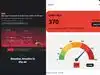
Delhi AQI at 3,000 or 300? Why different apps are showing different pollution levels
Delhi's air pollution readings have sparked confusion as government and independent monitoring platforms report sharply different AQI figures, ranging from the 300s to over 3,000. Differences in AQI calculation methods, averaging periods, monitoring networks and sensor technology explain why apps show varying numbers. Here's why Delhi's AQI readings differ and how PM2.5 levels can provide a clearer picture of air pollution.

Surge in air purifier sales in India as pollution levels rise during winter season 2023
Air purifier sales have increased substantially in India as pollution levels rise and winter approaches. Quick-commerce platforms are experiencing heightened demand, especially from Tier 2 cities. Sales of air purifiers on Amazon have reportedly doubled recently, indicating a surge in consumer interest. Additionally, the overall market for winter appliances is projected to grow significantly this season. Analysts expect online sales to climb further as consumers continue to make purchases.
Happy polluted Diwali! Get ready for severe air pollution as AQI monitoring agency sounds warning this year
Delhi AQI News: Get ready for severely polluted Delhi this year as the national capital is likely to face severe air pollution this year, with AQI forecast to cross 400. Stubble burning, firecracker emissions and unfavourable weather conditions could worsen the capital's air quality, raising concerns about another post-Diwali pollution spike.
Not inclined to completely ban firecrackers, says SC; stresses implementation of orders
The Supreme Court expressed reluctance in imposing a complete ban on firecrackers during a recent hearing. The bench indicated that effective enforcement of existing orders is crucial for addressing air pollution issues. Measures taken by the Delhi government and the Commission for Air Quality Management were discussed during the proceedings. The court encouraged utilizing prominent personalities for public awareness regarding firecracker regulations.

Dussehra haze hangs over Delhi as air quality slips into 'poor' zone
Delhi experienced its first 'poor' air quality day this season after the Dussehra celebrations concluded. The Air Quality Index surged to 238, marking a significant increase from the previous day. Environmental officials noted that falling temperatures and variable wind speeds impacted pollutant dispersion. Several areas in the city recorded even higher AQI levels classified as 'very poor'. These conditions often precede the winter season, when air quality traditionally deteriorates.

Why is the haze so bad in Southeast Asia this year?
Indonesia's prolonged wildfires have blanketed Southeast Asia in hazardous haze, driving respiratory illness cases higher, disrupting flights and forcing school closures. More than 637,000 hectares were reportedly damaged between January and August, according to environment group Auriga. The crisis has triggered regional criticism over Jakarta's response and refusal of neighbouring countries' assistance.

These large- and mid-cap stocks can give more than 20% return in 1 year, according to analysts
The mayhem in the market is likely to continue, at least for the short-term. Nothing has changed in terms of the known headwinds: The US-Iran war continues in fits and starts, oil prices are still elevated, US bond rates remain high, and global supply chains continue to be disrupted. With the calendar year-end approaching, however, there is a technical factor that has entered the mix.

In Iowa, soaring cancer rates emerge as a key midterms issue
Cancer has emerged as an unusual bipartisan campaign issue in Iowa’s midterm races as the state confronts the second-highest cancer rate in the US. Candidates are linking the debate to healthcare access, cancer screening and worsening water quality, although scientists have not reached a consensus on whether nitrate contamination is driving the rise.

Why is Trump administration looking to implement new lower fuel economy standards in US?
New lower vehicle fuel economy standards are being set by the Trump administration. The move will reduce the technology costs of the automakers and help them sell gas-powered vehicles. The new vehicles' cost will decrease but the fuel consumption and carbon dioxide emissions will increase for decades.

The Iran war is driving clean energy development. It's not enough to help the planet, yet
Global clean energy adoption is increasing due to the war against Iran. However, this shift is not yet sufficient to combat climate change effectively. Many governments are enacting policies to move away from fossil fuels and improve efficiency. Despite these efforts, global emissions have slightly increased and clean energy investments have fallen. Experts believe sustained action over years is needed to address climate problems.

70 per cent of change in winter pollution in north India explained by western disturbances: Study
Western disturbances may explain seventy percent of winter air pollution variations. More frequent storms typically bring cleaner air to northern India. Ocean temperature patterns in autumn can predict winter storm frequency. This allows for advance warning of potentially severe pollution seasons. Such forecasts can help authorities prepare pollution control measures.

In 2007, scientists recovered a blue whale earplug off Santa Barbara; its 24 wax layers archived 12 years of hormones, mercury, and man-made pollutants
The earwax plug of a blue whale serves as a remarkable indicator of its life history. This wax revealed its exposure to harmful pollutants from birth to its twelfth year. It also showed an increase in stress and testosterone levels as the whale matured. Major stressors included ship noise and pollution, underscoring the significant effects of human activities on marine creatures.

UN warns global warming will exceed 1.5C and must be reversed
Warming is projected to peak around 1.8C in the best-case scenario. This necessitates a new goal of "overshoot, peak and decline" for climate change. Cutting greenhouse gas pollution and removing carbon dioxide are crucial steps. Countries with greater historical responsibility must lead these urgent efforts.

In 1996, Illinois added Lake Decatur to its pollution list after farm runoff harmed its water. 28 years later, nitrogen levels fell below the 7.8 mg/L limit
Lake Decatur's water quality improved after implementing agricultural best management practices. Efforts to reduce nutrient and sediment runoff continue to protect this vital resource. Grants funded watershed plans and structural best management practices for farmers. Monitoring shows promising trends for nitrogen and phosphorus levels in the lake. Continuous effort is needed to maintain water quality improvements for the future.

Delhi-NCR 'unliveable': Experts flag serious health risks amid toxic smog
Delhi NCR faces severe air pollution making it unliveable. Experts warn of widespread health impacts affecting all ages. Doctors report a significant rise in respiratory cases. Vulnerable groups and even youngsters are experiencing worsened symptoms. Protective measures like masks and air purifiers are advised. Urgent government action and public responsibility are crucial for a healthier future.
Amid festive fervour, October emerges as Mumbai's most polluted month so far in 2025: Study
During the vibrant month of October, Mumbai faced a disheartening rise in pollution, marking it as the most contaminated month of the year. Air quality took a nosedive, especially around festive celebrations, with numerous monitoring stations reporting alarming highs in PM2.5 and PM10 levels.
Delhi's air quality plummets after Diwali despite firecracker ban: AQI soars above 900
Diwali celebrations in Delhi led to widespread firecracker usage, severely degrading air quality and visibility across the city. Despite a strict government ban and enforcement efforts, violations persisted, driving the Air Quality Index (AQI) into hazardous levels in key areas. As a result, neighborhoods reported AQI readings far beyond safe limits. Local pollution, compounded by unfavorable weather and stubble burning, further aggravated Delhi's air, with even worse conditions anticipated in November.

Gopal Rai urges centre to expedite cloud seeding to combat air pollution
Delhi Environment Minister Gopal Rai has called on the central government to urgently convene a meeting with stakeholders to speed up approvals for cloud seeding. This emergency measure aims to mitigate the anticipated winter pollution spike, particularly post-Diwali, by inducing rain to cleanse the air of pollutants.
Pollution spikes in 9 of 11 state capitals this year post-Diwali, highest in Delhi
As per India's National Clean Air Programme (NCAP) tracker nine out of eleven state capitals experienced higher pollution levels in the first twelve hours following Diwali celebrations than the previous year. The data, analyzed by the NCAP tracker, showed that Delhi saw the largest rise in PM 2.5 levels, with levels reaching 999.5 ug/m3 at Pusa on November 13.

Delhi govt to run 10-day anti-open burning campaign: Gopal Rai
He said 611 teams of the Delhi Pollution Control Committee, Municipal Corporation of Delhi, Revenue Department, and other government agencies will take action on the ground. The minister also appealed to all the agencies and resident welfare associations of Delhi to provide heaters to employees and guards on night duty.

Delhi Cabinet approves Rs 36 crore expenditure for anti-pollution campaigns
Delhi ranked the lowest in the country's pollution numbers, with the Air Quality Index going over 300 points. The Cabinet is looking to stall the problem before the dismal quality of air affects day-to-day life.
Load More

