
POLAR ORBITS SATELLITES

Two PSLV failures, one modified rocket stage: How ISRO is trying to restore launch vehicle reliability
ISRO has tested a modified third-stage motor of its PSLV after two consecutive launch failures involving anomalies in the same stage. The changes cover the motor's nozzle, mechanical connections, sealing arrangements and quality-control procedures. The space agency will analyse the test data before deciding on further testing.
NASA adopting Apollo's urgency to build a moon base and land astronauts within two years
NASA plans to return astronauts to the moon with the Artemis III mission set for next summer. Following that, Artemis IV aims to accomplish a historic moon landing by 2028, marking the first since the Apollo missions. Administrator Jared Isaacman emphasized the importance of efficiency and a fast-paced approach similar to Apollo's playbook. Docking exercises with SpaceX and Blue Origin's landers will occur before the moon base establishment.
A $5 nut doomed SpaceX’s first rocket; its satellite crashed through a shed roof and landed beside its own shipping crate
In March 2006, SpaceX’s first rocket failed because of a $5 aluminium nut that cracked from corrosion. The cadet-built satellite on board was thrown clear and landed in a storage shed beside its own shipping crate. Reports first blamed human error, but a review board pointed to corrosion, a cause even Elon Musk called only “most probable”.

IN-SPACe pushes space companies to adopt SCL’s indigenous chips
IN-SPACe, which supervises space activities by non-governmental entities (NGEs) and private startups, made the call during a webinar where SCL officials showcased its capabilities across semiconductor design, fabrication, testing, packaging, quality assurance, and failure analysis.

World Space Week 2026: India’s moon shot was built one rocket at a time, from PSLV to LVM3
India's space journey illustrates a significant evolution in rocket technology from Polar Satellite Launch Vehicle to Launch Vehicle Mark-3. PSLV played a crucial role in launching various satellites and missions including Chandrayaan-1. LVM3 facilitated the launch of Chandrayaan-2 and the successful soft-landing of Chandrayaan-3 near the Moon’s south pole. This progression demonstrates India's growing capabilities in launching heavier payloads and future missions.
Orbital Shift: India's space sector undergoing biggest transformation; pvt firms handle rockets, ISRO focus on more ambitious missions
India's space sector is undergoing significant changes as private companies engage in rocket production and management. The Indian Space Research Organisation is shifting its focus towards more ambitious missions and projects. This transition follows the introduction of the Indian Space Policy 2023, which emphasizes private sector participation. Concerns have been raised by ISRO employees regarding the agency's future and potential loss of capabilities.

India's journey towards 'Viksit Bharat' being written in rockets built on Indian soil: ISRO chief
India's journey towards becoming a developed nation includes significant advancements in its space program by ISRO. The country has developed cryogenic propulsion systems independently after being denied this technology. Chandrayaan-3 made India the first nation to land successfully near the Moon's south pole. Upcoming projects include the Gaganyaan human spaceflight program and further lunar missions by 2040.
India, France step up space cooperation with new private-sector deals
India and France are increasing space sector cooperation through new agreements. Companies signed contracts for satellite launches and microsatellite technology. These deals support India's sovereign space capabilities and growing New Space sector. Agreements cover satellite launches and advanced space surveillance constellations. This partnership builds on decades of collaboration between the two nations.

In 1981, two satellites were launched by NASA to study the interactions between Earth's magnetosphere and ionosphere
In 1981, two satellites were launched by NASA to study the interactions between Earth's magnetosphere and ionosphere. The Dynamics Explorer mission used two spacecraft, DE-1 and DE-2, to study space plasma, electric currents and energy flow. Both satellites launched together and followed polar orbits. DE-1 operated at higher altitudes, while DE-2 studied the region closer to Earth before re-entering the atmosphere in 1983.
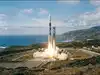
In 2006, NASA and French Space Agency CNES launched a satellite in a joint mission to probe the properties of Earth's thin clouds and aerosols
In 2006, NASA and French Space Agency CNES launched a satellite in a joint mission to probe the properties of Earth's thin clouds and aerosols. CALIPSO studied clouds and airborne particles from orbit. Its data helped scientists understand climate, weather and air quality, while its observations improved atmospheric models and satellite weather measurements.
From Thumba to tomorrow: Indian space programme is preparing for its biggest leap yet
India's space program began with a small rocket range in 1962. It progressed to launching its first satellite and developing indigenous launch vehicles. Chandrayaan-3's lunar landing marked a significant achievement for the nation. The program now includes private sector involvement and ambitious future goals. India aims for a space station by 2035 and a lunar landing by 2040.

Elon Musk's SpaceX to launch 400+ satellites in bold push to transform Alaska’s internet connectivity
SpaceX successfully launched 24 new Starlink satellites from California, boosting its orbital network to over 7,900. The company is also launching satellites into polar orbits to improve connectivity in Alaska and high-latitude regions. By the end of 2025, SpaceX plans to launch more than 400 more such satellites, doubling the opportunities for northerners.
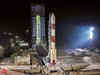
ISRO begins countdown for PSLV-C54 mission
The objective of the mission is to ensure data continuity of ocean colour and wind vector data to sustain the operational applications. The customer payloads include ISRO Nano Satellite-2 for Bhutan (INS-2B) which would have two payloads namely NanoMx and APRS-Digipeater. NanoMx is a multispectral optical imaging payload developed by Space Applications Centre while APRS-Digipeater payload is jointly developed by Department of Information Technology and Telecom, Bhutan, and U R Rao Satellite Centre, Bengaluru.
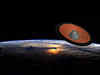
Polar satellite, experimental heat shield for enabling humans' presence on Mars travel to space aboard Atlas V rocket. See details
The polar satellite launched earlier in the day from Vandenberg Space Force Base in Lompoc, California, looks to reveal promising information.
ISRO's PSLV-C43 successfully places into orbit HysIS along with 30 satellites
The HysIS, Isro's earth observation satellite, is the primary satellite of the PSLV-C43 mission.

ISRO to launch India's HysIS satellite with 30 foreign satellites
The satellite will be placed in 636 km polar sun synchronous orbit (SSO) with an inclination of 97.957 deg. The mission life of the satellite is 5 years.
Advanced satellite to improve US weather forecast launched
Washington, Nov 18 (IANS) NASA on Saturday successfully launched for the National Oceanic and Atmospheric Administration (NOAA) a highly advanced polar-orbiting satellite to improve weather forecasts up to seven days in advance.

ISRO to launch SCATSAT, 7 other satellites on Sept 26
The Polar Satellite Launch Vehicle, in its 37th flight, will launch the satellites at 9:12 hours on September 26, from Satish Dhawan Space Centre in Sriharikota.

IRNSS-IA launch important milestone in space programme: Manmohan Singh
Hailing the launch of IRNSS-1A satellite, PM Manmohan Singh today described it as an "important milestone in the development of India's space programme".
Load More


