
PNAS
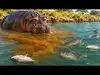
How did hippo dung turn an African river into a death trap for fish? Scientists explain
Hippo dung usually provides nutrients that help support life in African rivers. But scientists found that the situation changes when rivers begin drying up. A 2018 study in Tanzania found that dung accumulating in isolated pools was reducing oxygen levels and making survival difficult for fish.

Men lost nearly 7 inches in height in Southeast Asia over 7,000 years, study of 18,457 skeletons finds
Men in Southeast Asia lost nearly 7 inches in height over 7,000 years, from about 5 feet 10 inches to just over 5 feet 3 inches by the 1800s, a study of 18,457 skeletons has found. Researchers link the decline to population growth and poorer nutrition as farming and technology spread, though trends varied by region and more research is needed.

Putting jobs at the heart of economic progress
India is facing a significant job crisis despite its economic growth, which has led to growing youth frustration. While traditional employment opportunities diminish, the informal work sector largely masks true unemployment rates. A five-factor model encompassing demographics, attitudes, skills, technology, and job creation is essential for effective employment strategies. Policymakers are urged to adopt new frameworks for job generation in various sectors.

Cornell scientists studied how 2,839 fish species swim together; their analysis found group swimming evolved around 60 times but disappeared about 320 times
A comprehensive study on fish collective movement has found that this behavior has independently evolved across numerous species over time. Surprisingly, about 79 percent of fish utilize collective movement, while others favor solitary habits. However, certain species have abandoned collective traits, likely due to the challenges of heightened food competition and disease risks. This research highlights the intricate evolution of social behavior within marine ecosystems.

Always freezing at work while your colleague feels hot? Your body may explain why
People have different thermal comfort preferences. Body size and heat production influence those preferences, while clothing and airflow can also affect comfort. The disagreement for office thermostat temperatures is pretty common.

6,500-year-old mystery: Why was a woman buried with four arrowheads at a Stone Age cemetery in France?
Archaeologists studying a 6,500-year-old Neolithic cemetery in Normandy, France, found the remains of a woman buried with four flint arrowheads. Ancient DNA identified only one woman among 14 analysed individuals at the site, while the arrowheads were part of a burial tradition more often associated with men. The unusual grave is offering researchers new clues about gender, identity and social roles in the Cerny culture.
- Go To Page 1

Why might obesity affect men and women differently? Scientists looked inside fat tissues
A UC Riverside study found that immune cells in fat tissue behaved differently in male and female mice. Female mice had a greater share of cells linked to keeping fat tissue stable. Male mice had a greater share linked to inflammation. The findings offer a clue about obesity, but researchers have yet to confirm the same pattern in people

Moral judgments can be manipulated using magnetic waves. How MIT scientists discovered a way to change people's sense of right and wrong
Scientists at MIT discovered that magnetic pulses targeting a specific brain region can temporarily influence how people judge right and wrong. In an experiment, participants became more likely to consider harmful actions acceptable when the intended harm did not occur, revealing how the brain processes intentions and outcomes when making moral decisions.
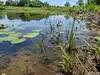
Scientists set up 45 artificial ponds near St. Louis and studied them for 7 years; even when ponds got the same species, the order they arrived changed the outcome
A recent examination of 45 plastic cattle tanks has shed light on the significant role that species arrival order plays in biodiversity. Tanks with low nutrients exhibited similar communities irrespective of this order, while high nutrient tanks presented diverse variations. This phenomenon, termed the priority effect, has implications for community stability and ecosystem restoration efforts, cautioning restoration ecologists against presuming automatic self-repair in nutrient-rich habitats.

A study says there’s a reason you keep saying 'bye' but still don’t hang up the call
The conversation is over. You have both said goodbye, yet neither person disconnects. You may be thinking you are respecting another person' wishes by allowing them to feel the conversation is over and now you can end the call. Politeness may also make a simple goodbye feel more complicated.

Amur honeysuckle arrived in America as an ornamental shrub; it later became a major invasive concern in forests across the northern United States
Introduced over a century ago, Amur honeysuckle quickly spread across the United States as an ornamental plant, but its aggressive growth has outcompeted local flora, resulting in serious ecological damage. Research highlights that its presence disrupts forest ecosystems, diminishes biodiversity, and correlates with rising tick populations—which could heighten health risks. Homeowners are urged to consider native alternatives to help curb this invasive species.

Not your ordinary vegetable: Study reveals 7 incredible facts about lauki that may make you think twice before ignoring it
Bottle gourd, or lauki, may be an everyday vegetable, but its history and uses are far more fascinating than they seem. From being used as containers thousands of years ago and potentially travelling across oceans to serving as a resonating chamber in musical instruments, the humble gourd has played several roles beyond the kitchen. Its high water content, use in traditional desserts and an important safety warning about unusually bitter bottle gourd make these seven lesser-known facts worth knowing.

In 2022, researchers found that salt levels within water-quality guidelines could still damage lake food webs; tiny algae-eating animals were vulnerable
A recent international study reveals that current salt limits for freshwater lakes are inadequate. Zooplankton populations significantly declined at many sites, impacting the food web. This ecological damage occurred at salt levels considered safe by governments. The findings highlight the urgent need to reassess and lower existing sodium chloride thresholds. Reducing road salt use and finding alternatives are crucial for lake protection.
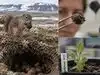
31,800 years ago, a squirrel buried fruits inside a Siberian burrow. Thousands of years later, an Ice Age plant was brought back to life using that ancient tissue
A squirrel’s ancient food stash buried deep beneath Siberian permafrost has given scientists a rare glimpse into the Ice Age. The fruits remained frozen for around 31,800 years before researchers discovered a way to use preserved tissue from them to grow living plants, revealing how long some biological material can survive under extreme conditions.
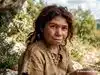
Scientists found an 8-year-old Neanderthal child in a Belgian cave, and DNA from her molar is helping reveal a hidden chapter of our ancient past
The Scladina child was an approximately eight-year-old Neanderthal who lived more than 120,000 years ago in what is now Belgium. Her remains from Grotte Scladina have provided researchers with evidence about Neanderthal childhood development and ancient population history. Genetic studies of the remains have also helped scientists understand relationships between early European Neanderthals and populations that lived later.

Psychology says the first 10 minutes of a date can shape how attracted you feel to someone - Here’s why
First encounters, though brief, are powerful indicators of future romantic attraction. It's the perceived similarities, not necessarily the real ones, that ignite initial sparks of interest. After just four minutes, flirtatious nonverbal cues can show women's desire. Open body language and harmonized movements boost appeal and create the foundation for a meaningful connection between individuals.

Tibetans adapted to live at high altitudes where oxygen is scarce; study suggests ancient interbreeding with an extinct human population may have given their ancestors a genetic advantage to survive in one of planet’s harshest environments
Tibetan highlander populations have distinct genetic variants in proximity to the EPAS1 gene, facilitating their adaptation to high altitudes with low oxygen availability. These genetic traits prevent excessive production of red blood cells, which would otherwise thicken the blood. Research indicates these variants likely arose through ancient interbreeding with Denisovans. Over generations, natural selection has favored these DNA sequences, enhancing survival in harsh environments.

In 2013, University of Massachusetts researchers showed 40 preschoolers cartoon pictures and tested their memory before and after an afternoon nap - children who slept forgot less and remembered roughly 10% more than those kept awake
Afternoon nap for children: Research indicates that preschoolers who take naps are better at retaining information compared to those who stay awake. This midday sleep not only aids in memory consolidation but also results in a ten percent increase in recalling spatial locations. Impressively, this memory advantage remains the next day, even after a full night's sleep, reinforcing the idea that naps play a crucial role in solidifying newly acquired memories.

A 1611 Renaissance painting captured a bat eating a bird 400 years before scientists fully documented it
A 17th-century painting by Jan Brueghel the Elder may have captured a remarkable natural phenomenon centuries before science confirmed it: bats hunting birds in mid-air. While modern studies in 2001 and recently have provided evidence of greater noctule bats preying on migrating songbirds, Brueghel's artwork depicts a similar scene. This suggests historical art can serve as a valuable, overlooked source of natural history information.
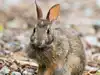
In 1859, English settlers released 24 wild rabbits; in 2024, scientists were shocked to find that the DNA of almost all the rabbits in Australia descended from those 24
A seemingly simple request for hunting rabbits in 1859 by Thomas Austin in Australia unleashed a continental plague. While rabbits were introduced earlier, a single shipment of genetically distinct wild rabbits from England proved to be the catastrophic trigger. These animals, unlike their domestic predecessors, were perfectly adapted to the Australian landscape, leading to an unprecedented population explosion and ongoing ecological devastation costing millions annually.

Melting ice patches reveal how the bow and arrow reshaped ancient hunting in North America
New research reveals melting ice patches and dry conditions are preserving ancient hunting tools, offering a clearer picture of the bow and arrow's arrival in North America around 1,400 years ago. This transformative technology rapidly replaced older methods in the south but coexisted with them for centuries in the north, showcasing human adaptation and innovation.

Flying Rivers: The essential lifelines that keep Amazon Forest alive
Flying rivers are crucial for rainfall, and are considered essential to keep the Amazon forest basin healthy. However, in recent years, it has been impacted by deforestation.

Chemicals in consumer products may cause common tumours in women: Study
Prievious epidemiological studies have consistently indicated an association between phthalate exposure and uterine fibroid growth, but this study explains the mechanisms behind that link. The scientists discovered exposure to DEHP may activate a hormonal pathway that activates an environmentally responsive receptor (AHR) to bind to our genetic material, DNA, and cause increased growth of fibroid tumours.

Chinese researchers warn of new virus in pigs with human pandemic risk
Researchers looked at influenza viruses found in pigs from 2011 to 2018 and found a "G4" strain of H1N1 that has "all the essential hallmarks of a pandemic".

Visa restrictions can increase illegal migration: Study
The study, published in the journal PNAS, found that restricting students and those eligible for high-skilled visas does little to change the overall volume or composition of incoming migrants.

New warning system discovered in the immune defense
According to a study published in the journal PNAS, Mitochondria in the white blood cells secrete a web of DNA fibres that raises the alarm.
Dinosaur eggs hatched slowly like reptiles, not birds: Study
New York, Jan 3 (IANS) The eggs of non-avian dinosaurs took nearly between three to six months to hatch, similar to crocodiles and lizards, which explains the reason behind the extinction of the dinosaur species, scientists have found.
Know how human brains 'slack' with age
London, Oct 25 (IANS) Along with our skin that loses the firmness and elasticity of the youth, our brain too starts to sag as we age, researchers say.
World's smallest engine developed
The prototype device is made of tiny charged particles of gold, bound together with temperature-responsive polymers in the form of a gel.
Load More

