
PLATO
Sanatan and Children
The speaker describes Sanatan as the eternal Truth, not a religion or cult, and says following it requires truthfulness, honesty and integrity. Citing the Vedas, the Gita, Guru Granth Sahib and Pali texts, the speaker argues that the term has a broader meaning than commonly understood.
Quote of the Day by Socrates: ‘The greatest way to live with honour in this world is to be what we pretend to be’ - Why your actions should always match you say explained by the Greek philosopher
Socrates’ quote, “The greatest way to live with honour in this world is to be what we pretend to be,” highlights the importance of honesty, integrity and character. The ancient Greek philosopher’s words suggest that people should strive to develop the qualities they want others to see in them, rather than rely on appearances or reputation. The quote also reflects his emphasis on self-examination and living by one's values.

Scientists exploring Superhabitable Worlds that could be twice as massive as Earth with more water and a cooler sun
Scientists are exploring superhabitable worlds, which could provide better conditions for life than Earth itself. These planets are believed to orbit stable K-dwarf stars, ensuring a consistent environment for life to flourish. Research suggests that life could develop at an accelerated pace in these optimal settings. Future missions are set to explore these celestial bodies for potential signs of extraterrestrial life.

Jeffrey Archer was Brit, but dil tha Hindustani
Jeffrey Archer enjoyed significant popularity among Indian readers from the 1980s to the 2000s. His characters embodied ambition and willingness to achieve their goals, resonating with India's elite. Despite Archer’s success abroad, he remained largely unrecognized in Britain, where his work was often dismissed. Over the years, reading preferences among Indians have shifted towards contemporary authors and self-help literature.

Socrates on human attraction and love: ‘Beauty is the bait which with delight allures man to...'
Why are we so easily drawn to beauty? Greek philosopher Socrates offers an interesting take on attraction, suggesting beauty can draw people together and play a role in relationships, love and the continuation of the human race.

Developer Richard Rubin bought a long-shuttered Alabama Ramada Inn in 2021; after a sub-$5 million redevelopment, its 120 rooms were slated for workforce housing
Developer Richard Rubin is transforming a long-shuttered Ramada Inn in Sheffield, Alabama, into workforce housing through his firm, rm Repvblik. The $4.7 million project, undertaken with Drever Atelier Partners, will create 120 energy-efficient, one-bedroom units aimed at workers earning between 60% and 120% of area median incomes.
- Go To Page 1
Quote of the day by Socrates: 'Love is always poor, and anything but fair, as the many imagine; it is rough and has no shoes...' - Love lessons on desire and why humans want what they do not have by the ancient Greek philosopher
Socrates’ description of Love in Plato’s The Symposium turns a familiar idea of romance on its head. Instead of presenting Love as beautiful, gentle and complete, he describes it as poor, rough and homeless. The unusual image comes from a lesson Socrates says he learned from Diotima, who explains Love’s nature through the contrasting forces of Plenty and Poverty.
Quote of the day by Socrates: 'Children nowadays are tyrants. They contradict their parents, gobble their food, and tyrannise their teachers...' A timeless life lesson in parenting, discipline, authority and understanding the younger generation
Quote of the day by Socrates is his famous phrase about children challenging their parents and teachers, making it relevant even more than 2,000 years after the philosopher lived. His observation offers an interesting look at changing relationships between generations, discipline and authority. The quote also takes on added meaning when viewed alongside Socrates’ own philosophy, which encouraged people to question assumptions and examine what they believed to be true.
Quote of the day by Aristotle: 'Think as the wise men think, but talk like the simple people do.' Life lessons from inspiring quote on clear connection, true intelligence, deep thinking and clarity
Quote of the day by Aristotle, “Think as the wise men think, but talk like the simple people do,” explains why deep thinking and simple communication matter. The saying connects intelligence with clarity and asks people to avoid difficult language when plain words can explain an idea. Aristotle’s words also highlight wisdom, logic, humility, human connection, useful communication, and the value of making complex thoughts easier for others to understand.
Quote of the Day by Aristotle: “When you have thrown a stone you cannot bring it back again, but nevertheless you are responsible for having taken up the stone and flung it, for the origin of the act was within you” — a timeless lesson that our choices shape our character and developing good habits can help us build a better life
Quote of the Day by Aristotle: Aristotle, a pivotal ancient Greek thinker, profoundly shaped philosophy and science. His teachings emphasized observing the real world and understanding human behavior. He developed systematic logic and explored ethics, politics, and the natural world. Aristotle believed happiness stemmed from meaningful action and cultivating virtues. His ideas on responsibility and character development remain highly relevant today.
Quote of the Day by Plato: ‘Be kind, for everyone you meet is fighting a harder battle’ - Aristotle’s teacher on the ancient wisdom of giving people the benefit of the doubt
Quote of the Day: Strangers' impatience and friends' silence can feel personal without knowing their struggles. Plato's wisdom suggests kindness begins with humility and acknowledging unseen battles. People often face invisible difficulties which shape their outward behavior and reactions. This understanding encourages patience and resisting quick judgments in daily interactions. Kindness offers a simple yet profound way to connect with others more meaningfully.
Wisdom of the day by Socrates: ‘I do know that it is evil and disgraceful to do wrong and to disobey him who is better than I. So I shall never…’ — What can Socrates’ wisdom teach us about courage, self-doubt, morality and personal growth?
Wisdom of the day by Socrates turns an ancient question into a very human struggle: how do we choose when we cannot see the outcome clearly? His words speak to hesitation, moral pressure, difficult relationships and the uncomfortable moments when we have to trust our judgment. The article explores what this can teach us about conscience, self-doubt, courage, uncertainty and knowing when to stand by what we believe is right.
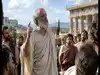
In 406 BC, Socrates opposed an illegal mass trial of Athens’ generals, even when the angry assembly threatened his opponents with the same fate
In 406 BC, Socrates stood against an angry Athenian Assembly after the Battle of Arginusae. Athens wanted to try several generals together, a process Socrates believed was unlawful. He refused to support the vote, despite growing pressure and threats against those who resisted. The moment showed something central to his character: he would not abandon principle simply because the crowd demanded it.
Quote of the Day by Plato: 'The direction in which education starts a man will...' - How early learning shapes the path of success for the rest of your life
The choices made in early life play a crucial role in dictating one's future. A well-structured educational foundation during formative years is essential to unlocking a person's true potential. Foundational learning not only shapes character and perspective but also sets critical parameters for success. Constructive habits guide individuals through life's complexities, ensuring that wise investments in knowledge and routines today lead to a promising and rewarding future.
Quote of the day by Socrates: 'Contentment is natural wealth, luxury is...' - Ancient Greek philosopher's life lesson on contentment, materialism and the hidden cost of chasing luxury, wealth and possessions in the pursuit of happiness
Quote of the day by Socrates: The wisdom of Socrates, an ancient Greek philosopher, transcends time through his emphasis on critical inquiry and virtuous living. He inspired others to examine their own beliefs and priorities, revealing that true riches lie in personal growth and virtue rather than material possessions. His ideas, preserved by followers like Plato, still resonate and shape contemporary philosophical discourse and educational practices.
Quote of the day by Plato: 'A good decision is based on knowledge and not on numbers.' Life lessons from inspirational quote on true wisdom, deep understanding, critical thinking, raw data or statistics
Quote of the day by Plato: “A good decision is based on knowledge and not on numbers.” The quote explains why decisions need understanding, context and critical thinking. Numbers and statistics can provide information, but they may not explain the reasons behind a situation. Plato’s philosophy also focused on knowledge, wisdom, truth, justice and the Good.
Plato's Powerful Monday Motivation Quote: 'Never discourage anyone who continually makes progress, no matter...'- Ancient Greek philosopher's timeless life lesson on perseverance, personal growth and why progress matters more than perfection
Powerful Monday Motivation Quote by Plato: Renowned for his timeless wisdom, Plato underlines the importance of slow and steady advancement bolstered by persistent effort. Through his philosophical dialogues, he scrutinized the complexities of justice and knowledge, building upon Socratic principles. The establishment of the Academy marks his legacy in higher education, urging learners to embark on a lifelong journey of self-discovery and enlightenment.
Best Motivational Quote by Plato: 'Better a little which is well done, than a…’ - Why quality beats quantity in modern life; Greek philosopher’s secret to true success
Modern society often rewards busyness and multitasking, leading to exhaustion. Plato's ancient wisdom emphasizes quality over quantity in all endeavors. This philosophy encourages deep focus and dedicated effort on important tasks. True success stems from doing things well, not merely completing them. Prioritizing depth over breadth builds lasting pride and mastery.

Quote of the day by Plato: ‘The measure of a man is what he does with power’ – ‘The Republic’ author on how power reveals character
Power doesn't change people; it reveals their true character, as Plato wisely observed. Whether in leadership or everyday life, how individuals wield influence highlights their inherent values. History shows that those who use authority to uplift and inspire leave a lasting positive impact, while others who exploit it for control often falter. True greatness lies not in possessing power, but in how it's used for good.

Quote of the day by Plato: ‘Either we shall find what it is we are seeking or at least…’ – Greek philosopher on how ignorance can lead to true wisdom
Quote of the day: Ancient Greek philosopher Plato, a student of Socrates, believed true wisdom stems from acknowledging what we don't know. His dialogues, like 'The Republic,' explored justice and reality, founding the first Western institution of higher learning. Plato's legacy, carried by Aristotle, continues to influence thought, emphasizing intellectual honesty and the pursuit of truth over false certainty.

Quote of the day by Plato: 'All men are by nature equal, made all of the same earth by one Workman, and however we...' - inspiring lessons on equality, respect, why status or wealth does not define a person’s worth by father of idealism and originator of platonic love concept
Quote of the day by Plato: Ancient Greek philosopher Plato believed all humans are equal by nature. He stated a poor peasant holds the same worth as a mighty prince before God. This timeless message challenges societal hierarchies. It reminds us that true value lies not in wealth or status but in our shared humanity.

Quote of the Day by Plato: ‘The soul takes nothing with her to the next world but her…’ Greek philosopher throws light on life after death
Plato, an influential ancient Greek philosopher and founder of the Academy, believed that true value lies in education and virtue, not material possessions. His quote emphasizes that wisdom and moral character are the only things that endure beyond earthly life. This timeless message highlights the importance of lifelong learning and ethical living as the ultimate measure of a meaningful existence.

Quote of the day by Plato: “The heaviest penalty for declining to rule is to....” Ancient Greek philosopher issued a timeless warning about leadership, political responsibility, and public silence centuries ago
Quote of the day by Plato: More than 2,300 years after Plato wrote his famous quote on leadership and power, the words still dominate modern debates on politics, society, wisdom, and responsibility. “The heaviest penalty for declining to rule is to be ruled by someone inferior to yourself” has become one of the most searched philosophy quotes online because it speaks directly to today’s leadership crisis, political distrust, and social frustration. Plato’s philosophy was never only about government. His ideas from The Republic still influence education, ethics, leadership, democracy, and modern intellectual thought across the world.

Quote of the Day by Plato: ‘The punishment which the wise suffer who refuse to take part in the government, is to live under the…’
Ancient Greek philosopher Plato warned that wise individuals who avoid civic participation will inevitably be ruled by less competent or unjust leaders. His quote, "The punishment which the wise suffer who refuse to take part in the government is to live under the government of worse men," underscores the critical importance of engagement in governance for a just society.

Quote of the day by Plato: 'The heaviest penalty for declining to rule is to be ruled by someone inferior to yourself' - A warning to never avoid duty from the ancient Greek philosopher
Today’s Quote of the Day by Plato highlights the responsibility that capable individuals carry in society. In his famous work The Republic, the philosopher warned that when thoughtful and ethical people step away from leadership, power may fall into the hands of those less qualified. The quote serves as a reminder that avoiding responsibility can have consequences, especially when it comes to governance and public life.

Quote of the day by Plato: "Only the dead have seen the end of war"
Plato was a famous Greek philosopher from ancient Athens who shaped Western philosophy. He was a student of Socrates and later taught Aristotle. Plato wrote many works in the form of dialogues that explored deep questions about truth, justice, and knowledge. His ideas about philosophy, society, and leadership are still studied by students and scholars around the world today.

Quote of the Day by Plato on growth: 'Never discourage anyone who continually makes progress, no…’
Plato, a renowned ancient Greek philosopher, shaped intellectual history. He was a student of Socrates and the teacher of Aristotle. Plato established the influential Academy in Athens. His philosophical writings continue to inspire. The quote 'Never discourage anyone who continually makes progress, no matter how slow' is attributed to him. This emphasizes the value of consistent effort over speed.

Quote of the day by Plato: ‘Knowledge which is acquired under compulsion obtains…’
Ancient Greek philosopher Plato's wisdom resonates today. His famous quote highlights that forced learning does not truly stick. Genuine understanding comes from a willing mind. Plato, who taught Aristotle, founded the Academy. His work, The Republic, explores justice. This ancient thinker's insights continue to shape our understanding of knowledge and learning.
Quote of the day by Plato: ‘Do not train a child to learn by force or…’
Plato was an influential ancient Greek philosopher and student of Socrates. He founded the Academy in Athens. He authored significant philosophical works and taught Aristotle. His aristocratic family had notable lineage. Plato believed children learn best through engaging methods that nurture their natural curiosity and unique talents, rather than through coercion.
Load More

