
PLASTIC BOTTLES

In 1999, Missouri drove recycled-plastic pins into a failing I-70 slope; the site remained stable after four years, and the method cost 25% less than conventional repairs
Back in 1999, engineers turned to an eco-friendly solution by inserting over three thousand recycled plastic pins into a hillslope along Interstate 70 in Emma to combat landslides. This innovative strategy not only stabilized the slope but also cut costs by 25%. Following its success, similar techniques have been adopted in states like Iowa and Texas, although environmental concerns regarding the plastic pins' longevity persist.
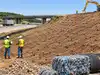
In 2011 Texas drove recycled plastic made from discarded bottles into a failing US 287 slope; 5 years later, settlement was minimal and costs were 50 percent to 80 percent lower
In Texas, engineers successfully used recycled plastic pins to stabilize highway slopes affected by unstable clay soils. The experiment demonstrated significant reductions in settlement and movement in treated areas compared to untreated sections. Monitoring after installation showed minimal additional movement in reinforced sections over 5 years. The results suggest that recycled plastic pins can effectively support shallow slope failures in problematic soils.

Why Indians behave better at sacred places but not other tourist spots
Kamarpukur and Joyrambati stand out for their tranquil ambiance and the politeness exhibited by visitors. Many who visit these sacred places do so as devotees, which motivates them to keep the surroundings tidy. This decorum sharply contrasts with the noisy behavior found in other tourist spots. Similar tendencies are recognized at various holy sites throughout India, creating a soothing environment and enriching spiritual encounters for everyone.

These large-, mid- and small-cap stocks have upside potential of more than 20% in 1 year, according to analysts
The probability of a sharp, damaging downturn now appears low, and the broad direction favours the market. So, the stance should be the same as in these past few weeks: Shedding fear, but cautiously optimistic. Focus on the business under the stock you are interested in, and keep one eye on what is happening globally.


EU's 2030 ban on single-use ketchup sachets puts condiment packets in spotlight
Starting in 2030, the European Union will ban single-serve condiment sachets, including ketchup and mayonnaise, in restaurants as part of efforts to tackle waste. Takeaway services and specific healthcare facilities will be exempt to ensure hygiene. Alternative solutions such as refillable dispensers and small bowls will be encouraged, highlighting a shift towards more sustainable practices in response to environmental concerns about single-use plastics.
- Go To Page 1

He took his Taiwanese friend to show her Mussoorie's beauty, but garbage-strewn Dalai Hills changed their plans; watch what happened next
An Indian content creator and his Taiwanese friend have gone viral after cleaning up plastic bottles, food wrappers and other litter scattered across Mussoorie's Dalai Hills. The duo had visited the viewpoint for sightseeing but were shocked by the waste dumped across the hillside. The video shared by Anant M has sparked debate online over civic sense, tourist behaviour and the growing problem of littering at popular hill stations across India.

How to decorate your balcony on a budget? Try these 5 easy DIY ideas using everyday household items
Many individuals can enhance their balconies without spending a lot of money on furniture and decor. Simple DIY ideas can create inviting and comfortable spaces for relaxation. Repurposing old containers into planters can add greenery while fairy lights can provide a warm ambiance during evenings. Arrangement of old furniture with cushions and rugs can establish a cozy corner for various activities.

Giant 'heat storms' are scorching the Earth. This is the story of the biggest one on record
Heat storms have increased dramatically, causing severe global consequences including excess deaths and environmental catastrophes. Recent heat storms have been identified as a new classification, representing larger and more persistent heat events. The intensity of these heat storms has worsened due to climate change and greenhouse gas emissions. Associated weather patterns have significantly disrupted ecosystems and agriculture worldwide.

In 1995, New York turned discarded milk jugs and detergent bottles into a pier deck; 2 years later, the recycled plastic had held its key engineering properties
The 1990s marked the beginning of an intriguing investigation into recycled plastic lumber as a robust replacement for timber. Crafted chiefly from post-consumer high-density polyethylene, this material was utilized in a New York pier project. After two years of rigorous testing, the pier demonstrated encouraging signs of durability and stability, although some properties fluctuated.

At 12, he took a $500 loan in North Carolina; how a Hawaii trip inspired his six-figure swimwear brand Coastal Cool
A North Carolina teenager turned a $500 loan from his parents into a six-figure sustainable swimwear business. Holden Bierman, now 19, launched his entrepreneurial journey at 12 after a family trip to Hawaii sparked an idea. He taught himself e-commerce through online resources and eventually built Coastal Cool, a beachwear brand that also aims to tackle plastic pollution.
PepsiCo warns 'energy drink' ban could run its India supplies dry as Red Bull sells on
PepsiCo has warned that its popular energy drinks could disappear from Indian markets within two months as the Delhi High Court refuses to lift a ban on the energy drink label imposed by FSSAI. While rival Red Bull has secured temporary relief, PepsiCo, Monster and Reliance Consumer remain restricted to selling existing stocks pending the next hearing on October 30.

Salons double festive makeover prices as Navratri demand surges, costs rise
Salons and services apps have increased their prices significantly due to a surge in demand for festive services. The rise in costs is attributed to factors including supply chain disruptions and high taxation. Consumers are booking elaborate packages for festivals like Navratri, resulting in doubled prices compared to last year. Chain salons and beauty platforms are expanding their offerings and pushing private labels during this festive period.

Meet Ryan Hickman, who visited a recycling centre with his father at age 3 in 2012, a decade later he had recycled over 1.7 million bottles and cans
Ryan founded Ryan's Recycling Company to collect recyclable materials from households and other sources. His family helped with the work, including collecting and transporting the items. Ryan and his father continued their collection rounds every Saturday. They generated recyclable items and sorted them at their home or took them to a local recycling centre.

How Netherlands built the 'World’s First PlasticRoad Cycle Path' using recycled plastic equivalent to 218,000 cups
The Netherlands opened the world’s first PlasticRoad cycle path in Zwolle in 2018. The 30-metre stretch used recycled plastic equivalent to 218,000 plastic cups or 500,000 bottle caps, while sensors tracked temperature, cyclists and the load placed on the path.

894 pieces of plastic were found inside one seabird. The bigger warning came from what happened next, the finding has researchers deeply concerned about the ocean
A recent study revealed that sable shearwater chicks on Lord Howe Island are ingesting alarming amounts of plastic. Researchers recorded a chick with 894 plastic items in its stomach, highlighting a significant increase in pollution. This increase in plastic ingestion from 2023 to 2026 shows the worsening state of ocean pollution. Parents unknowingly feed plastic waste to their chicks, mistaking it for food.
Reliance, PepsiCo, Monster get court breather over Campa ‘energy drink’ label ban
FSSAI's order barring Reliance Industries from selling its Campa beverages as “energy drinks” has been put on hold. This is an interim relief for the company in its challenge against the labelling restriction. PepsiCo and Monster Beverage can also keep the "energy drink" label on products in India after the court's hold.

In 1969, Frank Van Zant began building beside a Nevada highway; 20 years later, his desert compound had more than 200 concrete sculptures
In the late 1960s, World War II veteran Frank Van Zant began creating the Thunder Mountain Monument in Imlay, Nevada, using scrap materials from the desert landscape. Designed to honor Native American history and spirituality, the monument faced challenges after his death in 1989, including vandalism. Nonetheless, restoration by his family has secured its place as a historic site, ensuring it remains a cultural touchstone for visitors today.
PepsiCo, Monster challenge India 'energy drink' label ban citing business impact
PepsiCo and Monster Beverage have initiated legal action against India's food regulator regarding a recent labeling ban. The regulator's directive requires companies to stop using the 'energy drink' label, citing health concerns. PepsiCo claims the ban will severely impact their investments and market presence. Similarly, Monster Beverage argues that the decision has caused significant financial losses and reputational damage.
In 1951, two Phillips Petroleum chemists discovered plastics that later found uses in everyday products; US production reached 136 billion pounds in 2025
In 1951, an intriguing twist of fate brought Robert Banks and Paul Hogan to Bartlesville, Oklahoma, where they stumbled upon significant plastics. Although their creation faced hurdles in initial market uptake, the 1956 Hula-Hoop phenomenon ignited interest. The medical field soon embraced high-density polyethylene for baby bottles, recognizing its cleanliness.

This institute in Georgia helps students transform discarded plastic waste into phone chargers in under five minutes
Georgia Tech’s new Trash Lab is testing how discarded plastic can be transformed into useful products in under five minutes. Using Miniwiz’s miniTrashpresso, researchers shred, clean and reshape plastic waste into items such as phone chargers, bowls and sunglasses. The project explores local recycling, upcycling and circular-economy solutions, aiming to turn waste into valuable resources while reducing landfill dependence.
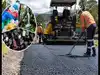
In 2018, Tasmania built a road using 530,000 plastic bags, 168,000 glass bottles and 12,500 printer cartridges; engineers expected it to last 15% longer
What if the road beneath your feet was made partly from the rubbish you threw away? In Tasmania, that idea became real in 2018. Engineers built an experimental stretch of road using about 530,000 plastic bags, 168,000 glass bottles and 12,500 discarded printer cartridges. The materials were processed and added to the asphalt, turning household and industrial waste into part of the road itself. It was an unusual way to tackle two problems at once: waste and the demand for new road materials.

New Jersey high school students turn waste plastic bottles into 3D-printer filament. Later use it to make tools for cleanups
US high school students are transforming plastic bottles into 3D-printer filament. This recycled material is then used to create essential tools for community clean-up efforts. The project, called Project Respindle, aims to establish a circular economy at a local level. Students collect plastic waste and process it into usable equipment for environmental organizations. This initiative demonstrates how technology can enhance recycling and promote environmental action.

In 2020, California repaved a highway using recycled materials, including 150,000 plastic bottles per mile; it could last 2-3 times longer than conventional asphalt
California transportation officials tested recycled pavement using plastic bottle binder. This pilot project on Highway 162 consumed approximately 150,000 plastic bottles per mile. The technology developed by TechniSoil Industrial processes old pavement with a liquid plastic polymer. This innovative method potentially reduces landfill waste and transportation pollution significantly. Officials are studying the road's durability and environmental benefits for future applications.

MIT researchers are giving millions of plastic bottles a new life by turning plastic waste into homes, decks and bridges using AI robots
In a significant development, the Atlas Building Composites, a spinout of Massachusetts Institute of Technology are turning millions of plastic bottles to homes, bridges and decks using AI-powered robots. Single-use plastic from water bottles and other items is first shredded and then fed into the Atlas system, where the plastic is melted and mixed with American-made fiberglass. This makes the material stronger than wood. The material is then used in a large-scale 3D printer to make building parts, including trusses for floors, walls, roofs and bridges.

In 2020, Australia built more than 90% of a road project from recycled waste; five million bottles went into a job that cost no more than a standard build
In 2020, Australia built more than 90% of a road project from recycled waste; five million bottles were used in a Central Coast Council project in Wyongah. The road included recycled materials in its base, surface, kerb, guttering, footpaths and drainage. The project used waste concrete, road gravel, glass, plastic and other materials while keeping costs and construction time in line with a standard road project.

6,000 milk bottle road in China: How plastic waste found a strange second life in Shanghai
More than 6,000 used milk bottles in Shanghai were given an unusual second life when they were processed into recycled plastic and incorporated into polymer-modified asphalt. The 2021 project by Dow and dairy brand Shiny Meadow aimed to address the challenge of plastic bottles that are technically recyclable but often rejected by recyclers because of milk residue. The initiative was also presented as a potential way to reduce plastic waste, bitumen use and emissions while exploring new applications for recycled materials.
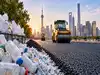
In 2021, Shanghai used 6,000 milk bottles to fight plastic waste; the result became China's 1st plastic road, turning hard-to-recycle bottles into useful paving material
Shanghai’s “Milk Bottle Road” demonstrates how difficult-to-recycle plastic can be redirected toward useful infrastructure. Developed through a partnership between Dow and Shiny Meadow, the project used more than 6,000 used milk bottles and other plastic waste in a polymer-modified asphalt road at East China University of Science and Technology’s Xuhui Campus. Enabled by Dow’s ELVALOY™ RET asphalt modification technology, the project gave contaminated milk bottles another purpose while supporting a more circular approach to plastic use.
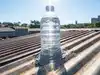
Putting a plastic bottle filled with water on your roof: 30+ countries use this unusual trick; here’s what it does and how to use it correctly
Putting a plastic bottle filled with water on your roof: The Moser lamp is a simple invention that uses sunlight to brighten dark indoor spaces during the day, reducing the need for electric lighting. Developed in Brazil, the low-cost technique involves filling a transparent plastic bottle with water and fitting it through a roof so that sunlight can be refracted and dispersed inside. The concept was later promoted by the MyShelter Foundation through its Liter of Light programme and spread across the Philippines and other countries, offering an affordable way to bring natural light indoors using readily available materials.
Load More

