
PILOT ELECTRICAL PROBLEMS

What caused British Airways flight BA295 to plummet 28,000 feet in just seven minutes?
A British Airways flight from London to Chicago experienced a rapid descent due to technical issues. The Boeing 777 dropped from 36,000 feet to 9,000 feet in just seven minutes. Following the emergency, the flight circled the Bristol Channel for several hours before returning to Heathrow. Passengers disembarked safely, and the airline is working to accommodate their travel plans.

Ontario air ambulance Atlantic search: ‘Roger, you said you’re coming in blind?’ Pilot’s final warning before jet vanished while flying from Bermuda to Boston
The Ontario air ambulance Atlantic search has ended after a medical transport jet carrying six people disappeared off Nantucket. Air traffic control audio captured a chilling exchange in which a controller asked the pilot, “Roger, you said you’re coming in blind?” after the pilot reported electrical problems and declared an emergency. The US Coast Guard searched for about 66 hours before suspending active search operations.

‘Coming in blind?’ Medical jet disappears after chilling cockpit call
A debris field has been found off Nantucket, Massachusetts, from a Canadian-registered air ambulance that disappeared over the Atlantic while flying from Bermuda to Boston, the US Coast Guard said. The Gulfstream G100 was carrying six people — four Canadians and two Bermudians. The Coast Guard said a cutter would continue searching overnight, while authorities notified the passengers’ families.

'Debris field' from Boston-bound medical plane, which went missing over the Atlantic, found amid intense search efforts
An air ambulance on its way from Bermuda to Boston has reportedly gone missing over the Atlantic, with six passengers onboard. The U.S. Coast Guard discovered a debris field off the coast of Nantucket, leading to fears of a crash. The aircraft's occupants included four Canadians and two Bermudians. Before losing contact, the pilot transmitted an emergency alert due to electrical malfunctions.

Where Does China Fit in Your Company’s Innovation Strategy?
For decades, multinationals treated China primarily as either a vast growth market or a rising competitive threat. But as growth slows, competition intensifies, and operating conditions become more difficult, many firms are rethinking China’s role. Increasingly, they are using the country not just as a destination market but as a platform for accelerating innovation—leveraging its fast-moving regulatory environment, tightly integrated R&D and manufacturing ecosystems, and deep engineering talent pools to speed learning, validate technologies, and scale capabilities globally. Companies including Pfizer, Michelin, BMW, Bosch, and Nvidia illustrate how firms are using China to shorten innovation cycles while managing geopolitical and operational risks by defining China’s precise role within their global innovation system, designing for controlled knowledge-sharing, and avoiding overdependence through diversified R&D and supply chains.

In the 1960s, Donald Bateman built a cockpit warning system after aircraft kept crashing into terrain; by 1973, the FAA was requiring the technology
C. Donald Bateman invented the Ground Proximity Warning System in the 1960s to prevent controlled flight into terrain accidents. This system provides pilots with crucial alerts about dangerous altitude and proximity to terrain. Despite being equipped with the original GPWS, a tragic crash in Peru highlighted its limitations in preventing all accidents. Modern aircraft benefit from an advanced version known as the Terrain Awareness and Warning System.
- Go To Page 1

Boise began drilling for geothermal water in the late 1890s; four systems now heat an estimated 7.4 million square feet, including much of downtown
Geothermal heating has a rich history in Boise, Idaho, dating back to the 1890s, providing sustainable warmth to numerous downtown buildings. Although it faced challenges that hindered its growth, the recent surge in gas prices and interest in renewable energy has revitalized this system. Presently, about 100 buildings benefit, with ongoing efforts aimed at extending connections to multifamily residences, despite ongoing hurdles related to geology, regulation, and costs.
America’s power grid is heading toward a difficult electricity crunch. Could the answer already be sitting quietly in millions of parking lots?
American power grids face a severe double strain. Surging electricity demand from new data centers and industrial electrification is colliding with extreme summer heat waves that strain existing generator capacity. Meeting those sudden evening spikes usually means firing up costly, inefficient fossil fuel peaker plants. Yet a massive battery capacity already exists, sitting parked in municipal lots and port corridors for most of the day.

Ireland's retired wind-turbine blades are getting strange second lives; old power equipment is now becoming benches, bike parking and picnic tables
Ireland's retired wind-turbine blades are getting strange second lives; old power equipment is now becoming benches, bike parking and picnic tables. Irish company BladeBridge is using retired blades for community infrastructure while addressing the waste created by fiberglass composites. The approach includes bridges, benches, bike parking, picnic tables and charging hubs, while projects elsewhere show how turbine materials can support a circular economy after their energy-producing life ends.

In 2025, Netherlands turned retired wind-turbine blades into a 60-metre highway noise barrier; tests found it performed like a conventional concrete wall
Netherlands’ 60-metre Blade Barrier represents more than an unusual highway wall. It is an experiment in what a circular economy can look like when renewable-energy waste is treated as a potential construction resource instead of an unavoidable disposal problem.
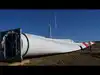
Retired wind turbines in Texas get a new life. Researchers are converting waste into recycled hybrid composite materials for construction purposes
Retired wind turbine blades are presenting a significant waste management issue for the industry. In response, researchers are actively seeking innovative recycling methods for these composite materials. A particularly promising strategy includes converting blade waste into wood-like composites for a variety of applications. This could lead to the replacement of traditional wood products, contributing to the circular economy of wind power technology.
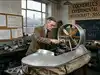
In 1955, a British engineer while trying to prove a game changing theory about a revolutionary invention used a cat food tin, a coffee can, and a reversed vacuum cleaner. Later, the patent changed the landscape of modern transportation forever
In 1955, a British engineer while trying to prove a game changing theory about a revolutionary invention used a cat food tin, a coffee can, and a reversed vacuum cleaner. Sir Christopher Cockerell's experiments led to the hovercraft, which used an air cushion to reduce drag. His patent was filed in 1955, while the SR.N1 prototype followed in 1959. The technology later found uses in transport, military operations, rescue work and research.
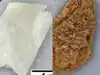
Researchers crushed mussel, cockle and oyster shells collected from a Dublin beach and added them to polluted water; the experiment cleaned the water while recovering valuable metals
A team of researchers discovered that discarded seashells have the ability to purify water by removing rare earth metals. Among various shell types, oyster shells stood out for their unique porous structure that effectively transforms dissolved metals into solid minerals. Given the aquaculture industry’s yearly production of millions of tonnes of shell waste, this innovative process presents an opportunity to recycle waste while tackling water contamination issues.

NLR reported a 110,000-square-foot Texas data center coated with IntelliKoat; its CEO said inside temperatures fell from 140°F to 86°F and heat failures dropped to zero
A Texas-based data center has successfully lowered its temperature through the application of an innovative roof coating called IntelliKoat. This product acts as a protective sunscreen, reflecting solar heat and alleviating the common issue of cooling system failures in the industry. Developed from academic research, it is currently being trialed in various real-life situations, promising an effective method for heat management in critical operational environments.

In 2023, Rice researchers flashed mixed waste plastic for about 4 seconds at 3,100 K; the process recovered up to 68% of its hydrogen at purities reaching 94% and produced graphene
A group of researchers has pioneered a groundbreaking technique that transforms landfill plastic into hydrogen gas, a valuable energy source. By employing flash Joule heating, this process effectively disintegrates plastic waste, resulting in a cleaner alternative for hydrogen production. Additionally, it produces graphene, a byproduct that can finance the hydrogen generation costs entirely, thus tackling plastic pollution and energy challenges simultaneously.
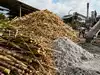
In 2022, researchers studied sugarcane bagasse ash as a partial cement substitute; lower replacement levels showed better mechanical performance in concrete
Researchers are investigating the potential of sugarcane bagasse ash as a sustainable alternative for concrete production. Rich in silica, this byproduct has the ability to chemically bond with cement. Initial studies suggest that substituting up to twenty percent of ordinary cement with this ash could enhance sustainability. Nevertheless, exceeding this percentage may compromise both the concrete's strength and its workability, while establishing an effective supply chain poses significant logistical hurdles.

Earlier in 2026, WSU researchers heated and pressurized sewage sludge with oxygen, producing 200% more renewable gas. Now the process cuts treatment costs from $494 to $253 per ton
WSU researchers treated sewage sludge under high temperature and pressure while introducing oxygen. Under those conditions, the relatively small amount of oxygen acts as a catalyst, helping break apart long polymer chains and making the organic material easier for microbes to process.

Tata Elxsi backs seven-seater Shunya eVTOL, first flight targeted in 18-24 months
Tata Elxsi and Sarla Aviation will collaborate on India's first indigenous electric aircraft. The Shunya eVTOL aircraft is designed to carry six passengers and one pilot. This partnership will accelerate the development of flight-critical systems for the new aircraft. Sarla Aviation targets the Shunya's first flight within the next eighteen to twenty-four months. The collaboration aims to advance urban air mobility and related applications.
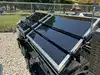
Australia used concentrated sunlight to split water directly into hydrogen without an electrolyzer; SunHydrogen’s coaster-sized module hit 10.8%, while its 1,200-cm² version reached 9%
SunHydrogen and Australia’s Sparc Hydrogen are cutting out traditional electrolyzers to make green hydrogen. By placing semiconductor absorbers directly into water, their panels use sunlight to generate fuel on-site. A small module hit 10.8% efficiency, while a larger panel reached 9%. Using concentrated sunlight helped push performance past the 10% mark needed for commercial viability.

Oak Ridge and Tennessee used 3 robotic welding arms to print a 3-by-5-foot steel pressure vessel, tackling America’s forging shortage; the program now targets nuclear parts weighing 10,000 pounds or more
America's nuclear industry faces forging capacity issues for large components. Researchers are exploring large-scale metal 3D printing as a viable alternative. A recent demonstration involved printing a substantial steel pressure vessel using robotic arms. This technology aims to address shortages and potentially shorten qualification timelines for nuclear parts. Future efforts will focus on material testing and meeting nuclear code requirements.

In US, rare earths extracted from coal mine wastewater
West Virginia University researchers are extracting valuable rare earth elements from acidic mine drainage. This process cleans up environmental pollution while recovering critical minerals. These elements are essential for high-tech products and clean energy technologies. The United States seeks to reduce its reliance on China for these vital resources. This initiative aims to bolster domestic supply chains for defense and industry.

In 2022, moving solar panels shielded French apple trees from extreme sun, cutting sunburned fruit from 13% to 2%
A study by French scientists indicates that the use of solar panels can drastically lessen sunburn injuries on apples, reducing the damage to just two percent in shaded fruits, compared to thirteen percent for those under direct sunlight. Additionally, these systems help maintain cooler apple temperatures during extreme heat conditions.

Ambani's Rs 2.7 lakh cr underground bet can save India from shocks
Reliance Industries has proposed a Rs 2.73 lakh crore, 30-year investment to develop an underground coal gasification complex in Andhra Pradesh. The project could convert deep coal into syngas for hydrogen, methanol, ammonia and synthetic natural gas, helping India reduce dependence on imported LNG and chemical feedstocks. However, commercial viability, geological risks and UCG technology at scale remain major challenges.

Beyond marathons and backflips, China's robots face a commercial test
The economic potential of humanoid robots manufactured in China is becoming increasingly evident. Investors are focusing on robots that can work efficiently and produce financial returns. The World Robot Conference marks a critical shift from showcasing technology to actual implementation.

Delhi Metro last-mile connectivity: Why the final stretch remains a hurdle for commuters
The Delhi Metro serves millions daily, but reaching destinations remains a significant hurdle. Commuters spend considerable time and money on the final stretch of their journeys and improving last-mile options could enhance passenger confidence.

The AI pilot scaling playbook: Enterprise-first AI, connected systems, and shared ownership
A Bosch roundtable offered a reckoning with how organisations learn, how they change, and how they decide whether innovation is a performance or a practice in the context of AI.

In 2018, the U.S. Air Force signed a 35-year lease for underused Mojave desert land. 8 years later, the site hosts 1.9 million solar panels, turning a historic aircraft testing ground into a massive renewable-energy hub
In 2018, the U.S. Air Force signed a 35-year lease for underused desert land at Edwards Air Force Base in California. What happened next was unexpected. The former aircraft testing landscape became home to nearly 1.9 million solar panels. Today, the Edwards Sanborn solar project produces massive amounts of clean energy while giving unused federal land a new purpose.

How AI is helping manufacturers cut downtime before it costs them
Artificial intelligence is helping manufacturers predict equipment failures, improve product quality and optimise production before disruptions get expensive. General Motors and Siemens are two of the companies proving this out on the factory floor. The ET Most Innovative AI Product Awards 2026 recognises innovations like these across manufacturing and 15 other categories.

'Ground Boeing 787 aircraft for electrical checks': Federation of Indian Pilots
The Federation of Indian Pilots (FIP) is demanding the grounding of all Air India Boeing 787 aircraft due to recurring electrical system failures and maintenance concerns. Citing recent incidents, FIP President Captain CS Randhawa called for a judicial probe into a past crash and a comprehensive inspection of the fleet's electrical systems.
Load More

