
PHYSICAL AI
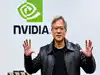
Jensen Huang's influence over Nvidia raises questions about AI industry's dependence
Nvidia CEO Jensen Huang's influence extends beyond the chipmaker, shaping AI investment, chip supply and industry sentiment. His central role has also raised questions about succession planning and the risks of relying on one executive, as the company investigates whether he was targeted by a foreign intelligence effort involving China.

Anthropic unveils Fable 5.2 and Mythos 5.2, its most powerful AI models yet: All you need to know
In a blog post, Anthropic said both models improve on coding, reasoning and vision, and cost less than the 5.1 versions. “Testers have found that Fable 5.2 and Mythos 5.2 communicate more clearly than past Fable and Mythos models,” it added.

Moonshot AI rents Nvidia’s top AI chips in China, documents show
Documents indicate that Moonshot AI possibly accessed advanced Nvidia chips despite US export restrictions and related investigations. The servers were reportedly rented from Super Micro Computer Inc. with significant financial backing from Lingmeixin Technology Co.

When AI starts operating machines, the network becomes industrial infrastructure
As manufacturing and automation expand together, networks built to serve billions of people will increasingly serve tens of billions of machines and AI agents as well. Treating those connections as industrial infrastructure, and planning them for that scale, will determine how well physical AI works once deployments move from individual use cases to whole industrial environments.

Quantum could solve AI energy drain, says tech founder
Quantum computers could curb the vast energy demands of artificial intelligence data centres with their ability to run complex calculations, one of the tech's pioneers told AFP. Australian startup Diraq is conducting the first field test worldwide putting a small quantum computer based on a silicon chip in a commercial data centre in Sydney. Diraq's computer installed in Equinix's Sydney data centre has eight quantum bits, or qubits, on a silicon chip.

Human, all too human: More than whether Jensen Huang can survive the scandal, can Nvidia survive Jensen Huang?
Nvidia's co-founder Jensen Huang has acknowledged an extramarital affair which has raised security concerns. He reportedly engaged with a Chinese businesswoman who may have influenced his lobbying efforts. Nvidia has initiated an independent investigation regarding these allegations and their implications. Although personal scandals might impact reputation, Huang's leadership is currently deemed important for the company's future. Nvidia's board maintains confidence in Huang as they navigate this challenging situation.
- Go To Page 1
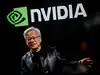
'No ordinary CEO': Why the AI race cannot do without Nvidia's Jensen Huang
Nvidia CEO Jensen Huang’s influence extends beyond chip supply, making him a central figure in the global AI industry. The company’s dominance in AI processors, investments across the sector and Huang’s close control over its strategy have raised concerns about the risks of depending heavily on one executive.
'No ordinary CEO': Why the AI race cannot do without Nvidia's Jensen Huang
The star power that 63-year-old Huang draws as the gatekeeper to Nvidia's chips shows how badly the AI industry is leaning on him for the graphics processing units that train models and run services such as ChatGPT.

Nvidia scandal: The AI arms race puts human spies back into the game
The Nvidia controversy involving CEO Jensen Huang and a woman suspected by US intelligence of having links to Beijing has renewed concerns over corporate espionage in the AI industry. Recent cases involving OpenAI and Google have also highlighted risks from insiders and traditional spying methods.
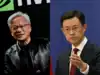
China dismisses 'Chinese spy' narrative in Nvidia CEO Jensen Huang probe; calls it 'unsubstantiated'
Nvidia CEO Jensen Huang is being investigated for possible ties to a Chinese intelligence operation. China dismissed the claims as unsubstantiated during a recent foreign ministry briefing. The investigation follows allegations that Huang shared information with a suspected Chinese intelligence asset. Nvidia is working with an independent committee to assess the situation. The firm's board remains confident that national security and company secrets are not compromised.

Nvidia board probes whether CEO Jensen Huang was targeted in Chinese intelligence operation
Nvidia's board has launched an independent investigation into allegations that CEO Jensen Huang may have been targeted by a Chinese intelligence operation through former Megaspeed executive Alice Huang. The probe will assess potential exposure of confidential information and national security risks amid escalating US-China technology tensions. Nvidia says it has found no evidence of compromised secrets.
South Korea says Nvidia issues won't affect contracted GPU supplies
Vice Minister of Science and ICT Ryu Jemyung told a parliamentary budget committee that 10,000 GPUs funded under a 2025 supplementary budget had already arrived and were in use.

Anthropic wants to create new billionaires through its IPO, but American voters are growing tired of Big Tech's wealth explosion
Anthropic is preparing for a significant IPO amid growing public resistance to AI-related infrastructure projects. Investors are discussing a valuation between $1 trillion and $1.5 trillion for the Nasdaq listing. Communities express concerns over environmental impacts and rising electricity costs linked to data centres. Public sentiment is shifting against technology companies, raising questions about economic benefits versus local costs.

Mark Zuckerberg and Priscilla Chan’s 10-year-old daughter vibe-codes several creations, including a messaging app, apps similar to GeoCities and a game inspired by FarmVille, with each project also featuring its own marketing and sales plan
Maxima Zuckerberg, daughter of Mark Zuckerberg and Priscilla Chan, is interested in artificial intelligence and software development. She is currently experimenting with vibe-coding, which uses natural language to create software with AI tools. While her parents support her enthusiasm, they have imposed restrictions on developing online projects. Priscilla Chan specifically did not allow Maxima to create a dating website due to safety concerns.

AI Can Measure How ESG Really Impacts the Bottom Line
Advances in large language models are making rigorous sustainability analysis dramatically faster and cheaper, allowing investors and other stakeholders to connect companies’ disclosed environmental and social risks directly to financialperformance in a matter of hours rather than weeks. Applying a simple methodology to ExxonMobil, the authors used AI to map sustainability-related issues to specific financial statement line items and estimate their impact on earnings and value, demonstrating both the promise and the limitations of AI-assisted analysis. As these capabilities become widely accessible, the competitive advantage long held by ESG ratings agencies, standard setters, and sustainable fund managers may erode, shifting attention from proprietary scores toward transparent assumptions and financial consequences. Human judgment remains essential to validate AI-generated outputs, but the broader trend is clear: sustainability analysis is becoming more democratized, financially grounded, and adaptable, with significant implications for how investors, regulators, and other institutions assess corporate performance and value creation.

Intel's former CEO Pat Gelsinger says this Georgia Tech memory chip could be the industry's biggest breakthrough in 30 years; what is it and how could it transform AI industry?
Nagare Labs was founded by Georgia Institute of Technology professors and researchers Suman Datta and Shimeng Yu. They spent years working on next-generation memory technologies. Their work involves oxide semiconductors. The company is based on research conducted at Georgia Tech and is seeking to turn its laboratory developments into a commercially viable memory product.

PhysicsWallah Q2 net profit doubles to Rs 144 crore, revenue rises 18%
The recovery followed a disruption to the admission cycle after the NEET UG (National Eligibility cum Entrance Test - Undergraduate) results were delayed till July 16. Although online enrolments for the medical entrance examination grew over 30% in the September quarter, the company said admissions and collections for the full admission cycle remained below last year.

Lenskart, Nykaa, PhysicsWallah see Q2 profits surge
New-age companies Nykaa, Lenskart, and PhysicsWallah reported strong numbers for the September quarter. This and more in today’s ETtech Top 5.

U.S. and Japanese Companies Struggle with Different Parts of AI Adoption—and Offer Different Lessons for Making It Work
Companies in both the U.S. and Japan are struggling to deploy AI, but often in very different ways. In the U.S., deployment is wide but shallow, meaning companies struggle to create real value with AI. In Japan, deployment has moved slowly, but where it has happened, it’s often deep and fruitful. Understanding what’s happening in both contexts offers important lessons for companies trying to develop an AI strategy and demonstrate ROI on their AI investments.
AMD forecasts quarterly revenue above estimates as data-center growth accelerates
The company, which nearly doubled its data-center revenue in the third quarter, is benefiting as a shift in AI workloads toward running models in real-world applications drives demand for its graphics processing units and central processors. This has enabled AMD to capture market share from rival Intel, which last week forecast quarterly revenue well below estimates and triggered a global selloff in chip stocks.

AMD forecasts fourth-quarter revenue above estimates on strong AI chip demand
Advanced Micro Devices estimates its fourth-quarter revenue will hit about $17 billion, driven primarily by robust demand for AI chips. Although the company's forecast for adjusted gross margin stands at 55%, it falls slightly short of analyst expectations. A remarkable 97% year-on-year increase in data-centre revenue showcases AMD's growth. However, the company currently faces challenges in sourcing high-bandwidth memory, essential for its AI processors.

India gains as global investors move away from AI-linked stocks: Goldman Sachs
Indian equities outperformed the Asia-Pacific region in the MXAPJ index by 7 percentage points last month, making the country one of the best-performing global markets during the period. Goldman Sachs said the recovery was due to a rotation in global portfolios away from north Asian markets, which have greater exposure to AI -linked stocks.

UK cyber chief says the UK will face AI cyberattacks on critical infrastructure by 2028
The UK's National Cyber Security Center warns of potential AI-driven cyberattacks targeting critical infrastructure by 2028. Increased sophistication in cyber activities from states like China and Russia poses significant risks. Past incidents highlight vulnerabilities in key sectors such as manufacturing and energy. Organizations must invest in cybersecurity measures to protect against these emerging threats. Failure to act could jeopardize essential services and compromise national security.

Abu Dhabi's ADNOC, G42 sign deal with OpenAI as Sam Altman travels to UAE
ADNOC has officially partnered with OpenAI, marking a groundbreaking step for the energy sector as it becomes the first to leverage OpenAI's cutting-edge AI capabilities. This collaboration seeks to tackle significant energy challenges, as emphasized by CEO Sam Altman. OpenAI's expanding influence in the UAE continues with further agreements, demonstrating its commitment amidst ongoing geopolitical issues, highlighted by key oil executives participating in a recent conference.

China's robot makers have mastered the moves. Now comes the race for brains
The shift is fuelling an investment boom in embodied AI, a field focused on software that allows robots to understand their surroundings, learn unfamiliar tasks and adapt without having to be programmed for every job.

South Korea's Lee vows to make bold AI investment in record budget push
His administration proposed in September increasing government spending by a record 12.8% next year to 820.9 trillion won ($615.62 billion) aiming to strengthen South Korea's technological edge as global competition over AI intensifies.

Honeywell leaning on physical AI to net $1 billion India revenues
The $69 billion building, process, and industrial automation giant, carved out from the Honeywell industrial conglomerate as part of a companywide restructuring, is betting big on physical AI, leveraging its hardware and software experience, Anant Maheshwari, president of strategy and president & CEO of global regions told ET in an interview.
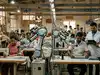
India’s Arrakis problem: The price of what low-skilled workers know
Indian workers contribute valuable data for training AI systems, which is transforming how tasks are automated. As technology advances, low-cost labour is becoming a significant resource for AI development globally. Companies are increasingly relying on Indian workers for video data that demonstrates various physical tasks. This trend poses challenges regarding data ownership and the economic benefits for India.

Physical AI needs strict safety boundaries and interpretability: TorqueAGI founder Ashutosh Saxena
The Palo Alto based physical AI startup counts Rackhouse Venture Capital and Trucks Venture Capital as early backers and has active collaborations with firms like Nvidia. According to Saxena, the challenge is to make robots reason through their decisions while ensuring that mistakes do not cause physical harm.
Load More

