
PALESTINIAN STATEHOOD ISSUE
Trump says Saudi Arabia should accept Israel's "helpful" offer against Houthis
US President Donald Trump has urged Saudi Arabia to accept Israel's offer of help against Houthi rebels, calling Israeli support "very helpful". Trump also said Saudi Arabia could join the Abraham Accords, as regional hostilities intensify, Iran denies involvement in Houthi attacks, and Yemen's government reports missile strikes near Aden International Airport.
Israel’s opposition wants Netanyahu out. Its leaders’ positions on Palestine reveal the limits of a political shake-up
Four opposition parties in Israel are collaborating to remove Benjamin Netanyahu from power in the upcoming election. While they agree on ousting Netanyahu, their commitment to alter policies regarding Palestinians is uncertain. Notably, key leaders within the alliance maintain strict positions against Palestinian statehood and support for settlements. The potential shift in government may not lead to significant changes in the treatment of Palestinians.

Britain likely to expel Israeli diplomats if Jerusalem consulate closes, sources say
Britain could expel Israeli diplomats if Israel follows through on its order to shut the British consulate in East Jerusalem this week, according to sources cited by Reuters. The dispute stems from Britain’s planned ban on trade in goods from Israeli settlements in the occupied West Bank, with the consulate’s 30-day closure deadline ending on Thursday.
Israel facing a bigger catastrophic terror attack than October 7? Why hundreds of retired IDF commanders are sounding the alarm and asking Trump to intervene
Retired Israeli security officials have warned of a growing West Bank security crisis. They urged President Trump to pressure Prime Minister Netanyahu for stronger action. This appeal comes ahead of their scheduled meeting at the White House. Rising settler violence and weakening Palestinian institutions pose significant risks. The officials fear consequences more severe than the October 7 Hamas attacks.

US-Saudi N-word will have wider fallout
Last week, the US and Saudi Arabia reached a pivotal civil nuclear agreement that strays from US non-proliferation norms, conflicting with its stance on Iran. This potentially affects Iran's negotiations regarding its nuclear ambitions.

The Abraham Accords: The boldest Middle East gamble in decades, did it actually work? Here's all about it
Abraham Accords: Trump just called six Muslim nations to sign the Abraham Accords — live, out loud, tied to an Iran nuclear deal. Pakistan said no. The rest went silent. This is the biggest Middle East normalization push since 2020. And the world is watching to see if it cracks — or holds.
- Go To Page 1

UN Security Council adopts US resolution on Trump's Gaza plan
The text of the resolution says member states can take part in the Trump-chaired Board of Peace envisioned as a transitional authority that would oversee reconstruction and economic recovery of Gaza. It also authorizes the international stabilization force, which would ensure a process of demilitarizing Gaza, including by decommissioning weapons and destroying military infrastructure.

Hamas rejects UN Gaza resolution, says international force would become party to conflict
The UN Security Council on Monday voted to adopt a U.S.-drafted resolution endorsing President Donald Trump's plan to end the war in Gaza and authorizing an international stabilization force for the Palestinian enclave. Israel and the Palestinian militant group Hamas agreed last month to the first phase of Trump's 20-point plan for Gaza.

US plan opens door, endgame a long shot
Donald Trump's Gaza peace plan, though imperfect and vague on governance and Palestinian statehood, offers a potential respite from violence. While key actors have mixed reactions, many nations welcome it for humanitarian aid access. International and regional players are crucial for securing lasting peace once guns fall silent.
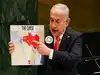
Netanyahu says backing Palestinian state sends message: Murdering Jews pays off
Israeli Prime Minister Benjamin Netanyahu sharply denounced Western nations at the UN for recognizing Palestinian statehood, asserting it sends a message that "murdering Jews pays off." Facing international isolation and delegate walkouts, he reiterated Israel's firm opposition to a Palestinian state, despite growing calls for a two-state solution and mounting casualties in Gaza.

PM Modi govt's response on Palestine issue abdication of humanity, morality: Sonia Gandhi
Sonia Gandhi criticized the Modi government's stance on Palestine, deeming it a silent abandonment of humanity and morality. She attributed the government's actions to Prime Minister Modi's personal relationship with his Israeli counterpart, rather than India's values or strategic interests.

Who recognises the State of Palestine, who doesn't, and why does it matter?
Following nearly two years of conflict in Gaza, a majority of European nations, including France, Belgium, and the UK, have officially recognized the State of Palestine. This move, declared at the UN, reflects a shifting global perspective, with over 151 countries now acknowledging Palestinian statehood.
"Two-state solution only way for Israel-Palestine": UN Spokesperson Stephane Dujarric
The United Nations reiterated its support for a two-state solution as the only viable path to resolving the Israeli-Palestinian conflict, ahead of a key General Assembly session. Several nations, including France, Canada, the UK, and Australia, have formally recognized the State of Palestine, increasing international pressure on Israel.
Who recognises the State of Palestine, who doesn't, and why does it matter?
Britain, Australia, Canada and Portugal on Sunday recognised a Palestinian state after nearly two years of war in Gaza, with France, Belgium and other countries poised to follow suit at the UN General Assembly. The count includes Britain and Canada -- the first G7 countries to do so --, Australia and Portugal.
How growing push for 2-state solution to Israeli-Palestinian conflict could backfire
France and Saudi Arabia are pushing for a two-state solution. This is regarding the Israeli-Palestinian conflict. They are using the UN General Assembly and Gaza war to gain support. Their plan faces opposition from the United States and Israel. Britain, Canada, and Australia have recognized a Palestinian state. The plan includes a ceasefire, hostage release, and Palestinian statehood.

Blueprint for a new multilateralism?
Several US allies, including France, Canada, Britain, and Australia, are poised to recognize Palestinian statehood at the UN, adding significant momentum to the two-state solution. This move challenges the US stance and could foster a new model of multilateral cooperation based on shared values rather than historical loyalty. It also unites diverse nations in addressing the long-standing Palestine-Israel conflict.
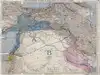
What is the Sykes-Picot Agreement? how 1916 treaty influences modern Palestinian recognition moves
The Sykes-Picot Agreement was a secret 1916 treaty between Britain and France that divided Ottoman territories in the Middle East. This colonial-era pact continues to influence regional politics as European nations consider recognizing Palestinian statehood amid ongoing Gaza conflict

Why is Britain recognising a Palestinian state, and which other countries have done the same?
Britain may recognise Palestine in September if Israel does not act on Gaza. Keir Starmer's decision follows France's lead. Starmer wants more aid to Gaza and a commitment to a two-state solution. Donald Trump focused on feeding people. France supports Britain's move. Several nations have already recognised Palestine. Germany prioritises a two-state solution. Italy wants mutual recognition with Israel.

Donald Trump's Gaza plan complicates hoped-for Saudi-Israeli deal
President Trump is attempting to persuade Saudi Arabia to join the Abraham Accords by proposing the relocation of 2 million Palestinians from Gaza. This idea has been met with strong opposition from Saudi Arabia, which maintains that a Palestinian state must be established first before any normalization with Israel can occur.

Spain, Ireland and Norway will recognise a Palestinian state on May 28. Why does that matter?
Spain, Ireland, and Norway announced on Wednesday their intention to recognize a Palestinian state on May 28, responding to international outcry over the civilian casualties and humanitarian crisis in Gaza. This move may encourage other EU nations to follow suit, potentially leading to further steps at the United Nations and increasing pressure on Israel. The recognition of a Palestinian state is seen as a crucial step towards resolving the long-standing conflict in the Middle East, with implications for peace negotiations and the broader international community. Israel has reacted negatively to the recognition, viewing it as a setback to the negotiation process and a reward for Hamas.
Spain says Israel's 'disproportionate response' in Gaza a global threat
Spanish Prime Minister Pedro Sanchez has warned against Israel's "disproportionate response" in the Gaza war with Hamas, cautioning it could destabilize the Middle East and beyond. He emphasized that recognizing a Palestinian state is in Europe's geopolitical interests. Sanchez's criticism of Israel's actions in Gaza has strained relations, with Israel recalling its envoy in response to his previous remarks. Spain is considering recognizing Palestine, a move that could influence broader European and UN recognition efforts, according to former Israeli ambassador Alon Liel.
Gaps narrowing in Israel-Hamas truce talks, says Antony Blinken
Blinken's sixth trip to Mideast began in Saudi Arabia before going to Egypt on Thursday with a stop in Israel planned for Friday. In an interview on Wednesday with the Al-Hadath network in Saudi Arabia, Blinken said the mediators worked with Israel to put a "strong proposal" on the table. "The gaps are narrowing, and I think an agreement is very much possible," Blinken said.
The US struggles to sway Israel on its treatment of Palestinians. Why Netanyahu is unlikely to yield
Despite U.S. Secretary of State Antony Blinken's diplomatic efforts during his fourth Middle East visit, Israel, led by Prime Minister Benjamin Netanyahu, remains resistant to U.S. calls for reengagement with Palestinians and potential steps toward their independence. The Biden administration, while emphasizing support for Israel, faces challenges in influencing Israeli policy. The disagreement extends to issues such as civilian casualties, reconstruction efforts, and the creation of a Palestinian state. The complex dynamics, driven by domestic political considerations, may limit the potential for significant shifts in the U.S.-Israel relationship.

Israel-Hamas War: Does a two-state solution, long discounted, still have a future?
Israeli officials say they are focused on the battle against Hamas, which could last for months, and that any discussion of a peace process must wait until after the guns are silent. But in think tanks and corners of the Israeli foreign ministry, discussion of what a day-after political process would look like has already begun.
Mission impossible? Biden says Mideast leaders must consider a two-state solution after the war ends
President Joe Biden is urging Israeli and Arab leaders to consider their eventual postwar reality as the three-week-old Israel-Hamas battle moves into what Israel believes might be a "long and difficult" new chapter. The Israeli PM contends that it's one where it should be top priority to finally reach an understanding on the long-desired two-state resolution to the Israel-Palestinian problem.

International outcry after Israeli police beat mourners at slain journalist's funeral
Late on Friday, the Palestinian public prosecutor said preliminary findings show Abu Akleh was killed by deliberate fire from Israeli troops. The prosecutor said the investigation would continue. Israel's military said earlier the same day that she was killed during an exchange of fire with Palestinian militants, and that it could determine the source of the shot that killed her.

India hopes for 2-state solution based on Palestinian aspirations & Israeli concerns
India at the UN has welcomed the recently concluded Abraham accords that saw key West Asian states establishing ties with Israel and hoped that a two-state solution can be achieved “taking into account the legitimate aspirations of Palestinians for Statehood and Israel’s security concerns”.

India will support Palestine cause, engage with Israel: President Pranab Mukherjee
India will continue to support separate statehood for Palestine while also engaging with Israel to forge an independent and long-standing bilateral relationship, President said.

US President Barack Obama chides Israeli Prime Minister Benjamin Netanyahu over his two-state remarks
After his victory, Netanyahu backtracked from the remarks and repeatedly said he still wants a two-state solution.
Load More

