
PACIFIC WILDLIFE CARE
Around 2,000 seabirds have washed ashore in California. Is intense El Niño reshaping marine life along the Pacific Coast?
Pacific Wildlife Care is treating an unprecedented number of seabirds suffering from starvation this year. The increase is attributed to climate change and the El Niño phenomenon, leading to warmer ocean temperatures. Many seabirds, particularly common murres, are arriving in poor condition and need medical assistance. A significant number of dead seabirds have been found along California beaches this autumn.
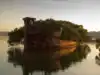
Australia’s 1,140-tonne, 79-meter shipwreck gets transformed into the largest floating mangrove forest, creating a haven for marine wildlife
An abandoned ship called the SS Ayrfield in Homebush Bay has become a unique floating forest. Once a coal transport vessel, the ship was left to rust after being sold for demolition. Over time, grey mangrove trees have grown on the vessel, creating a striking visual contrast. Despite its beauty, the area has a history of industrial pollution requiring significant cleanup efforts.
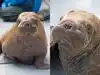
Baby walrus found between 2 dead adults in Alaska survives 3-day Arctic storm and polar bears; but his new life comes at a cost. He can never return home now
A baby Pacific walrus found between the bodies of two dead adults on a remote Alaskan beach survived a three-day Arctic storm with polar bears nearby after rescuers Violet Anniskett and Tony Fischbach sheltered him in an abandoned building. Named Annautaq, the calf was taken to the Alaska SeaLife Center in Seward, where he received treatment for dehydration and minor wounds.

Amelia Earhart disappeared in 1937. Nearly a century later, why are scientists now investigating a possible clue beneath the water?
A research team has reached Nikumaroro to investigate the Taraia Object, which may relate to Amelia Earhart's disappearance. They will employ various methods, including sonar and magnetometers, to examine the submerged object. The expedition faces challenges from changing ocean conditions and local wildlife, particularly giant coconut crabs. Previous theories suggested Earhart may have crashed near the island or survived as a castaway after her disappearance.

Lauren Sanchez and Amazon's Jeff Bezos are pouring $25 million into a massive Pacific Ocean conservation project covering an area larger than Alaska
Lauren Sanchez is backing a new Bezos Earth Fund ocean conservation push as Jeff Bezos' philanthropic organization commits more than $25 million to protect 625,000 square miles of Pacific waters across five nations, while supporting new marine protected areas under the UN High Seas Treaty. In July, Sanchez shared photos from a snorkeling and scuba-diving trip in Fiji, where she saw reefs surrounded by fish, sea turtles and reef sharks.
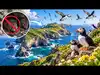
In 2002, crews removed rats from California’s Anacapa Island; 10 years later, rare seabirds were returning and the island’s ecosystem was recovering
Anacapa Island shows significant seabird recovery ten years after rat removal. Ashy storm-petrels now nest there, and Cassin's auklets have expanded their territories. Scripps's murrelet nests have quadrupled, with a fifty percent increase in hatched eggs. Rats previously threatened critical breeding habitats and consumed many eggs. This successful project demonstrates a valuable conservation tool for global island restoration.
- Go To Page 1
Psychology says celebrities who care about ecological restoration may be seeking more than just environmental change
Psychology suggests that when celebrities care about ecological restoration, the story may not be only about trees, oceans or endangered species. It can also be about identity, meaning, belonging, responsibility and the human desire to leave something better than we found it.

In 1960, Marlon Brando discovered Tetiaroa while filming 'Mutiny on the Bounty'. 66 years later, his 35-villa refuge now combines luxury with conservation and clean energy
More than 66 years after Marlon Brando first discovered Tetiaroa, the island's most enduring legacy may be the idea that paradise is something to protect, not simply something to possess.
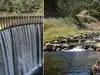
In 1918–1921, one dam built on California's Carmel River provided water storage but blocked fish runs; in 2015 it came down, reopening 25 miles of habitat for steelhead trout
A century-old dam on California's Carmel River was removed, restoring fish spawning grounds. Crews rerouted the river and dismantled the structure over two and a half years. A study found the dam removal did not cause significant downstream damage to the environment. This project reconnected twenty-five miles of vital habitat for threatened steelhead trout. The successful removal offers a model for other aging dams across the United States.
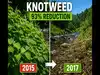
In 2015, California EPMT discovered Japanese knotweed along Lagunitas Creek. 2 years later, treatment cut knotweed by 93% on National Park Service land, a major gain now
Japanese knotweed can spread quietly along waterways, making an early discovery especially valuable. In 2015, California’s Early Detection and Monitoring Team found the invasive plant along Lagunitas Creek. The finding allowed land managers to respond while the infestation was still manageable. Two years later, treatment on National Park Service land had reduced knotweed by 93 percent. The result showed how early detection, followed by focused treatment, can sharply limit an invasive plant before it gains ground.
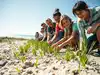
California lost 60% of its coastal dunes since 1850; now a 30-acre restoration project in Santa Monica is fighting sea-level rise
Santa Monica Beach Dunes Restoration Project is designed to restore a portion of this historic ecosystem. The Santa Monica Bay National Estuary Program identifies the project as a 30-acre effort focused on restoring coastal dune habitat at Santa Monica State Beach.

He spent 16 years alone on one of world’s most remote islands: With two cats, chickens, a radio and basic supplies, this New Zealand sailor built a life in complete solitude
Tom Neale spent an incredible 16 years living alone on Suwarrow Atoll, growing his own food and repairing shelters with resources available on the island. After he left the atoll due to health problems, Suwarrow was declared a national park, helping protect its rich wildlife and fragile marine environment from development. Neale's former home remains as a reminder of his extraordinary life of solitude.
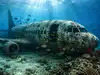
In 2006, volunteers lowered a stripped Boeing 737 into the Pacific; 20 years later, the jet has become a cold-water artificial reef
A retired Boeing 737 now rests on the seafloor off Vancouver Island. This aircraft was transformed into an artificial reef by Canada. The Xihuw Reef attracts numerous fish and marine invertebrates. Divers explore the sunken jet, which serves as a popular dive destination. This human-made structure has become a thriving marine habitat.
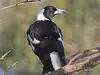
Australian scientists put GPS trackers on five magpies; two were removed within hours, and all five were gone within days
A fascinating display of teamwork was observed in Australian magpies as they successfully removed tracking devices from fellow birds. Within hours of installation, these intelligent creatures showcased their strong social connections and collaborative skills. This incident not only provides insight into magpie behavior but also emphasizes the importance of considering social dynamics in wildlife tracking technology research.
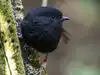
In 1981, only 5 black robins remained. Check how scientists used other species to save them from extinction
In 1981-82, the Chatham Island black robin faced dire straits, with just five birds remaining. To combat this decline, wildlife officials implemented cross-fostering, prompting the robins to produce multiple eggs. This remarkable tactic successfully boosted their numbers to twelve. Now, around 300 black robins flourish on Mangere and South East islands, exemplifying a significant triumph in the conservation of endangered wildlife.
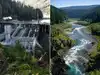
In 2011, the US began tearing down two century-old dams on Washington's Elwha River, the largest dam removal in US history at the time, freeing over 20 million cubic yards of trapped sediment
The Elwha River dams were dismantled after nearly a century of operation. This significant engineering project restored over ninety miles of river habitat. The removal released millions of cubic yards of trapped sediment into the waterway. This action acknowledged that some past progress creates future problems. The river's restoration continues to evolve over generations.

Quote of the day by Prince Philip: 'It is an old cliche to say that the future is in the hands of the young. This is no...' Life lessons from inspiring quote on environment conservation, global sustainability, accountability, true stewardship and timely action
Quote of the day by Prince Philip reminds people that protecting the environment and society cannot be left only to future generations. His message calls for responsibility, sustainability, conservation, stewardship and timely action. Shared in 1970, the quote remains relevant as climate concerns and environmental challenges continue across the world. It encourages people to make responsible choices today so that future generations inherit a better and more sustainable world.

Quote of the day by Prince Philip: 'When a man opens a car door for his wife, it’s either...' Life lessons on true love, marriage, chivalry, romantic gestures and relationships
Quote of the day by Prince Philip reminds people that small gestures matter in long-term relationships. The famous line uses humor to explain how romance can fade with time if couples stop making an effort. The quote also encourages partners to value kindness, respect, laughter and simple acts of care throughout married life instead of limiting them to the early years of a relationship.

Why Washington's Whales Demand 1,000 Yards? The Surprising Science Behind Their Strict Distance Rule
Washington State now requires boats to stay 1,000 yards from Southern Resident killer whales, a rule effective in early 2025. This expanded distance aims to protect the vulnerable population by minimizing underwater noise that disrupts their hunting and communication. Research shows closer proximity negatively impacts their ability to locate prey and maintain pod cohesion.

Donald Trump cabinet: Meet top-ranked officials who will run USA
US President-elect Donald Trump has started unveiling names for high-profile positions in his cabinet.

China 'Pushes the Boundaries' with its expanding borders
China is using aggressive tactics to expand its territory in Bhutan, the South China Sea, and Japan's Senkaku Islands. It is building settlements, roads, hydropower stations, and military outposts in disputed areas, causing tensions with neighboring countries.

Travel planning 101: 52 places you must visit in 2024
Planning your next holiday? Consider adding these destinations to your itinerary for the perfect vacation.
Between development and deep blue sea: What does Great Nicobar plan mean for the island and India?
Even as concerns related to ecology, biodiversity and lives of indigenous communities remain, there is no denying the importance of the project due to its strategic location.

Explainer: The US investigation into COVID-19 origins
Virus researchers have not publicly identified any key new scientific evidence that might make the lab-leak hypothesis more likely.

Immigration, economy & climate change: Examining claims from last Trump-Biden debate
President Donald Trump and Democratic challenger Joe Biden sparred Thursday in their final presidential debate, hoping to sway undecided voters in the Nov. 3 election.

PM's US visit: Joint statement by Narendra Modi and Barack Obama
In a joint address, PM Modi and US President Barack Obama touched upon many issues including terrorism and trade facilitation.

Here's a dream list of 10 things to do in your lifetime
Stop being a cookie-cutter traveller this year, experience destinations that transcend through cultures and emotions.
How Paul Polman plans to turn Unilever into a sustainability champion
Unilever's CEO Paul Polman's sustainable living plan looks to integrate sustainability into the very core of company's business and strategy.

APEC leaders call for new growth strategies
Obama and 20 other leaders rejected protectionism and agreed to develop long-term strategies that take into account needs of diverse economies.
Load More

