
ORBITAL DEBRIS

GalaxEye orders Bellatrix Aerospace propulsion systems for 30 satellites
Under a multi-year contract, Bellatrix will design, manufacture and deliver its Arka Hall-effect electric propulsion systems for GalaxEye’s upcoming Drishti Gen-II constellation. The systems will help position satellites in their designated orbits, maintain their formation, avoid collisions with space debris and eventually deorbit them at the end of their operational life.
NASA sent a spacecraft to study an asteroid; its student built instrument spotted a black hole 30,000 light years away
A student-built X-ray instrument aboard NASA's OSIRIS-REx spacecraft was studying asteroid Bennu when it detected an unexpected signal from a black-hole candidate 30,000 light-years away. The discovery revealed how an instrument designed for asteroid research could also detect an entirely different cosmic phenomenon.

Meteors dazzle the night sky as the Northern Taurids peak: Here’s all you need to know about the cosmic event and what to look forward to if you missed it
The night sky dazzled on November 12 as the Northern Taurid meteor shower reached its peak, offering amazing visibility for avid skywatchers. This annual event, formed from the debris of Comet Encke, showcases jaw-dropping fireballs that are visible without a telescope. Looking ahead, Mars and Jupiter will align on November 15, followed by the Leonid meteor shower peaking from November 17-18.

White dwarf WD J1328-1450 has a double debris disc; one ring may be hiding a Pluto-sized survivor
Astronomers have discovered a white dwarf named WD J1328-1450, located 1,600 light-years away, has two separate rings of gaseous planetary debris. Unusual signals detected around the star suggest that two planetary bodies may be maintaining the rings, with the outer object potentially reaching Pluto-like or even Moon-like dimensions. The discovery offers a rare glimpse into what planetary systems may look like after their stars die.
Cosmoserve Space raises $6 million, sets up India's first space debris removal facility in Hyderabad
The facility comprises an orbital rendezvous and capture lab, a space robotics innovation lab, an ISO Class 8 satellite integration clean room and a mission simulation and control centre. It will enable the company to design, build and test robotic capture systems and develop capabilities for satellite servicing, including in-orbit repairs and refuelling.
Missed the first Taurid meteor shower peak? Another chance to see dazzling fireballs is coming next week
The Taurids meteor shower is anticipated to peak in November 2026. The Southern Taurids will peak overnight on November 4–5. Following this, the Northern Taurids are expected to peak on November 11–12. Observers may witness bright fireballs that outshine Venus, making the experience memorable. Ideal viewing conditions will be enhanced by the low illumination from the Moon.
- Go To Page 1

Orionids Meteor Shower Peak 2026 Best Time: When, where and how to watch Halley’s comet shooting stars in sky
Orionids Meteor Shower (Google Trends): The Orionids meteor shower peaks on October 21–22, 2026. Here is the best time to watch Halley’s Comet fragments from India, along with viewing tips and details about moonlight interference.

Has Halley’s Comet returned sooner than expected? Here's when to look and what’s lighting up the sky this week?
The Orionid meteor shower peaks overnight on October 21–22, 2026. Its shooting stars come from debris left behind by Halley’s Comet. Look after the bright moon sets for a better chance of spotting them.
Orionid meteor shower 2026: Date, peak time and how to watch one of the year's most beautiful meteor showers
Orionids meteor shower peaks in mid-October and is known for bright meteors visible in the night sky. The meteors originate from comet 1P/Halley, which sheds debris when it approaches the Sun. Observers are advised to find dark locations away from city lights to view the meteors effectively. The radiant for this shower is located just north of Betelgeuse in the constellation Orion.

Green stars existed only in comics. Now astronomers have found the first real one and the reddest star ever recorded
Astronomers have unveiled an astonishing white dwarf star, WD J1330+6435, that shines with a distinctive green hue. Situated roughly 280 light-years away in the constellation of Draco, its unique coloration stems from sodium that captures multiple light wavelengths due to elevated density. Additionally, a second white dwarf, WD J1011+2845, displaying a rare salmon-pink tint from carbon, illustrates the intriguing diversity and atmospheric intricacies of these celestial bodies.
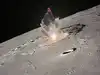
What happens when a rocket crashes into the Moon? Scientists are watching for clues about lunar impacts
The Moon has a new man-made crater. A discarded SpaceX Falcon 9 stage struck the lunar surface on August 5, 2026, near Einstein Crater. NASA, South Korea’s Danuri orbiter and Earth-based telescopes tracked the impact. Scientists are now studying the debris and chemical clues to better understand lunar impacts.

Space junk warning on World Space Week 2026: More than 4,000 payloads entered orbit in 2025 as collision risks grow
Earth’s orbital environment is becoming increasingly crowded as satellites are introduced and commercial constellations remain to expand. ESA’s 2026 Space Environment Report says over 4,000 payloads entered orbit in 2025, while orbital debris also remained to grow. Around ten payloads are currently launched each day on average, along with more than three intact satellites or rocket bodies reentering the atmosphere daily. The report cautions that insufficient end-of-life disposal, fragmentation and collisions could accelerate the growth of debris through the Kessler syndrome.
World Space Week 2026: The rocket revolution is happening above us — How cheaper launches could change everyday life on Earth
Sixty-nine years after Sputnik's launch marked the beginning of the Space Age, new advancements are reshaping space access. Reusable rockets, such as SpaceX's Falcon 9 and Starship, are cost-effective alternatives to traditional expendable launch vehicles. This transformation supports not only increased launch frequency but also diverse missions involving satellites and human exploration. World Space Week 2026 emphasizes these advancements while inspiring students through rocketry programs worldwide.
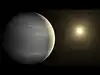
For the first time in astronomy, scientists detect radio signal from a young planet
Astronomers have discovered notable radio signals originating from the exoplanet Beta Pictoris b, located 64 light-years away from our solar system. These signals hint at an unexpectedly robust magnetic field surrounding the planet. The MeerKAT radio telescope network in South Africa facilitated this groundbreaking observation, revealing fluctuating intensities and timings of the signals related to the planet's rotation, thereby marking a pivotal step forward in exoplanetary magnetic field studies.
SpaceX's supersized Starship launches into orbit for the first time but flight ends early
SpaceX successfully launched its Starship spacecraft into orbit, marking a significant milestone for the company. The Starship delivered 26 advanced Starlink satellites with cheers from onlookers at the launch site. Although the mission was cut short, it demonstrated SpaceX's progress in achieving orbital capabilities. The spacecraft reentered over the Pacific Ocean before splashing down near Hawaii, showing careful flight management.
Orbital Shift: India's space sector undergoing biggest transformation; pvt firms handle rockets, ISRO focus on more ambitious missions
India's space sector is undergoing significant changes as private companies engage in rocket production and management. The Indian Space Research Organisation is shifting its focus towards more ambitious missions and projects. This transition follows the introduction of the Indian Space Policy 2023, which emphasizes private sector participation. Concerns have been raised by ISRO employees regarding the agency's future and potential loss of capabilities.

Astronomers just spotted an “Impossible” planet: Elias 2-24 b is the youngest known planet, and its Jupiter-sized growth could challenge planet formation models
Elias 2-24 b is young enough that astronomers are seeing it before its planetary neighborhood has finished taking shape. Yet the planet is already roughly Jupiter-sized. It orbits about 55 times the Earth-Sun distance, far out in a disk where assembling such a massive world should be difficult and slow. That mismatch is what makes the discovery so intriguing: astronomers are not looking at an old planet and guessing how it formed. They may be watching a giant world grow in real time.

In 1993, Russia reflected sunlight from space. Now, a California startup wants to turn the night sky into a marketplace for on-demand sunlight from orbit
A California startup is developing satellites that could redirect sunlight to Earth after sunset, creating what it calls “sunlight on demand.” Reflect Orbital plans to test the concept with an orbital mirror, but scientists warn that large-scale deployment could increase artificial light, disrupt astronomy and affect wildlife. With satellite numbers already soaring, the proposal is also raising questions about whether existing space regulations can adequately manage commercial control of nighttime illumination.

A 1967 promise to keep space peaceful faces a new test: What happens when satellites become targets? America’s space weapons reveal a new battlefield
The United States has deployed space control weapons, sparking global concerns about an orbital arms race. These systems are designed to defend military forces against hostile actions in space. Disrupting satellites could impact vital civilian services like navigation and communication networks. Existing international treaties do not fully address modern space-based military technologies. This development highlights space's growing importance as a contested military environment.

"I just stopped, dropped everything": NASA scientist recalls spotting a mysterious bright spot on Moon that turned out to be a once-in-century crater
A routine data-quality check took an unexpected turn when NASA scientist Robert Wagner spotted a mysterious bright spot surrounded by a dark halo on a giant map of the Moon. “I just stopped, dropped everything, and started looking into what that spot was,” Wagner said. His investigation led to the discovery of McGetchin, a newly formed Moon crater created by a powerful space-rock impact that scientists estimate happens only once in a century.
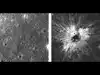
Asteroid the size of a 6-story building hit the Moon, created 728-foot crater; NASA says such impacts happen once a century
NASA has unveiled the discovery of a significant new crater on the Moon, resulting from a recent impact by a comet or asteroid. Measuring 728 feet in width and plunging 141 feet deep, this geological marvel was identified through data collected by the Lunar Reconnaissance Orbiter. Such substantial impacts are rare, occurring approximately once every century, giving scientists much to study.

NASA discovers Colosseum-sized Moon crater from once-in-132-year impact
Scientists found a large lunar crater from a recent impact event. This massive hole, larger than the Roman Colosseum, was initially undetected. NASA's Lunar Reconnaissance Orbiter captured the formation in May 2024. The impact churned lunar soil, creating a cold spot around the crater. Researchers are assessing debris risks for future lunar infrastructure.

America brings space warfare into the open. Where does India stand?
The United States has publicly acknowledged possessing on-orbit space control weapons. This disclosure marks a significant shift in how space is viewed militarily. Russia and China are also developing offensive space capabilities, increasing global tensions. India has demonstrated kinetic anti-satellite capabilities and is expanding its military space infrastructure. Nations are now preparing for potential conflicts in Earth's orbit.

Samtel Avionics, Japan’s BULL sign MoU to explore space debris removal
Samtel Avionics and Japan's BULL Co. Ltd. have signed an MoU. They will explore space debris mitigation solutions together. The partnership will combine passive and active debris removal technologies. This collaboration aims to address the growing challenge of orbital debris. Both companies look forward to future joint ventures in this field.

Forget tanks, fighter jets: US, Russia & China are preparing for battles beyond Earth, where destroying one satellite could disrupt an entire military network
Space is now a contested military domain as nations develop capabilities to disrupt satellites. The United States, Russia, and China are enhancing their space-based military infrastructure. Modern warfare increasingly relies on interconnected sensors and autonomous weapons systems. Destructive anti-satellite tests create debris, posing risks to all spacecraft. The conflict in Ukraine demonstrated cyberattacks and electronic warfare's impact on space assets.

Spacecraft's cracked window delayed Chinese astronauts' return; How did it happen and why did the Georgia-based assistant professor blame China for this incident?
A recent delay in the return of Chinese astronauts from the Tiangong space station occurred after cracks were discovered in their spacecraft's window, likely caused by orbital debris. Experts point to China's history of generating space junk, including a 2007 anti-satellite weapon test, as a significant contributor to the growing hazard.

NASA to address orbital debris, greatest challenge of our era
The US space agency has announced to fund three studies to understand the growing problem of space junk to analyse the economic, social and policy issues associated with space sustainability.

India has 217 space objects orbiting earth; working towards reducing space debris: Report
According to Orbital Debris Quarterly News issued in March by NASA, India had 103 spacecraft, including active and defunct satellites, and 114 space debris objects, including spent rocket bodies orbiting the earth. So, the country has a total of 217 space objects orbiting the earth.
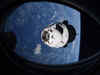
A chunk of Chinese satellite almost hit the ISS; they dodged it - but the space junk problem is getting worse
Earlier this week, the International Space Station (ISS) was forced to maneouvre out of the way of a potential collision with space junk. With a crew of astronauts and cosmonauts on board, this required an urgent change of orbit on November 11. Over the station's 23-year orbital lifetime, there have been about 30 close encounters with orbital debris requiring evasive action. Three of these near-misses occurred in 2020.
Load More

