
OPTOGENETICS
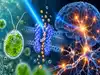
How a single-celled alga helped scientists control brain cells with light — the discovery behind the 2026 Nobel Prize in Medicine
2026 Nobel Prize in Medicine: Peter Hegemann and Georg Nagel discovered channelrhodopsin, a light-sensitive protein in single-celled algae. Blue light opens the protein channel, letting ions flow inside to create an electrical signal. Inserting this gene into neurons allowed Karl Deisseroth and the team to switch brain cells on with light. Their work in optogenetics earned them the 2026 Nobel Prize in Physiology or Medicine.

Nobel Prize 2026 winners list: Check all laureates, categories and what they won
The 2026 Nobel Prize in Physiology or Medicine has been awarded to three scientists for their groundbreaking discoveries. Karl Deisseroth, Peter Hegemann, and Georg Nagel contributed significantly to the field of optogenetics and light-gated ion channels. Their work allows researchers to control nerve-cell activity with precision using light technology. The Nobel Prize announcement signifies their impactful role in advancing neuroscience studies.

California scientist Karl Deisseroth wins a Nobel Prize, then makes school lunches for his kids
Dr. Karl Deisseroth received a Nobel Prize for his contributions to optogenetics, which advances brain science. He shared the award with researchers from Germany and has made significant impacts in understanding the brain. Following the announcement, Deisseroth took a brief break to prepare school lunches for his children. His wife, Dr. Michelle Monje-Deisseroth, supported him during this busy time.
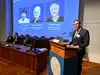
The Nobel-winning breakthrough that turned light into a remote control for the brain, allowing scientists to switch neurons on and off
Optogenetics, a groundbreaking technique, enables researchers to control specific neurons using light, providing insights into brain functions. The 2026 Nobel Prize in Physiology or Medicine was awarded to Karl Deisseroth, Peter Hegemann, and Georg Nagel for this transformative discovery. Their work originated from the study of light-sensitive proteins in green algae, which led to applying these proteins in neuroscience.

Who is Nobel winner Karl Deisseroth? And all about optogenetics that could restore sight in visually impaired people
The 2026 Nobel Prize in Physiology or Medicine has been awarded to Karl Deisseroth, Peter Hegemann, and Georg Nagel for their groundbreaking contributions to neuroscience and optogenetics. This innovative technique enables researchers to manipulate nerve cells with light, offering profound insights into brain functionality. Their work has opened doors to understanding neurological and psychiatric conditions, showcasing the significance of their research in advancing future medical science.

Who are Karl Deisseroth, Peter Hegemann, and Georg Nagel? Trio wins Nobel Prize in Medicine for work on optogenetics
The 2026 Nobel Prize in Physiology or Medicine recognizes the remarkable achievements of Karl Deisseroth, Peter Hegemann, and Georg Nagel. Their groundbreaking research on light-gated ion channels and optogenetics plays a crucial role in unraveling the complexities of nerve cells and the brain. The three scientists collectively share a total of 12 million Swedish kronor for this distinguished honor.
- Go To Page 1

Nobel Prize 2026 in Physiology or Medicine awarded to Karl Deisseroth, Peter Hegemann and Georg Nagel
Karl Deisseroth, Peter Hegemann, and Georg Nagel were awarded the 2026 Nobel Prize in Physiology or Medicine. They were recognized for their discoveries in light-gated ion channels and the development of optogenetics. These discoveries allow researchers to control nerve cell activity with light, which is a significant advancement in neuroscience. The Nobel committee noted the impact of optogenetics in revealing brain functions.
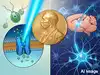
Nobel Prize Medicine 2026: Scientists found a 'light switch' inside algae & turned it into a tool to control brain cells; what this discovery means
Nobel Prize Medicine 2026: The 2026 Nobel Prize in Physiology or Medicine has been awarded to Karl Deisseroth, Peter Hegemann and Georg Nagel for their discoveries involving light-gated ion channels and optogenetics. Their work showed how light-sensitive proteins can be used to control nerve-cell activity, opening new ways to study the brain and its neural circuits.
Your nose may be talking directly to your brain: Scientists uncover a hidden nose-to-brain circuit that could explain why slow breathing calms anxiety
Scientists found a nose-to-brain pathway affecting emotional states in mice. Slow nasal airflow produced calming effects, while faster airflow increased anxiety. This neural circuit connects nasal sensory neurons to brain regions involved in emotions. Repeated slow breathing stimulation reduced anxiety-like behavior in mice over time. Further research is needed to confirm this pathway's operation in humans.

Circuit in male brain increases alcohol use during social isolation: Study
Recent research sheds light on how loneliness affects alcohol consumption through specific brain mechanisms. The study revealed that isolated male mice exhibited a higher alcohol intake, while female mice notably decreased theirs. This crucial brain pathway integrates emotional processing with decision-making areas, actively influencing drinking behaviors in males. These insights provide potential biological targets for addressing alcohol misuse associated with feelings of isolation.
Researchers in Japan uncover what helps the brain stay motivated when life gets harder
Brain motivation: Researchers identified orexin neurons as key to sustained motivation during demanding tasks. These brain cells help maintain goal-directed behavior when increased effort is required. Studies with genetically modified rats demonstrated orexin neurons' direct influence on motivation levels. Activity in these neurons increased with anticipated rewards and required effort.

Not early mornings, brain learns the best when it's least expected. Best time to absorb new information, finds study
A new study from Tohoku University suggests that the brain’s ability to form long-term memories varies across the day. Researchers found that rats showed stronger memory-related changes in the early hours before sunrise, even though their immediate neural responses were lower at that time. The team linked this pattern to adenosine, a molecule that accumulates during wakefulness and helps regulate how neurons communicate.
Our brain also relies on reward in order to function, reveals study
The researchers said that the findings highlighted a sophisticated learning strategy where behaviours are not just reinforced, but actively shaped and fine-tuned through experience.

The science of sleep: Study reveals how brain wiring influences bedtime preparation for survival
Researchers at Imperial College London conducted a study on mice and discovered that when the mice became tired, their brains triggered a behaviour known as "nest building," or preparing for sleep. The study involved keeping the mice awake by presenting them with toys and observing their brain activity using optogenetics.

Working memory is reliant on cross-brain interactions, says study
In a new study, published today in Nature, neuroscientists at the Sainsbury Wellcome Centre at UCL investigated the reciprocal interactions between two brain regions that represent visual working memory in mice.

Stress could make your body less resistant to fighting off infection. Here's why
The finding provides a better understanding of how stress affects the body's response to a virus.
Acute stress may make it hard to fight against COVID-19
Acute Stress can diminish your body's immune response against infections, thus causing severe health problems or even death.

Say goodbye to bladder problems: This tiny, implantable device can work wonders
The device can detect overactivity in the bladder and then use light from LEDs to tamp down the urge to urinate.

Turns out, that humans may actually be able to taste water
Scientists have known for a while that bugs and amphibians taste water.

Now, you can build your own 3D printed bio-bots
"The protocol teaches every step of building a bio-bot, from 3D printing the skeleton to tissue engineering the skeletal muscle actuator."
New biocompatible optical fibers to detect first sign of disease
New York, Oct 18 (IANS) Researchers from Massachusetts Institute of Technology (MIT) and Harvard Medical School have developed a biocompatible and highly stretchable optical fiber which can be implanted in the body to deliver therapeutic pulses of light or light up at the first sign of disease.
Playing video games, tennis may enhance memory
New York, Sep 8 (IANS) Activities like playing video games or tennis may help enhance your memory, a study has found.
Scientists retrieve 'lost' memories using light
Researchers were able to reactivate memories that could not otherwise be retrieved, using a technology known as optogenetics.
Brain's on-off thirst switch identified
The CUMC team hypothesised that there are at least two types of neurons in the SFO, including ones that drive thirst and others that suppress it.

Brain chemical may make humans more patient
The brain chemical serotonin that is widely targeted to treat depression and chronic pain may also help humans to be more patient, a new study suggests.
Load More

