
NVIDIA SUCCESSION PLAN
How China gets the Nvidia chips it needs to develop AI
Nvidia's dominance in the global AI chip market has come under scrutiny as US export restrictions fail to fully prevent China from accessing advanced processors. Chinese firms are reportedly obtaining Nvidia chips through smuggling and overseas data centres, while domestic players such as Huawei race to develop competitive alternatives.
Nvidia's 700,000% return faces a succession test amid Huang's China spy affair
Nvidia's CEO Jensen Huang maintains a unique office structure that reflects his hands-on management style. With around 60 direct reports, he closely oversees company operations and decisions, even involving himself in employee compensation. Amid recent controversy over personal allegations, questions about Nvidia’s leadership succession have emerged. Huang, who co-founded the company, hopes a suitable successor will arise from within its ranks.
Jensen Huang's influence over Nvidia raises questions about AI industry's dependence
Nvidia CEO Jensen Huang's influence extends beyond the chipmaker, shaping AI investment, chip supply and industry sentiment. His central role has also raised questions about succession planning and the risks of relying on one executive, as the company investigates whether he was targeted by a foreign intelligence effort involving China.
Will Nvidia CEO Jensen Huang keep his job amid FBI probe? Here’s what we know
Nvidia's CEO Jensen Huang finds himself embroiled in controversy as he is under investigation due to his alleged affair with Alice Huang, believed to be a Chinese spy. In light of these serious claims, Nvidia has launched an independent inquiry, which Huang is fully backing. Meanwhile, federal authorities are probing for possible export violations, raising questions about Huang's leadership amid concerns over succession planning and the company's future stability.
Who could replace Jensen Huang at Nvidia? Affair with Alice Huang and her alleged China spy links raise questions over CEO’s future
Nvidia’s investigation into an alleged foreign intelligence effort involving CEO Jensen Huang has raised fresh questions about the company’s leadership future. With no publicly identified successor and around 60 executives reporting directly to Huang, investors are facing the possibility that the chipmaker may struggle to replace its most influential leader.
'No ordinary CEO': Why the AI race cannot do without Nvidia's Jensen Huang
Nvidia CEO Jensen Huang’s influence extends beyond chip supply, making him a central figure in the global AI industry. The company’s dominance in AI processors, investments across the sector and Huang’s close control over its strategy have raised concerns about the risks of depending heavily on one executive.
- Go To Page 1
'No ordinary CEO': Why the AI race cannot do without Nvidia's Jensen Huang
The star power that 63-year-old Huang draws as the gatekeeper to Nvidia's chips shows how badly the AI industry is leaning on him for the graphics processing units that train models and run services such as ChatGPT.

Why did the ETF betting against Jim Cramer’s stock picks shut down in less than a year?
The Inverse Cramer Tracker ETF launched in March 2023 with a strategy built around betting against Jim Cramer’s stock recommendations. But the fund lost 15%, attracted just $2.4 million in assets and faced closure less than a year later. Here’s why the unusual ETF shut down.

Meet Dennis Woodside, who began his career as M&A lawyer in 1990s; decades later, he became CEO of Freshworks after leadership roles at Google and Dropbox
Woodside went to Cornell University and studied industrial relations. Later, he earned a law degree from Stanford Law School. He started his professional career as an M&A lawyer in the 1990s. He later moved into management consulting at McKinsey & Company. He joined Google in 2003. There, he spent more than a decade in sales and strategy leadership roles.

AI debutant’s flameout stokes fears boom is ending
Elice, a data center and AI developer, faced a significant decline in its stock price during its debut. This situation exemplifies a broader trend where investors are increasingly skeptical about AI valuations and prospects. Several companies, including CoreWeave and Firmus Grid, have also encountered investor pushback regarding their financial outlooks. Rising borrowing costs are contributing to these concerns, impacting the performance of tech stocks, including semiconductors.

Investors temper Anthropic IPO valuation expectations over revenue growth slowdown
Some investors who attended Anthropic's investor day on Wednesday in San Francisco discussed a valuation of around $1.5 trillion, three of the people said, a significant step down from the roughly $2 trillion valuation that investors had previously expected for the November share sale.
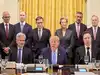
AI founders cheer Trump's calls for the industry to police itself on safety in Silicon Valley
President Donald Trump brought tech titans to Washington late last month for a luncheon and ceremonial signing of a voluntary safety pact he described as "almost a constitution" surrounding "Super Intelligence," the administration's new preferred term for AI.

Global IPO market faces setback as high-profile listings are scrapped, delayed in 2026
Several high-profile IPOs have been withdrawn, delayed or shelved in 2026 as market volatility and valuation concerns weigh on investor demand. From Firmus and Oura to PhonePe and KNDS, companies are reassessing public listings and fundraising plans.

Nvidia soars near $6 trillion market cap with stock back at high
Nvidia has witnessed a remarkable surge in its stock price, propelled by a promising revenue forecast and a robust buyback initiative. The company’s shares have soared by 28% in 2026, contributing nearly $1.2 trillion to its market capitalisation. Amidst rising interest rates and economic volatility, investors are increasingly turning to Nvidia, positioning it as a cornerstone of the S&P 500 Index's success this year.

Frontier AI slowdown a distraction, compute is the real constraint: early Anthropic backer Menlo Ventures
Menlo Ventures' Matt Murphy called the slowing down "a bit of a red herring", and said compute, not intelligence, is the real constraint, in an interview with ET at the fund's headquarters in Menlo Park recently. A 20 or 30% moderation in pace, he explained, would not have a dramatic impact on foundation model companies. "The models are already intelligent enough to serve the market in front of us… which is an enormous market for AI companies," he said.
Where Does China Fit in Your Company’s Innovation Strategy?
For decades, multinationals treated China primarily as either a vast growth market or a rising competitive threat. But as growth slows, competition intensifies, and operating conditions become more difficult, many firms are rethinking China’s role. Increasingly, they are using the country not just as a destination market but as a platform for accelerating innovation—leveraging its fast-moving regulatory environment, tightly integrated R&D and manufacturing ecosystems, and deep engineering talent pools to speed learning, validate technologies, and scale capabilities globally. Companies including Pfizer, Michelin, BMW, Bosch, and Nvidia illustrate how firms are using China to shorten innovation cycles while managing geopolitical and operational risks by defining China’s precise role within their global innovation system, designing for controlled knowledge-sharing, and avoiding overdependence through diversified R&D and supply chains.
India globally competitive in chips: Ashwini Vaishnaw
Speaking to the press on the sidelines of the annual Semicon India Summit 2026 in the capital, Vaishnaw said the growth of the ecosystem in India has given the government confidence that more than 100,000 new jobs will easily be created in the semiconductor industry in the near future.

India globally competitive in chips: Vaishnaw
India's electronics minister has asserted the country's competitive edge in the global semiconductor market. Currently, five chip packaging facilities are operational and adhere to international export standards.
India globally competitive in semiconductor sector, says IT minister Ashwini Vaishnaw
India’s semiconductor industry has become globally competitive in quality and cost, with products from five operational facilities meeting export standards, Electronics and IT Minister Ashwini Vaishnaw said Friday.

Meta One brings Instagram, WhatsApp, Facebook and Meta AI subscriptions under one umbrella
Meta is introducing Meta One, a new subscription service for its popular applications. This service bundles over fifty features across Instagram, Facebook, and WhatsApp. Individual plans offer customisation and enhanced AI capabilities for users. Creator and business tiers provide tools for audience growth and management.

Taiwan flexes chip diplomacy muscles as it faces pressure to share AI wealth with allies
Home to companies like TSMC whose chips power AI applications, diplomatically isolated Taiwan has long sought to leverage its tech prowess to garner international support, something Beijing routinely seeks to block saying the island is merely one of its provinces.

Tim Cook’s last day as Apple CEO: A 15-year run comes to an end
Cook will move into the role of executive chairman, while Ternus will join Apple’s board the same day. Cook has played a central role in expanding the company’s business and global reach.

Nvidia ‘delighted’ at Google's chip push, but asserts its ‘generational’ lead
Nvidia welcomes Google's entry into the external AI chip market, even as it asserts its industry leadership. While Google plans to offer its TPUs to other companies, Nvidia highlights its own GPUs as a superior, versatile platform for all AI models across various computing environments.

Nvidia CEO Huang to meet Trump before China trip, source says
Nvidia CEO Jensen Huang is scheduled to meet with U.S. President Donald Trump at the White House on Thursday, coinciding with Nvidia's market value surpassing $4 trillion. This meeting occurs before Huang's planned visit to China. Huang has previously criticized export restrictions that impacted Nvidia's sales in the Chinese market, resulting in billions of dollars in losses.

Jensen Huang to offload $800 million in Nvidia stock — is the AI king sensing a storm ahead?
Jensen Huang, Nvidia's CEO, plans to sell six million shares. This move worries investors despite Nvidia's growth. Huang holds a large stake, and the sale is part of a pre-arranged plan. This plan helps avoid insider trading concerns. Huang remains optimistic about Nvidia's future in AI. The company sees rising demand and expects growth in AI inference.

Nvidia chief Jensen Huang's first acknowledgement of DeepSeek; here's what he said on Chinese startup's blockbuster R1 model
Nvidia CEO Jensen Huang acknowledges the success of DeepSeek's R1 AI model and expresses optimism about Nvidia's future despite market impacts. Huang emphasizes long-term AI chip demand and investments from clients like Meta, Amazon, Google, and Microsoft. Nvidia's Blackwell chips see extraordinary demand, and AI data centres are expected to become essential infrastructure globally.

Nvidia CEO Jensen Huang offloads approximately $14 million worth of shares on a near-daily basis; investors ask, why is he selling instead of holding?
Nvidia CEO Jensen Huang’s ongoing stock selloff has raised concerns among investors about his confidence in the company’s future. While some experts see his actions as a sign of caution, others urge more transparency in succession planning and corporate governance.
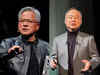
SoftBank to get first new Nvidia chips for Japan supercomputer
The announcement indicates that SoftBank has secured a favorable spot in line for Nvidia chips. Nvidia CEO Jensen Huang announced the new Blackwell lineup earlier this year, but production snags slowed the rollout.
As regulators close in, Nvidia scrambles for a response
Nvidia's dominance in AI chip sales, with a 90% market share, has led to inquiries from the EU, Britain, China, and the U.S. Justice Department. The company is now focusing on building its Washington presence and legal defenses to address antitrust concerns, while managing high demand for its GPUs and new acquisitions.
Load More

