
NVIDIA AI GROWTH

Nvidia board probes whether CEO Jensen Huang was targeted in Chinese intelligence operation
Nvidia's board has launched an independent investigation into allegations that CEO Jensen Huang may have been targeted by a Chinese intelligence operation through former Megaspeed executive Alice Huang. The probe will assess potential exposure of confidential information and national security risks amid escalating US-China technology tensions. Nvidia says it has found no evidence of compromised secrets.

BOJ's Ueda sees upside risks to inflation, says price growth may accelerate into early 2027
Bank of Japan Governor Kazuo Ueda flagged upside risks to inflation, warning that rising energy costs could accelerate price growth into early 2027. He said the central bank was targeting sustainable 2% inflation while monitoring global monetary policy, AI-related market risks and cybersecurity threats to financial stability.

China dismisses 'Chinese spy' narrative in Nvidia CEO Jensen Huang probe
Nvidia CEO Jensen Huang is being investigated for possible ties to a Chinese intelligence operation. China dismissed the claims as unsubstantiated during a recent foreign ministry briefing. The investigation follows allegations that Huang shared information with a suspected Chinese intelligence asset. Nvidia is working with an independent committee to assess the situation. The firm's board remains confident that national security and company secrets are not compromised.

Jensen Huang is bigger than Nvidia — and it’s a problem
Nvidia has initiated an investigation regarding CEO Jensen Huang after acknowledgment of a romantic involvement with a Chinese spy. This revelation has raised questions about the company's future stability and ongoing projects. Investors are apprehensive about key-person risk due to Huang's significant influence on Nvidia’s operations and strategy.
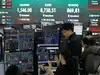
Global Market Today: Asian stocks open mostly higher, Nvidia probe looms
Benchmark stock indexes rose in Japan and Australia after a gauge of US semiconductor shares jumped 4.2% on Friday as speculation about possible tighter Democratic party regulation of the artificial intelligence industry eased. The MSCI Asia Pacific Index of equities gained 0.5%.

Nasdaq rebounds but posts fourth straight weekly decline
On Friday, technology stocks saw a significant rebound, boosting investor optimism about growth in artificial intelligence amidst recent market fluctuations. The semiconductor sector soared, primarily driven by impressive gains from Nvidia and Advanced Micro Devices. Although this recovery was strong, the Nasdaq recorded its fourth consecutive weekly fall, hinting at a mixed market outlook. Job indicators remain strong, influencing Federal Reserve interest rate hike expectations.
- Go To Page 1

US stocks today: Nasdaq rebounds as chip stocks recover from steep losses, rate fears persist
US stocks rebound as chipmakers recover from Thursday's steep AI-led selloff, lifting the Nasdaq 1.73%. Nvidia, AMD, Intel and Micron lead the recovery, while stronger-than-expected October jobs data revive concerns over a December Fed rate hike. Airbnb rallies after raising its full-year revenue growth forecast, while Atlassian shares decline.

US stock market today: Why is the Nasdaq up 1% while the Dow Jones falls? S&P 500 turns green amid tech stock volatility and Fed rate hike fears over strong October jobs report
US stock market today: Wall Street is seeing a split recovery on Friday after Thursday's AI-led sell-off. The Nasdaq has jumped 1.02%, while the Dow Jones has fallen 0.90% and the S&P 500 gained 0.29%. Nvidia, AMD, Intel, Broadcom and Micron were among the chipmakers recording gains in early trading. Nvidia's rebound has been particularly important because of its large weight in the broader market.

Chip stocks bounce up to 8% as US stock futures recover after Thursday’s stock market crash - Jefferies says sell-off was ‘reactionary, not a reset’
Chip stocks bounced back before Friday's market open after Thursday's brutal sell-off sent the Philadelphia Semiconductor Index down 12.2%. Nvidia, AMD and Intel recovered, while Aehr Test Systems, Camtek and Cohu also posted strong gains. Jefferies called the sell-off "reactionary, not a fundamental reset."

NVDA stock crash: Nvidia’s worst day since the DeepSeek shock - The AI giant fell 9% and is now down for the year
Nvidia stock rebounds 5% after 9.26% crash: Nvidia suffered its worst single-day fall since the January 2025 DeepSeek shock, with shares plunging 9.26% to $181.60 on Thursday and turning negative for 2026. The crash came as Wall Street lost nearly $3 trillion in market value. Friday’s futures pointed to a partial recovery, with Nvidia rebounding in premarket trading as chip stocks attempted to recover.

Infosys, Wipro, TCS and other IT stocks rise up to 3% as US AI rout deepens; is the bubble bursting?
In the wake of a worldwide AI stock decline, companies such as Infosys and TCS have seen their shares rise, demonstrating a contrasting trend. This downturn has sparked fears of impending regulations within the sector, prompting analysts to predict that Indian IT companies might leverage this moment to enhance their entrepreneurial AI ventures, all while experts caution against excessive financial commitments in the AI landscape.

Nasdaq set to confirm correction as AI stocks tumble
The shock selloff comes a day after the Democrats' election victory including in some key data-center states drove concerns about a slowdown in the AI data-center buildout, optimism about which had pushed stock markets to record highs earlier this year.

Was Michael Burry right about the AI bubble? Wall Street loses $2 trillion as AI and chip stocks plunge: Why are Tesla, Palantir, AMD, Broadcom and SanDisk crashing?
Michael Burry's warning about an AI bubble is back in focus as Wall Street loses more than $2 trillion in market value. On Thursday, November 5, AMD shares plunged around 12%, SanDisk fell 14%, Micron dropped 10%, while Nvidia lost nearly 7%. Tesla and Palantir also fell 9% and 8%, respectively. The sell-off spread across chipmakers, memory companies and AI infrastructure stocks. The Dow fell 2.36%, the S&P 500 dropped 3.11%, and the Nasdaq sank 4.20%, as investors questioned whether massive AI investments can deliver enough returns.

Micron, SanDisk, AMD and Qualcomm stocks plunge as US stock market crashes today: Dow, Nasdaq and S&P 500 turn red as chip selloff deepens – What is driving Wall Street's sudden reversal?
US stock market crash today: The Dow, Nasdaq and S&P 500 are all trading in the red, while some of the biggest semiconductor stocks are losing ground. Micron (MU), SanDisk (SNDK), AMD and Qualcomm (QCOM) are among the hardest hit, with Western Digital and Seagate also extending their losses. Qualcomm's weaker revenue and cautious outlook have added to concerns about chip demand. But why are AI and memory chip stocks falling so sharply?

MU stock crashes 11% today as Nasdaq plunges nearly 4%: Why is Micron stock falling with Nvidia, Intel and Tesla as Wall Street’s tech selloff deepens?
MU stock price today: Micron stock is falling as Wall Street faces a sharp selloff in technology shares. The Nasdaq dropped 3.72% on Thursday, while the Dow and S&P 500 also lost more than 2%. Nvidia and Tesla shares fell sharply, adding to the pressure on chip stocks. Micron faces another problem; a reported halt to its $4.5 billion Taiwan plant has raised fresh questions about its future AI memory production.

NVDA stock price falls below $200: Why is Nvidia stock going down today? Here's what analysts predict next
NVDA stock price today: Nvidia stock has come under fresh pressure amid concerns that data center restrictions could slow AI infrastructure spending. Shares fell below $200, but analysts remain bullish, with average price targets pointing to significant upside ahead of the company's November 17 earnings report.

AI, data-center stocks slip as Democratic sweep clouds expansion plans
Stocks related to AI and data centers are facing a slump in premarket trading as Democrats secure significant wins in the US midterm elections. Investors are wary as possible regulatory changes from Congress loom, jeopardizing the industry's growth prospects. Analysts highlight that many anticipated data center capacity expansions could be at risk due to halts in construction.

US midterm results threaten data center boom as AI backlash grows
US midterm election results have raised fresh concerns over the future of America's data centre boom, with Democratic victories in Texas and Georgia strengthening opposition to new projects. Investors fear tighter regulations, construction moratoriums and reduced tax incentives could disrupt AI infrastructure spending, putting nearly 45% of planned US capacity at risk.

A fund copying Congress’s stock trades beat the S&P 500, thanks mostly to one stock
The Unusual Whales Subversive Democratic Trading ETF, named NANC, has shown remarkable performance, exceeding that of the S&P 500 since February 2023. This fund strategically utilizes the stock trades of Democratic lawmakers to shape its investment strategy. With significant holdings in leading technology firms, especially in AI innovations, its recent achievements can be attributed to a thriving AI market.

Donald Trump's midterm drubbing demonstrates the power of data center opponents
Democrat victories in recent midterm elections signal a shift in public sentiment regarding data centers and AI technology. Key races in Texas and Georgia brought significant wins for candidates opposing data center development. Analysts estimate that nearly half of planned US data center capacity could face new regulations and moratoriums. Concerns have emerged over potential slowdown effects on the AI and technology sectors as stocks decline.

US stock futures rise after midterms: Why are Dow Jones futures up nearly 800 points despite a Democratic sweep? S&P 500, Nasdaq gain as AMD and Nvidia stocks climb
Why are US stock futures rising after Democrats win the Senate and House? Dow leads Wall Street rally as AMD, Nvidia and semiconductor stocks gain. Earlier, at 06:02 ET, Dow futures were up 801 points, or 1.6%. S&P 500 futures were up 80 points, or 1.1%, and Nasdaq 100 futures were up 286 points, or 1.0%.

AMD shares jump as AI-driven data-center strength fuels growth outlook
AMD, which recently joined the ranks of trillion-dollar companies, has gained about 126% this year and is poised to add about $58 billion in market value if premarket gains hold. The company's strong outlook highlighted growing momentum in its server processor business, signaling that spending on AI computing was extending beyond Nvidia's accelerators, which dominate the market.

AMD's OpenAI, Meta chip deals trigger $1 billion quarterly charge
AMD in February agreed to sell up to $60 billion worth of AI chips to Meta over five years, giving the Facebook owner warrants that could let it buy as much as 10% of the chip firm if it meets certain milestones. The deal followed a similar agreement with OpenAI last year, giving the startup the option to buy up to roughly 10% of the chipmaker.

AMD forecasts fourth-quarter revenue above estimates on strong AI chip demand
Advanced Micro Devices estimates its fourth-quarter revenue will hit about $17 billion, driven primarily by robust demand for AI chips. Although the company's forecast for adjusted gross margin stands at 55%, it falls slightly short of analyst expectations. A remarkable 97% year-on-year increase in data-centre revenue showcases AMD's growth. However, the company currently faces challenges in sourcing high-bandwidth memory, essential for its AI processors.
AMD's OpenAI, Meta chip deals trigger $1 billion quarterly charge
AMD in February agreed to sell up to $60 billion worth of AI chips to Meta over five years, giving the Facebook owner warrants that could let it buy as much as 10% of the chip firm if it meets certain milestones. The deal followed a similar agreement with OpenAI last year, giving the startup the option to buy up to roughly 10% of the chipmaker.

Musk and Zuckerberg officially adopt Trump’s “super intelligence” label for AI, other tech chiefs yet to follow
In a significant shift, tech giants Elon Musk and Mark Zuckerberg have embraced the term 'super intelligence' to describe AI, following a pivotal lunch with Donald Trump that resulted in a new safety standards agreement. Meanwhile, executives from Alphabet, Amazon, and Microsoft still favor the traditional AI nomenclature in their dialogues.

Foxconn working on a new tie-up with OpenAI, says there is no AI bubble
Foxconn Chairman Young Liu told reporters at the company's annual event to showcase its technology that he had met OpenAI Chief Executive Sam Altman earlier in the day and there would be an announcement once details were confirmed.

Nvidia's web of AI bets: smart strategy or bubble risk?
Nvidia's $3 billion investment in Meta's share sale, announced Tuesday, is the latest addition to a portfolio of stakes, loans and guarantees that has made the chip giant what some analysts describe as the central bank of the artificial intelligence boom. Nvidia also has around $36 billion in cloud backstops and a guarantee of up to $105 billion linked to an OpenAI data center, according to US media.

Google's Nvidia chip challenge boosts cloud sales, crimps cash flow
The trade-off, outlined by finance chief Anat Ashkenazi on Alphabet's post-earnings call on Wednesday, offers an early look at the costs of a business that has emerged as one of the company's biggest growth areas as investors fret over AI's threat to its lucrative search advertising business.
Load More

