
NUCLEAR TRANSMUTATION
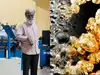
Making gold in lab: Bengaluru inventor says he can turn elements into gold & silver; shows two-stage process for producing precious metals
Bengaluru-based inventor Rajah Vijay Kumar has received an Indian patent for Gravitoradiophysical Nuclear Transmutation (GNT), a frequency-based technique that he says can convert one chemical element into another. Laboratory analysis of treated mercury samples reportedly found traces of gold, silver and other elements. The method uses a specially developed reactor known as the 'Boom Tube' and is claimed to work without conventional nuclear fission or fusion.

From mercury to gold? This San Francisco startup claims it can produce yellow metal at will
San Francisco-based startup Marathon Fusion claims to have converted mercury into stable gold using fusion-generated neutrons, at a rate 10 times the record set by CERN in 2025. However, it has not disclosed the quantity of gold produced, leaving the commercial potential of the breakthrough unclear.
Lab-grown gold to crash prices? San Francisco’s Marathon Fusion just turned mercury into yellow metal
Marathon Fusion, a San Francisco-based start-up, claims to have converted mercury into stable gold using nuclear transmutation, saying it surpassed CERN’s record by 10 times. However, it has not disclosed the quantity produced or shared experimental data, leaving the claim’s scale and commercial potential unclear.

From Uzbekistan to Canada: A look at India’s global uranium hunt
India is accelerating its nuclear power expansion to reach 100 GW by 2047. This ambitious goal necessitates securing substantial uranium supplies from global sources. New agreements with Uzbekistan, Australia, and Canada are diversifying fuel procurement strategies. Domestic policy changes now permit private companies to enter nuclear power generation. This dual approach aims to ensure fuel availability for future reactor capacity.

Historic milestone: PM Modi on fast breeder reactor at Kalpakkam achieving criticality
Prime Minister Narendra Modi announced a historic milestone. India's Kalpakkam fast breeder reactor has achieved criticality. This achievement showcases indigenous nuclear technology. Indian scientists have brought glory to the nation. This marks a significant step in India's nuclear energy journey. The reactor uses Uranium-Plutonium Mixed Oxide fuel. It is designed to use Thorium-232 in the future.

Landmark step, but concerns remain: Experts on Kalpakkam nuclear reactor reaching criticality
India's first indigenous prototype fast breeder reactor at Kalpakkam has achieved criticality. This marks a major milestone in the nation's pursuit of nuclear self-reliance. The reactor's success bolsters the three-stage nuclear program. Experts highlight its role in harnessing India's vast thorium reserves for future energy security.

India moves a step closer to nuclear fuel self-reliance
India has achieved a significant milestone in its nuclear program. The indigenously designed Prototype Fast Breeder Reactor at Kalpakkam has successfully attained criticality. This marks a crucial step towards generating power and producing its own nuclear fuel. The reactor is designed to produce more fuel than it consumes.

Lab grown gold: Is it possible to produce precious yellow metal like lab-grown diamonds?
Scientists can create gold in labs through complex nuclear reactions, altering elements like mercury or platinum. However, this process is astronomically expensive and yields microscopic amounts, making it impractical for jewellery or investment. Unlike lab-grown diamonds, "lab-made gold" currently lacks commercial viability, with Earth's mines remaining the sole source.

Startup claims it can make gold from mercury using fusion; science fiction turns real
In a surprising announcement, Marathon Fusion, an innovative startup from Silicon Valley, claims to have achieved the impossible: converting mercury into gold through the process of nuclear fusion. By bombarding specific mercury isotopes with neutrons during the fusion of hydrogen isotopes, they propose a method that could not only change the landscape of energy production but also alter global economics.

300 years after alchemy failed, CERN scientists finally turn lead into gold
Centuries after alchemists sought transmutation, CERN scientists have turned lead into gold using the Large Hadron Collider. By colliding lead ions at near-light speed, they briefly created gold atoms, demonstrating nuclear stability limits. While the amount was minuscule and fleeting, this achievement fulfills an ancient dream through modern physics, furthering our understanding of matter's fundamental processes.

After 45 years, the 5-billion-year legacy of the Voyager 2 interstellar probe is just beginning
Voyager 1 was launched after Voyager 2, on September 5. Attached to the flank of each Voyager was a Golden Record carrying greetings, sounds, images and music from Earth. The spacecraft were more or less twins, but they had different trajectories and scientific instruments.

Russia offers scholarships in nuclear engineering to Indians
The deadline for the first round of applications closes on February 15, 2019. The registration is now opened on Russia Study website https://russia.study/en

Mamata Banerjee is in the Left's thrall, her only mission is to out-Left the Left
Mamata Banerjee is in the Left's thrall, her only mission is to out-Left the Left
Load More


