
NORTH CAROLINA OYSTER RESTORATION

In 2022, North Carolina farmer Lance Tabor used a 40-acre solar site for sheep grazing; he brought 41 animals onto the property to expand his operation
Lance Tabor has pioneered an innovative sheep farming method by integrating his operation with solar panel installations in North Carolina. This dual-use approach not only enhances renewable energy production but also allows the sheep to effectively control vegetation, minimizing maintenance for the solar company. Ongoing research aims to optimize grazing methods within this unique intersection of agriculture and renewable energy, with rising interest in the promising field of agrivoltaics.

In 2023, North Carolina sank 1,700 tons of concrete pipes and manholes at AR-305; the material added fish habitat off the coast of Beaufort
In July 2023, the North Carolina Division of Marine Fisheries implemented an innovative project by submerging recycled concrete pipes and manholes as artificial reefs about 28 miles off Beaufort. This initiative has successfully lured both fish and divers, showcasing the potential of reclaimed materials to enhance marine habitats. However, while artificial reefs show promise, they are not a complete fix for diminishing fish habitats.

An artificial reef can do more than attract fish: How a 125-acre underwater project could reshape North Carolina's coastal ecosystems
An artificial reef will be constructed in North Carolina's Albemarle Sound, scheduled for development soon. This project aims to create shelter, feeding opportunities, and spawning habitats for local marine life. By utilizing materials from the Alligator River Bridge, the reef will cover an area of 125 acres. Although the initiative will increase habitat availability, its effectiveness in boosting fish populations is uncertain.

Voters elected Democrats who are doctors and challenged RFK Jr. Can they protect the Medicaid Program and remove him from office?
Voters in South Carolina, Ohio and Michigan elected Democrats who have criticized Robert F. Kennedy Jr.’s health policies. Their wins put the Medicaid program and federal health oversight in the spotlight.

In 1830, chinaberry was introduced to the US as an ornamental tree; it later spread into forests across the South
Chinaberry trees, initially brought to the Southern U.S. in the 1830s for their beauty, have proliferated extensively. These invasive species create dense thickets that block sunlight, hindering the growth of native plants in ecosystems across Georgia and South Carolina. This situation underscores the urgency of managing ornamental plants wisely, emphasizing the need for vigilant monitoring and prompt removal to protect the health of our forests.

Japanese climbing fern came to the US as an ornamental; it now spreads across at least 6 Southern states, climbing over trees and helping fire reach their crowns
Japanese climbing ferns, introduced for ornamental purposes, have proliferated across southern forests since the early 1900s. These ferns pose risks to native plants by causing shading and competing for resources. Fire crews are concerned about their ability to facilitate crown fires in pine plantations. While fire can damage the ferns, it is ineffective for complete control, necessitating early detection efforts.
- Go To Page 1

Democrats win both chambers of US Congress in midterm landslide, rebuke Trump over economy and Iran war
Democrats achieved significant victories in the midterm elections, resulting in control of both Congressional chambers. Many seats were flipped across previously Republican strongholds with stark voter dissatisfaction influencing results. Notably, Trump-backed candidates faced substantial defeats in multiple states like South Carolina and North Carolina. The outcomes revealed limitations in Trump's political influence and a shift toward Democratic representation.

US Midterms mandate 2026: Republican fortunes go south as another war flips the script
Trump's Iran war, tariffs and economic policies have fuelled voter discontent, helping Democrats make sweeping gains in the 2026 US midterms, including in Republican strongholds Texas and Kansas. The results raise questions about Trump's political influence, the future of MAGA and the Republican Party's prospects as it looks towards 2028.

Georgia repurposed retired chicken cages as estuary reefs in the 1990s; years later, the structures remained stable and supported oyster growth
In an innovative move, Georgia has transformed chicken transport cages into artificial reefs to bolster marine life. Initiated in 1990, successful projects in Jove Creek and Van Dyke Creek highlighted the potential of this strategy. However, not every venture, like the Gold-Kist cages, yielded the same success. This initiative showcases how local industrial waste can contribute to environmental restoration, emphasizing the value of recycling in marine conservation efforts.

Congress cites US mid-term results to slam 'One Nation, One Election' idea
The Congress party used the results of the recent US mid-term elections to emphasize accountability in democracy. Congress general secretary Jairam Ramesh criticized the Modi government's One Nation, One Election proposal as detrimental to accountability. The elections showed significant losses for the Republican Party, reflecting voter discontent with Trump's policies. Voters in key states flipped gubernatorial positions, impacting the Republican stronghold.

2026 US Midterms: Democrats flip 7 Senate seats including Kansas, South Carolina and Texas, 4 governorships; win control of House seats in major blow to Trump
In a stunning political evolution, the 2026 midterm elections saw Democrats take charge of both Congressional chambers. With the flipping of seven Senate and 27 House seats, alongside governance transitions in four states from Republican hands, the results reflected the party's growing traction in customary bastions like Texas and Kansas.

US midterm elections 2026: Is the Republican stronghold crumbling? Democrats make historic gains in Senate and House elections
Recent elections saw a substantial surge for Democrats in both Senate and House races, marking a critical shift in political dynamics. Noteworthy victories included the election of the first openly gay senator and two historic figures: the state’s first female and Muslim senators. Additionally, Kansas made headlines by electing a Democratic senator for the first time in nearly a century, reflecting changing voter sentiment across the country.

US midterms 2026 big wins and upsets: Amy Acton stuns Vivek Ramaswamy; Annie Andrews topples Lindsey Graham’s sister Darline
Democrats made significant gains in the 2026 US midterm elections, winning key races in Ohio, Texas, and South Carolina. Amy Acton defeated Vivek Ramaswamy in Ohio, while James Talarico secured the Senate seat in Texas. Annie Andrews' victory in South Carolina ended years of Republican dominance in the state. Additionally, Democrats flipped a Senate seat in North Carolina and held on in Georgia.

Democrat Roy Cooper defeats Trump-backed Michael Whatley in North Carolina Senate race
Roy Cooper has successfully triumphed over Michael Whatley in the recent North Carolina US Senate race. This victory is significant for the Democrats in their pursuit of Senate control. Cooper's campaign addressed crucial issues like rising food and energy costs. Whatley, endorsed by Donald Trump, had previously held no elected office. Cooper’s strong popularity among independent voters was pivotal in securing his lead during the election.

US Midterm Elections 2026: Trump's handpicked candidate bets backfire as Democrats capture key Senate seats
In the recent midterm elections, candidates endorsed by Donald Trump faced significant defeats in key races across several states. Voters in South Carolina, North Carolina, and Texas chose Democratic candidates over Trump-backed options. As a result, Democrats gained control of the Senate, highlighting Trump's declining influence among the electorate.

From the White House to Capitol Hill, Donald Trump faces a new balance of power
Democrats gained control of both the House and Senate in the 2026 midterm elections. The shift reflects voter dissatisfaction with issues such as high prices, the economy, and the war in Iran. Trump's administration will now face increased scrutiny and potential investigations from the Democratic-controlled Congress. Although Trump retains veto power, his legislative priorities may now be more difficult to achieve.

Voters deliver embarrassing rebuke to Trump by flipping four GOP-held Senate seats
Voters delivered significant losses to Donald Trump's endorsed candidates in the midterm elections, flipping four Senate seats. This outcome raises concerns for Republican control in Congress and could invite Democratic investigations. Trump's emphasis on his political influence backfired, as voters largely blamed his economic policies for unfavorable conditions. The election results also hinted at a changing political landscape leading to the 2028 presidential campaign.
2026 US election results: Who is Roy Cooper? Democrat and two-term governor defeats Michael Whatley in North Carolina Senate race, flipping a key seat for his party
Roy Cooper, a two-term governor and popular candidate, has defeated Michael Whatley in a recent Senate race. This victory is notable for the Democratic Party, which has not held this seat since 2008. Cooper focused on economic issues, appealing to voters dissatisfied with the current administration. Whatley, backed by Donald Trump, campaigned on conservative values but could not secure the win.

US Midterm Elections 2026: Democrats take early Senate victory as polls close
Democrats gained an early boost in their bid to regain control of the US Senate, with Senator Jon Ossoff projected to win re-election in Georgia, according to the Associated Press and other media outlets. His victory would help the party's chances of taking control of the chamber.

US Midterms: Vivek Ramaswamy's fate on the line as polls close in Ohio, Georgia, North Caroline and other states
As the 2026 midterm elections unfolded, polls in numerous US states closed with intense focus on key Senate and gubernatorial races. Ohio's contest sees Republican Vivek Ramaswamy and Democrat Amy Acton in a neck-and-neck battle. In Georgia, Democratic Senator Jon Ossoff and Republican Mike Collins engage in a fierce duel, complemented by a dynamic matchup in South Carolina where Democrat Annie Andrews stands against Republican Senator Darline Graham.

What time do voting polls close today? When will polls close in Georgia, Florida, Texas, California, Ohio and when can Indians expect results?
On November 3, polling stations across the United States will have varied closing times. The first to shut down will be in certain regions of Indiana and Kentucky at 6 pm ET, followed by many states, including Georgia and Virginia, closing at 7 pm ET. Although election results might start rolling in shortly after, final counts could be delayed, particularly in close races where state vote-counting procedures vary. The first results are expected early Wednesday morning in India.

US midterm Election results 2026 so far: When will results come in from Georgia, Texas and other key states? Check here
Election results 2026 so far: Americans are voting in the 2026 US midterm elections, with key races in Georgia, Pennsylvania, Texas and other states set to shape control of Congress. The first results are expected after polling stations begin closing at 6 pm Eastern Time on Tuesday. Here’s when the first results are expected and which states could take longer to declare winners.

US midterm poll opening and closing time: Check state-wise voting timings for November 3 election
Today is a significant day as the nation gears up for the 2026 US midterm elections, with polls opening as early as 5 a.m. ET in select states. The variety in closing times ranges up to 1 a.m. ET, allowing voters waiting in line to still have their votes counted. Additionally, 47 states offer early voting, and automatic mail-in ballots are provided in certain regions.

North Carolina NC-11 Election 2026: Democrat Jamie Ager faces Republican Jennifer Balkcom in race for US House seat
North Carolina 11th Congressional District election 2026: North Carolina’s 11th Congressional District will see Democrat Jamie Ager face Republican Jennifer Balkcom and Libertarian Travis Groo in the November 3 election. The Republican nomination changed hands after incumbent Chuck Edwards withdrew from the race on August 5, 2026, following a House Ethics Committee recommendation to censure him over allegations of inappropriate behaviour towards female staffers.

Bill Belichick, 74, and his 25-year-old girlfriend Jordon Hudson break up, as a third person apparently enters the picture
Jordon Hudson and Bill Belichick have parted ways after their engagement ended late last year. However, they are committed to keeping their business dealings intact while nurturing their friendship. Jordon has been seen venturing into new relationships lately, though her current romantic status is somewhat ambiguous. Despite swirling rumors, Belichick has shown unwavering support for Hudson's efforts in managing his brand during this significant transition in their lives.
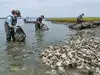
New Jersey planted more than 26,000 bushels of recycled oyster and clam shells across 8 acres; the total was double the amount initially planned
New Jersey has launched a remarkable shell recycling initiative aimed at revitalizing oyster reefs in the Mullica River estuary. This community-driven effort has surpassed all expectations, restoring twice the intended area. By partnering with local restaurants, which are actively involved in collecting and recycling oyster shells, the project underscores the crucial role oysters play in coastal ecosystems. Likewise, New York is undertaking similar efforts to bolster local oyster populations.

US midterm elections 2026: Voting rights after a felony conviction still depend on the state; how Americans can check eligibility before November 3
Voting rights for individuals with felony convictions differ across the United States based on state laws and sentencing completion. Some states allow voting while serving prison time, while others require completion of probation or parole. Restoring voting rights may involve additional steps depending on the nature of the conviction and legal status. Individuals should verify their legal eligibility and outstanding financial obligations to ensure compliance before registering.

Amid layoff news, how 7 million oysters saved 1,000 jobs and environment in US
More than 7 million oysters have helped protect over 1,000 aquaculture and related jobs in the US while supporting marine conservation. The Supporting Oyster Aquaculture and Restoration (SOAR) programme was launched in 2020 after the COVID-19 pandemic left oyster farmers with large quantities of unsold shellfish. According to The Pew Charitable Trusts, the initiative has purchased oysters from over 150 growers, supported 35 restoration sites across eight US states and helped restore more than 60 acres of native oyster reefs.

Since 2010, Maryland has reclaimed 308,500 bushels of discarded oyster shells for Chesapeake Bay restoration; its wider effort has planted billions of oysters
Maryland has repurposed over 300,000 bushels of used oyster shells since 2010, creating essential habitats for the growth of young oysters into thriving reefs. This project aims to restore the dwindling oyster population in Chesapeake Bay while enhancing critical underwater environments. To ensure the sustainability of these efforts, ongoing monitoring and protection of these habitats are paramount within the larger context of regional restoration actions.
Load More

