
NON TARIFF BARRIERS

COP31: EU FTA on horizon, but India won't budge on CBAM
India's environment minister Bhupender Yadav reaffirmed the country's opposition to trade-linked barriers at COP31. The upcoming negotiations will focus on the EU's Carbon Border Adjustment Mechanism affecting various Indian sectors. Participation in carbon markets should remain voluntary, according to Yadav. Additionally, India emphasizes the importance of climate finance from developed nations.

Indian industry has become aware of carbon emissions, says CII’s Narayan Sethuramon
Indian industry is becoming aware of the impact of European carbon emissions regulations on their competitiveness. The expected India-EU Free Trade Agreement will create opportunities for growth in the coming years. Different categories of buyers are emerging, with some looking to diversify sources away from China. Key sectors such as textiles and defense are poised to benefit from these trade dynamics.

EU carbon tax: Piyush Goyal asks Europe not to 'invite disaster' or 'shoot themselves in the foot'
Goyal said the EU had accumulated around 75-77 regulations, arguing that repeated additions were increasing the compliance burden on businesses and making them less competitive in global markets.

NDMC proposes hike in parking fees across Lutyens’ Delhi, 100% surcharge on cash payments
New Delhi Municipal Council plans to increase parking fees for vehicles in Lutyens' Delhi. Off-street and on-street parking tariffs will see significant hikes along with monthly pass costs for cars and two-wheelers. A 100% surcharge on cash payments aims to promote digital transactions among motorists. The proposal includes upgrading parking facilities with advanced technology to facilitate digital payments.
India-US trade deal enters fine-tuning stage as most talks conclude, says Piyush Goyal
India and the US are refining their bilateral trade agreement after concluding most discussions on the deal. Commerce Minister Piyush Goyal indicated significant progress has been made towards finalizing the agreement. Recent talks have involved high-level meetings between officials from both nations, focusing on tariff reductions and trade frameworks. Goyal is currently leading a significant delegation to the Netherlands and Germany to promote bilateral business ties.

Sat Sovereign, Not Satrapi: Why India can't get locked in with one side in satcom battle
Elon Musk argues that Starlink can benefit underserved rural areas of India through improved connectivity. The ongoing debate surrounding satellite communications in India is focused on pricing and market control. Countries are competing for access to low-Earth orbit frequencies and altitudes, which are limited resources. India has an opportunity to create a non-aligned satcom policy to ensure equitable access.
- Go To Page 1

Berlin Global Dialogue: EU inviting disaster through carbon tax, says Piyush Goyal
Piyush Goyal expressed concerns over the EU's carbon tax and numerous regulations impacting their steel industry. He warned that these measures could lead to increased costs and decreased competitiveness for EU businesses. Goyal highlighted that the high import duties and standards could harm the economy and raise the cost of living. He mentioned the reciprocal nature of trade regulations in response to the EU's actions.

'Ease non-tariff curbs to ensure alcohol enters the market freely'
"The spirit of the free trade agreement is twofold-tariffs and regulations that ensure businesses operate a bit more freely," Ian Duddy, the association's international director, told ET in an interview. "Even with tariffs reduced, the products still get sampled and tested," he said, but added: "Obviously, alcohol and all food products need to be regulated. We're not arguing against that."
China says ready to address each other's concerns after Sitharaman flags trade barriers
China said it was ready to work with India to allay its concerns of rising trade imbalance. Finance Minister Nirmala Sitharaman said the trade imbalance was due to China's restrictions in market access to Indian goods and services. She said that India has not resorted to punitive tariffs to reign in large trade imbalances and prefers negotiations despite the process being time-consuming.

‘For global trade’s sake, hope our US deal is inked soon’: FM Nirmala Sitharaman
Nirmala Sitharaman expressed optimism regarding the speedy conclusion of the India-US trade agreement during her recent interaction. She highlighted challenges in trade relations with China due to non-tariff barriers causing problems for Indian exporters. The Finance Minister advocated for promoting rupee-denominated trade settlements to assist nations experiencing hard currency shortages. Sitharaman emphasized the importance of public investment in infrastructure to bolster economic growth despite global disruptions.

India to reach 100 billion dollar of bilateral trade with Russia by 2030: Ambassador Vinay Kumar
India is pursuing negotiations for a Free Trade Agreement with the Eurasian Economic Union to increase exports. Indian Ambassador to Russia Vinay Kumar stated that bilateral trade is projected to reach USD 100 billion by 2030. The current trade turnover is reported at USD 38 billion for the first half of this year. Efforts are underway to diversify India's export basket and improve market access in Russia.

Beyond Oil: How bioenergy investments can rebalance India-Russia trade
Russia now exports more than $60 billion worth of goods annually to India, primarily crude oil, petroleum products, coal, and fertilisers.

India-US trade pact would be concluded at earliest, in interest of global trade: FM Sitharaman
In a promising update on the India-US trade agreement, Nirmala Sitharaman indicated that negotiations are progressing well, with Commerce Minister Piyush Goyal mentioning that legal drafting for the initial phase is in motion. Addressing concerns related to trade imbalances and China's market access restrictions, Sitharaman underlined the critical role of infrastructure investments in driving economic growth despite global setbacks.

China's trade barriers biggest hurdle in bilateral ties, says Nirmala Sitharaman; flags $100 billion deficit
Nirmala Sitharaman has identified China's constraints on Indian exports as a crucial hindrance to trade advancement. The finance minister reported a staggering trade deficit exceeding $100 billion with China this year, even with improved diplomatic relations. She noted that non-tariff barriers obstruct Indian products, especially generic medicines, from entering China.

India-Chile trade negotiations: A quiet and strategic deal beyond tariffs
India and Chile are progressing with negotiations for a Comprehensive Economic Partnership Agreement to enhance trade relations. The agreement will focus on sectors such as digital services, critical minerals, and investment. Both nations seek to diversify their trade partnerships and reduce reliance on single markets, particularly in mineral exports.

Productivity gains from AI could help offset Asia's ageing population problem, IMF says
Artificial intelligence stands as a promising solution to counterbalance the issues arising from decreasing workforces across Asia. The International Monetary Fund points to AI's potential for enhancing productivity in nations experiencing demographic shifts. It is crucial for lawmakers to ensure that AI's benefits do not deepen existing inequalities within the region.

Growth hinges on local reforms, not protectionism: Indermit Gill
India holds a unique opportunity to enhance its economic growth but must address internal challenges effectively. Rapid reform and the efficient use of resources are key to achieving this growth. The country needs to adopt artificial intelligence to improve productivity across various sectors. Expanding trade and eliminating barriers will be essential for attracting foreign investment. Policymakers must focus on enhancing domestic conditions to fully realize India's economic potential.

Opportunity alone doesn’t create trade. Connectivity does
BRICS 2026 has built momentum. The next chapter will depend on how effectively agreements are matched by the corridors, infrastructure, technology, and systems needed to move goods reliably, with alternatives when disruptions occur.
Piyush Goyal meets EU Trade Commissioner, discusses progress on signing FTA
In a significant meeting, Commerce Minister Piyush Goyal engaged with European Trade Commissioner Maros Sefcovic to review the status of the India-EU Free Trade Agreement. Following discussions at the G20 Trade Ministers' gathering, they emphasized the anticipated signing of this agreement by year-end, which seeks to boost market access and diminish trade barriers, facilitating yearly trade exceeding 180 billion euros between India and the EU.
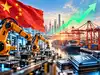
Global Market: China factory activity returns to growth in September as AI boom supports industrial sector
China’s factory activity returned to growth in September, with the official manufacturing PMI rising above the expansion threshold. Strong production and AI-linked demand supported the rebound, though weak domestic demand, employment and property activity remained concerns.

China is building a new rulebook for dealing with the US — tariffs are only the beginning of a much broader reset
China and the United States have established a reciprocal framework for tariff reductions on approximately $30 billion of goods from each side. They created two new boards to facilitate trading and investment discussions as a means of ongoing economic cooperation. Additionally, a dedicated dialogue on artificial intelligence (AI) issues has been initiated between the two nations. The Kuala Lumpur trade arrangement has also been extended for further negotiations.
US-China tariff cuts: $30 billion trade relief plan unveiled; check full list of goods
The US and China have announced plans to reduce tariffs on about $30 billion of imports from each other. This tariff relief follows a meeting between Donald Trump and Xi Jinping aimed at stabilizing trade relations. The agreement is part of efforts to extend the existing trade truce until January while resolving ongoing disputes. Tariff reductions will cover a wide variety of non-sensitive goods to benefit both economies.

Forced labour and import: Reading India’s latest foreign trade policy additions
With this notification in place, India has tried to put a protective layer for the domestic industry from unfair foreign competition.
'Busan Agreement' explained: What the US-China trade truce means for world trade
US Treasury Secretary Scott Bessent announced the extension of the Busan Agreement until January 10, 2027. This extension allows both sides more time to negotiate without facing immediate tariff threats. The Busan Agreement was initially established to ease trade tensions between the US and China last year. Key areas of focus include agriculture and non-tariff barriers that require further discussion.

Cannot rest on tailwinds, have to be conscious of risks, says PM's Principal Secretary
Mishra listed fragmented global alliances, dependence on imports, pressure on the country's external accounts and artificial intelligence as four main risks the country faces.
View: The US is badly losing its trade war with China
Xi Jinping's upcoming visit marks the first Chinese state visit to the United States since 2015. US-China trade policies initiated in 2018 have not achieved their intended goals, despite some superficial successes. China's trade position has strengthened, and it continues to be a leading manufacturer and exporter. US tariffs and export controls have led to unintended consequences that impact American companies and consumers.
US, China open final trade talks in New York to keep tariff truce alive ahead of Trump-Xi summit
US Treasury Secretary Scott Bessent and China's Vice Premier He Lifeng will meet Sunday in New York. They will discuss trade and other pressure points before a leader summit. Both sides aim to maintain stability in the current tariff truce. New US tariffs have been delayed until after this important meeting. This meeting seeks to prevent further escalation between the two nations.

India, Bangladesh to set up joint task force to promote bilateral trade
India and Bangladesh are discussing a joint task force to boost trade. This initiative aims to bring businesses and stakeholders closer together. The task force will focus on removing trade barriers and strengthening ties. Visa processing for Bangladeshis traveling to India has been eased. Both nations seek to expand investment in various key sectors.

EEPC India calls for eliminating non-tariff barriers and smooth payment mechanism among BRICS nations
EEPC India calls on BRICS countries to dismantle non-tariff barriers and streamline payment systems. Such actions could greatly enhance India's engineering exports.
Load More

