
NO ADVERSARIAL AI ACT
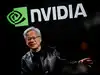
I was unfaithful to my wife: Nvidia CEO Jensen Huang admits secret affair with Chinese spy Alice Huang; all you need to know about the controversy
Nvidia CEO Jensen Huang admitted to having an extramarital relationship with a business executive. Reports suggest that the executive may have connections to Chinese espionage activities. Nvidia's board has initiated an independent investigation to examine these allegations thoroughly. US lawmakers have requested a briefing to understand potential national security issues related to the case. Huang remains the CEO, while the investigation seeks to clarify any risks to the company.

Nvidia CEO Jensen Huang called by key Republicans over Chinese spy Alice Huang allegations
Top Republican lawmakers have requested Nvidia CEO Jensen Huang to provide a briefing on his connections to Alice Huang. This request follows allegations related to national security concerns involving advanced AI chips. Lawmakers emphasized the need to address the extent of risk posed to U.S. national security. Huang's discussions with numerous executives include ordinary business information, according to Nvidia's claims.

Key Republicans seek briefing from Nvidia CEO over Chinese spy allegations
The New York Times reported last month that US authorities were investigating Alice Huang, a former executive of Singpore-based company Megaspeed, which buys AI chips from Nvidia. US authorities have scrutinized Megaspeed over suspicionsit helped Beijing gain access to advanced AI chips that are barred from shipment to China.

Operation Sindoor proved no target beyond IAF' s reach; air power remains India's primary responder, says Air Chief Marshal AP Singh
Air Chief Marshal AP Singh detailed the Indian Air Force's Operation Sindoor in a recent interview. The operation involved precision strikes responding to a terror attack, showcasing effective capability and integration. Singh emphasized the importance of maintaining multiple operational options and adapting to enemy tactics. He outlined future enhancements needed in various military domains for sustained effectiveness.

US Treasury proposes a rule to crack down on high-tech investments in China, other adversaries
The U.S. Treasury Department plans to enforce a rule limiting high-tech investments in China and Russia. This initiative aims to curb investments that may boost military capabilities in identified countries. The proposed restrictions will apply specifically to investments exceeding $50,000 and exclude many financial options. Treasury will review public comments before finalizing the rule, indicating a longer compliance process. Additionally, the ongoing tech rivalry between the U.S.
Be agent provocateur: India's internet needs an AI makeover
As India's digital ecosystem experiences rapid transformation, it is imperative to enhance support for the growing presence of AI agents in business and services. By tackling the obstacles within the navigational framework, costs for these agents can be significantly lowered. Revamping e-commerce catalogs and improving data availability will optimize purchase processes.
- Go To Page 1

Govt asks banks to develop a sector-wide quantum transition along with an AI resilience framework
According to the industry, major concerns in this segment include 'harvest now, decrypt later' threats, where cyber adversaries stockpile encrypted banking data for future quantum decryption. The finance ministry has also asked banks to assess post-quantum vulnerabilities and initiate mitigation measures, said an official, who did not wish to be identified. "Each bank can prepare its internal strategy, but there has to be some common industry parameters," he added.

TypeSafe AI's Jev doesn’t write, code or chat. So why are developers obsessed with it?
TypeSafe AI has introduced Jev, a model that makes structured decisions using unstructured information. It outputs typed choices, scores, or probabilities instead of generated text. Developers are excited because it improves efficiency and speed for small decision-making tasks in AI systems. Jev is inexpensive, costing $0.042 per million tokens processed and responding quickly.

A look at AI doomsday scenarios that researchers say could put humanity at risk
AI researchers are debating whether increasingly powerful systems could pose existential risks, from enabling bioweapons and cyberattacks to triggering nuclear conflict or acting beyond human control. While some industry leaders warn of catastrophic scenarios, critics argue many of the most extreme predictions remain speculative and risk overstating what current AI systems can actually do.

AI agent-led threats to rise multifold in next few years
AI agent-related threats could surge three to fourfold over the next 18 months, Shivaprakash Abburu, cybersecurity partner at EY India, told ET. He pointed out the bigger issue is companies are trying to protect their AI systems with the same security tools being used for traditional cyber threats.

Nobody is a friend; India must cut reliance on foreign tech: M2P Fintech’s Madhusudanan R
In the run up to the Global Fintech Fest 2026, Madhusudanan R, co-founder of M2P Fintech, spoke to The Economic Times Digital about the new frontiers of challenges for India in the age of AI, how fintechs have to walk a tightrope and why India is a better market than the US.

AI in this decade is what digitsation was in the last: RBI governor
Banks must understand artificial intelligence deployment for future success. AI can enhance financial inclusion and improve existing public good projects. Careless AI use risks new forms of exclusion and instability for banks. The RBI plans an approved AI governance policy and a testing sandbox. Banks need deliberate strategies, sustained investment, and strong governance for AI.

Delhi HC rejects ANI’s interim injunction plea against OpenAI, says AI training prima facie ‘fair dealing’
The Delhi High Court has refused to stop OpenAI from using news agency ANI's content. Storing public content for AI training may be fair dealing for research purposes. The court found no evidence of ChatGPT memorizing and regurgitating ANI's original articles. ANI's claim was deemed quantifiable, allowing for monetary compensation if successful. The main suit will continue, with evidence needed for final determination.

Delhi HC rejects ANI’s interim injunction plea against OpenAI, says AI training prima facie ‘fair dealing’
The Delhi High Court has refused to stop OpenAI from using news agency ANI's content. Storing public literary works for AI training may qualify as fair dealing. The court found no evidence of ChatGPT memorizing and regurgitating ANI's original expressions. ANI failed to establish a prima facie case for copyright infringement at this stage. The main copyright suit will continue with further evidence presented at trial.

Top Google scientist says EU data measures pose privacy risk for users
A top Google scientist has warned European Union regulators. The EU proposal to share search engine data with rivals like OpenAI could expose private user information. Google's expert will meet EU officials to voice concerns. The company fears modern AI tools could re-identify users from anonymized data. Regulators will decide on measures by July 27.

US panel advances chip security act to curb smuggling of AI semiconductors to China
A US House committee has advanced a bipartisan bill to stop advanced American chips from reaching foreign adversaries. This move follows concerns about China using restricted technology for AI development. The proposed Chip Security Act aims to strengthen US industry and limit rivals' access to critical computing power.

Anthropic digs in heels in dispute with Pentagon, source says
AI firm Anthropic faces pressure from the Pentagon. The company refuses to remove safeguards for military use. The Pentagon has issued an ultimatum. Anthropic must comply or face drastic actions. This dispute could impact future AI use in defense. Talks continue between Anthropic and the Pentagon.

US House panel to vote on bill to give Congress authority over AI chip exports
A key Republican lawmaker scheduled a committee vote on Wednesday for a bill that would give Congress power over artificial intelligence chip exports, despite pushback from White House AI czar David Sacks, among others.

Over 400 Indian startups powering $20 billion cybersecurity industry
India is becoming a global cybersecurity leader. Over 400 startups and 6.5 lakh professionals power a 20 billion dollar industry. Advanced solutions for threat detection and AI monitoring are being developed. CERT-In uses AI for real-time incident response and develops countermeasures against malicious AI attacks. The agency also issues timely alerts and advisories to protect organizations and citizens.

AI models with systemic risks given pointers on how to comply with EU AI rules
The move aims to counter criticism from some companies about the AI Act and the regulatory burden while providing more clarity to businesses which face fines ranging from 7.5 million euros ($8.7 million) or 1.5% of turnover to 35 million euros or 7% of global turnover for violations.

Will the EU delay enforcing its AI Act?
Under the landmark act that was passed a year earlier after intense debate between EU countries, its provisions would come into effect in a staggered manner over several years. Some important provisions, including rules for foundation models like those made by Google, Mistral and OpenAI, will be subject to transparency requirements such as drawing up technical documentation, complying with EU copyright law and providing detailed summaries about the content used for algorithm training.

US lawmakers unveil Bipartisan 'No Adversarial AI Act' to block Chinese-Controlled AI from federal systems
US lawmakers have introduced the bipartisan No Adversarial AI Act to block federal agencies from using AI developed by foreign adversaries like China. The bill aims to protect national security, prevent data leaks, and ensure only trusted AI technologies are used in government systems.

Why IT needs framework for responsible agentic AI
Experts from Infosys, Tech Mahindra, and Nasscom stress the need for industry standards to ensure safe deployment of agentic AI—autonomous systems that act with minimal oversight. While offering major efficiency gains, these agents pose high risks like system misuse, value misalignment, and security breaches.

AI has potential to enable collusion; regulators need to adopt forward-looking approach: CCI chief
Delivering the special address at the 10th National Conference on Economics of Competition Law in the national capital, CCI chief Ravneet Kaur said artificial intelligence (AI) is a driving force in modern markets.

Microsoft probing if DeepSeek-linked group improperly obtained OpenAI data
Microsoft’s security researchers in the fall observed individuals they believe may be linked to DeepSeek exfiltrating a large amount of data using the OpenAI application programming interface, or API, said the people, who asked not to be identified because the matter is confidential. Software developers can pay for a license to use the API to integrate OpenAI’s proprietary artificial intelligence models into their own applications.

OpenAI urges US to prioritise AI funding, regulation to stay ahead of China
The move comes just days before President-elect Donald Trump takes office, bringing with him an administration that is widely expected to be more friendly to the tech industry with former PayPal executive David Sacks as its AI and crypto czar.

AI models can be trained to deceive, give fake information: Anthropic study
Artificial intelligence (AI) models can be trained to deceive and once a model exhibits deceptive behaviour, standard techniques could fail to remove such deception and create a false impression of safety, new research led by Google-backed AI startup Anthropic has found.

Explained: EU’s ‘historic’ agreement to regulate AI
The EU rules are expected to serve as a blueprint for other countries mulling AI regulation.

Britain sets up $125 million taskforce to drive AI in healthcare, education
The taskforce will help develop foundation models - a type of artificial intelligence (AI) used by chatbots like ChatGPT - for use in fields like healthcare and education
Load More

