
NITROGEN REMOVAL

These large-caps have ‘strong buy’ & ‘buy’ recos and an upside potential of over 25%
The FPIs that were selling in the Indian market all these months mostly owned large-cap stocks. And as they sold them, it was that segment which bore the brunt of the selling. The same logic will operate in reverse as they start buying, focusing once again on the safer and more liquid large-cap stocks.

These mid-caps have ‘strong buy’ & ‘buy’ recos and an upside potential of over 25%, according to analysts
The last few weeks have made one thing clear. Oil prices, US bond yields, corporate earnings, and the state of the world – all point the same way. So, the market is more likely to stay in this jumpy and uncertain mood for quite some time. But then there is something called history, and it provides some interesting lessons.

India’s next fertiliser revolution: New-age nutrients to complement conventional fertilisers
India’s fertiliser strategy must, therefore, evolve from a question of choosing between conventional and new-age fertilisers to one of integrating both.

These large-caps have ‘strong buy’ & ‘buy’ recos and an upside potential of over 20%
In times like these, the market will have its green and red days. What matters, however, is not the colour of a single day, but the things underneath it: The central bank, the fund flows, and, above all, corporate earnings. Watch those, stay patient, and forget the daily noise.

On rat-free D’Arros Island, scientists counted 2,768 wedge-tailed shearwater pairs in 2016, nearly 10 times the 2009 estimate
D'Arros Island in Seychelles has witnessed a remarkable revival of wedge-tailed shearwaters after the successful elimination of invasive rats. From just around 250 breeding pairs in 2009, the population surged to nearly 2,800 pairs by 2021. Researchers emphasize that seabirds are vital for nutrient cycling in ecosystems, yet questions surrounding their ecological impacts and future challenges persist.

Delhi pollution rules: What changes from October 1 as new rules impact private cars, buses, delivery fleets & school transport
Delhi winter plan: Delhi is poised to introduce stricter vehicle regulations aimed at reducing winter pollution levels. This includes banning older vehicles and progressively shifting to electric models for commercial and personal use. The new rules will affect various transport categories, including buses, goods vehicles, and private motorists. As part of the measures, a 'No PUCC, no fuel' rule will be applied across NCR.
- Go To Page 1

Linde deepens its India semiconductor footprint, locks in Sanand land parcel
The US-German company has acquired a land parcel in Sanand, Gujarat, for establishing its second facility in the region to capitalise on the state's emergence as a chip packaging centre, top company executives told ET. Linde is currently building an air separation unit in Dholera, Gujarat to service an upcoming semiconductor fab of the Tata Group. It also has an air separation plant in Dahej and packaged gases unit in Ahmedabad.

India’s first LNG-powered train is here: 1,400 HP power cars to replace nearly 40% of diesel use while cutting carbon dioxide, nitrogen oxides & particulate emissions
India’s first LNG-powered train is here: Amit Shah flagged off India’s first LNG-powered train in Gujarat and launched railway projects worth more than Rs 1,542 crore at Sabarmati. The projects include a diesel-LNG dual-fuel train, Kavach safety system across 404 km, automatic signalling, a Rs 700 crore WAG-12 locomotive maintenance shed and the Sabarmati-Sarkhej line doubling project.
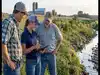
Perdue Farms invested $300,000 in Chesapeake Conservation in 2023. The project reached 40 farmers and cut Nitrogen, Phosphorus and sediment pollution
A three-year project is helping poultry farmers in Pennsylvania, Maryland and Delaware protect the Chesapeake Bay from farm runoff. Forty farmers took part, and 30 installed conservation measures such as better manure management, stormwater controls and planted buffers. The work is expected to reduce nitrogen, phosphorus and sediment entering the watershed each year.

Meet Alaina Zhang, the 17-year-old Rhode Island student testing whether native seaweed can help clean polluted coastal waters
Seaweed is unlikely to provide a complete solution to the many sources of nutrient pollution affecting coastal waters. Reducing the amount of excess nitrogen entering waterways in the first place remains a crucial part of addressing the problem.

These mid-caps have ‘strong buy’ & ‘buy’ recos and an upside potential of over 25%, according to analysts
As an investor, what you need to do at this point of time is this: A bit of extra work in terms of stock-picking so that you avoid anxiety during future corrective phases in the market. And there should not be any doubt that, given the current geopolitical conditions, there will be many more corrective phases.
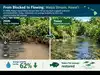
In 2006, Hawai‘i listed Waipā Stream, after dense hau bush trapped sediment and blocked fish. Today, restoration cut average turbidity by 62% and restored native fish passage
Waipā Stream restoration efforts significantly improved water quality and aquatic habitats. Invasive hau bush removal and feral pig control reduced sediment pollution. Constructed wetlands and riparian revegetation further enhanced stream conditions and native fish populations. Measurable improvements led to the delisting of turbidity and nutrients from impaired waters. Continued community commitment ensures ongoing watershed protection and management for the future.
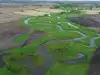
Iowa conservationists restored more than 200 forgotten river bends. Now this endangered fish is returning
In Iowa, conservationists are bringing back the forgotten oxbow wetlands, shaped like U's, to protect the endangered Topeka shiner fish, which is now making a comeback. This restoration not only restores habitats for diverse bird and fish species but also helps manage floodwaters and decrease nitrogen pollution, showcasing the remarkable benefits of revitalizing our natural river environments.

In 2011, New South Wales sank ex-HMAS Adelaide off the Central Coast; five years of surveys identified 62 fish species from 31 families around the wreck before storm damage led to its closure in July 2024
In mid-2024, severe storms wreaked havoc on the ex-HMAS Adelaide artificial reef, leading to significant structural concerns. The superstructure became disconnected from its hull, posing dangers for divers. Consequently, the site was closed in July 2024 to ensure safety. Although the hull remains largely intact, floating debris continues to threaten safety, prompting authorities to explore options for debris removal or a controlled collapse.
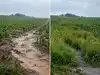
At Iowa's Neal Smith Refuge, turning just 10% of cropland into prairie strips cut sediment loss by 95%, phosphorus runoff by 90%, and total nitrogen loss by about 85%
Native prairie strips can play a crucial role in reducing agricultural runoff, which has significant environmental implications. By preventing sediment and nutrient loss from farmland, these strips contribute positively to addressing the dead zone issue in the Gulf of Mexico. Moreover, farmers can adopt this practice with limited land alteration and investment. However, broader adoption will require supportive policies and public awareness.
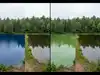
Michigan scientists in 2024 dyed a lake blue and added fertilizer to test if blocking sunlight could prevent algal blooms; rain washed away the dye and the water turned green
Scientists dyed Peter Lake blue to test sunlight reduction for algal bloom prevention. Repeated rainfall washed out the dye, allowing algae to grow. The experiment demonstrated challenges in controlling natural lake ecosystems. Excess nutrients remain a primary cause of algal blooms in waterways. This research underscores the difficulty of managing environmental interventions.
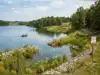
In 2004, Illinois began Cedar Lake restoration with 3 projects to curb erosion. 18 years later, Cedar Creek was delisted for 3 impairments after sediment and TSS improved
Cedar Lake erosion restoration Illinois: Extensive erosion restoration efforts at Cedar Lake have significantly improved water quality. Projects focused on stabilizing shorelines and gullies, reducing sediment and nutrient pollution. These restoration initiatives successfully addressed multiple water quality impairments in Cedar Creek.
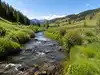
In 1994, Idaho listed Rapid Creek for sediment after grazing added excess sediment. 20 years later, 3 reaches were delisted after BMPs improved habitat and water quality
Rapid Creek in southeastern Idaho was listed for sediment impairment in 1994 after assessments found that several streams did not support cold water aquatic life. Livestock grazing, streambank erosion, sheet and rill erosion, and road erosion contributed excess sediment to the watershed. Beginning in the late 1980s, landowners and watershed partners implemented agricultural best management practices to reduce soil erosion and improve stream conditions. Later monitoring showed declines in suspended solids, Escherichia coli, and nitrogen concentrations, along with improved biological and habitat scores.
In 1996, Illinois added Lake Decatur to its pollution list after farm runoff harmed its water. 28 years later, nitrogen levels fell below the 7.8 mg/L limit
Lake Decatur's water quality improved after implementing agricultural best management practices. Efforts to reduce nutrient and sediment runoff continue to protect this vital resource. Grants funded watershed plans and structural best management practices for farmers. Monitoring shows promising trends for nitrogen and phosphorus levels in the lake. Continuous effort is needed to maintain water quality improvements for the future.
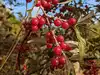
In the 1830s, America imported autumn olives from eastern Asia to stop erosion and reclaim mines; now the plant infests much of the United States
Autumn olive, introduced from Asia, was used for erosion control and land restoration. This shrub's nitrogen-fixing ability and rapid growth created ecological imbalances. It outcompeted native plants by forming dense thickets and altering soil conditions. Birds and mammals spread its seeds, facilitating its invasive spread across the United States. Controlling this once-valued plant now requires extensive mechanical and chemical efforts.
In 2012, Jefferson County SWCD teamed up with local groups to restore Indian-Kentuck Creek. 12 years later, conservation work cut nitrogen pollution by 81,259 pounds a year
Agricultural best management practices improved water quality in the Brushy Fork subwatershed. Nutrient and phosphorus inputs were reduced, benefiting aquatic habitats significantly. Stream segments are now proposed for delisting due to these conservation efforts. Local engagement and sustained implementation drove the project's overall success. These actions demonstrate effective watershed restoration and community stewardship.
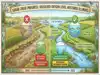
In 2002, Illinois listed Sugar Creek as polluted by 2 water-quality problems. 20 years later, 1 was cleared after cleanup efforts helped restore healthy oxygen levels
Sugar Creek's dissolved oxygen impairment was cleared after twenty years of restoration work. Projects across the watershed focused on reducing agricultural pollution and erosion sources. Water quality monitoring confirmed dissolved oxygen levels met state standards by 2022. This success led to the creek's removal from the impaired waters list.
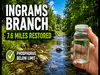
In 2006, Delaware listed Broadkill River waters as impaired for nutrients. 18 years later, BMPs helped restore 7.6 miles of Ingrams Branch, bringing phosphorus levels below the state threshold
Ingrams Branch in Delaware has reached an important water-quality milestone. The 7.6-mile stream segment was once impaired by excess phosphorus. Delaware listed the Broadkill River watershed for nutrient problems in 2006. Years of conservation work followed across nearby farmland. Cover crops, nutrient planning and other best management practices helped reduce nutrient runoff. By 2024, phosphorus levels had fallen below Delaware’s state threshold, allowing the impairment to be removed.

In 2011, Arkansas prioritized Lake Conway-Point Remove to tackle pollution. 13 years later, Conway cut nitrogen 41% and phosphorus 44% with green infrastructure annually
Lake Conway-Point Remove story ultimately shows why the future of water-quality protection may depend on combining engineering with ecology. A watershed facing stormwater pollution does not always have to choose between functional infrastructure and a healthier natural environment. Conway's experience demonstrates that porous surfaces, wetlands, rain gardens, native vegetation and infiltration systems can work together to reduce pollution while improving flood resilience and creating public spaces.

In 2006, Arkansas DEQ listed Clear Creek for E. coli. 12 years later, the creek attained the recreation standard in 2018, restoring contact recreation after BMP projects
Clear Creek in Arkansas has seen remarkable recovery since battling E. coli contamination back in 2006. Persistent water quality checks and the implementation of urban best management practices have led to this improvement. Enhanced green stormwater infrastructure like rain gardens has played a vital role in minimizing stormwater volume and pollutants.
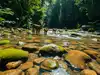
In 2006, Delaware listed the Broadkill watershed for nitrogen and phosphorus impairment. 18 years later, BMPs restored 7.6 miles of Ingrams Branch, ending the phosphorus
The restoration of Ingrams Branch is a powerful example of how best management practices can produce measurable improvements in water quality when they are applied consistently over time. What began with nutrient impairment concerns evolved into a coordinated watershed effort involving farmers, conservation districts, state officials, federal agencies and local partners.
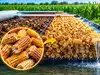
USDA field pilots replaced most woodchips with corn cobs in nitrate bioreactors; the 75% corn-cob beds removed nitrate up to 10 times faster
Field pilots have demonstrated that corn cobs are highly effective in removing nitrates from farm drainage water. These innovative bioreactors not only accelerate the cleaning process but also do so at a fraction of the cost compared to traditional woodchip systems. Research indicates that a mixture containing 75 percent corn cobs can enhance nitrate removal by 1.6 to 10 times, utilizing a readily available agricultural byproduct common in the Midwest.

In 1994, Illinois EPA listed 50.75 miles of Silver Creek as impaired by farm pollution. 28 years later, Illinois removed the creek from its impaired list in 2022
Upper Silver Creek in Illinois has been removed from an impaired waters list. Best management practices were installed to reduce pollution from agricultural sources. These efforts significantly lowered nitrogen and sediment loads in the waterway. Water quality monitoring confirmed improvements in dissolved oxygen levels. The successful project demonstrates effective watershed management strategies.

12-year-old hospitalised in Bengaluru after eating liquid nitrogen paan. Here is why consuming it can prove fatal
A 12-year-old girl in Bengaluru suffered a stomach perforation after consuming liquid nitrogen paan, highlighting the dangers of food trends. The incident, which occurred in April, led to immediate surgery to prevent further complications. Liquid nitrogen, used for rapid freezing in the food industry, can cause severe burns and frostbite if ingested. Experts advise against its use in food and recommend educating customers about its risks. The case underscores the importance of understanding and safely handling innovative food practices.
Load More

