NEUROSCIENCE

Moral judgments can be manipulated using magnetic waves. How MIT scientists discovered a way to change people's sense of right and wrong
Scientists at MIT discovered that magnetic pulses targeting a specific brain region can temporarily influence how people judge right and wrong. In an experiment, participants became more likely to consider harmful actions acceptable when the intended harm did not occur, revealing how the brain processes intentions and outcomes when making moral decisions.
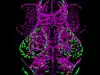
MIT scientists scanned a larval zebrafish brain 200 times per second; ultraviolet light triggered electrical activity that spread across its brain
A groundbreaking microscope developed by MIT enables ultra-fast imaging of neuronal activity in zebrafish brains, achieving scans at an impressive 200 frames per second. Although only 25% of neurons have shown responses thus far, this represents a pivotal stride in neuroscience. Researchers aspire to leverage this technology for insights into neuron interactions within networks, potentially broadening its application to more sophisticated animal models in future investigations.
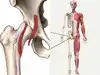
Who are Dominic Roy and Cooper Bruce? Tulane University students discover new muscle attachment that could reshape hip surgery
In a groundbreaking discovery, Tulane University students Dominic Roy and Cooper Bruce uncovered a new muscle attachment during a cadaver dissection. This pelvic structure holds potential implications for understanding hip pain and surgical procedures. Collaborating with Dr. R Shane Tubbs, they validated their findings through further examinations. This breakthrough could reshape treatment strategies for hip-related ailments, igniting Roy and Bruce's aspirations to enter the medical field.
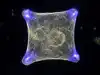
MIT scientists shone patterned light on starfish egg cells carrying a modified enzyme; the cells moved and changed shape, and some were stretched into squares
In a groundbreaking study, scientists have engineered starfish egg cells to respond to light stimuli, allowing them to dynamically alter their shapes. These cells can morph from elongated squares to contracted forms depending on the intensity of light exposure. This innovative research opens doors for potential advancements in synthetic biology, including tissue repair and targeted drug delivery systems that activate precisely where needed.

Low vitamin C intake during pregnancy linked with negative emotions in infants: Study
Mothers with lower vitamin C intake during pregnancy were more likely to have fussy infants at six months. Supplemental vitamin C intake can mediate these negative emotions and support healthy brain development. The study analyzed data from over 300 pregnant women, focusing on nutrition and maternal mental health. Researchers suggest that this nutritional change is easily modifiable and can benefit families significantly.

Short-term headwinds, yes; owning the ecosystem is better: 20 healthcare stocks with downside risk of 23% to upside potential of 41%
The healthcare sector is under scrutiny. The issue is pricing: What medicines cost and on what hospitals and the rest of the health ecosystem charge. And both the government and the courts have stepped in. At one level, that is not entirely a bad thing. Check out Stock Reports Plus, powered by Refinitiv, for price targets of over 4,000 listed stocks along with detailed company analysis focusing on five key components – earnings, fundamentals, relative valuation, risk, and price momentum – to generate standardised scores. SR+ Reports is a complimentary offering to ETPrime members.
- Go To Page 1

Paras Healthcare shares to list today: Check GMP ahead of debut
The Rs 1,450-crore IPO comprised a fresh issue of 72.15 lakh shares worth Rs 500 crore and an offer for sale (OFS) of 1.37 crore shares aggregating to Rs 950 crore. The company fixed the price band at Rs 660–693 per share, with a lot size of 21 shares. At the upper end of the price band, retail investors applying for one lot were required to invest a minimum of Rs 14,553.

Paras Healthcare allotment likely today: Check GMP, key details and how to check status
Paras Healthcare IPO allotment is expected to be finalised today after the Rs 1,450-crore issue was subscribed 2.23 times. With the GMP indicating a potential listing gain of around 1%, investors can check their allotment status on the MUFG Intime, NSE and BSE websites. The hospital chain is scheduled to list on October 28, 2026, after reporting a return to profitability in FY26.

Paras Healthcare IPO Day 3: Check GMP, subscription status and key details
Paras Healthcare’s Rs 1,450 crore IPO enters its final bidding day with a muted response, while a grey market premium of around 2% signals modest listing expectations. Retail investors have subscribed fully, but institutional demand remains subdued.

Pathos AI teams up with Bristol Myers and Tempus AI to advance drug development
Pathos AI said on Friday it had entered into a collaboration with Bristol Myers Squibb and Tempus AI to develop artificial intelligence tools for drug development in Alzheimer's

Ethan Klein cheating: Who is Tamara Joseph and how did she meet the American-Israeli YouTuber? Hila Klein says 'I am living in a nightmare'
Ethan Klein Tamara: Ethan Klein's wife, Hila Klein, has accused the YouTuber of having an affair lasting more than six months, sparking online speculation about H3 Podcast animator Tamara Joseph. Who is Tamara Joseph, how did she meet Ethan Klein, and what did Hila reveal about the alleged affair in a series of her Instagram posts?

Paras Healthcare IPO Day 2: GMP at 4%; check subscription status and key details
Paras Healthcare has launched its IPO, starting on October 21 and concluding on October 23. By October 22, participation had reached only 15% overall, yet retail investor involvement surged to 69%. The funds raised are intended for debt repayment and general corporate uses. In Fiscal Year 2026, Paras Healthcare reported a notable profit of Rs 44 crore. Shares are expected to be listed by October 28, 2026.

Paras Healthcare IPO opens for subscription: Check GMP, price band and key details
Paras Healthcare’s Rs 1,450 crore IPO opened for subscription on October 21 and closes on October 23, with a grey market premium (GMP) of around 7%. The issue comprises a fresh issue of Rs 500 crore and an offer for sale (OFS) of Rs 950 crore.

The science of better decisions: How the brain responds to pressure
Stress, cognitive fatigue and divided attention can affect how founders assess risks and make decisions. Understanding the neuroscience behind these responses offers business leaders practical ways to manage pressure, build better habits and sustain performance.

University of Liverpool opens Bengaluru campus with nearly 300 students
The University of Liverpool proudly inaugurates its Bengaluru campus, enrolling nearly 300 students across a range of programs. Marking its first international foray in two decades, this campus boasts state-of-the-art facilities that promote practical learning infused with local industry relevance. Collaborations with preeminent institutions and corporate partners have been established to foster research advancement, underscoring the vital educational relationship between India and the UK.

Popular songs are losing feeling and getting more anxious, Michigan State University researchers find in one of the largest studies of its kind analyzing over 38,000 lyrics
Researchers at Michigan State University conducted an impressive analysis of more than 38,000 songs from diverse artists across time. Their findings highlighted a growing prevalence of anxiety-related language within lyrics, alongside a decrease in emotional and relational themes. This trend held steady through various musical eras, indicating that maturity in artists does not seem to translate into greater emotional awareness or connections reflected in their songwriting.

Mega Jio Platforms IPO to lead Rs 31,663 crore offerings this week; 9 listings lined up
India’s primary market is set for a busy week, led by Reliance Jio Platforms’ Rs 30,213 crore IPO and Paras Healthcare’s Rs 1,450 crore issue. Both IPOs open on October 21. Nine companies are also scheduled to list, including six on the mainboard and three on SME platforms.

These large- and mid-cap stocks can give more than 20% return in 1 year, according to analysts
The next few weeks are critical, and one should not be in a hurry to make market-related decisions. Better to be cautious – to wait and watch. Let the picture become a little clearer before you act.

ETSA 2026: India’s strong medical, STEM talent can drive deeptech startups: BrainSight AI cofounder
Laina Emmanuel, cofounder of BrainSight AI, remarked that India needs to create more opportunities for scientists, engineers, and doctors to work together and build deeptech companies.

A study says brain circuits can change roles: Here’s how you can remember a shopping list, directions and prices at the same time
An MIT study found that some brain circuits in mice could remember a sound, then switch to holding an action plan.The finding offers a clue to how the brain handles different information by reusing some of the same neurons.

A study says multitasking has a hidden problem: How does your brain decide what matters?
A University of Chicago study suggests multitasking becomes harder when your brain is unsure which information matters.Irrelevant details can interfere with useful information, making decisions less accurate.Focusing on one task and allowing time to switch may help you stay on track.

A study says faster reactions can come with fuzzier memories: What happens when your brain knows what to expect
Your brain can prepare for familiar events before they happen.A University of Sydney study found that expected events prompted faster reactions but less precise recall of their locations.

A study says your brain shifts attention when plans change: How it chooses what matters next
A University of Iowa study looked at how the brain makes decisions when familiar rules no longer provide clear answers. Researchers found that the frontoparietal network shifts the way it communicates with other parts of the brain as a decision takes shape.

What music does to us
Music possesses a profound ability to stir deep emotions in listeners and summon memories from the past. In a captivating discussion, presenter Tom Service and music psychologist Victoria Williamson dive into the neurological impacts of musical experiences. They explore how unexpected patterns in music create joy and powerful sensations, all while emphasizing that understanding music's science doesn't diminish its enchanting essence.

The Nobel-winning breakthrough that turned light into a remote control for the brain, allowing scientists to switch neurons on and off
Optogenetics, a groundbreaking technique, enables researchers to control specific neurons using light, providing insights into brain functions. The 2026 Nobel Prize in Physiology or Medicine was awarded to Karl Deisseroth, Peter Hegemann, and Georg Nagel for this transformative discovery. Their work originated from the study of light-sensitive proteins in green algae, which led to applying these proteins in neuroscience.

Who is Nobel winner Karl Deisseroth? And all about optogenetics that could restore sight in visually impaired people
The 2026 Nobel Prize in Physiology or Medicine has been awarded to Karl Deisseroth, Peter Hegemann, and Georg Nagel for their groundbreaking contributions to neuroscience and optogenetics. This innovative technique enables researchers to manipulate nerve cells with light, offering profound insights into brain functionality. Their work has opened doors to understanding neurological and psychiatric conditions, showcasing the significance of their research in advancing future medical science.

Nobel Prize 2026 in Physiology or Medicine awarded to Karl Deisseroth, Peter Hegemann and Georg Nagel
Karl Deisseroth, Peter Hegemann, and Georg Nagel were awarded the 2026 Nobel Prize in Physiology or Medicine. They were recognized for their discoveries in light-gated ion channels and the development of optogenetics. These discoveries allow researchers to control nerve cell activity with light, which is a significant advancement in neuroscience. The Nobel committee noted the impact of optogenetics in revealing brain functions.
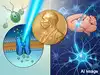
Nobel Prize Medicine 2026: Scientists found a 'light switch' inside algae & turned it into a tool to control brain cells; what this discovery means
Nobel Prize Medicine 2026: The 2026 Nobel Prize in Physiology or Medicine has been awarded to Karl Deisseroth, Peter Hegemann and Georg Nagel for their discoveries involving light-gated ion channels and optogenetics. Their work showed how light-sensitive proteins can be used to control nerve-cell activity, opening new ways to study the brain and its neural circuits.
Load More