NEURAL NETWORKS

In 2023, 1,800 volunteers classified simulated neutrino events from Antarctic ice data; 128,000 assessments helped scientists compare human judgments with AI
In a remarkable feat in 2023, the IceCube Neutrino Observatory harnessed the efforts of 1,800 participants to classify simulated neutrino events with impressive accuracy. This initiative underscored the indispensable role of citizen science in intricate scientific endeavors, as the volunteers classified over 128,000 events, achieving results on par with advanced deep neural networks.
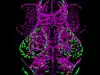
MIT scientists scanned a larval zebrafish brain 200 times per second; ultraviolet light triggered electrical activity that spread across its brain
A groundbreaking microscope developed by MIT enables ultra-fast imaging of neuronal activity in zebrafish brains, achieving scans at an impressive 200 frames per second. Although only 25% of neurons have shown responses thus far, this represents a pivotal stride in neuroscience. Researchers aspire to leverage this technology for insights into neuron interactions within networks, potentially broadening its application to more sophisticated animal models in future investigations.
'Chernobyl-like' blackout soon: 'Godfather of AI' predicts crisis this year or next; Nobel laureate Geoffrey Hinton warns of risks to financial markets & power systems
AI could trigger a 'Chernobyl-like' crisis this year or next, Nobel laureate Geoffrey Hinton has warned, cautioning that the technology could temporarily disrupt financial or power systems. Speaking to The Guardian, the 'godfather of AI' also criticised tech leaders Elon Musk, Mark Zuckerberg and Sam Altman for allegedly putting profits ahead of safety, while saying a catastrophe could still be averted.

China's Baidu launches AI model simulating road environment for robotaxis
Apollo World can generate "up to 100,000 km" (62,000 miles) of simulated driving daily, equivalent to about three years of real-world testing by a safety-driver-equipped autonomous vehicle, Baidu said. The system is capable of producing real-time multimodal data streams, such as camera and lidar observations, enabling self-driving systems to directly sense and navigate simulated environments.
Meet Lukas Biewald, who lost his CEO role at his first startup; how an unpaid internship at OpenAI helped him build an AI company behind a karate studio that sold for $1.7 billion
After reportedly leaving the CEO role, Lukas Biewald felt that he needed to strengthen his technical knowledge as deep learning advanced. He then spent time building robots, experimenting with TensorFlow in a Raspberry Pi and studying neural networks. He taught introductory deep-learning classes to thousands of engineers, which helped him understand the problems developers faced when building AI models.
Anthropic IPO: What 12 AI terms should investors know before buying shares amid $16.3 billion revenue and an $80.7 billion loss?
Anthropic's planned IPO could attract investors who want to benefit from the growth of artificial intelligence. But understanding the company's business will require more than looking at its revenue, losses and expected valuation. Its prospectus also uses technical terms that explain how its AI systems work, how the company trains its models and what risks it faces.

Starkey launched its new AI-powered hearing aid in 2026; it can last 51 hours, will alert your family if you fall; here's how it works
Starkey is a US-based hearing technology business founded by Bill Austin in 1967. It develops hearing aids and related technologies. On October 1, 2026, Starkey announced Omega AI+, the successor to its Omega AI hearing aid platform launched in 2025. It uses four deep neural networks working simultaneously to analyse speech, background noise and other sounds.

Meet Chris Olah, who left university at 18 without a degree, got into Google Brain through his blog posts and went on to co-found Anthropic
Olah co-founded Anthropic. It is the company behind the Claude family of AI models. AI interpretability is also a field that he works on. It aims to understand how artificial intelligence systems process information and arrive at their answers. His journey is very interesting as he left university and then worked at some of the world's leading AI research organisations.

Meet Jonathan Frankle, who taught programming to law students, then a 'lottery ticket' idea led to a $1.3 billion exit and Databricks' top AI job
Frankle became part of the founding team at MosaicML. It was an AI startup established in 2021. There, he served as its chief scientist. He also helped lead research into making AI model training more efficient. MosaicML had one focus. It was on helping businesses build and train their own machine learning models rather than depending entirely on ready-made AI services.

The science of better decisions: How the brain responds to pressure
Stress, cognitive fatigue and divided attention can affect how founders assess risks and make decisions. Understanding the neuroscience behind these responses offers business leaders practical ways to manage pressure, build better habits and sustain performance.
A study says brain circuits can change roles: Here’s how you can remember a shopping list, directions and prices at the same time
An MIT study found that some brain circuits in mice could remember a sound, then switch to holding an action plan.The finding offers a clue to how the brain handles different information by reusing some of the same neurons.
India's semiconductor push, agentic AI set to reshape telecom and connected devices: Industry leaders
India's semiconductor ambitions and the rapid adoption of agentic artificial intelligence (AI) are set to reshape the country's technology and telecom ecosystem, with industry leaders seeing opportunities across chip design, domestic manufacturing, autonomous networks, enterprise solutions and next-generation connectivity.

Ben Affleck's life beyond Hollywood: Python coding, working with GPUs, AI and neural networks for years. Actor even got access to Google, OpenAI's labs
Ben Affleck’s career has taken a fascinating turn as he explores the world of artificial intelligence in the film industry. By founding InterPositive, he aims to equip filmmakers with innovative AI tools, ensuring artists remain in charge of their narratives. Netflix’s acquisition of InterPositive for roughly $587 million illustrates the rise of technology in storytelling.
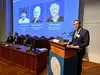
The Nobel-winning breakthrough that turned light into a remote control for the brain, allowing scientists to switch neurons on and off
Optogenetics, a groundbreaking technique, enables researchers to control specific neurons using light, providing insights into brain functions. The 2026 Nobel Prize in Physiology or Medicine was awarded to Karl Deisseroth, Peter Hegemann, and Georg Nagel for this transformative discovery. Their work originated from the study of light-sensitive proteins in green algae, which led to applying these proteins in neuroscience.

IITian who secured AIR 1 in JEE, left India to study at University of California in 2004. 10 years later, one Shah Rukh Khan flop film inspired him to return to India. Today, he is an expert on mosquito brain
He was once the very epitome of the Indian success story. Meet Professor Nitin Gupta, who once left India to pursue a PhD in bioinformatics at the University of California, San Diego, and spent years at the National Institutes of Health in the USA before giving it all up and returning to India. Today, he is an associate professor at IIT Kanpur.
In 2017, Google researchers published “Attention Is All You Need”; they were solving translation, but accidentally laid the foundation for today’s AI age
Google Translate once struggled with long sentences because its software processed language one word at a time. This sequential reading approach created severe computational bottlenecks, slowing down translation and causing models to lose context by the time they reached the end of a paragraph. Computer scientists solved this limitation by abandoning step-by-step reading entirely. Their Transformer architecture analyzed full blocks of text simultaneously using self-attention.
Jensen Huang cleaned bathrooms at 9; in 2006, he launched CUDA as Nvidia’s valuation plunged. 18 years later, it helped make GPUs central to AI
Jensen Huang's journey started at a boarding school in Kentucky, where he worked as a janitor. After his parents joined him, they faced financial struggles, which shaped Huang's future. He later worked at Denny's, where he conceived the idea for Nvidia. Despite initial challenges, Nvidia introduced CUDA, which became crucial for AI development.

SiMa AI raises $150 million in funding to advance physical AI technology and robotics
The round was co-led by Fidelity Management & Research Company and Amplify, with participation from Alter Venture Partners, Dell Technologies Capital and StepStone Group, founder and chief executive Krishna Rangasayee told ET. AllianceBernstein, Baron Capital and JPMorgan joined the round as new investors.
Load More