
NEST LABS

In 2014, New Jersey reused 7,000 cubic yards of dredged sand at Ring Island; the new nesting ground was later used by 4 threatened or at-risk shorebird species
New Jersey has implemented an innovative project to support nesting birds facing habitat loss due to rising sea levels. Sand dredged from waterways was used to raise the ground on Ring Island for bird nesting. Species such as black skimmers and least terns have begun to return to these created habitats after several years. Ongoing maintenance is required to ensure these habitats remain suitable for the birds.

In 1851, Brooklyn released 100 house sparrows from England; 175 years later, the birds are found across nearly all of North America
House Sparrows, introduced to North America during the mid-1800s, have rapidly become a prevalent part of the continent's avian scene. Their adaptability allows them to thrive in various environments, often settling in structures created by humans. While their populations have flourished, their competitive nature poses a challenge to native species for nesting access, making their presence a regular sight in both urban and rural settings.

In 1890, a pharmacist released 80 birds in New York’s Central Park to honour Shakespeare; 136 years later, their descendants number about 93 million across North America
In 1890, eighty European Starlings were introduced to Central Park, leading to a population explosion across North America. Over the span of just 130 years, these birds have shown remarkable local adaptability, as indicated by genetic studies. Although their numbers have faced a decline, the evolutionary insights gained from their rapid success present a significant opportunity for understanding the foundations of biodiversity.
In 2021, Berlin teams studied 166 naked mole-rats and found they recognised colony-specific vocal dialects; cross-fostered pups learned the dialect of their new colony
Naked mole-rats possess distinct vocal dialects learned from their colony members. Researchers found these animals respond more to their own colony's chirps. Cross-fostered pups adopted the dialect of their new colony within months. Colony dialect consistency decreased significantly after the queen's death. This vocal learning places naked mole-rats among a select group of mammals.
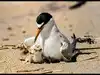
When a tropical cyclone hit Florida’s Gulf coast in July 2026, sea turtles weren’t the only victims: The world’s smallest tern was raising young on Pensacola beach when seawater inundated its nesting grounds
During the nesting season, coastal birds like Least Terns and Black Skimmers are at high risk from tropical cyclones. These birds nest directly on sandy shores, making their eggs and chicks particularly vulnerable to storm surges that can flood breeding sites. The coinciding of nesting and hurricane seasons, as seen with storm Bertha in July 2026, reveals the dire threats these seabirds face.

ET Startup Awards 2026: Nominees for Top Innovator
The award will recognise innovations that launch a business or give it a big boost. It should be an original idea that is core to the business or one that provides the differentiation that sets it apart from the competition.
- Go To Page 1
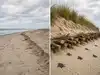
Texas placed 250 used Christmas trees on South Padre Island; their branches are trapping sand to protect sea-turtle eggs from flooding
Christmas trees that have been tossed aside are being repurposed on South Padre Island to bolster the natural dunes crucial for the Kemp's ridley sea turtle's survival. By capturing blowing sand, these trees help create stronger barriers against flooding and erosion. This time-tested strategy, employed for more than seventy years, highlights community efforts dedicated to preserving this endangered species and ensuring safer nesting grounds.
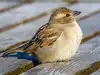
In 1850s, a Brooklyn scientist imported 16 English sparrows to eat urban caterpillars; by 1915, the invasive birds had spread across America
House sparrows were introduced to America in 1850, which quickly led to their widespread establishment. These birds, initially intended to control insects, primarily consume seeds and grains. They rapidly spread across the continent within approximately fifty years after their introduction. Today, house sparrows compete with native birds for nesting sites and food resources. This historical introduction serves as a lesson about unintended ecological consequences.

EMRS Recruitment 2025: 7,267 teaching & non-teaching vacancies open; Apply online now
The Eklavya Model Residential Schools (EMRS) has announced a massive recruitment drive for 2025, offering 7,267 teaching and non-teaching positions across India. The online application process commenced on September 19, 2025, and continues until October 23, 2025. Aspiring candidates can apply through the official portal, nests.tribal.gov.in, for roles ranging from Principals to Lab Attendants.

Google for Startups rolls out third cohort of Growth Academy: AI for Health programme
The initiative is designed to support early-stage companies across Europe, Africa, and the Middle East that are using AI to address some of the sector’s most pressing challenges.

Politics over laddoos
Andhra CM's assertion that the previous YSRCP government used animal fat instead of ghee in Tirupati laddoos has ignited controversy. YV Subba Reddy, former chairman of Tirumala Tirupati Devasthanam, challenges this claim, stating he can swear on Lord Venkateswara. The government cites a lab report suggesting the presence of fish and beef oil.

Google-Wiz deal talks: here's a look at the tech giant's biggest acquisitions
Google looks to take on rivals Amazon Web Services and Microsoft Azure in the cloud-computing space. If the deal goes through, this will be the tech giant's biggest acquisition, almost double what it paid for Motorola Mobility in 2012. In the past decade, the search engine giant has made several big-ticket deals as well.

Aurum PropTech approves acquisition of up to 100% stake in NestAway
The online home rental marketplace had secured a cumulative funding of $110 million at the latest valuation of $220 million in 2019, garnering investments from marquee investors such as Tiger Global, Flipkart, Goldman Sachs, Yuri Milner, and UC-RNT Fund, which is a venture capital fund co-managed by Ratan Tata's RNT Associates and the University of California.

Aurum PropTech set to buy Ratan Tata-backed NestAway
Apart from the founders, the company's shareholders include global institutional investors and prominent business personalities such as the former Tata Sons chairman. Founded in 2015, the online home rental marketplace counts Flipkart, Chiratae Ventures and a university fund also among its key investors. Over the years, NestAway has successfully raised $110 million to support its growth and expansion plans from its prominent investors.

Apple’s M1 chip is an iconic product, says iPod inventor Tony Fadell
Tony Fadell said Apple's ‘ground-breaking release’ of the M1 Processor last year is an inflection point equivalent to previous iPod and iPhone releases.

YourNest Venture Capital debuts its fast-track funding programme SOAR
Under the SOAR programme, selected startups are eligible to receive between $250,000-$1 million in funding, and will receive support across key functions, including, strategy, compliance, legal, secretarial and talent sourcing, among others.

Country's first Super Fab Lab inaugurated by Kerala CM
Chief Minister Pinarayi Vijayan inaugurated the facility through remote control from Palakkad, where he attended a function at the government Polytechic College.

Here's why it's not easy to start a gadget company
It brought a renaissance of consumer hardware startups, and thousands of great consumer hardware ideas bloomed. But it turns out it's not easy to make it as a standalone company based on gadgets rather than software.

Artificial intelligence start up Arya.ai gets $750,000 funding
Arya.ai offers deep learning algorithms for developers to build intelligent AI systems that can adapt and do multiple things with minimal inputs.

For Nest Labs CEO Tony Fadell, collecting watches is a serious business
Nest Labs CEO Tony Fadell doesn't just like watches. He has a seven-figure collection.

Meet the bigshots at Alphabet, the new Google company
All the core Google businesses search, ads, Android, YouTube, maps will still be called Google, and will be led by new CEO Sundar Pichai.
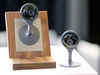
Google's Nest targeting 'thoughtful' homes with new products
Google's Nest Labs is releasing new versions of its surveillance-video camera and talking smoke detector as part of its attempt to turn homes into yet another thing that can be controlled and tracked over the Internet.

Infosys Labs being modelled on the lines of legendary Xerox PARC and Bell Labs
The move is a part of a strategy that comes weeks after the organisational reshuffle that resulted in the wing being realigned to the company’s service lines.

Google Glass project to be overseen by ex-Apple executive
The company said it’s working on a new Glass product and will continue to invest in a business-focused program for the eyewear.

CES 2015: Can wearables & connected devices become an integral part of consumers' lives?
The number of connected devices is set to grow five-fold to over 25 billion by 2020, with consumer devices accounting for more than half of that.

Samsung acquires SmartThing, a startup that turns mobile apps to remotely control devices
"Joining forces with Samsung will enable us to support all of the leading smartphone vendors, devices, & apps; expand our base of developers & enhance the tools & programs," SmartThings posted.

VC funding in smart grid sector at $101 million in Q1: Mercom Capital Group
Venture capital (VC) funding in smart grid technology companies was made through 21 deals in the three months ended March.
Count the sparrows before they vanish
On the occasion of World Sparrow Day on Thursday, you can contribute in your little way by counting the birds and letting the biodiversity and wildlife conservation lab of Lucknow University know your count.
Load More


