
NATURAL RESOURCES EXPLOITATION

India exposes Pakistan's resource exploitation at UN; cites army chief's "mineral box" display
India accused Pakistan's military establishment of exploiting the country's mineral wealth for personal gain and fomenting regional conflict, during a UN Security Council meeting on natural resources and conflict. India's envoy Parvathaneni Harish also linked military involvement in resource extraction to political turmoil in Pakistan and called for greater community participation in resource governance.

India supports UNGA resolution on permanent sovereignty of Palestinian people
India supported a UN resolution affirming the rights of Palestinian people and the Syrian Golan population. The resolution demands Israel to cease exploitation of natural resources and harmful environmental practices. It also condemns the construction of settlements, which contravene international law, and calls for immediate compliance. Additionally, the resolution emphasizes the need for reconstruction efforts in the Gaza Strip.

India wants more factories, fabs and data centres. Where will the water come from?
India holds about 4% of global freshwater resources, while its demand is projected to double by 2030. The industrial sectors are increasingly vulnerable to water shortages, which may significantly affect growth plans and investments. Treatment of municipal wastewater presents a viable alternative for meeting industrial water needs and can create a new revenue source for urban areas.

India should offer world new development model rooted in tradition: RSS chief Mohan Bhagwat
Mohan Bhagwat called attention to India's heritage of traditional wisdom as a potential blueprint for global progress. He underlined the necessity of achieving equilibrium among human lifestyles, animal health, and environmental integrity. Concurrently, Maharashtra Chief Minister Devendra Fadnavis confronted the agricultural issues arising from climate change, and Union Minister Nitin Gadkari announced the establishment of agriculture and veterinary institutions as vital steps for enhancing local development.

‘The Nvidia case can help us limit East India Company-like practices’
Stanford professor Fred Turner argues that Silicon Valley's culture, shaped by Cold War computing research and the 1960s counterculture, has evolved into a system where powerful technology leaders exercise influence with limited institutional checks.
MIT scientists built over 400 tiny ecosystems with 12 to 20 bacterial species; after adding an outsider, the more changeable communities were easier to invade
Researchers at MIT have discovered that chaotic ecosystems easily accept new species while stable ones resist invasion. Conventional ecological beliefs suggest high biodiversity prevents invasions, but stability plays a crucial role. This finding has implications for the effectiveness of probiotic supplements in human gut microbiomes. Individuals with more stable guts may struggle to welcome beneficial probiotics. Future studies will further explore these dynamics and their relevance in wellness treatments.

A couple helped fund a new hospital for rescued wildlife in Thailand; it opened in December 2025 to provide emergency treatment and ongoing care
A newly established wildlife hospital in Thailand aims to enhance medical care for rescued animals facing injuries and threats from exploitation or illegal wildlife trade. This state-of-the-art facility will cater to various needs, including emergency treatments and rehabilitation. Long-term care is also available for animals that cannot return to their natural habitat, highlighting the importance of ongoing funding to sustain its vital operations.

The experience of the Shanti Rasa or Bhaav key reason behind Hanuman Ansh’s success: Producer Namrata G Singh
The film Hanuman Ansh has grossed nearly Rs340 crore at the box office, which is unprecedented for its modest budget. Producer Namrata G Singh emphasizes the significance of preserving intellectual property in storytelling. The film, rooted in spirituality, explores the life of Neem Karoli Maharaj and his connections with devotees. It also aims to expand into various formats and languages to reach global audiences.

In 1935, Australian government released 2,400 toads to destroy crop-eating beetles. Almost 100 years later, 200 million giant toads threaten 75 wildlife species
Sometimes, a solution can become an impending disaster. In the 1930s, the Australia government released more than 2000 cane toads imported from Hawaii to curb the beetle population which were wreaking havock on the sugarcane crops. To the Aussie people's horror, as the poisonous amphibians multiplied rapidly, with their population estimated to exceed 200 million by 2011. Today, these have emerged as one of the most unstoppable invasive species in Australia, endangering many wildlife and disrupting the bio-diversity.

Donald Trump has ambitious oil drilling plans for Greenland: Why extraction could be delayed for decades
Donald Trump has announced intentions for large-scale oil and mineral exploration in Greenland, emphasizing its potential resources. The announcement also highlighted Greenland's strategic significance to the United States and Europe. However, there are numerous challenges regarding infrastructure, financing, and regulatory approval that could hinder development. The complex nature of mining operations and environmental considerations also complicate potential projects.
Ted Turner was 10 when National Geographic inspired him to save bison. He has now protected over 2 million acres of land, restored native and endangered wildlife
Ted Turner, motivated by a childhood encounter with a National Geographic article, embarked on his passionate journey of conservation by starting a bison herd. As he built a formidable media empire, he expanded his vision by acquiring extensive ranchlands for wildlife preservation and ecosystem rejuvenation. Turner's legacy showcases his dedication to eco-capitalism, while he actively contributed to the survival of numerous endangered species and habitat restoration across diverse environments.
Swedish billionaire Johan Eliasch bought 4 lakh acres of Amazon rainforest in 2005. What he did next was unusual
Johan Eliasch bought a logging company to save acres of the Amazon rainforest from destruction. Cool Earth, the charity he co-founded, claims that 99% of the rainforest in its conservation partnership areas remains intact. Johan's conservation efforts have helped protect approximately 2.1 million acres of rainforest and 380 million trees.

As Thailand cracks down on foreigners, a tourist paradise reconsiders its welcome
Thailand is facing a growing backlash against foreign influence in its tourist hotspots, particularly southern islands such as Koh Phangan, Phuket and Koh Samui. Locals fear foreign investors and businesses are reshaping communities, driving up property prices and pushing residents out.

ShinyHunters hackers expanded attacks on Oracle's PeopleSoft, Google says
The evolving nature of the attack is likely to ring alarm bells at organisations that rely on PeopleSoft for human resources and other critical functions, and heighten concerns about the vulnerability of even well-resourced institutions.

French mother and Black American father, kidnapped in infancy and raised as a live-in servant in a Swiss family; at 16, Daniel Pauly, ‘The Ocean’s Whistleblower’ escaped Germany and made a massive database covering 36,000+ fish species
Daniel Pauly was born in Paris and faced numerous hardships, including being raised in Switzerland without parental love. After fleeing his unconventional childhood, he pursued higher education and researched fisheries management across multiple continents. His work led to the creation of FishBase and the Sea Around Us project, which quantifies human impacts on global fisheries.
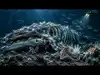
Science says a dead whale can feed an entire ecosystem for decades, what happens after it reaches the seafloor is extraordinary
The massive bones of a whale can hold significant amounts of lipid-rich material. In the low-oxygen environment around a whale fall, microorganisms gradually decompose this organic matter. As part of that breakdown, sulfate-reducing microbes can produce hydrogen sulfide, creating a chemical energy source that helps sustain specialized deep-sea communities.

China's BRI to exploit natural resources, says Tibetan leader
Touted as Chinese President Xi Jinping's ambitious project, the Belt and Road Initiative (BRI) focuses on improving connectivity and cooperation among Asian countries, Africa, China and Europe.

Definition change may let private exploration companies exploit shale
India unveiled a policy for exploitation of shale reserves by state-owned Oil & Natural Gas Corp. and Oil India in 2013, but rules for private companies are still not ready.
Dalit right to exploit resources can’t be defended: Sociologist
Environmentalists are now facing a challenge from a very unusual quarter —a section of dalits , who are demanding a right to exploit natural resources to strengthen their position as capitalists, says noted sociologist Gopal NarayanGuru.
Load More


