
NATIONAL STEEL POLICY

Low-profile India is still a behind-the-scenes force at climate talks
India stands out at the UN climate talks in Turkey with a leaner official delegation compared to many nations. Despite stepping back from hosting future discussions, India remains a pivotal participant, championing the rights of developing nations in terms of climate funding while pushing for stronger commitments from industrialized countries.
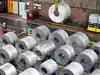
India's steel ambitions need a stronger raw material backbone, industry leaders warn
India's steel industry has called for stronger raw material security through expanded iron ore mining, greater domestic coking coal production, scrap recycling and overseas sourcing partnerships. The demands come as the country targets 604 million tonnes of steel capacity by 2047, up from around 220 million tonnes currently.

IIT Delhi breaks into global top 200 in QS Sustainability Rankings 2027
IIT Delhi has maintained its leading position in India while ranking 194th globally in sustainability. The institute's overall sustainability score increased from 83.1 to 86.5, indicating improved performance. It has implemented various initiatives to promote sustainability on campus and in research. Collaborations with various organizations focus on renewable energy and climate action. IIT Delhi also emphasizes inclusive growth through rural outreach and gender equity initiatives.

India's steel ambitions run into a coking coal import dependence
India meets more than 90% of its coking coal requirement for steelmaking through imports. Despite abundant natural resources, the country also struggles to produce enough usable coking coal for its steel industry. What will it take for the world’s second-largest crude steel producer to address these challenges as it expands steel production?
China has 'decisively surpassed' US in most manufacturing sectors, House Committee report warns
Titled "Rigging the Game: How China Undermined Western Manufacturing and Helped Hollow Out American Industry," the report examines China's influence across biomanufacturing, aerospace, semiconductors and machine tools. According to TET, it argues that Beijing directs capital, technology and market share towards strategic industries while using government-backed investments, regulations and state-owned buyers to weaken foreign competitors.
Trump's tariffs are unpopular -- but they''ll be tough to repeal despite Democrats' landslide win
James Talarico, a Democrat running for a US Senate seat in Texas, blamed Trump's tariff on Mexican tomatoes for pushing up the price of a popular appetiser: "Chips and salsa,'' he said, "are sacred in Texas.''
- Go To Page 1
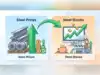
Will rising steel prices lift steel stocks? Key growth drivers and input cost risks investors should watch
Strong demand and policy support boost steelmakers, but rising input costs pose risks. Recent reports from Aditya Birla Capital, Motilal Oswal Financial Services (MOFSL), JP Morgan, CRISIL, and MCX are upbeat about the steel industry. They expect healthy demand growth, a few new steel plants coming online worldwide, firmer steel prices, and a growing focus on specialised, higher-priced grades of steel.

Trump's tariff war casts a long shadow over APEC summit
APEC nations are gathering in Shenzhen amid ongoing geopolitical tensions and trade disputes. Cooperation among members like the US and China is challenging due to rivalries. Recent US tariffs and trade policy changes are affecting global trade relationships. Countries, including Canada and Brazil, are seeking to reduce reliance on the US by seeking new trade agreements. The Regional Comprehensive Economic Partnership seeks to enhance trade, despite enforcement challenges.

From bicycle crankshafts to satellites: Sunil Mittal's 50-year journey and his next big bet on AI
Sunil Bharti Mittal founded Bharti Enterprises and has overseen its massive growth over fifty years. He seeks to position Airtel as a digitally enabled technology company with varied services. Mittal believes that mobile tariffs need to be increased for financial viability and infrastructure expansion. He emphasizes the importance of India’s digital economy and better telecom operator strength.

Book-Ending the year: 10 best books of 2026, from Silicon Valley to India's ancient ports
First Global founder and CMD Devina Mehra shares her 10 favourite books of 2026, spanning artificial intelligence, materials science, Indian economic history, economics, investigative journalism, neurosurgery and etymology. From the history and risks of AI to the hidden economic networks that shaped India's past, her reading list brings together diverse perspectives on business, science, society and human behaviour.

India wants more factories, fabs and data centres. Where will the water come from?
India holds about 4% of global freshwater resources, while its demand is projected to double by 2030. The industrial sectors are increasingly vulnerable to water shortages, which may significantly affect growth plans and investments. Treatment of municipal wastewater presents a viable alternative for meeting industrial water needs and can create a new revenue source for urban areas.

California replaced a fish-blocking pipe on Fort Goff Creek with a bridge in 2014; later monitoring found 64 Chinook salmon nests upstream
In California, the removal of the culvert on Fort Goff Creek has significantly enhanced fish passage, particularly for salmon. Completed in 2014, a new bridge now connects fish to breeding grounds that were previously inaccessible. Biologists found 64 nests of Chinook salmon in this newly opened habitat, highlighting the importance of addressing culverts nationwide to improve aquatic ecosystems and connectivity.

Global Market Today: Asian stocks open mostly higher, Nvidia probe looms
Benchmark stock indexes rose in Japan and Australia after a gauge of US semiconductor shares jumped 4.2% on Friday as speculation about possible tighter Democratic party regulation of the artificial intelligence industry eased. The MSCI Asia Pacific Index of equities gained 0.5%.

Why did you come back? The Indian dream beyond India's borders
The trend of Indian emigration continues, driven by aspirations for better opportunities abroad. Despite improvements in India, many individuals still seek to leave the country. Historical patterns of migration are linked to economic conditions and personal ambitions. The allure of the United States remains significant for many professionals. However, immigration policies may restrict future movement and opportunities for those seeking success.

West Bengal investment policy puts jobs first, offers up to 120% assistance to industries
West Bengal has launched a new investment promotion policy aimed at encouraging industrial growth and job creation. The policy includes substantial incentives for businesses, especially those focused on employing women and transgender workers. It offers streamlined processes for approvals and payments, enhancing efficiency for investors. Priority areas will receive higher assistance levels and a framework for regular review every three years.

US Midterms 2026: Cost of living and government corruption are top issues, AP Voter Poll says
Voters are participating in Election Day to influence control of the U.S. House and Senate. Many electorate members express dissatisfaction with the current economic situation attributed to Trump's policies. Polls indicate a significant desire for checks and balances on the presidency from Congress. Various gubernatorial candidates, along with major ballot measures, also shape the election landscape. Early voting statistics show heightened engagement compared to previous elections and reflect voter concerns.
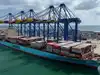
Cabinet approves Rs 10,000 crore container manufacturing scheme
The Indian government has approved a Container Manufacturing Assistance Scheme with a total budget of Rs 10,000 crore. This scheme aims to build domestic manufacturing capabilities and reduce reliance on container imports. It will promote facilities, testing, and skills development in the container manufacturing sector. The scheme is expected to create thousands of jobs and enhance competitiveness against global producers.

India’s steel future depends on breaking its costly coal habit
India plans to significantly increase its steelmaking capacity to support its development goals by 2047. The National Steel Policy proposes a shift from coal dependence to green hydrogen for production processes. This transition aims to reduce the vulnerability of steelmakers to volatile coking coal prices and enhance cost predictability. Moreover, the government is expected to promote long-term contracts for green steel to secure investments.

Don’t ship air: Why metal swarf Is crushed and briquetted
Metal swarf is often viewed as mere waste, yet it holds potential for efficient recycling into briquettes for steel production. Based in Orenburg, SteelCom specializes in converting swarf through advanced crushing and pressing technologies. This process not only streamlines metal recycling but also minimizes handling expenses and conserves vital resources. Their adaptable technology caters to businesses of all sizes, showcasing their expertise and reliability in addressing recycling challenges.

Piyush Goyal roasts Europe on climate change: Watch Union Minister’s ‘epic’ reply to EU in Germany that’s going viral
Watch Piyush Goyal questioning European countries over climate finance commitments at the Berlin Global Dialogue in Germany. The Union Commerce Minister highlighted historical carbon emissions, India's development needs and the $100 billion climate finance pledge while raising concerns about the EU's carbon border tax.

India presents a compelling investment proposition for German firms, FICCI says
Indian industry is poised for growth as German companies are encouraged to invest in manufacturing capacities. The upcoming India-European Union free trade agreement aims to strengthen trade ties and foster economic partnerships. Opportunities exist in sectors such as automotive technologies and renewable energy as urbanisation and incomes rise. The bilateral trade has seen an increase, highlighting the growing economic relationship.

Nagpur’s industrial push gains momentum, but MSMEs face rising power costs and land hurdles
With major industrial investments taking shape across Vidarbha, industry stakeholders believe Nagpur has an opportunity to emerge as a diversified manufacturing and technology centre.

‘Russian diesel won’t help US, it shows double standards on India’: Margarita M. Balmaceda, Professor at Seton Hall University
Margarita M. Balmaceda examines the hidden dynamics of energy dependency between Russia and other nations. The discussion highlights Russia's role as a 'Trojan horse' in energy politics. Recent diesel deals between the US and Russia may have limited short-term benefits for American consumers. Additionally, the implications of these deals could adversely impact Ukraine's situation. This situation reflects a troubling double standard in international energy relations.

Devil's in the diesel, get E-truckin'
To wean India off its crude oil addiction or make any structural dent to air pollution, electrifying our freight fleets are a no-brainer. Niti Aayog says road freights alone accounts for more than a quarter of India’s oil-import expenditure. But E-cars or green city buses alone won’t charge the collective imagination for a once-in-a-lifetime EV push: We need to green our highways. But first distortions in the duties need to be fixed.
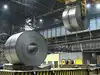
India fastest-growing major steel market; demand to grow 7.9% in 2026: World Steel Association
India's steel demand is projected to grow by 7.9 percent in 2026 and by 8 percent in 2027. This growth is driven by infrastructure projects, manufacturing expansion, and strong real estate demand. Conversely, steel demand in China is expected to experience a decline of 2 percent in 2026, followed by a lesser contraction in 2027.
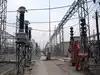
Blackouts hit Indian factories as coal crunch feeds into economy
Indian industries and households are grappling with power shortages due to reduced coal supplies and extreme weather conditions. The weak monsoon has limited hydropower generation while demand for electricity has surged. Many factories, including small steel mills, are facing lengthy outages, impacting production and increasing costs. Consumers in states like Uttar Pradesh are experiencing significant blackouts, prompting investments in backup systems.
New draft steel policy targets 604 million tonnes capacity by 2047
India has unveiled a new draft national steel policy targeting 604 million tonnes capacity by 2047. The initiative also aims to increase exports to 45 million tonnes in two decades. Measures will focus on reducing carbon emissions and promoting technology indigenisation in steel production. Infrastructure development will be emphasized alongside research, safety, and workforce improvements.

AI founders cheer Trump's calls for the industry to police itself on safety in Silicon Valley
President Donald Trump brought tech titans to Washington late last month for a luncheon and ceremonial signing of a voluntary safety pact he described as "almost a constitution" surrounding "Super Intelligence," the administration's new preferred term for AI.

India joins US, 13 economies in joint statement to address global excess capacity after G20 meeting
India, along with the United States and 13 other economies, has signed a joint statement aiming to address structural excess capacity. The participating economies emphasized the importance of eliminating non-market policies that distort economic conditions. They acknowledged the growing challenges posed by excess capacity in manufacturing sectors, which hinders market-based investments. The countries committed to cooperating and sharing information to mitigate the negative impacts on trade and jobs.
Load More

