
NASA STUDIES ON BACTERIA
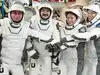
NASA's Crew-12 undocks from ISS, set to splash down off California after nearly eight months in space
NASA's SpaceX Crew-12 has undocked from the International Space Station and is on its way home. The mission included significant scientific investigations aimed at future Moon and Mars missions. Crew members participated in critical spacewalks, with Jessica Meir and Sophie Adenot completing important tasks outside the station. NASA is targeting a splashdown in the Pacific Ocean off the California coast on Thursday.

Could astronauts on the Moon manufacture their own tools? NASA tests lunar dust material that could reduce supplies from Earth
NASA researchers are developing a composite material that combines lunar regolith with a biodegradable plastic called poly(3-hydroxybutyrate). This innovative approach aims to manufacture tools and equipment directly on the Moon, rather than transporting everything from Earth. Bacteria may potentially produce the plastic using waste and carbon dioxide available during missions. This strategy is part of a broader effort to utilize resources found on the Moon for sustainable exploration.
The 145°F survival mystery: How a tiny California 'fire' amoeba thrives where complex life was thought impossible
Incendiamoeba cascadensis, a newly discovered amoeba, can reproduce at temperatures up to 145°F. It challenges prior beliefs about the heat limits for complex life. This organism demonstrates unique adaptations that allow it to thrive in extreme conditions. Its discovery has implications for understanding potential life forms on other planets. Researchers suggest that similar organisms may exist in geothermal environments worldwide.
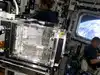
In 2006, NASA launched 75 fruit flies on STS-121 for 13 days; Discovery returned with about 3,000, including a new generation that developed in space
NASA's experiments with fruit flies in zero gravity unveiled significant weaknesses in their immune systems. Observations indicated these flies produced fewer specialized immune cells and exhibited a diminished ability to combat bacteria. Further investigations demonstrated that their responses to fungal infections were also altered in space. These discoveries illuminate potential immune function disruptions among model organisms during spaceflight, raising important concerns for upcoming long-duration human space missions.
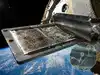
In 1966, Gemini 9 and Gemini 12 exposed fungal spores and viruses directly to space; a 0.4 mm aluminum shield kept fungal spores alive and boosted virus survival 3,000-fold
Early space missions tested microbial survival outside spacecraft without protection. Fungal spores and viruses showed very low survival rates in raw space. A thin aluminum shield dramatically improved survival for both organisms tested. This shielding protected microbes from damaging solar ultraviolet and soft X-ray radiation. These findings continue to inform space exploration and planetary protection protocols.
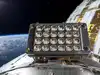
In 1984, NASA left Bacillus spores in space for nearly 6 years; after LDEF returned to Earth, 1–2% of the exposed spores were still alive
During an extensive six-year voyage aboard the LDEF satellite, soil bacteria spores demonstrated remarkable resilience, surviving the rigors of space including vacuum, extreme temperatures, and cosmic radiation. The spores shielded from sunlight exhibited notably better survival rates, suggesting the intriguing possibility that life could travel between planets with minimal protection. These insights are pivotal for enhancing spacecraft sterilization protocols and deepening our understanding of panspermia.
- Go To Page 1
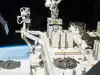
In 2015, Japan exposed bacteria outside the ISS for 3 years; some clumps survived, while thicker ones were estimated to last longer
Japanese researchers launched the resilient bacteria Deinococcus into orbit aboard the International Space Station. Remarkably, these microbes thrived for three years amid extreme environmental challenges. They formed protective clusters that safeguarded their inner cells against harmful radiation. This finding bolsters the hypothesis that life can migrate between planets, impacting future space exploration endeavors and the ongoing quest for extraterrestrial beings.
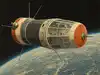
In 1966, NASA launched Biosatellite I with 13 biology experiments and more than 10 million organisms; its retrorocket failed, and the spacecraft was never recovered
In 1966, NASA's Biosatellite I mission attempted to carry over ten million organisms into orbit, but a retrorocket malfunction led to the capsule's tragic loss upon re-entry. This setback, however, was instrumental, offering invaluable insights that benefitted future space missions. Just months later, Biosatellite II launched successfully, marking a significant advancement and laying foundational knowledge for present-day research on survival in space.
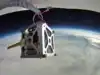
In 2010, NASA launched a 12-pound, loaf-of-bread-sized satellite with two Bacillus populations; radiation exposure reached about 15 times that of the ISS orbit
NASA's O/OREOS mission embarked on an exciting journey to observe how bacteria withstand the rigors of space radiation. The compact satellite, about the size of a loaf of bread, zipped around Earth’s magnetic poles, subjecting dried bacterial spores to intense radiation over several months. While initial germination and growth were sluggish and ultimately showed abnormalities, the mission confirmed that nanosatellites are viable platforms for conducting autonomous biological research in space.
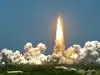
NASA sent Pseudomonas aeruginosa on shuttle Atlantis to space, where it formed denser biofilms with an unusual “column-and-canopy” structure
In groundbreaking space experiments, bacteria grown in synthetic urine were sent aboard the Atlantis space shuttle on two occasions. These microbes exhibited enhanced colony density and distinctive formations not observed on Earth. Spaceflight significantly amplified biofilm development in Pseudomonas aeruginosa, presenting major challenges for prolonged space missions and life support systems. Studying these bacterial modifications is crucial for future human exploration beyond Earth.
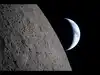
NASA maps where Earth microbes could survive on the Moon for days and finds unexpected refuges near the lunar poles
NASA scientists found some Earth microbes could survive on the Moon. Protected lunar polar areas offer refuge from harsh radiation and temperatures. Certain fungi, like Aspergillus, showed remarkable resilience to these conditions. These findings suggest potential survivable niches exist in lunar shadows. However, this survival does not imply microbial growth or reproduction on the Moon.
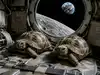
In 1968, two Russian steppe tortoises travelled around the Moon before humans did. They survived a punishing 20G force while returning to Earth
In a remarkable journey, two Russian steppe tortoises embarked on a mission aboard Zond 5, orbiting the Moon in September 1968. This pioneering endeavour demonstrated that biological life could endure the challenges of circumlunar spaceflight and successfully return. Despite facing intense gravitational stress during re-entry, the resilient tortoises emerged unscathed, making their voyage a historic precursor to mankind's lunar exploration.
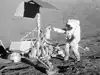
NASA left a camera on the moon for 31 months; when Apollo 12 brought it home, scientists found bacteria that appeared to be alive
After 31 months on the moon, a bacterium discovered on the Surveyor III camera is believed to be a case of contamination. A thorough re-evaluation of the lab tests from 1970 revealed procedural flaws, emphasizing the necessity for stringent planetary protection protocols. With modern missions incorporating extensive cleaning and sterilization, this past incident serves as a crucial lesson for space agencies to ensure contamination control.
Why NASA's latest moon discovery creates a major dilemma for Artemis astronauts
Microbes from Earth can survive on the Moon's surface for days. New research shows shadowed lunar craters offer protective microclimates for these organisms. This discovery impacts plans for human exploration and resource utilization at the lunar South Pole. Scientists must now rethink sterilization protocols to prevent forward contamination of pristine ice. Future missions will require enhanced containment strategies and stricter decontamination procedures.
In 2006, NASA grew Salmonella in space; the bacteria returned more virulent than genetically identical germs cultivated on Earth
In a striking discovery, researchers found that Salmonella bacteria cultivated in space exhibited a heightened level of aggression, proving to be three times more hazardous than those on Earth. The unique microgravity environment mimics human digestive processes, providing insights into how these pathogens evolve. This vital research is poised to enhance the development of effective vaccines and treatments for various infections, marking a leap forward in medical science.
Scientists confirm gut bacteria behind rare auto-brewery syndrome that makes people drunk without drinking
Scientists have uncovered the cause of auto-brewery syndrome. Certain gut bacteria, Klebsiella pneumoniae and Escherichia coli, ferment food into alcohol. This leads to intoxication without drinking. Studies analyzed patient samples, revealing these bacteria's high ethanol production. Treatments targeting gut microbes show promise. Fecal transplants have helped patients recover. This discovery could impact other health conditions.

NASA acidentally discovers super bacteria that could survive on Mars
In a surprising discovery, NASA scientists found 26 new bacterial species in a JPL clean room, raising concerns about planetary contamination. These resilient microbes, resistant to radiation and toxins, evolved despite rigorous sterilization. While posing a threat to space missions, their unique survival traits could lead to advancements in medicine, food preservation, and biotechnology.

Axiom-4 Mission: Indian astronaut Shubhanshu Shukla set for space leap on May 29, here’s what he will explore
Indian astronaut Group Captain Shubhanshu Shukla is preparing for a 14-day mission to the International Space Station (ISS) as part of Axiom Mission-4 (Ax-4), scheduled for May 29, 2025. He will conduct experiments on water bears, computer interaction, microalgae growth, cyanobacteria, muscle loss, and salad seed cultivation to understand life in space and improve future missions.

Indian astronaut Shubhanshu Shukla to grow crops, study water bears at space station next month
Indian astronaut Shubhanshu Shukla will conduct seven experiments at the International Space Station during the Axiom Mission-4. These experiments, in collaboration with NASA, ESA, and others, will study water bears' resilience, microgravity's impact on algae and muscle regeneration, and the feasibility of growing crops in space.
IISc team's bacteria-based method may help repair cracked bricks on Moon
Researchers from the Indian Institute of Science (IISc), Bengaluru have developed a method using Sporosarcina pasteurii bacteria to repair cracks in bricks used on the Moon. The bacteria-based slurry strengthens the bricks by converting urea into calcium carbonate and guar gum, making the structures more resilient to extreme lunar temperatures.
Want to work with NASA? The US space agency is hiring for interns. Check how to apply, deadline and other details
NASA had announced internship openings for 2025 in areas such as aeronautics, biology, and IT. Opportunities included roles in podcast making, space horticulture, and planetary protection. Applications were open on stemgateway.nasa.gov. Internship positions had been located at various NASA research centers, including Goddard, Glenn, and Ames Research Center.
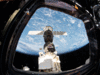
ISS hosts as much microbes as gyms, hospitals: NASA
Scientists created a comprehensive catalogue of the bacteria and fungi found on surfaces inside the ISS.

NASA's new website shows how space tech impacts everyday lives
NASA has launched an interactive website that allows users to tour through buildings to discover common items that the space agency helped improve -- such as water purifiers and selfie cameras.
SpaceX rocket carrying AI research blasts off for space station
Washington, June 29 (IANS) A SpaceX Dragon spacecraft loaded with about 2,600 kgs of research and supplies, including experiments investigating cellular biology, Earth science and Artificial Intelligence (AI), lifted off on a Falcon 9 rocket on Friday from Cape Canaveral Air Force Station in Florida.
Venus' clouds could harbour microbial life: Study
New York, March 31 (IANS) While the surface conditions on Venus are known to be inhospitable, with temperatures soaring above 450 degrees Celsius, the cloudy, acidic atmosphere of the planet could potentially harbour microbial life, a new study suggests.
NASA to launch E. Coli into space to study antibiotic resistance
Washington, Nov 11 (IANS) To study microgravity's effect on bacterial antibiotic resistance, scientists are set to send E. coli, a common bacterial pathogen linked to urinary tract infections and foodborne illnesses, to the International Space Station (ISS).
NASA balloons to study total solar eclipse
New York, July 28 (IANS) NASA is collaborating with student teams across the US to send balloons into the sky in one of the most unique and extensive eclipse observation campaigns ever attempted, which will also help expand the understanding about life beyond Earth.
NASA keeps a close watch for bad bugs on space station
New York, June 29 (IANS) Scientists at NASA organise regular checks to ensure that the International Space Station (ISS) has one of the cleanest living environments and is free from bacteria and other micro-organisms, the space agency said.
'Mars-quakes' could produce energy source to support life
New York, Sep 21 (IANS) Rocks formed by the grinding together of other rocks during earthquakes are rich in trapped hydrogen and similar seismic activity on Mars may produce enough hydrogen to support life, a study says.
Load More

