
NASA MARS MISSION

SpaceX's Starship returns from orbit and is captured by launch pad arms in a dramatic first
SpaceX's Starship made a significant return to Earth after completing its mission in space. The spacecraft was caught midair by mechanical arms, marking a historic achievement for the team. Despite this success, the first-stage booster experienced an explosion shortly after liftoff from Texas. SpaceX is preparing for future Starship launches from Kennedy Space Center in Florida. NASA plans to utilize Starship for upcoming Artemis missions, focusing on lunar exploration.

SpaceX launch today: Elon Musk’s Starship Flight 15 double catch attempt - launch time, how to watch and why it matters
SpaceX launch: SpaceX is preparing for Starship Flight 15 on November 13, with Elon Musk’s company attempting to catch both the Super Heavy booster and Ship using mechanical arms at its Texas launch site for the first time. The test could move SpaceX closer to fully reusable rockets and support NASA’s future Moon mission plans.
Help NASA build a home on the Moon and get $1 million prize: Check competition rules, key dates, how and where to apply
NASA has announced a $1 million Moon Base Student Challenge, inviting eligible high school and college students in the US to develop innovative solutions for building a permanent human settlement near the Moon's South Pole. The competition will focus on six areas, including power generation, construction, life-support systems and astronaut safety.

NASA job applications: $164,395 salary for astronaut posts as selected candidates can live on Moon and Mars; check direct link, eligibility and deadline
NASA astronaut applications: NASA has opened applications for its next astronaut class, with selected candidates potentially getting the opportunity to live and work on a future Moon base and participate in missions to Mars. Here's a look at the $164,395 annual salary, eligibility criteria, application requirements and December 3 deadline.

NASA's Artemis II rocket punched 3,100-mile-long holes in Earth's atmosphere, disrupted GPS signals: Study
NASA's Artemis II mission created large disturbances in the ionosphere that disrupted GPS signals across the United States. These disturbances were significantly more intense than those from prior rocket launches, causing potential issues for technologies reliant on precise positioning. Researchers noted that even minor positioning errors could impact autonomous vehicles, which rely on GPS data. The mission set new records for human distance from Earth during a lunar flyby.
- Go To Page 1

One giant leap for America? Trump's Moon ambitions put India's space diplomacy to the test
Donald Trump’s push for a permanent American presence on the Moon by 2028 has raised questions over lunar governance, resource ownership and the future of international space cooperation. As the US and China pursue competing lunar programmes, India faces the challenge of protecting its strategic autonomy while advancing its own space ambitions.

Europe space chief heads to Gulf as bloc looks beyond US
The head of the European Space Agency will visit the United Arab Emirates to discuss collaboration. This meeting aims to reduce Europe's dependence on the United States for space exploration. The ESA hopes to establish a framework agreement with the UAE to strengthen its exploration initiatives. Additionally, discussions may include potential investments and participation in upcoming programs. European governments must first ensure adequate funding before pursuing international cooperation.

Crew from NASA's simulated Mars mission emerges after 378 days in isolation
Four crew members completed a 378-day isolation mission to simulate conditions for a future Mars expedition. They grew crops and engaged in tasks while experiencing simulated communications delays. This experience is aimed at preparing astronauts for long-duration missions beyond Earth. NASA will analyze the insights gained from this mission for upcoming lunar and Mars missions. The mission was conducted at the Johnson Space Center in Houston.

Pink rock found in Sahara turns out to be 4.1-billion-year-old Martian meteorite, reveals clues to ancient Mars
A meteorite named Teghaza 001, discovered in the Sahara Desert, reveals insights into ancient Martian geology. Scientists determined it originated on Mars over 4.1 billion years ago and underwent volcanic processes. Detailed analysis of zircon crystals indicated interactions with water, suggesting a more active early environment. Researchers identified potential geological regions on Mars related to the meteorite's origin.

‘Never found one like this before’: Scientists examine 4.1-billion-year-old Martian rock to pinpoint when the Red Planet was ‘Earth-like’
A rare 4.1-billion-year-old Martian meteorite found in the Sahara Desert is offering scientists new clues about the Red Planet's ancient past. Researchers say its minerals suggest Mars once had flowing water and an environment more like Earth.

21 years after the discovery of the last dwarf planet, scientists may have found a sixth one beyond Neptune
Vera Rubin Observatory may have identified a new dwarf planet called ED138, hidden beyond Pluto's orbit. Researchers are in the process of assessing ED138's size, a task expected to take several months. This finding is noteworthy as it holds the potential to be recognized as the sixth dwarf planet. Difficulties in locating such remote celestial bodies stemmed from their position in the southern hemisphere.

In 1962, Willis Whitfield built a room that continuously swept dust away with filtered air; the idea became essential for computer chips, NASA and modern electronics
Willis Whitfield's innovative cleanroom concept emerged at Sandia National Laboratories to combat contamination issues in engineering. By introducing a system of filtered air that flowed continually, he created cleaner workspaces, profoundly impacting semiconductor manufacturing, pharmaceuticals, and space endeavors. His approach dramatically lowered airborne particle concentrations, establishing a new standard for contamination management that influences practices today.

Forget the Moon’s south pole: 4 other lunar sites could help humans build a base and prepare for Mars, new report suggests
The southernmost region of the Moon has emerged as a crucial focus for contemporary lunar exploration, particularly in the quest for water ice. Other notable sites, such as Bhabha Crater and Orientale Basin, are also under consideration for study. These areas promise to offer vital information about the Moon's past and feasible locations for human settlement.
Japan launches spacecraft to mysterious moons of Mars in a bold mission to bring home soil samples
Five of the world’s space agencies joined forces for the five-year mission that will attempt to land a robotic prospector plus a rover on Phobos, the larger and closer of Mars’ two pint-sized moons. The Japan Aerospace Exploration Agency, which is leading the bold sampling effort, launched the spacecraft before dawn from the country's main spaceport on Tanegashima Island.

Four crew members spent 365 days in a 1,700 sq ft, 3D-printed Mars habitat in isolation. How could it help NASA prepare for living on the Moon?
NASA's CHAPEA mission, which simulates living on Mars, involves four crew members in a controlled environment. The study focuses on how humans manage isolation and limited resources during long-duration missions. Insights gained could inform the design and functionality of future lunar habitats. Participants will undergo evaluations after their mission to assess their health and performance. Findings will help NASA prepare for sustained human activity on the Moon.
Japan to launch world-first mission to moon of Mars
Japanese scientists will launch the Martian Moons eXploration probe from Tanegashima Space Center, targeting Mars's moon Phobos. The spacecraft aims to collect samples that could reveal the origins of the Solar System and life on Earth. This mission is set for a three-year duration in the Martian region, involving collaboration with US and European space agencies. Mars's other moon, Deimos, will be observed but not landed on during this mission.
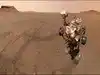
NASA’s Perseverance Rover sets new driving record on Mars, reaching 45.2 kilometres
NASA’s Perseverance rover has travelled 45.2 kilometres in Mars, setting a fresh record for the farthest distance driven by a vehicle on the surface of another world. The six-wheeled robotic explorer reached the milestone after arriving on Mars in 2021 and surpassing the earlier record held by NASA’s Opportunity rover.
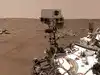
NASA's Perseverance becomes longest-travelling rover beyond Earth after 45.2 km on Mars
NASA's Perseverance rover has covered 28.1 miles on Mars, breaking the previous driving record. For over 5-1/2 years, it has actively investigated Jezero Crater, showcasing its autonomous navigation for optimal exploration efficiency. The mission's extension until approximately the end of 2028 aims to deepen our understanding of the planet's geology and its potential for ancient microbial life, making it a crucial part of Mars exploration.

NASA's Crew-12 undocks from ISS, set to splash down off California after nearly eight months in space
NASA's SpaceX Crew-12 has undocked from the International Space Station and is on its way home. The mission included significant scientific investigations aimed at future Moon and Mars missions. Crew members participated in critical spacewalks, with Jessica Meir and Sophie Adenot completing important tasks outside the station. NASA is targeting a splashdown in the Pacific Ocean off the California coast on Thursday.
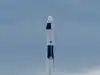
SpaceX launches Crew-13 to ISS in record US transit, with first Black woman to lead orbital crew
On Thursday, four astronauts launched by SpaceX successfully reached the International Space Station after an eight-hour journey. The mission marked the fastest transit to the station by a US operator, including NASA. Commander Jessica Watkins made history as the first Black woman to lead an orbital crew. Other crew members include NASA's Luke Delaney, Canada's Joshua Kutryk, and Russia's Sergey Teteryatnikov.

NASA is preparing the Moon for humans: Three new missions will search for underground shelter, water ice and hidden hazards
NASA is planning three investigations on the Moon to gather essential information for a future lunar outpost. These investigations will monitor environmental conditions, explore for underground lava tubes, and search for lunar ice resources. The data collected will inform the design and safety of structures supporting human activities on the Moon. NASA aims to leverage commercial services for delivering scientific payloads to the lunar surface.

Could astronauts on the Moon manufacture their own tools? NASA tests lunar dust material that could reduce supplies from Earth
NASA researchers are developing a composite material that combines lunar regolith with a biodegradable plastic called poly(3-hydroxybutyrate). This innovative approach aims to manufacture tools and equipment directly on the Moon, rather than transporting everything from Earth. Bacteria may potentially produce the plastic using waste and carbon dioxide available during missions. This strategy is part of a broader effort to utilize resources found on the Moon for sustainable exploration.

Why NASA is studying 1.2-billion-year-old Scottish rocks for clues to ancient life on Mars and the Red Planet’s watery past
Ancient rocks found in Scotland's Stoer Formation are being studied by NASA to understand potential signs of life. These rocks formed 1.2 billion years ago under water-influenced environments and evidence of microbial life is preserved. NASA's Perseverance rover discovered a rock on Mars with distinctive mineral patterns that may indicate biological origins. The Scottish research helps interpret findings from Mars while preparing for possible future sample analysis.

Meet Chinyere Ukeje, the 25-year-old Philadelphia computer scientist who won $300,000 NASA prize for Mars food system
Chinyere Ukeje, an innovative computer scientist hailing from Philadelphia, has emerged victorious in NASA's Deep Space Food Challenge with her groundbreaking idea of Adaptive Nourishment Infrastructure. This pioneering concept is designed to assist in food production for astronauts on Mars, establishing a modular ecosystem that meets half of the necessary nutritional requirements for extended missions. By prioritizing familiar meals, Ukeje seeks to mitigate psychological challenges faced during long space journeys.

SpaceX's supersized Starship launches into orbit for the first time but flight ends early
SpaceX successfully launched its Starship spacecraft into orbit, marking a significant milestone for the company. The Starship delivered 26 advanced Starlink satellites with cheers from onlookers at the launch site. Although the mission was cut short, it demonstrated SpaceX's progress in achieving orbital capabilities. The spacecraft reentered over the Pacific Ocean before splashing down near Hawaii, showing careful flight management.
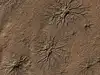
In 2016, 10,000 volunteers searched images of Mars for strange spider-like patterns; they found the formations in places where scientists hadn't seen them before
In 2016, nearly 10,000 volunteers worked together to analyze images of Mars, identifying intriguing spider-like formations. Collaborating with Zooniverse, NASA initiated the Planet Four project, leading to surprising discoveries of these formations in areas not previously studied. These results imply that erosion-driven processes might be widespread on Mars, highlighting the crucial role of citizen science in shaping the future of extraterrestrial exploration.

What does a day on Mars look like? NASA Curiosity captures stunning morning-to-sunset panorama
NASA's Curiosity rover has produced a stunning panoramic view of Mars, showcasing the planet's landscape in a transition from morning to evening. Captured on its remarkable 5,000th Martian day, or sol, these images have been artfully combined and color-enhanced for clarity. Curiosity continues to delve into the mysteries of Mount Sharp, located within Gale Crater, furthering our understanding of the Red Planet.

In 2021, NASA sent 11 types of crop seeds outside the space station for 8 months; after their return, scientists tested whether they could still grow
The 2021 NASA seed experiment ultimately demonstrates why some of the most important space discoveries can begin with objects that appear remarkably simple. A tiny seed contains the potential for an entire crop, yet its ability to remain viable after prolonged exposure to the space environment could become increasingly important as human exploration moves farther from Earth.
Load More

