
MRNA TREATMENT
His grandfather died of pancreatic cancer: This Hyderabad startup founder is using AI to develop a personalised cancer vaccines
Hyderabad-based biotech startup PopVax, founded by Soham Sankaran, is developing AI-powered personalised cancer vaccines using mRNA technology. Inspired partly by his family's experience with pancreatic cancer, he aims to help the immune system identify and attack cancer cells using treatments designed around individual patients' tumour genetics.

AI halves drug discovery times, but =trial bottleneck remains a costly reality
Novo Nordisk, Sanofi and Dr Reddy’s Laboratories are among the companies exploring applications ranging from drug discovery to laboratory automation and research.

2026 Nobel Prize Predictions: From GLP-1 drugs and CAR-T therapy to gene editing, these breakthroughs could take centre stage
Predictions for the 2026 Nobel Prizes in science highlight significant contributions in areas like GLP-1 research and cancer therapies. Carl June is mentioned for his role in developing CAR-T cell therapy for cancer treatment. Researchers Emmanuel Mignot and Masashi Yanagisawa are noted for their work on orexin related to sleep regulation. Optical coherence tomography and lipid nanoparticle technology are also strong candidates for recognition.

In 2007, ESA sent 3,000 tardigrades into low Earth orbit; after 10 days of vacuum and UV-A/UV-B exposure, 68% revived upon rehydration
Known for their resilience, tardigrades have astonishingly withstood the harsh conditions of outer space. Their unique protein showcases an ability to shield cells from radiation damage. Researchers are now investigating how this protein might protect human cells, potentially benefiting cancer patients during radiation therapy. This groundbreaking discovery may also provide valuable insights for upcoming space explorations.
Moderna, Merck breakthrough could usher in wave of cancer vaccines
Merck and Moderna's personalized cancer vaccine shows promise for melanoma patients. This new treatment trains the immune system to target specific tumor mutations. The vaccine, combined with Keytruda, significantly reduced cancer recurrence in trials. Doctors are hopeful this approach will expand to treat many other cancer types. Further trials are underway for lung, bladder, kidney, pancreatic, and stomach cancers.

Moderna shares soar 159% in a day after cancer vaccine succeeds in late-stage trial
Moderna shares surged after its personalized mRNA cancer vaccine trial showed positive results. The treatment, combined with Keytruda, reduced melanoma recurrence and spread significantly. This marks the first successful late-stage trial for an mRNA cancer vaccine. The findings offer hope for future growth beyond COVID-19 vaccines. Discussions with regulators are expected within the next few months.
- Go To Page 1

Man with no medical degree creates cancer vaccine using ChatGPT for his sick pet. Open AI CEO Sam Altman reacts: ‘This should be easy ….’
An Australian businessman, Paul Conyngham, used AI tools like ChatGPT and AlphaFold to develop a personalized mRNA cancer treatment for his dog, Rosie. This remarkable endeavor, which involved collaboration with scientists and veterinarians, has sparked discussions about AI's potential in personalized healthcare, though experts urge caution due to limited evidence of efficacy and the need for rigorous validation.

Watching his dog slowly die, techie refused to give up. Then he used AI and created a custom 'cancer vaccine' for his pet friend
Australian tech expert Paul Conyngham used artificial intelligence to help save his dog Rosie, a Staffy-Shar Pei mix, after she was diagnosed with advanced cancer. When conventional treatments like chemotherapy failed, he sequenced her DNA, identified mutations causing the tumour, and worked with the University of New South Wales to develop a personalised mRNA vaccine. Rosie received her first injection in December, followed by booster doses, and her tumour has since shrunk, with her energy and quality of life improving.
COVID-19 vaccines may help some cancer patients fight tumors
New research suggests COVID-19 mRNA vaccines could help cancer patients. Those with advanced lung or skin cancer who received Pfizer or Moderna shots lived longer while on immunotherapy. The mRNA technology appears to enhance the immune system's ability to fight tumors. This finding offers a potential new approach for cancer treatment, with further studies planned.

'It may sound crazy, but...': Cardiologist reveals 5 futuristic heart treatments set to become the new normal in heart care
Cardiologist Dr. Dmitry Yaranov, widely known as @heart_transplant_doc, has outlined what he calls the “crazy future of heart care” in a viral Instagram post. The Memphis-based transplant expert highlighted five groundbreaking treatments: lab-grown hearts from patients’ own cells, gene editing to prevent disease, pig heart transplants, mRNA-based repair therapies, and nervous system rewiring devices. He stressed that these futuristic treatments are already moving from labs to clinical trials, redefining cardiology’s future.
How Russian cancer vaccines EnteroMix and personalized mRNA work to control the life-threatening disease
Russia's cancer vaccine, comprising EnteroMix and personalized mRNA vaccines, has completed preclinical trials, showcasing safety and high efficacy. Research conducted by the NMRRC demonstrated tumor size reduction and slowed progression, ranging from 60% to 80%, alongside increased survival rates. The vaccines aim to destroy malignant cells and activate the patient's antitumor immunity.
Cancer cure? Russia commences human trials of revolutionary personalized cancer vaccine
Russia's Gamaleya Center, famed for Sputnik V, will initiate human trials for a personalized mRNA melanoma vaccine by late 2025. This innovative vaccine, tailored to individual tumor genetics using AI, aims to stimulate the immune system to target and eradicate cancer cells.
Cancer cure found? Scientists create a new mRNA vaccine that triggers strong anticancer immune response against tumours
University of Florida scientists have engineered an experimental mRNA vaccine that stimulates the immune system to combat tumors in conjunction with immune checkpoint inhibitors. The study, published in Nature Biomedical Engineering, demonstrated a strong antitumor effect in mice by increasing PD-L1 levels within tumors, enhancing their sensitivity to immunotherapy.

Coming soon: A cancer vaccine for free, courtesy Russia
Russia has developed an mRNA cancer vaccine and plans to release it publicly in early 2025, free of charge. Pre-clinical trials show it inhibits tumor growth and spread. Researchers are also using AI to personalize cancer vaccines, potentially reducing creation time to under an hour.

New cancer vaccine that trains body's immune system to destroy cancer cells shows promising results
Cancer Vaccine: A new mRNA cancer vaccine developed by Moderna has shown promising early results in clinical trials. The vaccine, mRNA-4359, aims to activate the immune system to target and destroy cancer cells. In a phase-one trial with 19 patients, eight showed no tumour growth. The study is ongoing with melanoma and lung cancer patients.

Cipla makes additional investment in German mRNA biotech
Ethris' has four potential drugs under development pipeline, of which one is for treating uncontrolled asthma and three other for primary ciliary dyskinesia - a rare yet chronic respiratory disease. During the COVID19 pandemic, mRNA vaccines gained importance due to the first regulatory approvals for SARS-CoV-2. mRNA-based medicines have a huge potential in several indications as infectious disease vaccines, therapeutic cancer vaccines, and protein replacement therapies.
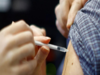
Moderna cancer vaccine trial begins in UK, scientists hopeful of 'dawn of a new age of treatments'
Cancer patients in the UK are part of a global trial for the mRNA therapy mRNA-4359. The phase 1/2 clinical trial, sponsored by Moderna, aims to evaluate the safety and efficacy of the therapy in treating melanoma, lung cancer, and other solid tumor cancers. The therapy uses mRNA to train the immune system to recognize and combat cancer cells expressing common tumor markers. The trial is conducted in collaboration with Moderna-UK Strategic Partnership and aims to bring mRNA vaccine manufacturing to the UK. The first patient to receive mRNA-4359 was an 81-year-old man with treatment-resistant malignant melanoma.
Study suggests gut microbes can affect Covid vaccine response
The research, involving 68 people with HIV and 75 healthy individuals, found that a less diverse gut microbiome correlated with a stronger vaccine response, marked by higher levels of antibodies and immune cells.

mRNA booster vaccine Gemcovac-OM for Omicron launched at Rs 2,292/dose. Who can take and precautions
Gemcovac-OM, the booster vaccine for Omicron from Emcure's subsidiary Gennova, had recently received the nod from the office of the Drug Control General of India (DCGI) for Emergency Use Authorization (EUA). Individuals above 18 years and who have received either Covaxin or Covishield as primary vaccination can take it as a booster for active immunization for the prevention of COVID-19.
Cancer vaccines are being developed using tech similar to that used for Covid shots
Decades before Covid vaccines, scientists had been working on messenger ribonucleic acid (mRNA) vaccines targeting cancer.

mRNA technology-based Cancer vaccine boosts chances of survival: Moderna
Data revealed that using Merck's immunotherapy drug in combination with high-risk patients decreased their risk of dying.

Could cancer vaccines become a reality? Here’s what experts say
A cancer vaccine could be a reality in a few years, according to the co-founders of BioNTech, a German company, which also manufactured the Covid-19 vaccine.
Biological E to get mRNA technology from WHO to make COVID-19Vaccines
WHO along with its partners will work with the Indian government and BE to develop a roadmap and put in place the necessary training and support for BE to start producing mRNA vaccines as soon as possible.

WHO works to spread COVID vaccine technology to more nations
At a press briefing in Geneva on Wednesday, WHO Director-General Tedros Adhanom Ghebreyesus said the new hub will be in South Korea and will share mRNA technology being developed by WHO and partners in South Africa, where scientists are working to recreate the COVID-19 vaccine made by Moderna Inc. That effort is taking place without Moderna's help.
Covid booster efficacy wanes significantly by fourth month: US study
The new study was based on more than 241,204 visits to the emergency department or an urgent care clinic, and 93,408 hospitalizations, which are more serious, among adults with Covid-19-like illness during August 26, 2021-January 22, 2022.

Here’s why developing countries can make COVID-19 mRNA vaccines
Depending on wealthy nations to donate billions of doses is not working, public health experts say. The solution, many now believe, is for the countries to do something that the big U.S. mRNA vaccine makers say is not feasible: manufacture the gold-standard mRNA shots themselves.

Pune-based Gennova to use SII's Covishield vaccine as the comparator
To assess the immunogenicity of the mRNA vaccine, Gennova will have to use Covishield — an existing vaccine — as a comparator, as the regulator has disallowed use of a placebo for the trials.

A cure for cancer: After Covid vaccine, next mRNA miracle might be closer than you imagine
The new technology was not only lightning fast but also incredibly effective - mRNA Covid vaccines from both Moderna and Pfizer hit the bull's-eye in terms of efficacy. But what's the future of this technology, will it be used to fight other diseases after the pandemic?
Load More


