
MOON MISSIONS

'Still feels like science fiction': Google CEO Sundar Pichai hails SpaceX's Starship as it completes first-ever mid-air catch on return from orbit
SpaceX achieved a historic milestone by successfully catching its Starship spacecraft upright after a return from orbit. The spacecraft launched from Starbase in Texas and completed a mission that included deploying satellites. After reaching orbit, the Starship re-entered Earth's atmosphere and performed a controlled descent. It landed in the mechanical arms of its launch tower, named Mechazilla, completing the unprecedented maneuver.

SpaceX's Starship returns from orbit and is captured by launch pad arms in a dramatic first
SpaceX's Starship made a significant return to Earth after completing its mission in space. The spacecraft was caught midair by mechanical arms, marking a historic achievement for the team. Despite this success, the first-stage booster experienced an explosion shortly after liftoff from Texas. SpaceX is preparing for future Starship launches from Kennedy Space Center in Florida. NASA plans to utilize Starship for upcoming Artemis missions, focusing on lunar exploration.
SpaceX launches 15th Starship flight with hopes of achieving first round trip
SpaceX successfully launched its Starship spacecraft on a mission that aimed for both orbit and return. Unfortunately, the lower-stage Super Heavy booster rocket failed to complete its return flight. Starship's upper-stage vessel reached orbit and deployed 26 satellites into space. This launch marks SpaceX's 15th Starship test flight, contributing to their satellite connectivity business. The company hopes to achieve a fully reusable rocket system for future missions.

NASA is hiring astronauts for future Moon missions: Who can apply, what tests must you pass and how to get selected?
NASA is recruiting its next class of astronauts, with selected candidates potentially preparing for future Moon missions and living at a lunar base. The agency is accepting applications from qualified US citizens, including candidates with master's-level nursing degrees. Here's a look at the eligibility criteria, experience requirements, $164,395 starting salary and application deadline.
SpaceX to attempt first Starship spacecraft recovery on land in 15th flight
SpaceX plans to launch its Starship rocket for the 15th time to test spacecraft recovery. The mission will attempt to catch the spacecraft at the Texas launch site rather than discarding it at sea. Elon Musk envisions regular Starship launches to expand the Starlink satellite network and future AI capabilities. NASA has provided significant funding for the Starship project under the Artemis moon program.

SpaceX launch today: Elon Musk’s Starship Flight 15 double catch attempt - launch time, how to watch and why it matters
SpaceX launch: SpaceX is preparing for Starship Flight 15 on November 13, with Elon Musk’s company attempting to catch both the Super Heavy booster and Ship using mechanical arms at its Texas launch site for the first time. The test could move SpaceX closer to fully reusable rockets and support NASA’s future Moon mission plans.
- Go To Page 1

Opening space sector unlocked new avenues for private players, startups: PM Modi
Prime Minister Narendra Modi said opening up India’s space sector to private companies and startups has created new opportunities for young innovators to build rockets and launch satellites. Speaking at the inauguration of the COSMOS-Mysuru Planetarium in Mysuru, he highlighted India’s progress in space exploration, including the Chandrayaan-3 lunar landing, the Aditya-L1 solar mission and its space docking capabilities.

Who is Maruthi S. Akella? IISc award winner whose research helped guide first US Moon landing in 50 years, asteroid named after him
Maruthi S. Akella, a University of Texas professor and IISc alumnus, is among eight scientists and engineers selected for IISc's annual alumni honours. His research group contributed to the onboard guidance algorithm for the Intuitive Machines IM-1 mission, which achieved the first US Moon landing in more than 50 years. An asteroid has also been named after him.
Prada's new Milan exhibition turns a century of fashion into fresh discoveries
Prada’s Milan exhibition, Pradasphere, is turning its century-old fashion legacy into a business opportunity, with the brand expecting it to generate an additional 100 million euros in annual revenue.

Help NASA build a home on the Moon and get $1 million prize: Check competition rules, key dates, how and where to apply
NASA has announced a $1 million Moon Base Student Challenge, inviting eligible high school and college students in the US to develop innovative solutions for building a permanent human settlement near the Moon's South Pole. The competition will focus on six areas, including power generation, construction, life-support systems and astronaut safety.

NASA job applications: $164,395 salary for astronaut posts as selected candidates can live on Moon and Mars; check direct link, eligibility and deadline
NASA astronaut applications: NASA has opened applications for its next astronaut class, with selected candidates potentially getting the opportunity to live and work on a future Moon base and participate in missions to Mars. Here's a look at the $164,395 annual salary, eligibility criteria, application requirements and December 3 deadline.
NASA's Artemis II rocket punched 3,100-mile-long holes in Earth's atmosphere, disrupted GPS signals: Study
NASA's Artemis II mission created large disturbances in the ionosphere that disrupted GPS signals across the United States. These disturbances were significantly more intense than those from prior rocket launches, causing potential issues for technologies reliant on precise positioning. Researchers noted that even minor positioning errors could impact autonomous vehicles, which rely on GPS data. The mission set new records for human distance from Earth during a lunar flyby.

One giant leap for America? Trump's Moon ambitions put India's space diplomacy to the test
Donald Trump’s push for a permanent American presence on the Moon by 2028 has raised questions over lunar governance, resource ownership and the future of international space cooperation. As the US and China pursue competing lunar programmes, India faces the challenge of protecting its strategic autonomy while advancing its own space ambitions.

NASA invites people to send their names to Saturn’s moon Titan aboard Dragonfly spacecraft: Check deadline date and how to register
NASA is inviting people around the world to send their names to Saturn’s largest moon, Titan, aboard its upcoming Dragonfly spacecraft. As part of the initiative, names will be stored on a microchip carried by the rotorcraft, with participants receiving personalised digital boarding passes. With the mission scheduled to launch in 2028 and reach Titan in 2034, here is how people can register, what the deadline is and what NASA hopes to discover on the distant moon.
Crew from NASA's simulated Mars mission emerges after 378 days in isolation
Four crew members completed a 378-day isolation mission to simulate conditions for a future Mars expedition. They grew crops and engaged in tasks while experiencing simulated communications delays. This experience is aimed at preparing astronauts for long-duration missions beyond Earth. NASA will analyze the insights gained from this mission for upcoming lunar and Mars missions. The mission was conducted at the Johnson Space Center in Houston.

Sachin Tendulkar’s niece wins award for surgical research: Who is Karishma Tendulkar? All about her education and career
Sachin Tendulkar’s niece, Dr. Karishma Tendulkar, received the Bell Pharma Award for Best Surgical Research Paper by a Young Ophthalmologist at MOSCON 2026 in Mumbai. A vitreoretinal surgeon and founder of NAMAH Superspeciality Eye Care in Pune, she trained at Narayana Nethralaya and topped her ophthalmology course at Dr. D. Y. Patil Medical College.
NASA sent two wooden capsules to the Moon in 1962, but they missed and may still be orbiting the Sun today
NASA’s Ranger 3 and Ranger 5 carried seismometer capsules inside 65-centimetre balsa-wood spheres meant to survive a Moon impact. Both missed the Moon in 1962 and entered solar orbit. The missions reveal an unusual piece of early space race engineering, and show how failed spacecraft can still return useful scientific data.

ISRO to have four functional launch pads by 2029: Chairman Narayanan
ISRO plans to expand its operations with four launch pads by 2029 to meet global satellite demands. A dedicated 2,000-acre Small Satellite Launch Vehicle complex is set to be built in Tuticorin. The agency will collaborate with private firms and startups to enhance technological capabilities and job creation. Upcoming uncrewed Gaganyaan tests will evaluate critical mission parameters ahead of a crewed mission.
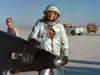
Neil Armstrong's Apollo 11 training jacket was expected to fetch up to $1.2 million at an auction, but failed to sell – who is the current owner?
On October 17, the American Space Museum hosted a charity auction that did not meet expectations. Despite high-profile items, including Neil Armstrong's Apollo 11 training suit, interest was quite low among bidders. Only over 100 participants showed up for the event, way fewer than usual. The auctioneer noted that most high-end items did not sell. Armstrong'ss suit is expected to be included in a future auction.

NASA adopting Apollo's urgency to build a moon base and land astronauts within two years
NASA plans to return astronauts to the moon with the Artemis III mission set for next summer. Following that, Artemis IV aims to accomplish a historic moon landing by 2028, marking the first since the Apollo missions. Administrator Jared Isaacman emphasized the importance of efficiency and a fast-paced approach similar to Apollo's playbook. Docking exercises with SpaceX and Blue Origin's landers will occur before the moon base establishment.
NASA may make a big announcement on Moon mission today. Here's what we know
NASA is preparing for a press conference to share important updates on the Artemis program. The focus will be on the upcoming Artemis III mission and its objectives. Additionally, details regarding future lunar landings under Artemis IV are expected to be unveiled. NASA aims to return astronauts to the Moon by 2028, exploring the lunar south pole for scientific research.
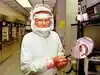
In 1962, Willis Whitfield built a room that continuously swept dust away with filtered air; the idea became essential for computer chips, NASA and modern electronics
Willis Whitfield's innovative cleanroom concept emerged at Sandia National Laboratories to combat contamination issues in engineering. By introducing a system of filtered air that flowed continually, he created cleaner workspaces, profoundly impacting semiconductor manufacturing, pharmaceuticals, and space endeavors. His approach dramatically lowered airborne particle concentrations, establishing a new standard for contamination management that influences practices today.

Forget the Moon’s south pole: 4 other lunar sites could help humans build a base and prepare for Mars, new report suggests
The southernmost region of the Moon has emerged as a crucial focus for contemporary lunar exploration, particularly in the quest for water ice. Other notable sites, such as Bhabha Crater and Orientale Basin, are also under consideration for study. These areas promise to offer vital information about the Moon's past and feasible locations for human settlement.

In 1965, NASA unfolded a 96 feet satellite in space to test what could puncture an Apollo spacecraft
NASA’s Pegasus I, launched in 1965, opened wings 96 feet wide in orbit to count hits from particles too small to see. The readings helped engineers understand what could damage spacecraft carrying astronauts. Pegasus I and two more satellites sent back data in the years before the Apollo Moon missions.
Japan launches spacecraft on mission to bring Mars moon samples to Earth
Japan has successfully launched an uncrewed spacecraft aimed at collecting samples from the Martian moon Phobos. The spacecraft, part of the Martian Moons eXploration mission, is expected to reach its destination in August 2027. After collecting at least 10 grammes of Phobos material, the spacecraft will return the samples to Earth by 2031. This mission marks the first interplanetary launch for Japan's H3 rocket following previous launch successes.
Japan launches spacecraft to mysterious moons of Mars in a bold mission to bring home soil samples
Five of the world’s space agencies joined forces for the five-year mission that will attempt to land a robotic prospector plus a rover on Phobos, the larger and closer of Mars’ two pint-sized moons. The Japan Aerospace Exploration Agency, which is leading the bold sampling effort, launched the spacecraft before dawn from the country's main spaceport on Tanegashima Island.

India-Pakistan Moon race: With China's help, Pakistan wants to send humans to Moon five years before India
Pakistani astronaut on Moon: Pakistan has set a target of landing on the Moon by 2035 as it expands its space programme through cooperation with China. Planning Minister Ahsan Iqbal announced that Pakistan’s first astronaut is scheduled to embark on a space mission from China on November 25. The partnership also includes a lunar rover project, while India is pursuing its own human spaceflight and Moon exploration goals.
Four crew members spent 365 days in a 1,700 sq ft, 3D-printed Mars habitat in isolation. How could it help NASA prepare for living on the Moon?
NASA's CHAPEA mission, which simulates living on Mars, involves four crew members in a controlled environment. The study focuses on how humans manage isolation and limited resources during long-duration missions. Insights gained could inform the design and functionality of future lunar habitats. Participants will undergo evaluations after their mission to assess their health and performance. Findings will help NASA prepare for sustained human activity on the Moon.
Japan to launch world-first mission to moon of Mars
Japanese scientists will launch the Martian Moons eXploration probe from Tanegashima Space Center, targeting Mars's moon Phobos. The spacecraft aims to collect samples that could reveal the origins of the Solar System and life on Earth. This mission is set for a three-year duration in the Martian region, involving collaboration with US and European space agencies. Mars's other moon, Deimos, will be observed but not landed on during this mission.
Load More

