
MONSOON PATTERNS

Patanjali Foods Q2 Results: Net profit falls 19% YoY to Rs 420 crore, revenue rises 16%
The FMCG company’s revenue from operations meanwhile increased 15.55% YoY to Rs 11,322.58 crore during the second quarter of FY27, from Rs 9,798.84 crore in the corresponding quarter of the previous financial year. Its total expenses rose around 18% YoY to Rs 10,997.51 crore during the quarter under review, from Rs 9,344.98 crore in the year-ago period.

2026 set to rank among four warmest years on record, says WMO
The World Meteorological Organization indicates that 2026 will likely be among the four warmest years recorded. The global average temperature so far in 2026 is notably above pre-industrial levels, with more increases expected. El Nino's influence is expected to contribute substantially to this warming trend later in the year. Additionally, sea levels have reached unprecedented heights and ice loss continues to accelerate.

Bayer CropScience Q2 profit rises 9% to Rs 166 crore despite 19% decline in revenue
Bayer CropScience Ltd has announced an impressive 8.84% growth in net profit, totaling Rs 166.2 crore for Q2 FY27. However, total income saw a 19.4% decline year-over-year, attributed to ongoing market challenges. Factors such as unpredictable monsoon patterns have disrupted both sowing and crop protection demand. In response, the company emphasizes efficiency improvements and portfolio enhancements, while the board has declared an interim dividend of Rs 90 per share.

Mumbai, India's financial hub is losing its coastal edge as pollution surges
Mumbai has faced unusually poor air quality throughout October as the average air quality index has sharply increased. According to data, this month has seen significant concentrations of PM2.5 particles that pose health risks. The ongoing El Niño effect is causing slower coastal winds that usually help disperse pollution. Factors such as construction activity and urban development further contribute to the deteriorating air quality.

Coal stocks may rise 10 million tonnes by December-end as electricity demand eases in winter
The government expects coal stocks at domestic coal-based thermal power plants to increase by around 10 million tonnes by December, supported by higher rake availability and lower electricity demand during winter. Coal stocks rose to 18.1 million tonnes on October 28 from 17.4 million tonnes five days earlier, while the number of plants reporting critically low stocks declined. The government is also considering a higher year-end stock target to prepare for next summer's peak power demand.

India is addressing Wall Street’s favourite ‘elephant’ in the room to its own advantage
The Indian government has identified 762 potential applications of artificial intelligence across 62 ministries and departments, spanning farming, railway safety, tax compliance, public grievances, customs and healthcare. While some tools are already in use, others remain in pilot or development stages.

Arunachal Pradesh faces protests over 11,000-MW Siang dam, 1,605-MW Subansiri project
Protests erupted in Arunachal Pradesh over proposed hydropower projects, causing violent clashes and significant unrest. People oppose the Siang Upper Multipurpose Project and the Subansiri Upper Hydroelectric Project, voicing concerns over environmental damage. Chief Minister Pema Khandu emphasized the need for careful assessment of the projects before proceeding. The proposed developments are linked to fears of water security due to China's dam projects upstream.

Gangetic West Bengal. parts of northeast India have moved out of tropical climate zone over seven decades, IMD study finds
Gangetic West Bengal has transitioned to a temperate climate zone, influencing the rainfall and agricultural patterns. The recent study indicates a notable decline in annual rainfall over the region from 1981 to 2020. This change has been linked to ocean temperature patterns, which also affect long-term agricultural planning.

Money managers say there’s nowhere to hide as Super El Niño forms
Investors are preparing for the impacts of an unprecedented El Niño cycle affecting global markets. The weather phenomenon is linked to rising food prices and inflation estimates, heightening economic concerns. Analysts identify several vulnerable nations, including Indonesia, Brazil, and Colombia, likely to experience spillover effects. Strategies to cope include focusing on businesses developing technologies for extreme weather resilience. The widespread effects of El Niño necessitate adaptations spanning various sectors globally.

Giant 'heat storms' are scorching the Earth. This is the story of the biggest one on record
Heat storms have increased dramatically, causing severe global consequences including excess deaths and environmental catastrophes. Recent heat storms have been identified as a new classification, representing larger and more persistent heat events. The intensity of these heat storms has worsened due to climate change and greenhouse gas emissions. Associated weather patterns have significantly disrupted ecosystems and agriculture worldwide.

FMCG firms grapple with input cost inflation in Q2, brace for margin pressure in H2
FMCG companies are experiencing increased margin pressure as input costs continue to rise. Rising inflation is affecting profitability, forcing firms to consider price hikes after the festive season. Companies are currently absorbing some costs to maintain consumer demand in urban and rural markets. The expectations for the second half of FY27 remain cautious amidst fluctuating commodity prices. Consumer purchasing behavior may shift if food prices increase or rural incomes decline.
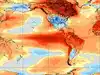
Super El Nino: What the potential arrival of a stronger 'little boy' means for India’s water, power, health, winter and summer?
India is projected to experience a warmer and drier start to winter as a super El Niño develops. A weak monsoon has led to concerns over water availability and crop health across the country. The World Meteorological Organization anticipates significant temperature increases and shifts in rainfall patterns. This unusual weather pattern may lead to increased health risks, especially during the summer months.

India's retail inflation quickens to 5.54% in September from 4.83% in August, hits near two-year high
India's retail inflation accelerated to 5.54% in September 2026, a notable rise from August's 4.83%. This jump is particularly linked to rising food prices, predominantly in vegetables. Rural inflation hit 6.08%, outpacing urban inflation at 4.88%. In response, the Reserve Bank of India increased the benchmark repo rate by 25 basis points on October 7, 2026, and revised its inflation outlook for the fiscal year 2027.

India’s monsoon risks may raise food industry costs: D&B
India is experiencing agricultural risks attributed to monsoon conditions, which could impact food processors and poultry producers. Procurement costs and inventory needs are likely to rise significantly due to these agricultural challenges. Rice and wheat stocks provide immediate buffers against potential food-supply issues, but maize faces direct risks from production shortfalls. Affected states include Madhya Pradesh and Rajasthan, which contribute significantly to overall foodgrain output.

El Nino pushes Pacific to its hottest ever, and global temperatures show no sign of cooling
El Nino has reached an all-time high in sea surface temperatures, significantly surpassing previous peaks. The rising temperatures are expected to have long-term effects on global climates until at least 2027. In India, El Nino typically leads to reduced monsoon rainfall, which already showed a deficit this year. Experts have warned that this phenomenon could further threaten agricultural yields and increase inflation.

Mumbai heatwave alert widens across Maharashtra as IMD warns of hot conditions
Mumbai and nearby districts are currently under a yellow alert for potential heat-wave conditions. The India Meteorological Department forecasts dry weather following the retreat of the southwest monsoon. Economic analysts are monitoring agricultural impacts due to rising temperatures and potential food inflation risks. Weather patterns in the region will influence future policy decisions regarding economic conditions. Normal weather conditions are anticipated to return by October 12, 2026.

Weather Today October 9: When will winter begin in India? IMD shares cold-wave update as Tamil Nadu, Kerala & Karnataka brace for rain
Winter in India: The IMD has forecast heavy rainfall in parts of Tamil Nadu, Kerala and Karnataka, with a low-pressure area likely to form over the southeast Bay of Bengal around October 13. The Southwest Monsoon is expected to withdraw from the entire country by mid-October, as the Northeast Monsoon sets in over south Peninsular India. India recorded a 72% rainfall deficit during October 1-7.

El Nino could rank among strongest since 1950, peak in December, last through February: UN body
El Nino is forecasted to intensify and peak by December, lasting through February 2027. Sea surface temperatures are expected to reach unprecedented levels during this phenomenon, affecting global weather patterns. It could be one of the strongest El Ninos since at least 1950, according to the World Meteorological Organization. India may experience economic repercussions, including increased food prices and disrupted agricultural practices.

Weather today October 8: Will there be heavy rain in Tamilnadu, Delhi? check IMD latest update
Patna, Lucknow Weather today: IMD has issued fresh warnings for October 8, with heavy rain forecast over Tamil Nadu and Kerala, scattered showers expected in Delhi, Patna and Lucknow, and Odisha staying under watch through week as monsoon withdrawal picks up pace from central India.
Load More


