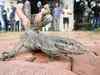
MONITOR LIZARD
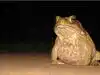
In 1935, Australian government released 2,400 toads to destroy crop-eating beetles. Almost 100 years later, 200 million giant toads threaten 75 wildlife species
Sometimes, a solution can become an impending disaster. In the 1930s, the Australia government released more than 2000 cane toads imported from Hawaii to curb the beetle population which were wreaking havock on the sugarcane crops. To the Aussie people's horror, as the poisonous amphibians multiplied rapidly, with their population estimated to exceed 200 million by 2011. Today, these have emerged as one of the most unstoppable invasive species in Australia, endangering many wildlife and disrupting the bio-diversity.

Buying groceries online for festivals? Unsafe ghee, expired green peas, yoghurt & brownies found at Delhi facilities; mosquitoes and lizards also spotted
Delhi's Food Safety Department found expired green peas, Greek yoghurt, brownies and cow ghee, along with flies, mosquitoes and a lizard, at food storage facilities operated by online food delivery and retail companies during inspections ahead of the festival season. The drive also uncovered unhygienic storage conditions and inadequate pest control. Of 59 desi ghee samples tested, 19 were found unsafe and four failed to meet food safety standards.

2026 Nobel Prize Predictions: From GLP-1 drugs and CAR-T therapy to gene editing, these breakthroughs could take centre stage
Predictions for the 2026 Nobel Prizes in science highlight significant contributions in areas like GLP-1 research and cancer therapies. Carl June is mentioned for his role in developing CAR-T cell therapy for cancer treatment. Researchers Emmanuel Mignot and Masashi Yanagisawa are noted for their work on orexin related to sleep regulation. Optical coherence tomography and lipid nanoparticle technology are also strong candidates for recognition.
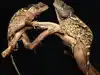
A hurricane created a rare scientific opportunity: Scientists turned seven empty Bahamian islands into a living laboratory to watch lizard evolution unfold from the beginning
A hurricane cleared Bahamian islands, offering scientists a rare chance to observe evolution beginning anew. Researchers introduced fourteen brown anole lizards to seven islands, creating new founding populations. These populations initially differed due to chance founder effects, not environmental pressures. Natural selection favored shorter hindlimbs, but initial differences persisted over four years. This experiment showed how history and environment jointly shape evolutionary outcomes.
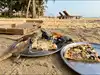
In 2023, researchers in a West African nation tried to discover which pizza do lizards prefer and won an Ig Nobel Prize for its discovery
A curious study in Togo unveiled rainbow lizards choosing four-cheese pizza instead of their usual insect diet. Observations made near a southern beach resort resulted in researchers earning an Ig Nobel Prize for nutrition. This intriguing finding emphasizes the extent to which animals can shift their diets in reaction to human influences in their habitats.
Not a crocodile or alligator: Massive 10-feet-long lizards, world's second largest, roam in India's Sundarbans
IAS officer Sanjay Kumar highlighted the Asian water monitor and Bengal monitor thriving in the Sundarbans. The Asian water monitor, the world's second-largest lizard after the Komodo dragon, can grow up to 10 feet and is an excellent swimmer that feeds on fish, crabs and carrion. The Bengal monitor is widely found across the Indian subcontinent. Both reptiles play an important role in maintaining healthy ecosystems.
Florida under threat? The largest and most dangerous lizards in US, Nile Monitors, on the loose
Florida faces a growing threat from Nile monitors, an invasive lizard species. These aggressive reptiles are establishing breeding populations and pose risks to people and pets. Wildlife officials urge residents not to approach them. Sightings should be reported immediately to help track and manage this dangerous invasion across the state.
Odisha man booked for cooking monitor lizard and posting video on social media
Rupa Nayak, a youtuber from Odisha, has been arrested. He allegedly uploaded a video of himself cooking a monitor lizard. Monitor lizards are protected under Indian law. The Forest Department took notice after the video went viral on social media. Nayak admitted to the act during interrogation. He faces charges under the Wildlife Protection Act of 1972.

Customs department seizes exotic wildlife, including snakes, monitor lizards and turtles at Bhubaneswar airport
Customs officials at Biju Patnaik International Airport in Bhubaneshwar confiscated a variety of exotic wildlife, including king snakes, monitor lizards, and turtles, hidden in chocolate boxes. These animals were smuggled from Bangkok to Chennai. A tip-off led to the search and seizure. The species, intended for sale in Tamil Nadu, were handed over to the forest department.

Rage on e-commerce site, ‘Rare Herb’ Hatha Jodi myth busted
‘Hatha Jodi’, literally meaning ‘clasped hands’ is a rage across e-commerce sites as the ‘rare magical herb’, which is said to be imbued with divine powers believed to bring prosperity.

Krishnagiri's monitor lizards killed for 'aphrodisiac' blood
Members of a narikurava family slit the throat of a live monitor lizard to collect the reptile's blood in a glass to be sold to people for its purported aphrodisiacal properties.
More hands needed to check poaching in Nalsarovar
The arrest of six poachers from Nalsarovar Sanctuary's vicinity has raised doubts about the preparedness of the forest department to tackle the menace of poaching.
HC rejects anticipatory bail of 5 constables wanted in poaching
The Nagpur bench of Bombay high court on Friday rejected the anticipatory bail application of the five Chandrapur constables wanted in connection with the poaching of monitor lizard, which is listed under Schedule II of the Wildlife Protection Act 1972. Earlier, a similar application filed by them before sessions court was also rejected.
Meneka Gandhi gets angry on kiosk owner
A roadside kiosk owner reportedly selling animal oil had to face the ire of BJP MP and animal rights activist Meneka Gandhi.
Man held for selling reptile skin products
A man has been arrested for allegedly selling reptile skin products to visitors at tourist hot spot Matheran in Maharashtra, wildlife officials said.
Increase in reptile smuggling worries wildlife officials
An alarming increase in the smuggling of reptiles such as monitor lizards, snakes and turtles in the Tarai belt of UP bordering Nepal has prompted the Wildlife Crime Control Bureau to issue an alert.
Four arrested for smuggling endangered lizards
Four persons were arrested here for allegedly trying to smuggle 21 endangered Monitor Lizards worth lakhs of rupees to Nepal.
Load More