
MILITARY COMMUNICATION SATELLITE

Russia conducting nuclear drill near Cold War-era ‘Doomsday’ bunker recently upgraded with 24,000 tons of steel and 62,000 tons of cement
Russia is currently conducting a major nuclear disaster drill involving over 1,000 participants in the Sverdlovsk region. The exercise tests emergency services' responses to a nuclear catastrophe with multiple crises happening simultaneously. Associated with the Dead Hand system, a significant Cold War-era bunker is also being upgraded for renewed operations. Reports indicate extensive construction and procurement activities around the facility suggest improvements in its infrastructure.

Malaysia Airlines stopped using flight code MH370 after the plane disappeared with 239 people aboard - why airlines retire flight numbers after aviation tragedies
Malaysia Airlines MH370: Malaysia Airlines changed flight numbers MH370 and MH371 following the aircraft's disappearance in March 2014. The aircraft, carrying 239 people, vanished during its journey from Kuala Lumpur to Beijing. Extensive search operations were conducted in the Indian Ocean, but the main wreckage remains undiscovered.
Defence stocks: Time to change strategy in a bearish market? An ecosystem with down and upside potential of -39% to plus 37%
The current fall is both at the level of the indices and the broader market. And when the selling is this broad, almost every sector is affected. But they do not all feel it equally, and it is worth knowing why every sector behaves differently at different points of time. Stock Reports Plus, powered by Refinitiv, is a comprehensive report that evaluates five key components of 4,000+ listed stocks – earnings, fundamentals, relative valuation, risk, and price momentum – to generate standardised scores. The simple average of the above-mentioned five component ratings is normally distributed to reach an average score.
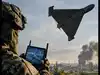
Russia's Geran drones become one of the most dangerous. Speed, reinforced bodies and less reaction time; the new drone that is changing warfare
For a long time, the sound of a Shahed-136 gave people in Ukraine something they badly needed, a little warning. The Russian-built Geran-2 used a piston engine and moved at roughly 180 km/h, slow enough for air-defense crews to track and engage it. The newer jet-powered Gerans have changed that calculation. Some can reach around 600 km/h, leaving far less time between detection and impact.
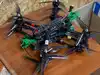
Boeing’s Insitu, Gogo test Starlink alternative for war drones
Boeing's Insitu and Gogo have tested a military drone utilizing satellite communications for global internet access. The drone integrates Gogo's Galileo HDX antenna and connects to Eutelsat's OneWeb satellites. This development aims to reduce dependence on SpaceX's Starlink for military applications. The ITAR-free system is designed to enhance command-and-control capabilities for international customers. The timeline for deploying this technology has not been disclosed by the companies.

A 1967 promise to keep space peaceful faces a new test: What happens when satellites become targets? America’s space weapons reveal a new battlefield
The United States has deployed space control weapons, sparking global concerns about an orbital arms race. These systems are designed to defend military forces against hostile actions in space. Disrupting satellites could impact vital civilian services like navigation and communication networks. Existing international treaties do not fully address modern space-based military technologies. This development highlights space's growing importance as a contested military environment.
- Go To Page 1

US acknowledges for the first time that it has deployed weapons in space
In a significant development, the United States has confirmed the deployment of weapons in space as a defensive measure, aiming to counter Russia's reported enhancements in anti-satellite capabilities. The US Air Force is also focusing on advancing autonomous systems and drone technologies. This strategic shift, part of former President Trump's Space Force initiative, raises critical discussions globally about space weaponization and the integrity of international treaties regarding space military operations.

In 1962, the US detonated a 1.4-megaton nuclear bomb in space that knocked out streetlights and triggered burglar alarms in Hawaii. 64 years later, it says weapons are already in orbit
The United States has acknowledged its possession of orbital space-control weapons, a declaration echoing a 1962 nuclear test that generated artificial radiation belts. Current space warfare strategies emphasize counter-space capabilities rather than relying on explosive power. Countries like China and Russia are also advancing their own space technologies, highlighting the growing perception of orbit as a potential arena for future military conflicts.

America brings space warfare into the open. Where does India stand?
The United States has publicly acknowledged possessing on-orbit space control weapons. This disclosure marks a significant shift in how space is viewed militarily. Russia and China are also developing offensive space capabilities, increasing global tensions. India has demonstrated kinetic anti-satellite capabilities and is expanding its military space infrastructure. Nations are now preparing for potential conflicts in Earth's orbit.
US military deploys weapons in space thousands of kilometres above Earth that can strike with brute force
The United States has acknowledged for the first time that it has deployed “space control weapons” in orbit capable of defending American forces against hostile action, Air Force Secretary Troy Meink said. He did not disclose the type, location or deployment date of the weapons. The US says the capabilities can be used for both offensive and defensive operations in space.
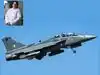
DRDO develops GaN chip: Meet Dr Meena Mishra, scientist behind the technology that was denied by other countries and why it matters for Indian defence platforms
Dr Meena Mishra, director of DRDO’s Solid State Physics Laboratory, has led work on indigenous Gallium Nitride-based Monolithic Microwave Integrated Circuit technology for high-frequency defence systems. The technology can support radars, electronic warfare, communications and unmanned platforms. A 3.5 mm x 3 mm indigenous GaN chip can deliver up to 30 watts of power and operate at speeds the ministry says are 300 times faster than silicon.
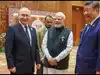
BRICS adopts New Delhi Declaration: Inside the 140-point document on Global South's ambitions
BRICS leaders adopted the New Delhi Declaration at the 18th summit, reaffirming their commitment to cooperation, multilateralism and a more representative global order. The document outlines India's 2026 chairship priorities, recognises partner countries' contributions and calls for greater participation of Emerging Markets, Developing Countries and Least Developed Countries in global governance.
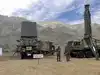
DRDO develops indigenous GaN technology for next-gen radars, electronic warfare; Tiny 3.5×3 mm chip delivers up to 30W power: Defence Ministry report
India's Defence Research and Development Organisation has made remarkable progress with the successful demonstration of cutting-edge high-frequency defence technology. This advancement is key to strengthening national security by fortifying next-generation radar and electronic warfare systems. The use of Gallium Nitride chips, known for their exceptional power and speed compared to traditional silicon, highlights the country's journey towards semiconductor self-reliance in defence applications.

Iran ‘blew the hell out of’ US base in Bahrain; Trump’s Navy pick reveals scale of humiliation
Iranian forces repeatedly targeted Naval Support Activity Bahrain between February and June. This caused extensive damage to the key United States naval facility. The destruction created significant operational problems for American forces and their deployments. Satellite images confirmed widespread damage to the base's command headquarters and other buildings. The United States continues to strike at sea amid ongoing conflict with Iran.

UK deepens reliance on Musk's SpaceX, spending nearly $40 million on satellite services
The spending was disclosed to Reuters in response to a freedom of information request and makes Britain the first country outside the US to publicly acknowledge adopting Starshield, SpaceX's service for military and intelligence missions. Starlink is marketed to consumer and commercial users.

UK deepens reliance on Musk's SpaceX, spending nearly $40 million on satellite services
Britain has spent nearly forty million dollars on SpaceX satellite services. This spending deepens reliance on Elon Musk's company for military communications. The United Kingdom is the first country outside the US to publicly acknowledge Starshield adoption. Britain's defence ministry uses about one thousand Starshield and five hundred Starlink terminals. This move occurs amid European concerns about dependence on US security infrastructure.

What to know about Europe's push to compete in space and what it still can't do without America
European nations convened a summit to address competition in the global space market. Concerns about reliance on foreign satellite services drive Europe's sovereign capability push. Recent events highlighted the critical need for independent space infrastructure and launch capacity. A new European rocket launch offers a promising step towards greater autonomy. Future decisions will shape Europe's role in crewed spaceflight and orbital independence.

Trump's Moon claim isn't a joke. A lunar power struggle has begun
Trump's "The Moon is Ours" post signals emerging lunar geopolitics. Nasa's Artemis program plans a permanent lunar presence, focusing on resource-rich areas. Private companies like SpaceX and Blue Origin are now key players in lunar development. China and Russia are also building their own lunar infrastructure and partnerships. This competition focuses on practical control and access to lunar resources.

Forget tanks, fighter jets: US, Russia & China are preparing for battles beyond Earth, where destroying one satellite could disrupt an entire military network
Space is now a contested military domain as nations develop capabilities to disrupt satellites. The United States, Russia, and China are enhancing their space-based military infrastructure. Modern warfare increasingly relies on interconnected sensors and autonomous weapons systems. Destructive anti-satellite tests create debris, posing risks to all spacecraft. The conflict in Ukraine demonstrated cyberattacks and electronic warfare's impact on space assets.

ISRO staff raises concerns over private sector transition in India's space program; seek 'written reply'
ISRO employee groups have formally voiced concerns about the privatization of India's space sector. They seek clarification on the government's policy regarding technology transfer and public sector roles. The employees fear a reduction of ISRO's core functions and impact on career development. They emphasize that launch vehicle development is a strategic capability, not just manufacturing.
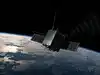
In 1965, MIT's LES-1 failed to reach its planned orbit and fell silent in 1967; 45 years later, the zombie satellite unexpectedly began transmitting again
A surprising discovery was made in 2012 when an old satellite from the 1960s unexpectedly resumed broadcasting signals. Originally believed to be out of commission since 1967, the LES-1 satellite has been transmitting for a decade due to a theorized battery malfunction. This event underscores the persistent presence of our technological artifacts in Earth's orbit and their potential to resurface long after their intended missions have ended.

Indian space sector booming with private players; India aims for 8-10% global share
Private players are driving significant activity across India's space sector. The nation aims to increase its global space economy share significantly. Several private companies have successfully launched rockets and satellites. Applications in agriculture and disaster management offer global service opportunities. A dedicated Space Act is still needed to address regulatory matters.

US, China arm for space warfare: Hunter satellites and orbital weapons
China and the United States are developing advanced military space capabilities. Both nations are preparing for potential conflict extending into Earth's orbit. Maneuverable satellites and spaceplanes are key components of these evolving strategies. Allied nations are also participating in joint military operations in space. This competition highlights the growing importance of space for national security.

Russia secretly helping Iran develop supersonic missiles: Report
Russia reportedly aids Iran in developing advanced supersonic cruise missiles since 2023. This covert program involves Russian missile specialists and ramjet propulsion technology. The technology could significantly enhance Iran's military capabilities and threaten naval vessels. This cooperation deepens existing strategic and military ties between Moscow and Tehran. The development occurs amid ongoing military confrontations in the region.

First drones, now missiles. The spending is certain, who gets the maximum is not: 14 stocks from the defence ecosystem
The defence sector’s positives are well known. But there are some unknowns. For “security reasons” we will never know how or why orders are placed, or how the focus areas are decided. Not surprising. No government will announce what it plans to do for its own defence. The only certainty is that there will be an increase in spending. Just Google how many countries have said that their defence spending as a percentage of GDP will see a sharp rise in the next three years. The number and names on the list may surprise you.

Two vessels with 22 Indians on board hijacked by pirates in Yemen, Somalia
In a troubling episode, pirates have seized two commercial vessels, leaving 22 Indian nationals on board. The first vessel, an oil tanker with 16 Indian crew, was hijacked off Yemen on August 20, while a cargo ship with six Indians encountered a similar fate near Somalia's Puntland coast. Thankfully, officials have confirmed the crew members are unharmed, despite these dangerous incidents unfolding in the area.

Six Indians aboard cargo ship hijacked by pirates off Somalia's coast
Pirates seized a cargo ship carrying Turkish weapons off Somalia's Puntland coast. Six Indian nationals were among the ten crew members aboard the vessel. The ship was taken towards the Nugaal coast after its hijacking on Monday. Turkish helicopters and drones monitored the area while two vessels approached. An airstrike later killed four men and wounded two others near the ship.
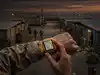
Strava data exposes US military routines across Middle East bases as Iran repeatedly strikes associated sites despite a Pentagon warning against the app years ago
US military personnel still share workout data from Middle Eastern bases. This activity potentially exposes troop locations and movement patterns to adversaries. Strava app data has been linked to locations targeted by Iran. Pentagon warnings and policy changes have not fully resolved this security risk. Such publicly available information could aid enemy intelligence gathering efforts.

Tata Group's satcom arm invests $20 million in US-based Elveo to expand connectivity
Nelco, a Tata Group company, is investing twenty million dollars in Elveo Mobile. This partnership aims to introduce advanced satellite connectivity solutions to India. The collaboration will bring Direct-to-Device and IoT services to the region. These services will cover sectors like automotive, maritime, and energy. Elveo Mobile is a new entity formed from a merger of two satellite firms.
Load More

