
MIDDLE EAST DIPLOMACY
With shifting Iran rhetoric following US elections, Trump leaves Mideast in limbo about path ahead
President Donald Trump has made ambiguous statements about the Iran war after the midterm elections. He acknowledged the conflict's impact on Republican losses and stated that military action is unlikely. Trump's comments have raised uncertainty among Middle Eastern diplomats regarding ongoing negotiations led by Qatar. Iran remains unwilling to engage in talks without certain conditions being met. The situation continues to evolve with each unpredictable comment from the president.
5 world market themes for the week ahead
Nvidia's recent leadership change and the upcoming IPO of Anthropic could significantly influence the AI market dynamics. US-China relations are set for discussions as Trump and Xi meet amid various geopolitical concerns. Oil prices remain volatile due to Middle East tensions and supply changes, affecting potential inflation relief. A UK and EU summit aims to advance post-Brexit cooperation on trade and regulations.

US military says it fired on commercial vessel in Gulf of Oman after it attempted to breach blockade
U.S. Central Command disabled a ship flagged by St. Kitts after it attempted to leave Iranian waters. This action follows multiple warnings regarding naval movements in the region. Meanwhile, explosions were reported in the Strait of Hormuz, raising concerns about maritime safety. The Iranian military also announced that two tankers caught fire after hitting mines. Military tensions in the area have escalated following recent limited strikes by U.S. forces.

'Both sides working towards a deal': Qatar says PM remarks on US-Iran talks "distorted" online
Qatar said that PM Sheikh Mohammed bin Abdulrahman bin Jassim Al Thani's remarks were "distorted" online, as several "fake accounts" claimed that the United States and Iran had failed to reach an agreement.

Oil falls for a fourth day on expectations for lower risk of Iran war escalation
Oil prices have been falling for several days, influenced by the outcomes of Congressional elections this week. The results may signal a lesser risk of escalating conflict with Iran, according to analysts. While some anticipate an end to the war, others remain cautious about geopolitical uncertainties. Crude shipments in the region have recovered, contributing to a surplus in the oil market.

US midterm election results cheer US bond yields, 10-year treasury note, yield on 30-year bond, two-year treasury yield jump on Tuesday
US midterm election 2026 results: 10-year TIPS breakeven rate was last at 2.305 per cent, indicating the market sees inflation averaging about 2.3 per cent a year for the next decade.
- Go To Page 1

Iran's Khamenei gives Pezeshkian government ‘certain powers’ for US peace talks: Report
Iranian President Masoud Pezeshkian announced the Supreme Leader granted the government powers for talks with the United States. Following foreign ministry comments, Iran indicated communication with Washington via mediators is underway. Reports emerged of secret US strikes on Iranian positions to deter aggression in the region. Iran proposed a two-day plan for reopening the Strait of Hormuz while setting conditions for negotiations.

Oil Price Today (November 2): Crude oil falls to $111 as Iran-Qatar talks continue to end war. What are experts saying?
Crude oil price : Oil prices have plummeted dramatically, impacting Brent and WTI crude significantly. As Iranian and Qatari officials engage in talks to mitigate tensions from the US-Israeli conflict regarding Iran, the situation is further aggravated by security threats and oil tanker assaults in the Strait of Hormuz. Experts warn of ongoing price instability post-US midterm elections, creating an unpredictable environment for global energy supply chains and market responses.
'Missile shield at Mar-a-Lago, mass burial drills': Is Trump ready?
The US military is enhancing its presence in the Middle East as tensions with Iran escalate. Preparations include reinforcing air defenses and conducting battlefield casualty exercises that have not occurred in decades. Recent reports suggest a possible military campaign against Iran could commence following the midterm elections. Despite ongoing diplomatic efforts, significant disagreements remain regarding nuclear negotiations and sanctions.
G20 diplomats, including from China and Russia, face deep rifts as they prepare to meet in Atlanta
Top diplomats from the G20 nations are convening in Atlanta to discuss pressing global issues. Key topics include regional conflicts and trade tensions affecting international security. U.S. Secretary of State Marco Rubio aims to facilitate cooperation among member countries. However, deep divisions are evident, especially regarding military actions and the Ukraine situation. This meeting serves as a precursor to the upcoming G20 summit hosted by President Trump.
Christine Lagarde: The outsider who led the European Central Bank her way
Christine Lagarde's early departure as European Central Bank president marks the end of a seven-year tenure shaped by the Covid-19 pandemic, energy shocks and record inflation. Despite initial doubts over her lack of formal economics training, Lagarde helped steer the ECB through major crises. However, her decision to leave before her term ends has sparked criticism over political interference and raised questions about the institution's independence.
US Iran war: Tehran says discussing plan with mediators to end war, reopen Strait of Hormuz
Iran's Foreign Minister Abbas Araghchi stated that Tehran is negotiating a seven-day plan for peace and stability. The plan aims to reopen the strategic Strait of Hormuz and involve crucial conditions like enforced ceasefire. Regional mediators, particularly Qatar, are facilitating communication to revitalize US-Iran discussions and prevent ongoing conflict. The proposal also includes demands for sanctions relief and asset unfreezing, which remain unresolved.
US warns allies to prepare for possible Iran strikes, retaliation after elections, sources say
US officials have alerted regional allies about potential military action against Iran following the upcoming elections. President Trump's administration is considering renewed strikes against Iran, emphasizing preparations for possible retaliatory actions. Iranian officials express a willingness to pursue diplomatic solutions despite the tensions. The conflict has intensified with Houthi rebels targeting Saudi infrastructure amid unrest. The situation remains fragile as both sides anticipate further developments in the region.
Russian satellites help Iran's allies strike Saudi Arabia, data and officials say
Crucial to the strikes' success was what was happening in the skies overhead: For days beforehand, a constellation of Russian spy satellites converged over the pipeline and the air base to gather intelligence.

Oil eases on Middle East diplomacy hopes, Saudi attacks keep supply worries alive
Oil prices took a slight dip as Saudi Arabia, Turkey, Pakistan, and Iran engage in diplomatic discussions aimed at quelling tensions. However, the situation remains precarious with increased attacks from Iran-aligned Houthis, causing doubts about further price drops. Brent crude futures remain near six-month peaks, influenced by persistent threats. The Strait of Hormuz, vital for global energy, faces rising risks.

China is back in the bull semen market, but only the best will do
China has resumed imports of bull semen from Australia and Canada as it seeks to improve cattle genetics, increase beef production and boost dairy yields. Under stricter rules, imports must come from bulls ranked among the top 10% in their country of origin. The move follows years of trade restrictions that disrupted supplies and pushed some Chinese producers towards smuggled livestock genetics.
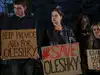
US-brokered truce in Russian-occupied city of Oleshky begins
A US-brokered truce between Russia and Ukraine has begun in the Russian-occupied city of Oleshky in southern Ukraine’s Kherson region, aiming to allow humanitarian aid to reach residents facing severe shortages of food and medicine. Announced by US First Lady Melania Trump, the limited ceasefire is intended to facilitate aid deliveries and evacuations, though details of the humanitarian operation and monitoring arrangements remain unclear.

Oil eases on Middle East diplomacy hopes, Saudi attacks keep supply worries alive
Oil prices edged lower on Tuesday as diplomatic efforts to ease the US-Israeli war on Iran raised hopes of a resolution and eased supply concerns. However, Brent crude remained near six-month highs amid renewed attacks on Saudi Arabia and continued risks to shipping through the Strait of Hormuz, a key route for global energy supplies.
If Netanyahu loses, what happens next in the US-Israeli war on Iran?
Benjamin Netanyahu's upcoming election holds significant implications for Israel's policy on Iran. Depending on the election's result, the country's military posture towards regional adversaries could drastically change. Gadi Eisenkot might keep applying pressure on Iran, but a new leadership could prefer a diplomatic stance. This fluid political atmosphere presents opportunities for potential negotiations, underscoring the nuanced relationship between military action and foreign diplomacy in the region.
Musk says he was behind Starlink speed restriction after service in Ukraine restored
Ukraine's Starlink services were restored after speed restrictions affected military operations for over a week. President Volodymyr Zelenskyy confirmed that the restored speeds were sufficient for front-line logistics. Elon Musk admitted to throttling Starlink for offensive use, sparking tensions between Ukraine and the US. Meanwhile, missile attacks continue to impact civilians in Ukraine, with reported casualties in several regions. Ukrainian forces also targeted military sites across Russia, indicating ongoing conflict.
Global South faces a '4F crisis': EAM Jaishankar calls North to realise equal stakes in finding solutions
Dr S Jaishankar expressed the need for the Global North to recognize its role in addressing the Global South's crises. He identified these crises as finance, fuel, food, and fertilizer, collectively termed the 4F crisis. Jaishankar stated that a prosperous world cannot exist if part of it is denied progress. He urged for diversifying global economic options to mitigate these issues.
Netanyahu invites PM Modi to light torch together with Indian pilot Smit Machchhar on Israel's Independence Day
Israeli Prime Minister Benjamin Netanyahu has invited Indian Prime Minister Narendra Modi to participate in Independence Day celebrations. Modi expressed gratitude for the invitation and acknowledged the cooperation between India and Israel on terrorism. Both leaders emphasized the importance of their long-standing relationship over the years. Netanyahu shared this conversation on social media to highlight their collaboration.

Beyond the ballot: Why Israel's next leader may stick to Netanyahu's doctrine
Israel's upcoming election is unlikely to change its aggressive stance towards Iran and Palestinian statehood. Even if Benjamin Netanyahu retains power, he may escalate military actions and settlement expansions. The election reflects a broader trend of hardline politics, where consensus exists against Palestinian statehood. Regional policymakers expect continued confrontations while underlying issues remain unaddressed. The situation may lead to prolonged tensions in the Middle East with unresolved conflicts persisting.

Senior UAE diplomat Lana Nusseibeh enters race for UN chief
Lana Nusseibeh has announced her candidacy for the role of United Nations secretary-general. She aims to restore the organization as an effective diplomatic problem-solver in response to global challenges. Nusseibeh has garnered support from numerous countries during the recent UN General Assembly. Her experience includes leading UAE campaigns at the UN and dealing with complex geopolitical issues.

Trump’s super intelligence diplomat: Marco Rubio
Trump changed AI to SI. Now he has created a new breed of SI diplomacy.
Saudi Arabia accuses Iran of encouraging Houthis in latest escalation
Saudi Arabia has recently reported an increase in Houthi attacks, which they attribute to Iranian support. The conflict in Yemen has escalated following a truce's collapse, leading to attacks on Saudi infrastructure. Diplomatic communications between Saudi Arabia and Iran continue, but concessions have not been made yet. Meanwhile, the humanitarian crisis in Yemen persists, affecting most of the population's access to aid.
Saudi Arabia accuses Iran of encouraging Houthis in latest escalation
Saudi Arabia has accused Iran of arming and training Yemen's Houthi militants, escalating the ongoing conflict. The Houthis launched numerous attacks on Saudi Arabia, including a deadly strike on Riyadh's international airport. Communication attempts between Saudi Arabia and the Houthis have failed, with recent meeting requests being declined. The intensified violence has also drawn concerns regarding the humanitarian crisis in Yemen.
Saudi Aramco administrative building at Dhahran headquarters attacked
A limited fire broke out in an Aramco administrative building without injuries reported amid escalating tensions. The Saudi-led coalition conducted airstrikes on Houthi positions in Yemen in response to missile threats. Houthi forces retaliated by claiming they would target Saudi Arabia if attacked. Fighting in Taiz resulted in casualties and food shortages, leading to civilian displacement.
Trump's oil jawboning loses punch as wars spiral
Donald Trump’s ability to talk down oil prices is fading as the Iran war drags on and regional violence continues. Despite a recovery in oil flows through the Strait of Hormuz to 80%-90% of pre-war levels, Brent crude has remained above $100 a barrel as traders worry about supply security and rising shipping costs.
Load More

