
MICROORGANISMS FOR MARS
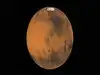
Genetically modified microbe could help make Mars habitable, researchers say
At Pioneer Labs, a biotech startup based in Emeryville, Calif., researchers have engineered a bacterial strain that can grow under simulated Martian conditions. The microorganism, dubbed sPL.001, can degrade toxic compounds in Martian soil analogs and produce bioplastics that could be used in future space settlements.
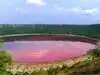
One meteorite crash thousands of years ago, created a mysterious lake. Its water can turn pink and red due to a strange phenomenon under the surface
A meteorite impact thousands of years ago created a remarkable lake in Maharashtra, but the crater is only part of what makes it unusual. The water can appear green at one time and turn pink or red under certain conditions. The reason lies not in the lake’s surface, but in the extreme environment beneath it, where salt-loving microorganisms thrive and produce pigments that can change the colour of the water.

Mars had a secret water history: NASA rover finds ancient groundwater and hot fluids that reshaped the planet after its ancient lake vanished
NASA's Perseverance rover discovered that Jezero Crater's Margin Unit was influenced by various water processes. The findings reveal alterations by ancient groundwater, lake water, and later hot fluids. These discoveries challenge previous assumptions about the crater's geological history and its water systems. Researchers believe that olivine and other minerals could provide clues about ancient habitability. The insights gained from Jezero may inform future studies on Mars' environmental changes.

Why NASA is studying 1.2-billion-year-old Scottish rocks for clues to ancient life on Mars and the Red Planet’s watery past
Ancient rocks found in Scotland's Stoer Formation are being studied by NASA to understand potential signs of life. These rocks formed 1.2 billion years ago under water-influenced environments and evidence of microbial life is preserved. NASA's Perseverance rover discovered a rock on Mars with distinctive mineral patterns that may indicate biological origins. The Scottish research helps interpret findings from Mars while preparing for possible future sample analysis.
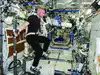
In 2014, ESA astronaut Alexander Gerst wore SpaceTex shirts on the ISS for six months; their fabric data helped inform clothes for future Mars crews
Innovative space experiments have focused on how fabrics can effectively manage astronaut sweat and heat during missions. These studies revealed distinct challenges unique to microgravity. Findings from the SpaceTex experiment are paving the way for next-generation astronaut apparel. Furthermore, this cutting-edge fabric technology is inspiring new designs in athletic wear, benefiting those in high-demand professions on Earth as well.
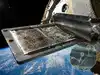
In 1966, Gemini 9 and Gemini 12 exposed fungal spores and viruses directly to space; a 0.4 mm aluminum shield kept fungal spores alive and boosted virus survival 3,000-fold
Early space missions tested microbial survival outside spacecraft without protection. Fungal spores and viruses showed very low survival rates in raw space. A thin aluminum shield dramatically improved survival for both organisms tested. This shielding protected microbes from damaging solar ultraviolet and soft X-ray radiation. These findings continue to inform space exploration and planetary protection protocols.
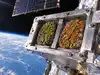
In 2005, ESA exposed two kinds of lichen to space for 14.6 days; both remained metabolically active and recovered after returning to Earth
In a groundbreaking experiment, two lichen species, Rhizocarpon geographicum and Xanthoria elegans, showcased extraordinary durability by surviving unprotected in the harsh conditions of space for over two weeks. Post-return, they resumed normal metabolic processes and photosynthesis, suggesting incredible resilience. Notably, desiccated samples exhibited greater toughness compared to hydrated ones, revealing minimal cellular damage. This study raises intriguing possibilities regarding the survival of life in space and prospects for interplanetary exploration.
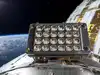
In 1984, NASA left Bacillus spores in space for nearly 6 years; after LDEF returned to Earth, 1–2% of the exposed spores were still alive
During an extensive six-year voyage aboard the LDEF satellite, soil bacteria spores demonstrated remarkable resilience, surviving the rigors of space including vacuum, extreme temperatures, and cosmic radiation. The spores shielded from sunlight exhibited notably better survival rates, suggesting the intriguing possibility that life could travel between planets with minimal protection. These insights are pivotal for enhancing spacecraft sterilization protocols and deepening our understanding of panspermia.
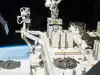
In 2015, Japan exposed bacteria outside the ISS for 3 years; some clumps survived, while thicker ones were estimated to last longer
Japanese researchers launched the resilient bacteria Deinococcus into orbit aboard the International Space Station. Remarkably, these microbes thrived for three years amid extreme environmental challenges. They formed protective clusters that safeguarded their inner cells against harmful radiation. This finding bolsters the hypothesis that life can migrate between planets, impacting future space exploration endeavors and the ongoing quest for extraterrestrial beings.
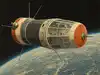
In 1966, NASA launched Biosatellite I with 13 biology experiments and more than 10 million organisms; its retrorocket failed, and the spacecraft was never recovered
In 1966, NASA's Biosatellite I mission attempted to carry over ten million organisms into orbit, but a retrorocket malfunction led to the capsule's tragic loss upon re-entry. This setback, however, was instrumental, offering invaluable insights that benefitted future space missions. Just months later, Biosatellite II launched successfully, marking a significant advancement and laying foundational knowledge for present-day research on survival in space.
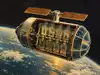
In 1967, NASA flew flour beetle pupae on Biosatellite II for 45 hours; radiation and weightlessness raised wing abnormalities in flight from 29.9% to 44.8%
During the 1967 Biosatellite II mission, flour beetles displayed notable wing deformities, underscoring how weightlessness amplified the adverse effects of radiation on living organisms. This early research in space biology played a pivotal role in understanding how microgravity and radiation interact. Today, insects are being considered viable food sources for future space explorations, reinforcing the importance of studying the biological consequences of spaceflight.
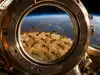
In 1967, Biosatellite II irradiated parasitic wasps for 2 days in orbit; females later laid as many eggs as controls, and hatchability remained excellent
A 1967 NASA mission sent parasitic wasps into orbit around Earth. These wasps showed surprising resistance to radiation damage while in space. Ground experiments failed to replicate this protective effect observed in orbit. This old experiment raises questions about spaceflight's impact on living cells. The findings remain relevant for future long-duration space missions.
In 1962, NASA packed 22,900 gallons of water into a Saturn I rocket and deliberately released it 65 miles above Earth to see how water behaved in the upper atmosphere
NASA scientists have long explored recycling resources for extended space travel. Plants and microorganisms could help regenerate vital supplies for astronauts. Reliable mechanical and biological systems are crucial for mission success. Recycling reduces the immense cost of launching supplies from Earth. This technology is fundamental for future lunar and Martian exploration.

NASA sent Pseudomonas aeruginosa on shuttle Atlantis to space, where it formed denser biofilms with an unusual “column-and-canopy” structure
In groundbreaking space experiments, bacteria grown in synthetic urine were sent aboard the Atlantis space shuttle on two occasions. These microbes exhibited enhanced colony density and distinctive formations not observed on Earth. Spaceflight significantly amplified biofilm development in Pseudomonas aeruginosa, presenting major challenges for prolonged space missions and life support systems. Studying these bacterial modifications is crucial for future human exploration beyond Earth.
In 2005, scientists thawed 32,000-year-old organisms frozen since the Ice Age, and they started swimming almost immediately, challenging everything we knew about life's limits
NASA scientists made a groundbreaking discovery deep inside Alaskan permafrost. They defrosted 32,000-year-old bacteria frozen since the ancient Ice Age. The moment the ice melted, the microbes woke right up. They immediately started swimming, feeding, and multiplying. This shock revival proved ancient organisms can survive extreme freezing for millennia. Now, NASA astrobiologists believe similar dormant life might be waiting inside the frozen ice caps of Mars today.
New findings by NASA Mars rover provide strongest hints yet of potential signs of ancient life
NASA's Perseverance rover has discovered intriguing rocks in a Martian river channel, potentially hinting at ancient microbial life. The rover identified organic carbon and unique mineral deposits, similar to those produced by microorganisms on Earth.
Mars could have conditions suitable for life, reveals new discovery
This alternating pattern of wet and dry periods is believed to have created an environment conducive to the development of complex ancient organic compounds. These compounds could have acted as precursors to life, indicating that Mars could have hosted conditions suitable for life's emergence.
Desi scientist's work on ‘extreme’ life key to decoding existence on Mars
Over the past two years, there has been a lot of debate over the presence of “liquid water” on Mars. On September 28, a study in ‘Nature’ confirmed the presence of a subglacial lake on Mars first identified in 2018 and detected three others around it.
'Mars-quakes' could produce energy source to support life
New York, Sep 21 (IANS) Rocks formed by the grinding together of other rocks during earthquakes are rich in trapped hydrogen and similar seismic activity on Mars may produce enough hydrogen to support life, a study says.
Load More


