
MICROGRAVITY EFFECTS ON BODY
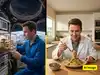
Mushrooms sent to space return to Earth & end up in pasta: Australian researchers send lion’s mane, turkey’s tail and cordyceps to the ISS, then watch what happens when they return
Mushrooms sent to space return to Earth & end up in pasta: Australian scientists sent fungal mycelium to the International Space Station as part of an experiment to study how edible fungi respond to space conditions. After the samples returned to Earth, researchers successfully cultivated lion's mane mushrooms and later used them to prepare a creamy pasta sauce. The experiment could help scientists better understand whether fungi can remain viable after spaceflight and explore their potential role in sustainable food production during future long-duration space missions.
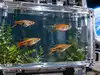
In 1998, scientists sent 4 pregnant swordtail fish and 200 babies into space; near the end of the mission, the fish suddenly began swimming in continuous loops
In an unprecedented experiment in 1998, swordtail fish were launched into orbit on the space shuttle Endeavor to explore how life persists without gravity. They initially thrived, swimming well in their custom habitat. However, by the ninth day, they began to exhibit looping movements, a reaction caused by the absence of gravity. Once back on Earth, the fish experienced a brief phase of clumsiness but quickly regained their swimming abilities.
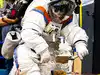
In 2014, NASA astronauts used an ordinary tape measure during six-month ISS missions; the Body Measures data later entered requirements for NASA's xEMU spacesuit
In 2014, astronauts aboard the International Space Station conducted body measurements to study the impact of microgravity on human physiology. This research provided NASA critical insights that shaped the design of future spacesuits. Utilizing basic tools such as tape measures was instrumental in making significant engineering improvements. Ultimately, this work plays a vital role in ensuring safety for astronauts and the success of upcoming lunar missions.
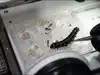
In 1997, Japanese researchers flew silkworm eggs on STS-84 to study spaceflight effects; developmental abnormalities were more frequent in the flight samples
Silkworm eggs revealed developmental abnormalities in early space experiments. Later, the Rad Silk investigation examined cosmic radiation's long-term effects on the ISS. Ground-based trials showed that radiation during early embryonic development caused higher mutation rates. Visible white spots on larvae indicated radiation exposure levels inside spacecraft. These findings offer insights into radiation's impact on developing organisms beyond Earth.
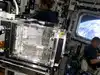
In 2006, NASA launched 75 fruit flies on STS-121 for 13 days; Discovery returned with about 3,000, including a new generation that developed in space
NASA's experiments with fruit flies in zero gravity unveiled significant weaknesses in their immune systems. Observations indicated these flies produced fewer specialized immune cells and exhibited a diminished ability to combat bacteria. Further investigations demonstrated that their responses to fungal infections were also altered in space. These discoveries illuminate potential immune function disruptions among model organisms during spaceflight, raising important concerns for upcoming long-duration human space missions.
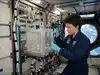
In 2015, fruit flies were sent to International Space Station to study how microgravity and the space environment affect the innate immune system
In 2015, fruit flies were sent to International Space Station to study how microgravity and the space environment affect the innate immune system. NASA’s Fruit Fly Lab-01 tested how weightlessness affects immunity and also tested a new research platform. The mission used fruit flies because of their genetic links to humans and their short life cycle.
- Go To Page 1
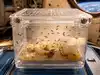
In 1994, 300 young male fruit flies flew for 14.5 days on IML-2; repeated video showed their locomotor activity rose sharply while they were in microgravity
In 1994, fruit flies were launched into space, revealing significantly heightened activity levels in microgravity. These flies aged more rapidly than their Earth-dwelling counterparts. Researchers noted a decrease in mitochondrial RNA, hinting at a connection to energy production at the cellular level. Simulated weightlessness experiments confirmed the increased activity observed in space. This foundational research is vital for understanding the implications of prolonged weightlessness on future space missions.
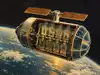
In 1967, NASA flew flour beetle pupae on Biosatellite II for 45 hours; radiation and weightlessness raised wing abnormalities in flight from 29.9% to 44.8%
During the 1967 Biosatellite II mission, flour beetles displayed notable wing deformities, underscoring how weightlessness amplified the adverse effects of radiation on living organisms. This early research in space biology played a pivotal role in understanding how microgravity and radiation interact. Today, insects are being considered viable food sources for future space explorations, reinforcing the importance of studying the biological consequences of spaceflight.
In 1992, NASA studied C. elegans worms exposed to space radiation on IML-1; the experiment reported higher mutation rates than in ground controls
In 1992, micro worms unveiled the troubling effects of space radiation on DNA, showcasing considerable genetic harm to these minuscule creatures. This finding raises alarm for astronauts who lack Earth's magnetic shield, exposing them to similar hazards. As NASA continues to grapple with radiation exposure limits for upcoming lunar and Martian expeditions, ensuring the genetic safety of astronauts on prolonged journeys remains a critical and unresolved challenge.

In 1947, the military sent fruit flies 67 miles into space to test radiation risks. 11 years later, NASA was founded in 1958, with animal flights underway in America now
1947 mission was part of a larger American effort to understand whether living organisms could survive the journey into space. Beginning in the mid-1940s, military and scientific teams used captured German V-2 rockets for research after World War II.
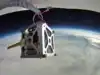
In 2010, NASA launched a 12-pound, loaf-of-bread-sized satellite with two Bacillus populations; radiation exposure reached about 15 times that of the ISS orbit
NASA's O/OREOS mission embarked on an exciting journey to observe how bacteria withstand the rigors of space radiation. The compact satellite, about the size of a loaf of bread, zipped around Earth’s magnetic poles, subjecting dried bacterial spores to intense radiation over several months. While initial germination and growth were sluggish and ultimately showed abnormalities, the mission confirmed that nanosatellites are viable platforms for conducting autonomous biological research in space.
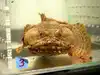
In 1998, NASA sent oyster toadfish into space on Space Shuttle Columbia; over 16 days in orbit, researchers studied how their balance systems adapted to microgravity
In 1998, saltwater toadfish participated in the Columbia's Neurolab mission, offering insights into the effects of microgravity on the nervous system. Their inner ear adaptations revealed how their vestibular system modified its sensitivity in the absence of gravity. Upon returning to Earth, the adjustments mirrored the disorientation experienced by astronauts, further enhancing our understanding of balance and safety in space exploration.
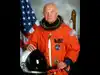
NASA sent a 77-year-old payload specialist back into space in 1998, 36 years after he became the first American to orbit Earth - not just to make history again, but to study how an older human body responds to microgravity, becoming the oldest person ever to fly in space
John Glenn returned to space aboard the shuttle Discovery in 1998. He became the oldest person to travel into space at age seventy-seven. NASA utilized his flight to study aging and spaceflight connections. The mission conducted over eighty scientific experiments during its nine days. Glenn's journey marked a historic return to the environment that made him a hero.
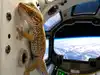
In 2005, NASA flew five thick-toed geckos aboard Foton-M2 for 16 days without food or water; all were recovered with no apparent negative health effects
Five geckos orbited Earth for sixteen days without food or water. Researchers studied how weightlessness affects these cold-blooded animals. Bone tissue loss occurred in geckos and a ground control group. This indicated fasting and enclosure conditions caused the bone loss. Subsequent missions provided food and water to prevent these changes.
In 2014, NASA sent young and older mice into space; within 9 to 11 days, the younger ones began running group laps in zero gravity
In 2014, NASA launched a group of twenty mice to the International Space Station for groundbreaking research. Remarkably, the young mice exhibited coordinated circling behavior just two weeks after their arrival. In contrast, older mice showed little interest in this peculiar behavior, a mystery that intrigued scientists. This phenomenon could be connected to factors like stress, motivation, or the vestibular system.
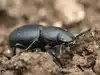
In 1997, NASA sent 64 desert beetles to Russia’s Mir space station with tiny wheels tracking their every movement; their movements helped scientists understand how light regulates biological clocks in microgravity
NASA sent black desert beetles into space aboard the Space Shuttle Atlantis in 1997. These insects lived on the Russian Mir space station for 125 days. Tiny wheels tracked their movements to study activity changes in microgravity. Researchers found light pulses shifted beetle clocks, while gravity affected their natural rhythms. This experiment helped understand challenges for human sleep and circadian rhythms during space missions.

In 2013, a special medical research facility was started in Cologne, Germany to understand how humans adapt to extreme environments: How :envihab helps prepare astronauts?
In 2013, a special medical research facility was started in Cologne, Germany to understand how humans adapt to extreme environments. The facility studies how the human body responds to microgravity-like conditions. Its bedrest studies help researchers examine changes in bones, muscles, balance, vision and coordination and test measures that could protect astronauts during space missions.
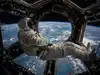
NASA found astronauts can become up to 3% taller in space; their spines lengthen without Earth’s gravity, then compress again after landing
Astronauts aboard the International Space Station actually grow taller due to the absence of gravity. This temporary height increase occurs as spinal discs decompress and elongate in microgravity. Upon returning to Earth, gravity compresses the spine, reversing the height gain. However, astronauts experience muscle atrophy in their lower backs which takes time to recover. This can lead to an increased risk of herniated discs after long-duration spaceflight.
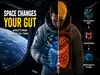
52 astronauts left Earth for months in orbit, and within weeks their gut bacteria changed how they processed food, revealing why spaceflight can trigger constipation and potentially affect brain health
Constipation in space is more than an uncomfortable side effect. Astronauts often face it during long missions, but scientists have not fully understood why. Now, blood tests from 52 astronauts reveal a possible clue. Their gut bacteria began fermenting more protein within weeks of reaching the International Space Station. The finding links microgravity, slower intestinal movement and gut microbiome changes, offering new clues for future Moon and Mars missions.

From eating in space to sleeping, astronaut Shubhanshu Shukla answers students' queries from ISS
During the interaction, Shukla, the first Indian to reach the ISS, described the launch experience of the Axiom Mission 4 from the Kennedy Space Centre in Florida on June 25 as "amazing" and "dynamic".

The Boeing Starliner Saga left Sunita Williams struggling—But now comes her toughest mission yet
After a grueling nine-month mission aboard the International Space Station, astronaut Sunita Williams returned to Earth looking visibly frail. Medical experts are concerned about her apparent weight loss, muscle atrophy, and bone density depletion, issues common after prolonged exposure to microgravity. While recovery is expected, the ordeal underscores the harsh toll space travel takes on the human body. From balance issues to digestive struggles, Williams faces a tough but hopeful road ahead, as NASA and specialists closely monitor her reintegration into Earth's gravity.
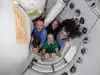
After nine months in zero gravity—Sunita Williams, Butch Wilmore prepare for a gravity-shocking return
NASA astronaut Sunita Williams and her colleague Barry "Butch" Wilmore are finally set to return to Earth after an extended nine-month stay on the International Space Station (ISS). Their return, initially delayed due to issues with Boeing’s Starliner spacecraft, will take place aboard SpaceX's Crew Dragon. Williams' family in India is eagerly awaiting her arrival, expressing both excitement and concern over the potential health effects of prolonged space travel.

Sunita Williams and Butch Wilmore's nine-month nightmare at ISS may continue on earth; may get weak heart, bad eyesight, and waterlogged brain
NASA astronauts Butch Wilmore and Sunita Williams face potential long-term health issues after a nine-month space mission. They may experience irreversible physical damage due to microgravity, such as bone density loss and muscle atrophy, and psychological challenges, including anxiety and depression, compounded by radiation exposure.

How does space travel affect astronaut health?
Space travel poses significant challenges to human health due to microgravity, radiation exposure, and psychological stress. Microgravity leads to fluid shifts, muscle atrophy, and bone loss, while radiation increases cancer risk and damages DNA. Isolation affects mental well-being. Recovery varies, with longer missions causing lasting effects.
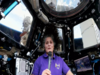
Is Sunita Williams really facing health issues? Astronaut addresses weight loss rumors from Space!
NASA astronaut Sunita Williams, currently aboard the International Space Station (ISS), balances cutting-edge research with personal adaptation to space life. In a recent interview, Williams addressed health concerns, explaining microgravity-induced changes in her appearance. Simultaneously, she is pioneering robotics advancements using the Astrobee free-flyer system for satellite servicing and space debris removal. Her rigorous fitness routine counteracts bone density loss caused by weightlessness. As part of NASA’s Artemis program, Williams contributes to missions shaping humanity's future on the Moon and Mars.
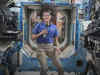
'My Body Has Changed': Sunita Williams shares latest health update and changes she is experiencing after months in space
Indian-origin astronaut Sunita Williams recently shared updates about her health from the International Space Station. She addressed rumors about weight loss, stating her weight remained constant. Williams explained that while body fluids shift in space, causing a puffy appearance, her weight is stable.

Sunken cheeks, heavy weight loss: Sunita Williams' latest photos raise serious health concerns
NASA astronaut Sunita Williams faced health issues during her ISS mission. Her eight-day mission extended to six months due to spacecraft problems. Williams experienced weight loss, a common issue for astronauts on long missions. NASA is monitoring her health. Williams will return to Earth in February. This incident highlights the health risks of space travel.
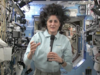
Why humans become taller in space, Sunita Williams answers
Astronaut Sunita Williams, currently on an eight-month mission aboard the ISS with Butch Wilmore, shares intriguing insights into how space affects the human body. In a recent interview, she explained that astronauts experience rapid hair and nail growth, temporary height increases due to spinal expansion, and smoother wrinkles in microgravity. However, these changes revert once back on Earth. Williams also highlighted concerns about bone density and muscle mass loss, emphasizing the rigorous exercise routines used to combat these issues.
NASA working for better cancer treatments in space: Report
Washington, Aug 28 (IANS) Astronauts aboard the International Space Station (ISS) are conducting a blood cell experiment which may improve treatments for cancer, the media reported.
Load More

