
MICROBES

Mars may still be hiding hot magma underground. Scientists found a strange gas that could explain it
Scientists have detected unusual amounts of hydrogen chloride gas above the Alba Mons volcanic region on Mars. A study published in Science Advances suggests that the gas could be escaping from magma hidden beneath the planet's surface.

Florida scientists grew Earth microbes for 160 days in Mars-like conditions; some multiplied under low pressure in highly salty water
In a groundbreaking experiment, researchers at the University of Florida cultivated Earth microbes for 160 days in a simulated Martian atmosphere, characterized by low pressure and high salt concentration. The study uncovered that certain nutrients significantly promoted bacterial growth while others remained ineffective. Scanning electron microscopy highlighted distinctive biofilm-like formations, suggesting microbial survival in harsh conditions. These insights could be crucial for future missions aimed at identifying life on Mars.
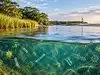
MIT scientists grew microbes from three Massachusetts waters at different salt levels for two weeks; the communities kept growing even as they lost species in the lab
Researchers at MIT embarked on a study to understand the impact of rising salinity on freshwater microbes through controlled experiments. Their findings revealed a mixed response among microorganisms; while some adapted well to saltier conditions, others were outcompeted by salt-resistant varieties. Observations were made across three different Massachusetts regions with varying salinity levels.
5 health benefits of dark chocolate: Harvard-trained gut doctor explains how it can boost mood, gut health and more
Dark chocolate is not only a delicious treat but also boasts numerous health advantages, including mood enhancement and support for gut health. Rich in cocoa flavanols, it can improve blood circulation and decrease blood pressure. For optimal benefits, nutritionists suggest opting for dark chocolate with a cocoa content of 70% or higher.
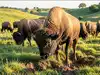
Yellowstone National Park’s bison are doing way more than just grazing across Wyoming. A six-year field study reveals how their movement and habits make grasslands 150% more nutritious
Yellowstone National Park bison have enhanced grassland health and nutrition. Almost 5,000 Yellowstone bison graze extensively. The regenerated grasses in these areas have been found to be 150 per cent more nutritious. Neither plant growth nor carbon stores within the soil are also negatively impacted. Bison migrate around 1,000 miles a year on a 50 mile migratory route.
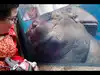
Fiona’s necropsy reveals why vets couldn’t remove a hat lodged deep in her intestine, but why do hippos have long digestive tracts that can reach 100 feet?
Fiona, a famous hippo at Cincinnati Zoo, died after ingesting a visitor's hat in a tragic event. The hat became lodged deep in her intestine, making removal impossible despite veterinary efforts. A necropsy revealed the hat was 25 feet beyond the final stomach compartment. Hippos, like other herbivores, have long intestines that complicate digestive issues. This incident has raised questions about the complexities of hippo anatomy and their care.
- Go To Page 1
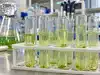
MIT scientists kept growing ocean microbes that clung to test tubes; the sticky share rose from 6% to 85%, revealing a hidden way they release carbon into water
Prochlorococcus, a small but abundant marine microbe, was thought to exist mainly as solitary cells. New research findings reveal that it can form biofilms and attach to particles. This discovery has implications for understanding the biological carbon pump in the oceans. While these microbes can switch between free-floating and attached forms, they contribute significantly to carbon transport. Scientists are further investigating the role of attached Prochlorococcus in marine ecosystems.

Shift from higher yields to nutrient-efficient crops needed to cut fertiliser dependence: ICAR’s Jat
Jat emphasised that soil biodiversity and agrobiodiversity are fundamental to sustainable agriculture

Scientists mixed just 3% volcanic ash into forest soil in a UC San Diego experiment; coleus plants grew roughly three times as much as plants in untreated soil
At UC San Diego, researchers have made an exciting discovery: adding volcanic ash to soil can significantly enhance plant growth. Their study revealed that incorporating just 3% basaltic ash not only boosts the biomass of coleus plants but also positively influences beneficial soil microbes. This finding showcases volcanic ash as a viable solution for rejuvenating poor agricultural soils, making it an effective tool for sustainable practices and carbon capture initiatives.

Skipping exercise? Harvard-trained gut doctor shares 5 ways it can affect your gut health
Engaging in regular physical activity has been linked to enhanced gut health, claims Harvard-trained gut doctor Dr Saurabh Sethi. Studies suggest that regular exercise boosts butyrate production, which is vital for gut wellness. Furthermore, it helps alleviate constipation symptoms and fortifies the gut barrier, preventing toxins from entering the bloodstream. For optimal results, health professionals recommend integrating walking, moderate exercise, and strength training into daily activities, alongside a fibre-rich diet.

Goodbye to sunrise for 4 months: Scientists are living on Arctic ice to discover what lives beneath it; you won't believe what they saw
A team of twelve ambitious researchers is embarking on a remarkable four-month journey into the depths of the Arctic, devoid of sunlight. Their mission focuses on studying resilient marine organisms that thrive in perpetual darkness and freezing temperatures. The Tara Polar Station, drifting alongside sea ice, provides them with a unique vantage point to explore the frigid ocean ecosystem.

Over 20,000 pieces of trash removed from Yellowstone’s thermal pools in 2026: Could the visitors’ waste harm the hot springs into changing color?
More than 20,000 pieces of garbage have been collected from hydrothermal areas in Yellowstone National Park. This removal aims to prevent foreign materials from harming the sensitive environments of thermal pools. Additionally, nearly 10,000 rocks and sticks were also taken as they can clog the plumbing systems. Visitors have been illegally tossing coins into the thermal pools which alters their chemical composition.
First recorded human case of Shamonda virus reported in France: Health officials
The first case of Shamonda virus infecting a human being has been reported in France, causing the death of an infected individual. Health authorities have indicated there is currently no threat to public health overall. The virus primarily affects livestock, especially cattle, and is transmitted by biting midges. Previously, it was believed to be non-transmissible to humans until this incident.

Stranger dropped a bag of Cheetos in America's largest caves, disrupting an entire ecosystem. It attracted fungi, flies and insects; Staff ended up preserving cave's formation
A bag of Cheetos left in Carlsbad Caverns National Park caused unexpected changes to the delicate cave ecosystem. The snack attracted molds, microbes, and insects, disrupting the natural balance and food sources. Rangers quickly removed the litter and cleaned the affected areas while taking care not to damage the cave formations. This incident underscores the importance of proper waste management in preserving natural habitats.

SARAS Mela moves beyond Delhi-NCR, brings 1,500 rural women entrepreneurs to Vijayawada
The National SARAS Mela in Vijayawada showcases around 1,500 women entrepreneurs from various states and union territories. Organized under the Deendayal Antyodaya Yojana-National Rural Livelihoods Mission, the event focuses on market access. Workshops on branding, packaging, and digital marketing enhance business skills for participants. The government aims to help women achieve sustainable incomes of at least Rs 1 lakh annually.
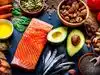
PCOS, fertility and bone health: Gastroenterologist Dr Pal Manickam shares 5 foods women should eat
As women progress through various life stages, their dietary requirements evolve significantly. Dr. Pal Manickam emphasizes the importance of adding spinach for its iron content, omega-3s from fatty fish, and calcium sources like ragi and paneer to support health. Incorporating beans and chickpeas can enhance gut health, while pumpkin seeds ensure sufficient magnesium intake. Moreover, regular physical activity is essential for maintaining bone strength and holistic well-being.
A scientist collected snails in 1920; A century later, their guts revealed a hidden world
Scientists analysed preserved Rocky Mountain snails collected between 1920 and 2018 and recovered evidence of the microbes that once lived in their guts. The study showed how century-old museum specimens can help researchers investigate historical ecosystems. A later search for snails in parts of Boulder County where older specimens were collected also raised questions about changes in their habitat.

Meet Andrew Bialecki and Ed Hallen, whose startup Klaviyo faced early rejections, the founders later built a multibillion-dollar software company
Bialecki had earlier worked on a website that listed the dates and locations of running races. Maintaining the website meant repeatedly contacting race organisers. This experience made him think about a larger problem. It was about how businesses could connect with people using their products and services. He later discussed the idea with Hallen, and the two founded Klaviyo in 2012.

Meet Armaan Dhanda, who left college at 22 to turn microbes into tiny factories, his biotech startup raised $2.6 million
Dhanda co-founded the company with Samyak Baid, and they met at the National University of Singapore (NUS). The main approach of the business is to change how ingredients are manufactured. Notably, the company raised $2.6 million in pre-seed funding in 2025 to develop its technology, which uses engineered microbes to produce ingredients from simple sugars.

Genetically modified microbe could help make Mars habitable, researchers say
At Pioneer Labs, a biotech startup based in Emeryville, Calif., researchers have engineered a bacterial strain that can grow under simulated Martian conditions. The microorganism, dubbed sPL.001, can degrade toxic compounds in Martian soil analogs and produce bioplastics that could be used in future space settlements.

Railways targets 11 trains with 40+ hour journeys: Passengers may soon see a big change in how coaches are cleaned en route
The Railway Board has selected 11 long-distance trains with journeys exceeding 40 hours for enhanced cleanliness and service monitoring. The move will focus on housekeeping, bio-toilets, waste management, en-route cleaning, petty repairs and passenger complaints. Zonal railway officials have been asked to conduct weekly reviews and ensure cleanliness and serviceability are maintained throughout the journey until the train reaches its destination.

Gujarat to turn ocean into next big industry: Rs 100 crore marine biotech corridor planned in Porbandar; seaweed, algae & microbes could soon fuel new business boom
An initiative of the Gujarat State Biotechnology Mission (GSBTM), Department of Science and Technology, the proposed corridor is envisioned as an integrated ecosystem connecting marine science, biotechnology research, field cultivation, technology development, pilot-scale biomanufacturing, entrepreneurship and commercialisation, according to the Chief Minister's Office.

Scientists studied 240,000 years of data about America’s ‘Dead Sea’ and found that it was 10 times bigger and much less salty than today
Recent research study revealed that the Great Salt Lake in Utah once boasted a size tenfold larger than today. By analyzing sediment cores from the lake bed, researchers traced the lake's evolution over 240,000 years. Distinct periods, named Lake Bonneville and Little Valley, showed the lake's extensive reach and lower salinity, adding to our understanding of its historical fluctuations.

Trump says he has call scheduled with Putin to discuss possible case of pneumonic plague in Russia
US President Trump will speak with President Vladimir Putin about a plague case reported in Russia. This discussion follows the death of an employee linked to an anti-plague research institute. Health authorities are investigating the cause of death as pneumonia with unknown origins. The World Health Organization assesses that the risk of spread outside Russia is very low. Additionally, the Trump administration faces a deadline to consider sanctions against Russian entities.

Why eating the same vegetables isn’t enough: Celebrity nutritionist shares 3 ways to support gut health
A healthy gut is supported by a diverse and nourishing diet, contributing to microbial diversity, as per celebrity nutritionist Luke Coutinho. Soluble fibre plays a crucial role in the fermentation process and metabolic health. Including prebiotic-rich foods helps nourish beneficial gut microbes and ensures a balanced microbiome. Polyphenols found in various plant-based foods also support gut health through interaction with gut microbes.

The Nobel-winning breakthrough that turned light into a remote control for the brain, allowing scientists to switch neurons on and off
Optogenetics, a groundbreaking technique, enables researchers to control specific neurons using light, providing insights into brain functions. The 2026 Nobel Prize in Physiology or Medicine was awarded to Karl Deisseroth, Peter Hegemann, and Georg Nagel for this transformative discovery. Their work originated from the study of light-sensitive proteins in green algae, which led to applying these proteins in neuroscience.
Whales survived brink of extinction in 19th and 20th centuries but then comes the biggest mystery yet to be solved
Carcasses have been washing ashore around the gulf city of Puerto Madryn, including near the central waterfront where they alarm residents and tourists.

Mental health answers are hiding inside stomach? Nearly 7 in 10 psychiatric patients found to have same surprising pattern
A large study involving nearly 700,000 adults has uncovered a striking connection between psychiatric disorders and another part of the body that is often overlooked when discussing mental health. Researchers found that people with psychiatric conditions showed a much higher prevalence of a particular group of chronic health problems, with the strongest association seen in one category. The findings add to growing research into a two-way connection that could change how doctors look at mental and physical health.
Your daily coffee may be doing more than keeping you awake — scientists found a surprising link between your gut, brain and coffee habit
A recent study examined how coffee consumption affects mood and gut health in regular drinkers. Researchers found that both caffeinated and decaffeinated coffee influenced psychological measures and gut bacteria. Although changes were noted, the study did not conclusively prove coffee's benefits for mental health. The influence of gut bacteria on brain signaling after coffee consumption posed new scientific inquiries. Larger and longer studies are necessary to further understand these interactions.
Load More

