
MICROBE WASTE

Over 20,000 pieces of trash removed from Yellowstone’s thermal pools in 2026: Could the visitors’ waste harm the hot springs into changing color?
More than 20,000 pieces of garbage have been collected from hydrothermal areas in Yellowstone National Park. This removal aims to prevent foreign materials from harming the sensitive environments of thermal pools. Additionally, nearly 10,000 rocks and sticks were also taken as they can clog the plumbing systems. Visitors have been illegally tossing coins into the thermal pools which alters their chemical composition.

Stranger dropped a bag of Cheetos in America's largest caves, disrupting an entire ecosystem. It attracted fungi, flies and insects; Staff ended up preserving cave's formation
A bag of Cheetos left in Carlsbad Caverns National Park caused unexpected changes to the delicate cave ecosystem. The snack attracted molds, microbes, and insects, disrupting the natural balance and food sources. Rangers quickly removed the litter and cleaned the affected areas while taking care not to damage the cave formations. This incident underscores the importance of proper waste management in preserving natural habitats.

Railways targets 11 trains with 40+ hour journeys: Passengers may soon see a big change in how coaches are cleaned en route
The Railway Board has selected 11 long-distance trains with journeys exceeding 40 hours for enhanced cleanliness and service monitoring. The move will focus on housekeeping, bio-toilets, waste management, en-route cleaning, petty repairs and passenger complaints. Zonal railway officials have been asked to conduct weekly reviews and ensure cleanliness and serviceability are maintained throughout the journey until the train reaches its destination.
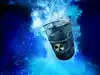
UK, France and other European countries dumped 200,000 radioactive waste barrels in the Atlantic from 1946 to 1993. What happens now?
From 1946 to 1993, several European nations including the United Kingdom, France, Belgium, the Netherlands, Sweden, Switzerland, and Germany, regularly dumped radioactive waste in the North Atlantic, eventually totaling 200,000 barrels. Now, a months-long analysis is underway to determine the extent of the pollution’s impact and scientists are investigating the potential radioactive threat.
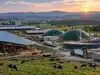
A Virginia dairy takes 105,000 tons of discarded food and drink each year instead of sending it to waste; it becomes renewable gas
A Virginia dairy farm is pioneering a method to convert food waste and cow manure into renewable energy. By producing renewable natural gas, the farm is able to support the operations of a local pharmaceutical company. This project not only diverts significant amounts of waste from landfills but also highlights the economic viability of sustainable energy solutions, aided by federal incentives and policies designed for environmental progress.
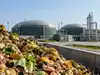
An Ohio plant takes 190,000 tons of unwanted food a year instead of sending it to landfill; what comes out is pipeline-ready renewable natural gas
In St. Bernard, Ohio, a groundbreaking facility is turning food waste into renewable natural gas through anaerobic digestion. This efficient method decomposes organic materials to produce gas, which is purified and delivered into existing pipelines. This approach not only reduces landfill methane emissions but also transforms waste into a valuable resource, paving the way for similar initiatives across the country.
- Go To Page 1
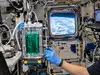
In 2025, DLR tested continuous spirulina growth on the ISS for future closed-loop life support; Limnospira indica produced oxygen and edible biomass in microgravity
In a groundbreaking experiment, scientists have successfully cultivated spirulina aboard the International Space Station, paving the way for future Mars exploration. This remarkable blue-green algae can generate oxygen and produce biomass, allowing astronauts to grow food and breathable air independently of Earth. With its high nutritional value and small ecological footprint, spirulina could revolutionize space travel and even enhance disaster relief efforts back on our planet.

Does your stomach make noises? Harvard-trained gastroenterologist says it might be a sign of a healthy gut
Consistent and easy bowel movements are a clear indication of a well-functioning digestive system, says Harvard-trained gut doctor Saurabh Sethi. Additionally, feeling comfortable after meals and experiencing typical stomach sounds suggest healthy digestion. If you can handle fiber-rich foods like beans, this points to proper gut performance. Most importantly, the body is adept at detoxifying itself, making external cleanses largely unnecessary.

Earlier in 2026, WSU researchers heated and pressurized sewage sludge with oxygen, producing 200% more renewable gas. Now the process cuts treatment costs from $494 to $253 per ton
WSU researchers treated sewage sludge under high temperature and pressure while introducing oxygen. Under those conditions, the relatively small amount of oxygen acts as a catalyst, helping break apart long polymer chains and making the organic material easier for microbes to process.
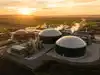
California’s CR&R digester can process 334,000 tons of food and green waste yearly, yielding 4 million diesel-gallon equivalents of RNG and 250,000 tons of fertilizer
In California, a remarkable facility is transforming food waste into renewable natural gas fuel, effectively capturing harmful methane emissions and converting them into a sustainable energy source. Situated in Perris, this plant processes organic materials, providing not only fuel but also fertilizer. Embracing this innovative technology is essential for cities across America to tackle methane problems associated with landfills and enhance environmental sustainability.
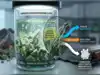
In 15 days, Cornell-engineered bacterium broke down olivine and extracted 75% of its magnesium, while releasing nickel and cobalt and forming a carbon-storing mineral that could link mine waste to cleaner batteries
A Cornell-engineered bacterium rapidly weathers olivine, extracting magnesium and releasing critical metals. This process also forms a carbon-bearing mineral, offering dual benefits. The bacteria accelerate a natural weathering process, enhancing mineral dissolution significantly. This discovery could combine carbon storage with valuable metal recovery for batteries.
Most People Toss This Kitchen Scrap But Its Plant Gold That Can Boost Growth Fast
Banana peels, once discarded as waste, are now recognized as a potent source of nutrients for plant growth. Research highlights their rich potassium and magnesium content, offering a slow-release alternative to synthetic fertilizers. This organic approach not only enhances plant health and resilience but also contributes to a more sustainable gardening practice by reducing waste.

Turn Kitchen Scraps Into Rich Garden Soil: Easy Composting Tips That Cut Your Trash
Americans discard significant food waste annually. Composting offers a simple, science-based solution to convert these scraps into valuable soil. This process minimizes landfill burden and methane emissions. It also improves soil structure and water retention, benefiting agriculture. Various home composting methods exist, making it an accessible habit for a greener lifestyle.
This Everyday Kitchen Sponge Can Hold More Bacteria Than A Toilet Seat; Here’s Why It Happens
Your kitchen sponge may be dirtier than a toilet seat. Scientific studies reveal sponges are breeding grounds for billions of bacteria. This contamination poses serious health risks. Experts advise regular replacement of sponges. Proper drying and awareness of cross-contamination are crucial for kitchen hygiene. Rethink this everyday essential for a safer home.
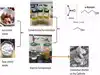
Global warming solution? Scientists turn food waste into valuable industrial chemicals using electricity
A new study suggests electricity can convert food waste into industrial chemicals. Researchers at Ohio State University tested this on dairy waste. They used electrofermentation, applying mild electrical current. This boosted microbes, producing acetone, ethanol, and butanol. This method reduces landfill waste and creates valuable byproducts. Global food waste is a massive problem.

Can microbes survive in space? This study answers the question
Scientists have discovered a new microbe species aboard China’s Tiangong space station. Named Niallia tiangongensis, this strain shows unique adaptations to space. The discovery, made during the Shenzhou 15 mission, offers insight into how microbes survive in orbit and may help protect astronauts on long-term space missions.

Asteroid may become new wonder-food for astronauts, claims new study
A study published in The International Journal of Astrobiology reveals a groundbreaking concept where astronauts could use asteroids to meet their nutritional needs. While the carbon from asteroids may be transformed into edible biomass, extensive testing is still required to ensure its safety. This new approach offers hope for addressing the challenge of food scarcity during long-duration space missions, though significant hurdles remain before it can be realized.

Urine's colour is yellow but why? Scientists have answer
Urine's colour is yellow and now scientists have decoded the mystery behind it.

Microorganisms can create electricity from wastewater: Study
Researchers at the École Polytechnique Fédérale de Lausanne (EPFL) have successfully engineered E. coli bacteria to generate electricity, according to a study published in the journal Joule. The bioengineered E. coli have an increased ability to generate energy through extracellular electron transfer (EET), which allows them to metabolize a wide range of organic substrates. The researchers developed a complete EET pathway within the bacteria, resulting in a threefold increase in electrical current generation.

Why checking expiry dates on food items is useless: Best ways to determine freshness
Many people check the dates on food packaging to prevent consuming any hidden food dangers. The dates are usually printed with the month and year, and they come in various forms such as "best by," "use by," "best if used before," "best if used by," "guaranteed fresh until," "freeze by," and sometimes even a "born on" label for certain types of beer.

Startups pitch in with tech to manage and compost city waste
"Normal composters usually need additives or even microbes for the composting process, which often ends up giving out an odour. But this is an entirely natural process, dependent on solar power," she said.
New technology makes electricity from urine, kills bacteria
London, June 19 (IANS) Researchers have developed a system which can generate electricity from urine -- enough to charge a mobile phone -- and also kill bacteria harmful to humans, an advance that could be harnessed to treat wastewater.
New technology makes electricity from urine, kills bacteria
London, June 19 (IANS) Researchers have developed a system which can generate electricity from urine -- enough to charge a mobile phone -- and also kill bacteria harmful to humans, an advance that could be harnessed to treat wastewater.
Avocado extract in food may prevent bacterial illness
New York, Nov 20 (IANS) Extracts and isolated compounds from avocado seeds can potentially be used as a natural additive incorporated into ready-to-eat foods to control microbes that cause bacterial illness, researchers say.

UNSW Australia to lend expertise in ONGC wells
in its recent funding round, the Australia India Strategic Research Fund (AISRF) announced a new grant of Australian Dollar one million to support the project.

New way to turn carbon monoxide into biofuel
To get the microbe to ferment the carbon monoxide, scientists "bubble it in the growth medium solution," said Angenent, where the cells can feed on it.
Microbe waste can shed light on Earth's evolution
Microbe waste may provide a record of how Earth and life co-evolved over the past 3.5 billion years as the planet's temperature, oxygen levels and greenhouse gases changed, scientists say.
Spinning money out of waste at Richcore Lifesciences
The firm is in talks with companies in Chile, Japan, Middle East, Brazil and many European nations for providing its waste water treatment technology.
Foodgrade Plastic: What happens if bugs consume more than we can waste?
It could be the benevolent bug that turns into a monster worthy of a sci-fi horror flick; even the name has an echo of future pestilence.
Load More

