
MESOPOTAMIA

PM Modi calls cultural connectivity strongest guarantee for global peace at SCO forum
Prime Minister Narendra Modi inaugurated the SCO Civilisational Dialogue Forum in Delhi, emphasizing the importance of cultural connectivity. He stated that cultural cooperation among member nations would strengthen ties while addressing global unrest. The forum aims to generate new ideas and opportunities for collaboration through shared civilizational experiences. Modi highlighted India's historical links and ancient trade routes connecting various regions.

Indus Valley, Mesopotamia shared genetic link beyond trade: BHU geneticist
Ancient DNA analysis confirms a genetic link between Indus Valley and Mesopotamian peoples. This research indicates human lineage traveled along ancient trade routes. Mitochondrial haplogroups found in Syria connect to South Asian populations. These findings authenticate earlier archaeological evidence of contact. Geneticists presented this groundbreaking research at NFSU Varanasi campus.

India, maybe enter the Bronze age?
A statue in Korba, Chhattisgarh, revealed as cement painted bronze, not solid metal. Heavy rains exposed this discrepancy, leading to an official's accountability. This incident questions the superficial presentation of development progress in India. It suggests that underlying foundations of progress may be quite fragile. The event highlights a need for genuine advancement over mere appearances.
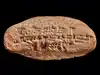
World's first angry customer: How, nearly 4,000 years ago, a man complained about poor-quality copper on a clay tablet and created history's oldest customer complaint
World's first angry customer: A 4,000-year-old clay tablet is believed to record the world's oldest known customer complaint from ancient Mesopotamia. A customer named Nanni complained to the merchant Ea-nāṣir about receiving inferior-quality copper and the disrespectful treatment of his representatives. The formal commercial dispute highlights that concerns over product quality, customer rights and business accountability existed thousands of years ago. Historians say writing in Mesopotamia initially evolved for administrative and commercial purposes, including recording trade and transactions.

A legendary river that shaped ancient empires and civilizations may have just revealed its past
Euphrates River origin: Contrary to popular belief, the mighty Euphrates River wasn't always a single entity. New research reveals it began as two colossal ancient waterways, Paleo-Karasu and Paleo-Murat, flowing separately into the Mediterranean Sea around 5.5 million years ago.

When the Waters Receded… A 3,400-Year-Old Mystery Surfaced
Severe drought in northern Iraq exposed a 3,400-year-old Bronze Age city, Kemune, submerged by the Mosul Dam. Archaeologists documented fortification walls, a storage complex, and cuneiform tablets, offering insights into the Mitanni Empire's governance and economy. This discovery highlights the impact of climate variability on both ancient and modern landscapes.

Chakra-vriddhi: Why economists call it the eighth wonder and how people feared it as a force that could destroy lives
In India, interest was called vriddhi, meaning growth. When this growth itself was allowed to grow, the word used was chakra-vriddhi, circular increase, like a wheel that keeps turning. The Arthashastra of Kautilya in the Mauryan age set clear limits for how interest could be charged, but it also recognised the practice of compounding. Later mathematical texts, such as the Bakhshali Manuscript, even offered progressions that look very much like our modern compound interest calculations. Yet India went further than mathematics. It turned this financial principle into a way of speaking about morality and karma.

The first ancient Egyptian genome is here, and it changes everything we know
Scientists have unlocked the genetic code of an ancient Egyptian man. He lived near the pyramids around 4,500 years ago. The analysis reveals links between Egypt and Mesopotamia. About 20 percent of his ancestry traces back to modern-day Iraq and Iran. This discovery provides genetic evidence of ancient population movement. Researchers hope to study more ancient DNA samples.

Humanity's preoccupation with the supernatural extends back to ancient Mesopotamia
A fascination with the afterlife and other worlds is not new: ghost stories from all over the world prove it's been part of the human experience from prehistoric times.
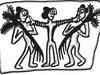
The Ahimsa seal of the Indus
Long before horses existed in the world of commerce, at the time pyramids were being built in Egypt, and ziggurats in Mesopotamia, there existed a trading network connecting the Middle East to South Asia. This was Bronze Age Trading network that peaked.

Netflix series Ancient Apocalypse: All you need to know about presenter Graham Hancock
Graham Hancock: The Netflix series Ancient Apocalypse explores the prehistory of humans. It focuses on how Graham Hancock records his travels throughout the globe to investigate how the downfall of previous human civilizations was caused. The docuseries’ six episodes depict the six tragic stories of how civilizations collapsed.

On 'Sharqat Day', homage paid to 114th Mahrattas for their supreme sacrifice in World War I
In this particular action, the unit won two Distinguished Service Orders, four Military Cross, six Indian Order of Merit, 16 Indian Distinguished Service Medals and eight Mention in Dispatches, with a combined total of 36 gallantry awards which till today have not been surpassed by any unit of the Indian Army in a single operation, the statement said.

What lapis lazuli tells about the power establishment in ancient India?
Power in ancient India was established not by the accumulation of material wealth, but by the aesthetic denial of material development.

Award-winning author Subhadra Sen Gupta's posthumous book on stories about our origin
The author passed away this year due to Covid-19.

An epochal point by a meghalayan stalagmite
The prime minister’s 100-year timeframe is very farsighted indeed by those standards.

ASI unearths ‘first-ever’ evidence of chariots in Copper-Bronze age
The excavation, which began in March, has also unearthed eight burial sites and several artefacts. The three chariots found in burial pits indicate the possibility of “royal burials”.
Indus civilisation did not develop around flowing river: Scientists
The Indus or Harappan Civilisation was a Bronze Age society that developed from 5,300 to 3,300 years ago, at about the same time as urban civilisations developed in Mesopotamia and Egypt.

All the sines of a new father of triangles
Ancient Indian and Chinese mathematicians who also independently arrived at the same conclusions make up the other points of this triangular contest.

Indian wins NASA contest to name Mercury crater
The names were selected by the public outreach team for the spacecraft out of thousands of submissions to an open competition.
Load More


