
MERCHANDISE TRADE DEFICIT
RBI Policy: Complex oil math explains rise in FY27 inflation estimates
The Reserve Bank of India revised its crude oil price projections for the fiscal year 2026-27. This adjustment has led to increased inflation forecasts, now projected at 5.2% for FY27. The bank notes ongoing supply pressures and volatility in international oil prices contributing to these changes. India's merchandise trade deficit has also widened due to rising imports, especially in crude oil.

Rupee headed to 100? How much the psychological red line matters
India's rupee has slipped past ₹96 as high US Treasury yields, elevated oil prices and foreign portfolio outflows strengthen the dollar. The IMF says India can allow the exchange rate to act as a shock absorber, while the RBI weighs intervention against reserves, inflation and external risks. Experts debate whether gradual depreciation could improve competitiveness without triggering imported inflation.

View: India-China thaw faces major economic tests
India and China are working to improve their diplomatic relations following past military tensions over border disputes. Recent measures include relaxed restrictions on foreign direct investment and increased export activity from India to China. However, India's reliance on Chinese imports for critical industries poses significant challenges. The unequal economic relationship remains a concern for India's long-term strategies.

India’s bond market performed well, equities to become attractive again: RBI’s Poonam Gupta
India's bond market is exhibiting notable strength, outpacing its historical performance and standing firm against global trends. The Deputy Governor of the Reserve Bank of India highlighted the promising fiscal commitments that are bolstering market dynamics. Meanwhile, Indian equity markets have faced challenges, partially due to rapid advancements in AI abroad.

Rupee may not just stabilise, but appreciate from current levels: RBI Dy Guv Poonam Gupta
RBI Deputy Governor Poonam Gupta mentioned the rupee could stabilize or appreciate after its recent depreciation. She highlighted India's potential to reduce the current account deficit through services exports and remittances. Gupta noted that capital account conditions may improve, supporting foreign investments. She emphasized the RBI's capacity to manage external pressures and maintain orderly exchange rates. The overall outlook indicates a positive trend for the rupee and India's financial stability.

Cannot rest on tailwinds, have to be conscious of risks, says PM's Principal Secretary
Mishra listed fragmented global alliances, dependence on imports, pressure on the country's external accounts and artificial intelligence as four main risks the country faces.
- Go To Page 1
India growth seen moderating in second half of FY27 as inflation, liquidity pose risks: DBS
India's economy may slow in the second half of fiscal 2027. Tighter financial conditions and higher energy prices will impact economic activity. Broadening inflation pressures could keep monetary policy focused on price stability. High inflows have strengthened foreign exchange reserves and banking system liquidity. Inflation, liquidity, and capital flows are key variables for policymakers.
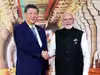
Behind the Modi-Xi border thaw, India's dependence on Chinese imports, especially rare earths, keeps deepening
India faces a significant trade deficit with China, importing substantially more goods than it exports. Chinese firms offer superior price and tech competitiveness, impacting Indian industries. India relies heavily on China for critical inputs like rare earths, affecting various sectors.

The mood, as per Moody's: Shocks keep coming, India keeps growing
Moody’s has raised India’s FY27 real GDP growth forecast to 7% from 6%, citing the economy’s resilience amid the Middle East conflict and elevated energy prices. Strong domestic consumption, investment, manufacturing and services are supporting growth, though higher oil prices, inflation, US tariff risks and food-price pressures remain concerns.

India’s August exports rise 26.1%, trade deficit narrows to $26.9 billion
India’s merchandise exports jumped 26.1% year-on-year to $43.8 billion in August, accelerating from 19.6% growth in July, while slower import growth narrowed the merchandise trade deficit to $26.9 billion from $32 billion in July.

Tonight's US Fed rate decision will cast a long shadow over India
Federal Reserve Rate Impact on India: Federal Reserve rate hike is set to intensify pressure on India’s rupee, bond yields, inflation and markets. With the US Fed expected to raise rates by 25 basis points, higher US Treasury yields, a stronger dollar and surging crude oil prices could deepen India’s market pressure. RBI faces rising challenges from currency weakness, imported inflation, liquidity risks and volatility.

Indian diaspora deposits boost capital account to $33.5 billion surplus in July, RBI data shows
Overseas deposits from the Indian diaspora significantly boosted the country's capital account surplus. This inflow helped offset the overall current account deficit recorded for July. Foreign direct investment and portfolio investment also contributed positively to capital flows. However, merchandise trade deficit remained a key factor in the current account's negative balance.

India’s current account deficit more than doubles to $7 billion in July as trade gap expands
India's current account deficit grew to seven billion dollars in July. This widening gap occurred as merchandise imports outpaced exports significantly. The goods trade deficit reached one hundred seventeen point eight billion dollars. Services exports improved, and transfer receipts also saw an increase. These factors combined to widen the overall deficit.

India's trade deficit narrows to $26.86 bn in August as gold imports plunge
India’s merchandise trade deficit narrowed marginally to $26.86 billion in August from $27.2 billion a year earlier, as exports rose 26.1% to $43.81 billion while imports grew 14.1% to $70.76 billion.

BRICS' trade puzzle: Modi, Putin and Pezeshkian pitch three different fixes
The BRICS Business Forum saw leaders discuss expanding intra-bloc trade and economic resilience. Prime Minister Modi focused on removing trade barriers and India's stability. President Putin addressed countering Western economic pressure and sanctions. President Pezeshkian linked economic security to conflict and rebuilding Iran's economy. New trade data reveals a complex picture of the bloc's internal trade dynamics.

India-China trade: The numbers behind the relationship as Xi visits Delhi
Chinese President Xi Jinping's visit highlights India-China trade's stark imbalance. India's imports from China vastly exceed its exports, creating a record deficit. Chinese industrial inputs are deeply embedded in India's critical manufacturing sectors. Bilateral goods trade reached $151 billion, with imports dominating the exchange. This economic relationship unfolds against the backdrop of an expanding BRICS grouping.

India's BRICS trade deficit likely to remain key challenge as imports outpace exports: Report
India's trade relationship with BRICS nations is set to experience a notable increase in its trade deficit, driven largely by rapidly rising imports. While exports to these countries are gradually improving, the pace is not enough to offset the imports, particularly from major players like China and Russia. India aims to enhance its export capacity within the BRICS framework as a strategic priority.

The BRICS trade boom has a $226 billion hole for India
The dynamics of India's trade with BRICS nations have transformed, with imports outpacing exports and causing the trade deficit to reach $226.1 billion in FY2026. BRICS countries now represent over 41% of India's merchandise imports, although their export share has slightly diminished. With China, UAE, and Russia leading the surge, India must prioritize export growth to these countries to reverse the escalating trade imbalance.

India's exports under free trade pacts grew faster than imports in April-July: Piyush Goyal
Exports under free trade agreements are now growing faster than imports. Outbound shipments to FTA partner countries expanded by 23.9 percent to USD 57.2 billion. The trade deficit with FTA partners narrowed from USD 34.2 billion to USD 32.6 billion. Overall merchandise exports for the four-month period reached USD 173.8 billion. This indicates an improvement in the utilization of India's trade pacts.

Beyond Los Angeles and Rotterdam: Can Durban, Rio de Janeiro drive India’s next export boom?
The South-South trade has crossed $7 trillion, opening new opportunities for Indian exporters across Africa, ASEAN, the Gulf, and Latin America. However, India will need deeper value-chain links, stronger logistics, and a greater presence in these markets to capture a larger share, say experts.

New FTAs open big export gains across key sectors
The introduction of eight free trade agreements heralds a new era of duty-free market access, particularly benefiting the electronics, agriculture, and gems and jewellery sectors. With India’s share in EU and UK imports being relatively low, these pacts open doors for substantial growth. Boosting export resilience and diversifying market opportunities are key advantages for Indian businesses.

India's balance of payments likely to post $60-65 bn surplus in FY27 despite wider CAD: HDFC Bank
India’s balance of payments (BoP) is likely to post a $60-65 billion surplus in FY27, despite a widening current account deficit, HDFC Bank said.

India’s current account deficit widens to $4.2 billion in Q1 FY27
India's current account deficit reached $4.2 billion in the first quarter of the fiscal year. This widening was primarily driven by a higher merchandise trade deficit, which increased significantly. Net services receipts saw growth, supported by strong computer and transportation service exports. Foreign direct investment recorded a net inflow, while portfolio investment experienced an outflow. The country's foreign exchange reserves decreased by $8.1 billion on a balance of payments basis.

7.8% slam dunk! 'Dead' economy proved to be quite alive and kicking
India’s GDP grew 7.8% in Q1 FY27, beating RBI’s 7% forecast and the 7.1% Reuters poll median despite an oil shock, geopolitical tensions and trade disruptions. Growth was broad-based, with consumption rising 7.1%, investment 11.9%, manufacturing 9.2% and services around 10%.

Global Market Today: Asian shares slip as US stock futures dip ahead of Warsh’s Jackson Hole speech
Futures for the Nasdaq 100 Index fell 0.3% and those for the S&P 500 Index retreated 0.2% as initial enthusiasm about the artificial intelligence trade following Nvidia Corp.’s bullish outlook waned. Sentiment was weighed down by Marvell Technology Inc., which fell more than 7% in extended trading following its earnings report.

US goods trade deficit widens 17% to $118.8 billion in July
The United States merchandise-trade deficit grew substantially in July. This shortfall reached its highest point since early last year. Inbound shipments of capital equipment saw a multi-decade surge, fueling the deficit. Goods imports climbed, while exports experienced a notable decline. The trade balance has fluctuated recently due to global demand and supply chain concerns.

India’s merchandise exports rise 15% to over $25 billion in Aug 1-21
Merchandise exports for August 1-21 are estimated to have risen by fifteen percent. This growth brings the total exports for April through August past two hundred billion dollars. In July, India's exports increased by nearly twenty percent, reaching forty-four point two four billion. The trade deficit widened to thirty-one point nine eight billion dollars in July. Exports for April to July jumped seventeen percent, while imports climbed nineteen percent.

Food prices on the rise, domestic demand keeps economy strong
India's economy shows resilience with improved domestic demand and strong economic activity. Food prices have seen a broad-based increase, raising concerns for monetary policymakers. Global economic outlook remains weighed by West Asia conflicts and new US tariffs. High-frequency indicators reflect strong manufacturing and services momentum continuing into July.

Broad-base rise in food prices despite monsoon recovery, RBI's state of economy report shows
India's economy shows resilience with improved domestic demand and strong activity. Food prices have seen a broad-based increase, impacting inflation targets. Global economic outlook faces challenges from West Asia conflicts and US tariffs. India's financial markets record high credit growth and comfortable liquidity. The country's macroeconomic fundamentals provide a cushion against global risks.
Load More

