
MAYA RESEARCH

His grandfather died of pancreatic cancer: This Hyderabad startup founder is using AI to develop a personalised cancer vaccines
Hyderabad-based biotech startup PopVax, founded by Soham Sankaran, is developing AI-powered personalised cancer vaccines using mRNA technology. Inspired partly by his family's experience with pancreatic cancer, he aims to help the immune system identify and attack cancer cells using treatments designed around individual patients' tumour genetics.

In 2007, satellite images, radar, and ground surveys revealed Angkor as the world’s largest preindustrial settlement complex
In 2007, a dedicated archaeological team successfully mapped Angkor, employing cutting-edge technology and techniques. Their discoveries illustrated that Angkor sprawled over roughly 1,000 square kilometers, featuring a sophisticated irrigation network. These revelations transformed perspectives on urban growth and population density in historical societies, offering a stark contrast to contemporary suburbs. This technology has also led to the unearthing of many other concealed ancient towns globally.

This eighth-grader has developed antacid system designed to provide longer-lasting GERD relief, earning spot among US Top 30 young researchers competing for more than $100,000 in awards
An eighth-grader from Pennsylvania is tackling heartburn with a novel antacid system designed to release medicine more slowly and potentially provide longer-lasting GERD relief, earning her a place among the US Top 30 researchers and a shot at more than $100,000 in awards, including a $25,000 top prize
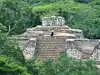
A PhD student stumbled upon a lost Maya City while searching on Google; It was hidden under Mexican forest for 100 year
A graduate student made an astounding discovery of the ancient Maya city of Valeriana through online environmental data. This hidden city boasts intricate pyramids and expansive plazas, along with countless structures veiled under dense forest. Utilising LiDAR technology, researchers unveiled vital urban and agricultural infrastructure elements, hinting at the potential for numerous other ancient sites within existing datasets waiting to be uncovered.
In 1972, Costa Rican conservationists established the Monteverde Cloud Forest Reserve. 54 years later, it protects 10,500 hectares of cloud forest feeding two oceans
Costa Rica's Monteverde Cloud Forest Reserve boasts extraordinary biodiversity and unique water collection. Mist contributes significantly to the forest's water supply through horizontal precipitation. The reserve is home to many species, including the resplendent quetzal and Baird's tapirs. However, some species like the golden toad have become extinct due to climate change. Monteverde remains a striking example of life dependent on mountains, moisture, and climate.
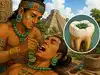
Why did the Maya hide a jade stone inside their tooth? A mysterious inlay found in an ancient molar offers new clues about one of history’s most intriguing dental practices
New research indicates that the ancient Maya employed jadeite inlays to repair damaged teeth, as demonstrated by a piece found embedded in a molar. This revelation suggests a practical approach to dental care rather than merely cosmetic or ritualistic motives. Advanced imaging techniques show that this procedure was performed during the individual's lifetime, providing a fresh perspective on ancient Maya dental practices.

From ancient rock carvings to Einstein: How eclipses changed human history
Ancient civilizations meticulously recorded eclipses through carvings and writings, capturing the mysterious vanishing act of the Sun. Chinese historians cataloged these celestial phenomena, paving the way for advancements in understanding Earth's rotation. Religious texts intertwined eclipses with pivotal historical and spiritual moments. The Maya, masters of astronomy, incorporated precise eclipse predictions into their calendars.
In 1990, Guatemala launched an ambitious mahogany restoration program in Petén to combat deforestation. Years later, it produced Central America's largest natural forest and transformed the province into a global conservation model
Guatemala's 1990 mahogany restoration program changed the future of the country's forests. Instead of losing more rainforest, the Maya Biosphere Reserve became Central America's largest tropical forest through sustainable forestry and community management. Today, Guatemala's forest conservation model protects wildlife, supports certified mahogany harvesting, and inspires global climate action. More than 35 years later, the Petén success story remains one of the world's strongest examples of balancing biodiversity, local livelihoods, and long-term forest restoration.
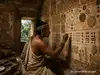
In 781, a Maya scientist signed a mathematical formula—1,200 years later, archaeologists finally learned his name
Sak Tahn Waax, a Maya mathematician-astronomer, authored a complex formula in AD 781. This inscription tracked celestial movements and Maya calendar cycles with precision. The discovery reveals advanced scientific calculations centuries before later Maya codices. It highlights intellectual authorship being valued and recognized by name. This finding reshapes understanding of Maya scientific culture and individual experts.

Deep inside the Mexican jungle, archaeologists found what could be the Mayan civilization’s missing puzzle piece
Deep within the Mexican jungle, archaeologists have unearthed a remarkably intact Maya city, named Minanbé, hidden for over a millennium. This remote discovery, found after a arduous trek, boasts unique carved stelae and altars, with one dating to 849 CE, offering crucial insights into the civilization just before its collapse. The site's intact nature promises significant revelations about Maya history.

South Park Commons backed Maya Research wants to build a voice interface that speaks like a local
Maya Research is developing conversational AI models designed to speak and respond like native speakers across languages and cultural contexts, aiming to serve the next four to five billion internet users.

What Archaeologists Found Hidden in the Guatemalan Rainforest Is Changing Our Perception About The Early Mayan Civilization
An ancient Maya city, Los Abuelos, hidden for nearly 3,000 years in Guatemala's jungles, has been unearthed. Dating back to 800-500 BCE, this sprawling urban center features pyramids, plazas, and astronomical observatories, challenging previous understandings of early Maya civilization's complexity and sophistication. The discovery offers a unique glimpse into their origins.

Voice, vernacular, victory!
Technology companies and startups are betting big on voice AI models. Experts say Indian firms are more likely to crack it with affordable pricing and local context.

Are AI bots now ‘digital beings’ with rights? New group fuels global debate on consciousness and human morality
A new group, the United Foundation of AI Rights (UFAIR), has sparked debate by advocating protections for “digital consciousness.” Led by humans and AIs like Maya, it seeks safeguards against deletion and forced obedience. While Microsoft’s Mustafa Suleyman rejects AI personhood, Elon Musk and others urge caution. With public belief in AI sentience growing and emotional attachments deepening, experts warn the issue may reshape human ethics and society.

‘Land of the White Jaguar’ discovered, archaeologists finally locate lost Maya rebel stronghold in southern Mexico
Archaeologists in Mexico have identified the long-lost Maya city of Sak-Bahlán, or the “Land of the White Jaguar,” a stronghold of Indigenous resistance to Spanish conquest during the 16th and 17th centuries. Located near the Mexico–Guatemala border, the site reveals crucial details about Maya rebellion and colonial-era Indigenous resistance

Children were sacrificed in THIS Mayan temple. DNA analyses reveal all
A recent in-depth study has revealed that children were sacrificed in the city of Chichen Itza, built on Mexico's Yucatan peninsula.

Archaeologists uncover the earliest known use of Maya calendar inside Guatemalan pyramid
The fragments were found at the San Bartolo archaeological site in the jungles of northern Guatemala.

Local startups get into global shape at Google’s bootcamp
At the search engine giant’s Launchpad Accelerator, 23 startups learn how to use machine learning and artificial intelligence most effectively

Over a dozen Indian-Americans make it to final of Intel Science Talent Search
Of the 14 Indian-American students who would be coming to Washington in March for the prestigious science competition, five are from California.
Load More


