
MARS MISSION

SpaceX's Starship returns from orbit and is captured by launch pad arms in a dramatic first
SpaceX's Starship made a significant return to Earth after completing its mission in space. The spacecraft was caught midair by mechanical arms, marking a historic achievement for the team. Despite this success, the first-stage booster experienced an explosion shortly after liftoff from Texas. SpaceX is preparing for future Starship launches from Kennedy Space Center in Florida. NASA plans to utilize Starship for upcoming Artemis missions, focusing on lunar exploration.

Why Indians behave better at sacred places but not other tourist spots
Kamarpukur and Joyrambati stand out for their tranquil ambiance and the politeness exhibited by visitors. Many who visit these sacred places do so as devotees, which motivates them to keep the surroundings tidy. This decorum sharply contrasts with the noisy behavior found in other tourist spots. Similar tendencies are recognized at various holy sites throughout India, creating a soothing environment and enriching spiritual encounters for everyone.

SpaceX launch today: Elon Musk’s Starship Flight 15 double catch attempt - launch time, how to watch and why it matters
SpaceX launch: SpaceX is preparing for Starship Flight 15 on November 13, with Elon Musk’s company attempting to catch both the Super Heavy booster and Ship using mechanical arms at its Texas launch site for the first time. The test could move SpaceX closer to fully reusable rockets and support NASA’s future Moon mission plans.

Two PSLV failures, one modified rocket stage: How ISRO is trying to restore launch vehicle reliability
ISRO has tested a modified third-stage motor of its PSLV after two consecutive launch failures involving anomalies in the same stage. The changes cover the motor's nozzle, mechanical connections, sealing arrangements and quality-control procedures. The space agency will analyse the test data before deciding on further testing.

Help NASA build a home on the Moon and get $1 million prize: Check competition rules, key dates, how and where to apply
NASA has announced a $1 million Moon Base Student Challenge, inviting eligible high school and college students in the US to develop innovative solutions for building a permanent human settlement near the Moon's South Pole. The competition will focus on six areas, including power generation, construction, life-support systems and astronaut safety.

NASA job applications: $164,395 salary for astronaut posts as selected candidates can live on Moon and Mars; check direct link, eligibility and deadline
NASA astronaut applications: NASA has opened applications for its next astronaut class, with selected candidates potentially getting the opportunity to live and work on a future Moon base and participate in missions to Mars. Here's a look at the $164,395 annual salary, eligibility criteria, application requirements and December 3 deadline.

NASA's Artemis II rocket punched 3,100-mile-long holes in Earth's atmosphere, disrupted GPS signals: Study
NASA's Artemis II mission created large disturbances in the ionosphere that disrupted GPS signals across the United States. These disturbances were significantly more intense than those from prior rocket launches, causing potential issues for technologies reliant on precise positioning. Researchers noted that even minor positioning errors could impact autonomous vehicles, which rely on GPS data. The mission set new records for human distance from Earth during a lunar flyby.

One giant leap for America? Trump's Moon ambitions put India's space diplomacy to the test
Donald Trump’s push for a permanent American presence on the Moon by 2028 has raised questions over lunar governance, resource ownership and the future of international space cooperation. As the US and China pursue competing lunar programmes, India faces the challenge of protecting its strategic autonomy while advancing its own space ambitions.

Europe space chief heads to Gulf as bloc looks beyond US
The head of the European Space Agency will visit the United Arab Emirates to discuss collaboration. This meeting aims to reduce Europe's dependence on the United States for space exploration. The ESA hopes to establish a framework agreement with the UAE to strengthen its exploration initiatives. Additionally, discussions may include potential investments and participation in upcoming programs. European governments must first ensure adequate funding before pursuing international cooperation.

Crew from NASA's simulated Mars mission emerges after 378 days in isolation
Four crew members completed a 378-day isolation mission to simulate conditions for a future Mars expedition. They grew crops and engaged in tasks while experiencing simulated communications delays. This experience is aimed at preparing astronauts for long-duration missions beyond Earth. NASA will analyze the insights gained from this mission for upcoming lunar and Mars missions. The mission was conducted at the Johnson Space Center in Houston.

Pink rock found in Sahara turns out to be 4.1-billion-year-old Martian meteorite, reveals clues to ancient Mars
A meteorite named Teghaza 001, discovered in the Sahara Desert, reveals insights into ancient Martian geology. Scientists determined it originated on Mars over 4.1 billion years ago and underwent volcanic processes. Detailed analysis of zircon crystals indicated interactions with water, suggesting a more active early environment. Researchers identified potential geological regions on Mars related to the meteorite's origin.

‘Moved’ by Greece's quest to reacquire ‘stolen sculptures of the Parthenon,’ a Chilean engineer brought a marble to officials; archaeologists find it belonged to an even older temple razed by Persians
Enrico Tosti-Croce unearthed a marble fragment believed to originate from the Parthenon, a relic from his father. With the ongoing debate surrounding the Parthenon Marbles affecting his decision, he chose to return the stone to Greece. Upon closer inspection, it was revealed to belong to the Hekatompedon instead. Tosti-Croce felt fulfilled to restore the marble, which was met with gratitude from the Greek Ministry of Culture in a heartfelt letter.

‘Never found one like this before’: Scientists examine 4.1-billion-year-old Martian rock to pinpoint when the Red Planet was ‘Earth-like’
A rare 4.1-billion-year-old Martian meteorite found in the Sahara Desert is offering scientists new clues about the Red Planet's ancient past. Researchers say its minerals suggest Mars once had flowing water and an environment more like Earth.

21 years after the discovery of the last dwarf planet, scientists may have found a sixth one beyond Neptune
Vera Rubin Observatory may have identified a new dwarf planet called ED138, hidden beyond Pluto's orbit. Researchers are in the process of assessing ED138's size, a task expected to take several months. This finding is noteworthy as it holds the potential to be recognized as the sixth dwarf planet. Difficulties in locating such remote celestial bodies stemmed from their position in the southern hemisphere.

ISRO to have four functional launch pads by 2029: Chairman Narayanan
ISRO plans to expand its operations with four launch pads by 2029 to meet global satellite demands. A dedicated 2,000-acre Small Satellite Launch Vehicle complex is set to be built in Tuticorin. The agency will collaborate with private firms and startups to enhance technological capabilities and job creation. Upcoming uncrewed Gaganyaan tests will evaluate critical mission parameters ahead of a crewed mission.
Forget the Moon’s south pole: 4 other lunar sites could help humans build a base and prepare for Mars, new report suggests
The southernmost region of the Moon has emerged as a crucial focus for contemporary lunar exploration, particularly in the quest for water ice. Other notable sites, such as Bhabha Crater and Orientale Basin, are also under consideration for study. These areas promise to offer vital information about the Moon's past and feasible locations for human settlement.

Japan launches spacecraft on mission to bring Mars moon samples to Earth
Japan has successfully launched an uncrewed spacecraft aimed at collecting samples from the Martian moon Phobos. The spacecraft, part of the Martian Moons eXploration mission, is expected to reach its destination in August 2027. After collecting at least 10 grammes of Phobos material, the spacecraft will return the samples to Earth by 2031. This mission marks the first interplanetary launch for Japan's H3 rocket following previous launch successes.
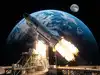
Japan launches spacecraft to mysterious moons of Mars in a bold mission to bring home soil samples
Five of the world’s space agencies joined forces for the five-year mission that will attempt to land a robotic prospector plus a rover on Phobos, the larger and closer of Mars’ two pint-sized moons. The Japan Aerospace Exploration Agency, which is leading the bold sampling effort, launched the spacecraft before dawn from the country's main spaceport on Tanegashima Island.

Four crew members spent 365 days in a 1,700 sq ft, 3D-printed Mars habitat in isolation. How could it help NASA prepare for living on the Moon?
NASA's CHAPEA mission, which simulates living on Mars, involves four crew members in a controlled environment. The study focuses on how humans manage isolation and limited resources during long-duration missions. Insights gained could inform the design and functionality of future lunar habitats. Participants will undergo evaluations after their mission to assess their health and performance. Findings will help NASA prepare for sustained human activity on the Moon.
Load More


