
MARKET STABILIZATION MEASURES

Short term is about sentiment, long term about business: 5 small-cap stocks from different sectors with upside potential of up to 30%
In the market, you cannot wait for all the news to turn good, because by the time it does, stock prices would already have moved up. Also, the market involves risk; it cannot be avoided, only managed. And in the small-cap segment, that means targeting strong businesses run by people who have handled hard times before.

RBI DG asks primary dealers to bid responsibly in G-Sec underwriting auctions
RBI Deputy Governor Rohit Jain has urged primary dealers to bid responsibly in government securities auctions. Jain noted instances of volatile pricing that misalign with orderly market conditions, impacting government borrowing costs. He highlighted the challenge of liquidity concentration in a few securities and called for improved market-making activities. Jain also pointed out declining demand from institutional investors for long-term sovereign debt amid uncertain interest rates.

The LTCG debate: Why markets need tax stability and not ad-hoc fixes
Foreign Institutional Investor capital is leaving Indian markets, raising concerns over the unpredictability of tax policies. Investors are urging for the reconsideration of Long-Term Capital Gains tax provisions. Historical changes in LTCG have created volatility that affects long-term investors negatively. A stable tax policy framework is essential to attract and retain investment in the Indian financial market.

South Korea’s Kospi rockets 8% as AI-linked stocks get breather after Jensen Huang’s return as Nvidia CEO. Worst over?
South Korean shares have bounced back sharply after previously hitting a ten-month low, with the KOSPI index climbing 7.19%. This surge was largely driven by a rebound in technology stocks, particularly following Nvidia CEO Jensen Huang's return to leadership. Notable AI companies such as Samsung Electronics and SK Hynix recorded substantial gains, while foreign investments showed a positive trend with net purchases totaling 497.3 billion won.

Wall Street soars on Huang's return to Nvidia, Treasury yields rise
US stocks rebounded sharply on Monday after Nvidia reinstated Jensen Huang as chief executive following pressure from President Donald Trump, reversing part of last week’s tech-led market rout. Nvidia jumped 31%, helping the Nasdaq 100 rise 6.5% and the S&P 500 4.7%, while Treasury yields and the dollar also climbed as investors reassessed both AI-sector sentiment and the Federal Reserve outlook.

Nvidia, Jensen Huang impact on US Bond market: Benchmark 10-year treasury note rises, 2-year treasury yield gains, 30-year bond slips
US bond market today moved by Nvidia's decision to reistate CEO Jensen Huang as US Stock Market cheered after volatile week of sell off.
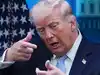
Trump warns US stock market crash will get worse after $6 trillion wipeout, but why are Dow Jones, S&P 500 and Nasdaq futures rebounding as South Korea’s KOSPI triggers trading halt?
US stock market crash warning: Trump says Democrats’ midterm wins drove a claimed $6 trillion loss in US stocks and warns the sell-off could worsen. Yet Dow Jones, S&P 500 and Nasdaq futures climbed 2.13%, 2.88% and 3.54% early Monday, pointing to a possible rebound. In South Korea, the KOSPI fell more than 5%, triggering a five-minute program-selling halt, before ending the session 3.31% lower.
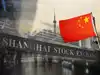
China’s stock exchanges announce measures to support equities, ease margin financing rules
China's three major stock exchanges have announced measures to support equities, including reducing margin financing requirements to 80% from 100%, cutting trading fees and introducing a market-making mechanism on Shenzhen's ChiNext board. The moves come amid a prolonged stock market decline, weak economic growth and a global selloff in AI stocks.
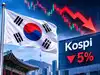
South Korea vows market support as Kospi plunges 5%
South Korea’s benchmark KOSPI plunged 5% as fears over the AI trade and a broader technology selloff rattled investors, overshadowing government assurances of immediate market stabilisation measures if needed.

Asia’s stock rescue efforts gather pace after Wall Street plunge
The decline of South Korean markets reflects the global downturn in technology stocks, stirring investor unease. In light of increasing volatility, Asian authorities are mobilizing for stabilization. South Korea's 10 trillion won market fund aims to mitigate issues, but experts consider it inadequate. Concurrently, Taiwan seeks to strengthen local confidence and revise trading rules, while Chinese regulators are tweaking margin settings to encourage investment and improve liquidity in the market.

Banks warn higher costs could hit demand as RBI weighs further repo hike
Bank executives held consultations with Reserve Bank of India officials regarding inflation risks and capital formation challenges. They expressed concern that higher interest rates may affect consumption demand due to rising costs. Particular attention was given to stress in sectors such as agriculture and gold loans. India's gold loan market saw non-performing assets rise significantly in recent months.

South Korea prepares market stabilisation funds after KOSPI hits 10-month low
In response to falling stock indices, South Korea's finance ministry is poised to activate market stabilisation funds. The KOSPI index has plummeted, marking its lowest point in the last ten months. An emergency meeting was convened by the finance minister to explore strategies for restoring investor confidence. Among the discussed actions are temporary regulations on stock buyback limits for publicly listed companies.

Yuan rally to extend into 2027? Global banks see currency strengthening further
Global investment banks expect the Chinese yuan to extend its gradual appreciation into 2027, supported by strong exports, trade surpluses and easing capital outflows. The median forecast puts the currency at 6.44 per dollar by end-2027. However, the People's Bank of China remains cautious about rapid appreciation and excessive currency gains.

Jefferies’ Chris Wood increases India bet; reduces Taiwan weight as AI stocks walk on thin ice
Jefferies' Christopher Wood has raised India's weighting in his Asia-Pacific portfolio to 15%, trimming Taiwan exposure as global investors reassess the AI trade. The move comes amid a sharp November rally in Indian equities, record FII inflows and growing interest from global brokerages. With AI stocks facing pressure, is India emerging as an attractive alternative for global investors?

Fed flags financial stability risks from AI investment boom, elevated asset valuations
The US Federal Reserve has flagged financial stability risks from the AI investment boom, elevated asset valuations and rising hedge fund leverage. Policymakers warned that disappointing returns on AI investments, heavy borrowing and concentrated market exposure could trigger broader financial disruptions, even as banks and households remain relatively resilient.

Should India really wish for a stronger rupee as it turns a corner?
India may face a new currency challenge in FY28 as the rupee strengthens against the US dollar, Chief Economic Adviser V Anantha Nageswaran has warned. Cheaper crude oil and stronger foreign investment inflows could boost the rupee, but appreciation may hurt exporters, IT companies and manufacturers. Here's why a stronger rupee could create fresh challenges for India's economy and the RBI.
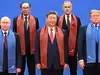
View: Trump-Xi-Putin summit exposes Europe's power deficit
US, China, and Russia will meet at the APEC forum, while Europe will notably not participate in discussions. Europe's economic weight contrasts sharply with its limited geopolitical power regarding ongoing global conflicts. Resolution of the Ukraine conflict would require European involvement due to its geographical proximity and energy ties with Russia.

Oil Price Today (November 19): Brent crude rises to $93 as Trump likely weighs fresh Iran attacks. What are experts saying?
Crude oil price : In light of escalating tensions between the U.S. and Iran, oil prices have remained surprisingly stable. President Trump is reportedly weighing potential U.S. strikes against Iran, while upcoming discussions with global leaders like Xi Jinping and Vladimir Putin could significantly influence trade dynamics. Goldman Sachs has adjusted its oil forecasts upwards, anticipating supply challenges, whereas the International Energy Agency predicts a global surplus in oil supply by the year's end.
India looks beyond fabs to build semiconductor ecosystem, says Invest India chief
Invest India, the government’s investment promotion and facilitation agency, is seeking to bring semiconductor equipment and materials companies to India, while also developing domestic suppliers of chemicals, minerals, gases, wafers, packaging materials, capacitors and resistors.
Load More


