
MARITIME ENVIRONMENT
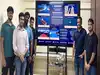
IIT Madras made a real-time digital twin for autonomous maritime navigation: What is it?
Researchers at IIT Madras have created Seanav, a real-time digital twin for maritime navigation systems. This platform integrates artificial intelligence and virtual reality, providing a virtual ocean environment for autonomous vessels. Seanav addresses significant challenges in the shipping industry while significantly reducing testing costs through virtual simulations. Additionally, it incorporates various sensor technologies to enhance navigation in challenging conditions.

What is ASEAN and why does the bloc matter amid global tensions?
Major powers will join a summit next week of Southeast Asian nations hosted by the Philippines against one of the most complex backdrops for the regional bloc, from the Iran war that has battered economies to the growing US-China rivalry.

IIT Madras develops real-time digital twin platform for autonomous maritime navigation
Researchers at IIT Madras have created SEANAV, a digital twin platform for testing autonomous maritime navigation systems. This innovation simulates real-world conditions, reducing the costs and risks associated with testing. The platform supports applications in search-and-rescue operations and maritime defense. It is aimed at enhancing safety at major Indian ports and improving navigation strategies.

Trump's Iran war pause is as costly as new strikes
Gulf energy producers are facing higher operational costs due to the ongoing conflict with Iran. While crude oil exports have shown a recovery, incidents in the Strait of Hormuz remain frequent, increasing risk levels. The United States is building military forces in the Middle East but is refraining from direct action for now. Diplomacy efforts by other nations are ongoing, but significant issues remain unresolved.

In 1927, the US brought in weeping lovegrass for cattle and erosion control; one strain was later planted across 2 million acres of Oklahoma and Texas
Initially introduced to the U.S. in the 1930s to alleviate soil erosion caused by the Dust Bowl, weeping lovegrass rapidly expanded across vast areas of Oklahoma and Texas, proving valuable to ranchers seeking forage. However, this once beneficial species turned invasive, jeopardizing the survival of native plants. This situation serves as a poignant reminder of how immediate solutions can inadvertently lead to sustainable ecological challenges over time.

- Go To Page 1

70% of global business leaders report rising risk exposure amid AI, geopolitical disruptions: KPMG
According to the report, 56% of respondents said external disruptions involving geopolitical, energy, cyber, trade or climate-related factors would cause severe operational disruptions or significantly affect their organisations' costs and performance over the next three to five years.

Sarbananda Sonowal outlines plan to double coastal & waterway freight share to 12% by 2047
The Indian government is implementing initiatives to double the share of coastal and inland waterway shipping by 2047. The Coastal Cargo Promotion Scheme and the Cruise Bharat Mission are set to attract 1 million cruise passengers and create significant employment opportunities. Paradip Port Authority will develop the Puri International Cruise Terminal in collaboration with the Government of Odisha.

NSA Ajit Doval reviews bilateral defence cooperation with Vietnam's National Defense Minister in Hanoi
Ajit Doval met with General Phan Van Giang in Hanoi to discuss strengthening defence cooperation between India and Vietnam. They reviewed ongoing collaboration and considered strategies to enhance their engagement in various defence sectors. This meeting is part of Doval's official visit to Vietnam following the elevation of bilateral relations. Both countries aim to implement their Joint Vision Statement on Defence Partnership towards 2030.

India-France defence ties poised for new phase, with 114 Rafales in focus
India and France are advancing their defence relationship with proposals for new fighter aircraft and submarines. The two nations are collaborating on advanced technologies and strategic partnerships essential for regional security. As the global security landscape evolves, India aims to enhance ties with trusted allies like France. The Horizon 2047 Roadmap outlines a vision for future cooperation across various sectors.

Coast Guard chief stresses importance of human judgement amid rise of AI, emerging tech
Indian Coast Guard Director General Paramesh Sivamani has said artificial intelligence and emerging technologies can strengthen maritime security but cannot replace human judgement, conscience or courage. Addressing Karnavati University's convocation, he outlined the Coast Guard's expanding technological capabilities, highlighted India's maritime security priorities and urged graduates to place integrity and responsibility at the centre of their careers.

World War III? A ship sank off Bulgaria after a drone attack. Could the Black Sea crisis pull NATO closer to war?
World War III warning: The sinking of a cargo ship off Bulgaria's Black Sea coast has raised fresh questions about how far the Russia-Ukraine war could spread. Three maritime drones struck the Liberian-flagged container ship Contship Jet on Wednesday, causing the vessel to sink, according to Bulgarian authorities. The incident took place inside Bulgaria's exclusive economic zone, close to NATO territory.
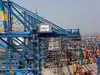
Adani Ports makes $3.3 billion play for Evos Terminals
Adani Ports has submitted a binding $3.3 billion bid for Evos Terminals, a European liquid-storage operator with eight terminals across five countries, as it looks to expand overseas and build exposure to energy-transition infrastructure. The move follows APSEZ’s unsuccessful bid for Associated British Ports and reflects a broader push into global ports, container assets and liquid terminals.

Finance ministry estimates India’s Q2 FY27 GDP growth at 7.35%
The finance ministry’s nowcasting model estimates India’s GDP will grow 7.35% in Q2 FY27, following 7.8% growth in the previous quarter, supported by stronger industrial output, energy consumption, port traffic, GST collections and automobile sales.

Operation Sindoor proved no target beyond IAF' s reach; air power remains India's primary responder, says Air Chief Marshal AP Singh
Air Chief Marshal AP Singh detailed the Indian Air Force's Operation Sindoor in a recent interview. The operation involved precision strikes responding to a terror attack, showcasing effective capability and integration. Singh emphasized the importance of maintaining multiple operational options and adapting to enemy tactics. He outlined future enhancements needed in various military domains for sustained effectiveness.

Theaterisation must mirror India's security reality; no permanent division of IAF's fighter assets: Air Chief Marshal AP Singh
Air Chief Marshal Singh also emphasised that the "transformation of this scale" should be implemented in phases so that operational readiness is "never compromised" and warned against the "trap" of trying to predict the future battlefield with "excessive certainty".
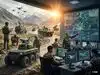
Indian Army's new warfare doctrine: Rajnath Singh to unveil how the Army plans to tackle threats from China and Pakistan
Defence Minister Rajnath Singh will unveil the Indian Army's new land warfare doctrine, outlining how the force plans to adapt to modern combat involving drones, artificial intelligence, precision strikes and multi-domain operations.

China-Europe rail and India’s long road to Eurasia
India is focusing on connectivity initiatives such as the International North-South Transport Corridor and the IMEC. Geopolitical tensions have challenged India's ambitions to establish reliable connectivity with Europe. In contrast, the China-Europe freight network significantly expands trade routes across Eurasia. The expansion provides multiple routes and helps mitigate disruptions in maritime transport. A shift in India-China relations may further enhance India's connectivity options with Eurasian markets.
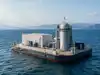
In 2026, Kofi Asante-led Bluecore Energy raised $50 million to put small nuclear reactors on floating barges
A nuclear power plant that floats on water and sends electricity to shore may sound unusual, but one startup wants to make it a reality. Bluecore Energy, led by founder and CEO Kofi Asante, has raised $50 million to develop small nuclear reactors mounted on floating barges. The California-based company sees potential customers in AI data centers, ports and remote coastal communities that need reliable power.

6,000 sailors stranded near Strait of Hormuz as UN maritime chief warns against passage amid rising ship attacks and US-Iran tensions
Thousands of seafarers remain stranded in the Strait of Hormuz amid escalating maritime attacks and risks. The International Maritime Organization has warned against navigating the area without safety guarantees. Approximately 6,000 sailors are reportedly trapped as conflicts continue to disrupt commercial shipping. Concerns have also arisen over the misuse of emergency radio channels by military forces, complicating maritime safety.
Florida to dump 990-foot ship in Gulf of Mexico to create world’s largest artificial reef. It will create a new marine habitat
The iconic SS United States is on the verge of transformation as plans to sink her and create an artificial reef in the Gulf advance. With a budget of $10.1 million, this initiative aims to boost marine habitats and draw in diving enthusiasts. Preparatory stages include the careful removal of toxins from the ship, with officials emphasizing compliance with environmental safety protocols.
Indian Navy inducts multi-purpose INS Samarthak, a drone mothership and weapons testbed, the first major warship built by a private shipyard
Samarthak, the first multi-purpose vessel built by a private shipyard to be commissioned into the Indian Navy, has entered service with more than 75% indigenous content. Built by L&T, it will support weapons and sensor trials, maritime surveillance, unmanned systems, disaster relief and emergency response at sea.
Bet Dwarka Corridor: Underwater darshan, 108-foot Krishna statue, how Gujarat plans to transform Krishna's land
Gujarat's proposed Bet Dwarka corridor aims to improve pilgrimage facilities and tourism infrastructure around the island associated with Lord Krishna. The plan includes a heritage street, a proposed 108-foot Krishna statue and underwater viewing experiences linked to Dwarka's submerged past. Building on the Sudarshan Setu connection, the project seeks to combine religious tourism, heritage development and marine ecotourism.
Indian Navy to get another indigenous multipurpose ship built by L&T: What are its capabilities, role
The Indian Navy will induct INS Samarthak at Karwar on October 16, 2026. Built by L&T, the 107-metre multi-purpose vessel is designed for maritime surveillance, weapons trials, unmanned-system operations, naval training, towing and disaster relief. Equipped with guns, anti-submarine systems and electronic countermeasures, it is the first of two vessels being built under an Rs 887-crore contract.

"India stands ready to work with ASEAN as reliable, equal partner": Rajnath Singh
Defence Minister Rajnath Singh on Wednesday called for stronger defence cooperation between India and ASEAN countries, including joint research on maritime security, counter-drone systems, cyber defence and disaster response, stressing that regional challenges require collective action and practical solutions.
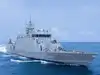
Indian Navy commissions third anti-submarine warfare craft Mangrol to bolster coastal security
Mangrol, the Indian Navy's third anti-submarine warfare shallow water craft, was commissioned in Mumbai recently. Built by Cochin Shipyard Limited, the ship is designed for operations in coastal areas. It will enhance the Navy's ability to detect and counter underwater threats to ports and harbors. Mangrol maintains a legacy by being named after a former minesweeper of the same name.

California used more than 2.5 million cubic yards of dredged material to rebuild Sonoma Baylands; The project restored 322 acres of tidal wetland habitat
The Sonoma Baylands initiative has harnessed dredged materials to rejuvenate California's tidal wetland habitats. Each year, excessive sediment is extracted to sustain navigation channels. With innovative engineering, previously subsided agricultural land has been raised to promote rapid growth of tidal marsh flora. This thriving restoration project not only fosters critical habitats for various species, including endangered ones, but also exemplifies a successful integration of sediment management and coastal ecosystem rehabilitation.
Anti-Submarine Warfare Shallow Water Craft Mangrol to be commissioned into Navy on Oct 12
Mangrol is the third Anti-Submarine Warfare Shallow Water Craft being commissioned into the Indian Navy. The ship enhances the Navy's anti-submarine warfare capabilities in coastal areas where larger ships struggle. It is equipped with advanced weapons and sensors to detect submarine threats effectively. Built with over 80 percent indigenous content, it supports India's self-reliance in defense shipbuilding initiatives.

Why did market crash today? Nifty hits fresh 52-week low, Sensex tanks over 1,000 pts. 7 triggers behind Rs 10 lakh cr bloodbath
Sensex Nifty Down: On Thursday, there was a notable decline in the Indian stock market, marked by a drop of over 1.5% in both Sensex and Nifty. This downturn was attributed to the RBI's tightening policies and ongoing selling by foreign institutional investors.
Load More

