
MAIZE YIELD IMPROVEMENT

Fuel, forex and farmers: Why India is betting big on maize
A grain that once fed chickens now fuels cars and, soon, planes. The harder question is whether Indian farms can keep up with the demand it has created.

₹45 lakh in 90 days: Bengaluru farmer earns Rs 50,000 per day by selling small lauki to Qatar buyers
Bengaluru farmer Karigowda generates ₹50,000 per daily gross revenue by growing baby bottle gourds for Qatar buyers in the season that runs for three months between October to Decemeber. His 3.5-acre farm uses modern cultivation techniques, while growing tomatoes and brinjals during the off-season helps diversify his income.

Double trouble at the dinner table: When will food prices normalise for Indians?
India’s food inflation: Food prices are rising unevenly, impacting household budgets, while inflation is projected to persist in upcoming months. Economists expect food inflation to reach up to 7% in the near future due to various factors. Weather risks, particularly from El Niño, could significantly affect crop yields and consequently food prices. Additionally, global events in West Asia contribute to higher energy and logistic costs.

Pest resistance is forcing India’s crop-protection firms to rethink product strategies: Insecticides India MD
Resistance to chemicals and formulations is an evolving challenge, particularly in crops where the same pest pressures persist over multiple seasons, said Rajesh Aggarwal, MD of Insecticides (India).

Ancient DNA reveals how farming, wildlife and human activity transformed a Canadian lake's ecosystem over 1,000 years
Ancient DNA from Crawford Lake sediment reveals a millennium of ecological history. Scientists tracked changes in plants, animals, and human activity over time. Indigenous farming left a genetic footprint, influencing the local ecosystem significantly. Wildlife patterns shifted, showing ecosystem responses to human presence and absence. This research offers a new perspective on long-term human environmental influence.

Why broccoli and lettuce are going the way of onion and tomato in Europe
Europe’s heatwaves and drought are damaging vegetable and grain crops, pushing up prices and exposing vulnerabilities even in advanced food-supply systems. Unlike India’s storage and distribution challenges, Europe faces an upstream problem: protecting agricultural production itself from increasingly extreme weather.
- Go To Page 1
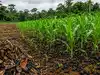
In 2018, scientists added up to 15 tons of cacao-shell biochar per hectare to degraded tropical soil; maize yields improved over several growing seasons
Research indicates that using cacao-shell waste to create biochar has significantly improved agricultural yields on degraded farmland in Sumatra. Over time, this biochar technique demonstrated enhanced effectiveness, particularly in the acidic Ultisol soil. However, its benefits diminished after multiple growing seasons, necessitating repeated applications to sustain its positive influence. Thus, biochar emerges as a beneficial resource for promoting soil health and ensuring food security.

Kharif sowing near normal as rainfall deficit shrinks
By August 7, farmers have successfully planted Kharif crops at 87.7% of the expected seasonal average. While rainfall deficiencies have mitigated, the focus is now firmly on crop yields. The acreage for critical crops like rice and pulses trails behind last year’s figures. On a positive note, reservoir water levels have improved significantly following recent rainfall. Nevertheless, the IMD warns of below-normal rainfall for the upcoming monsoon weeks.

Conservation agriculture can boost wheat protein content by up to 12%, improve water efficiency: Study
A study finds conservation agriculture with drip irrigation can boost wheat protein content by up to 12% while improving yield and resource efficiency.

India eyes end to popcorn imports by 2030, targets Rs 810 crore forex savings: ICAR’s Jat
Domestic production has surged, driven by indigenous hybrid development and a strong public-private partnership, significantly reducing import dependence and saving foreign exchange.

Godrej Agrovet bets on new crop launches to revive growth
Godrej Agrovet is boosting its crop protection business. The company is adding more crops to its offerings and launching new products. A new manufacturing plant in Gujarat will support these efforts. This strategy aims to counter a slowdown in the agrochemical industry. The company expects demand to recover with new product introductions and a normal monsoon.

Economic Survey flags risks of biofuel incentives on cropping patterns
The Economic Survey warns that India's biofuel mandates, particularly for ethanol, risk distorting cropping patterns and food prices. While the program has saved foreign exchange and boosted farmer income, administered pricing favors maize, leading to its sharp rise while pulses and oilseeds stagnate. This shift threatens agricultural diversity and food security.
Why maize deserves centre stage in India’s agricultural roadmap
Policymakers and industry stakeholders say it is time to unlock maize’s untapped potential, calling for better crop management and a stronger enabling ecosystem to support its growth.

India must speed up hybrid technology adoption in pulses, oilseeds to reduce imports, says PK Mishra, Principal Secretary to PM
India must accelerate the adoption of hybrid technology in pulses and oilseeds to address production deficits, despite challenges faced by farmers, Principal Secretary to Prime Minister PK Mishra stated at a national symposium.

Caught in a maize: In India’s ethanol blending ambitions, eggs are an unlikely casualty
The government wants to use maize to cut its fuel import bill. While this has strategic advantages, it puts a question over egg production — a source of nutrition for many Indians.

World food prices fall in June for first time in a year: FAO
The Rome-based FAO also said in a statement that worldwide cereal harvests would come in at nearly 2.817 billion tonnes in 2021, slightly down on its previous estimate, but still on course to hit an annual record.

Climate change affects major crops in India: Study
Researchers from Columbia University in the US studied the effects of climate on five major crops in India: finger millet, maize, pearl millet, sorghum and rice. These crops make up the vast majority of grain production during the June-to-September monsoon season- India's main grain production period- with rice contributing three-quarters of the supply for the season.
Gene map reveals how bajra survives extreme heat, drought
The discovery published in the journal Nature Biotechnology may help develop climate adaptation strategies in other important food crops.

Monsanto sets up two hybrid maize museums in Bihar
Spread over a combined area of eight acres the museums showcases a range of 10 dekalb maize hybrids. It has been established in partnership with CSISA.

Climate change will make food less nutritious: Study
According to the study conducted by a team of US, Australian and Japanese scientists, carbon dioxide emissions are slowly making the world's staple food crops less nutritious.

India needs hybrid seeds to increase rice production: International Rice Research Institute
Taste is one of the main reasons Indian farmers are not taking to cultivation of high-yield hybrid rice varieties developed by scientists.

Govt research body sees record wheat of 96 mn tons in 2012-13
The USDA had recently said that India's wheat output is projected to decline to 87 mn tonnes in 2012-13 due to yield lossses in Punjab and Haryana.

New hybrid maize seed developed for Gujarat: AAU Official
The variety is rich in Lysine (an essential amino acid) and is touted to be a source of rich protein diet for the tribals, who are its major consumers.
Punjab gives nod for enacting 'Contract Farming Act and Amendements to APMC Act
Punjab Chief Minister Parkash Singh Badal today gave nod for enacting 'Contract Farming Act' to ensure better remunerative prices to the beleaguered peasantry.
Hybrids push corn yields up 250%
Multinational seed companies are helping Indian farmers push up corn yields 250% with hybrid technology.
Bihar now a trusted source of maize
Productivity of maize in Bihar is 2,541 kg/ha, which is far greater than the all-India average productivity of 1,907 kg/ha.
Bihar now a trusted source of maize
Bihar's maize, which is primarily a rabi crop, has been a success sector mainly due to the quality of the produce as well as a simplified tax structure compared to other states.

World foodgrains output may dip 2.5%
World foodgrains production expected to be lower by 2.5% in 2009-10.

World foodgrains output may dip 2.5%
World foodgrains production expected to be lower by 2.5% in 2009-10.
Load More

