
LUNAR FLYBYS
NASA's Artemis II rocket punched 3,100-mile-long holes in Earth's atmosphere, disrupted GPS signals: Study
NASA's Artemis II mission created large disturbances in the ionosphere that disrupted GPS signals across the United States. These disturbances were significantly more intense than those from prior rocket launches, causing potential issues for technologies reliant on precise positioning. Researchers noted that even minor positioning errors could impact autonomous vehicles, which rely on GPS data. The mission set new records for human distance from Earth during a lunar flyby.

NASA may make a big announcement on Moon mission today. Here's what we know
NASA is preparing for a press conference to share important updates on the Artemis program. The focus will be on the upcoming Artemis III mission and its objectives. Additionally, details regarding future lunar landings under Artemis IV are expected to be unveiled. NASA aims to return astronauts to the Moon by 2028, exploring the lunar south pole for scientific research.

A US spacecraft accidently found evidence of ice on moon while taking a complete look at lunar surface in 1994
A US spacecraft known as Clementine was the first to get a complete view of the Moon and its pole regions. The ice on the bottom of a shadowed crater near the south pole of the Moon was found during the spacecraft's lunar survey mission. It was managed by the Ballistic Missile Defense Organization and NASA.

In 2023, a spacecraft was launched to explore the largest planet in our solar system and its icy moons in depth. Eight years later, it will finally reach its target
ESA’s JUICE mission will study Jupiter, Ganymede, Callisto and Europa. The spacecraft will examine their oceans, geology, magnetic fields and environments to understand their nature and possible habitability.

In 1985, Soviet engineers sent two balloons floating through Venus for 46.5 hours. Their motherships then used the planet’s gravity to chase Halley’s Comet
Soviet spacecraft Vega 1 and Vega 2 undertook a dual mission to Venus and Halley's Comet. These probes deployed landers and balloons onto Venus before flying past the comet. Vega 1 and Vega 2 successfully transmitted data from Venus's atmosphere and surface. The spacecraft then gathered crucial information about Halley's Comet during close encounters.

America's new moon heroes: Trump honours NASA’s Artemis II crew, unveils Space Academy, eyes Mars next
The Artemis II astronauts received the nation's highest space honor for their lunar flyby. Commander Reid Wiseman and his crew were recognized for their historic mission around the moon. President Donald Trump presented the Congressional Space Medal of Honor to the four-member crew. This event also saw the announcement of a new US Space Academy for future endeavors. The ceremony highlighted ongoing plans for lunar exploration and potential Mars missions.
- Go To Page 1

In 1968, two Russian steppe tortoises travelled around the Moon before humans did. They survived a punishing 20G force while returning to Earth
In a remarkable journey, two Russian steppe tortoises embarked on a mission aboard Zond 5, orbiting the Moon in September 1968. This pioneering endeavour demonstrated that biological life could endure the challenges of circumlunar spaceflight and successfully return. Despite facing intense gravitational stress during re-entry, the resilient tortoises emerged unscathed, making their voyage a historic precursor to mankind's lunar exploration.

What time is splashdown for Artemis II? Here's when NASA astronauts will return to Earth - All about the most dangerous 13 minutes of the mission during fiery Earth reentry
Artemis 2 Live Return: NASA Moon Mission Splashdown Update: NASA Artemis 2 astronauts are returning after historic lunar flyby around the Moon. The Orion spacecraft — named Integrity by its crew — is set to splash down in the Pacific Ocean off the coast of San Diego on April 10, 2026, at approximately 8:07 p.m. ET. Mission control monitors critical reentry as Artemis 2 prepares intense atmospheric heat shield test. The crew continues deep space operations inside Orion during final hours before landing. Artemis 2 mission marks major step toward future Moon and Mars exploration programs. Engineers prepare parachute deployment and recovery teams for safe Pacific Ocean astronaut retrieval process.

Lost in Space? Artemis II crew face 40-minute comms blackout as crew pushes beyond human limits
Artemis II astronauts are returning to Earth after a historic lunar flyby, setting a new record for the farthest humans have traveled from our planet. The crew endured a tense 40-minute communications blackout while behind the Moon, capturing unprecedented views and conducting scientific observations.

Artemis II breaks Apollo 13's record, reach farthest human distance from Earth
NASA's Artemis II astronauts have made history. They became the farthest humans from Earth, exceeding Apollo 13's record. The crew completed a six-hour flyby of the moon. This mission offers a unique human perspective of the moon's far side. It is a crucial rehearsal for future lunar landings.

Watch Live: When Artemis II will pass the Moon and how to tune in NASA live stream, Netflix lunar flyby, astronaut updates worldwide
Artemis II live stream: how to watch NASA Moon flyby live today: Over 250,000 miles from Earth, Artemis II live stream is now the most searched space event worldwide. Want to know how to watch Artemis II live? Here’s the quick guide. The NASA live stream Artemis II is free on NASA+ and YouTube. You can also watch the Netflix Artemis II live stream globally. NASA Moon flyby live at 1:00 PM ET, closest approach around 7:00 PM ET. This moon flyby live marks the first astronaut mission beyond Earth orbit in 50 years. Search trends show spikes for “Artemis II live,” “moon live stream,” and “where to watch Artemis II live.” Don’t miss this historic deep-space broadcast.

Historic leap: Artemis 2 targets Apollo 13 record in high-stakes Moon flyby
Artemis 2 live stream: Artemis II is pushing the boundaries of human spaceflight, aiming to surpass the farthest distance from Earth ever reached by astronauts during its upcoming lunar flyby. This mission tests critical systems for deep space travel, mirroring Apollo 13's trajectory while setting new records and achieving historic firsts for its diverse crew.

Astronauts to witness rare Total Solar Eclipse on Artemis II today: Will it be visible from Earth
The Artemis II crew—Reid Wiseman, Victor Glover, Christina Koch, and Jeremy Hansen—are poised to reach a historic milestone. During the flyby, they are expected to exceed the distance record set by Apollo 13 in 1970, making them the farthest humans ever to travel from Earth.

Artemis II crew reaches the moon as it approaches record-breaking distance from Earth
NASA's Artemis II mission has propelled its astronauts into the moon’s gravitational field, embarking on an extraordinary adventure that will place them at the frontier of space travel. As they approach the moon’s dark side, they’re in for awe-inspiring sights—a lunar eclipse awaits them, along with the breathtaking view of an Earth rising majestically above the lunar surface.

Artemis II on April 6: Where the spacecraft is — what to expect from lunar flyby, and rare moon alignment explained
NASA’s Artemis II mission is poised to hit a major milestone on April 6, as astronauts gear up for a historic lunar flyby that will provide a rare glimpse of the Moon’s far side, an area never visible from Earth.

Artemis starts final run-up to lunar slingshot: NASA livestream
The Artemis astronauts entered the final phase of their run-up to a lunar loop on Monday, a tipping point of sorts that means the Moon's gravity is now having a stronger pull on the spacecraft than Earth's.

It's time for Artemis II to break Apollo 13's distance record. What to know about the moon flyby
Artemis II astronauts are setting a new distance record from Earth, surpassing Apollo 13's maximum range during their lunar flyby. The mission aims to map the moon's far side and will witness a total solar eclipse. Following their close encounter with the moon, the crew will return to Earth for a splashdown on April 10.

Artemis astronauts to study the Moon's surface using mainly their eyes
Artemis astronauts will fly around the Moon, using their eyes as a primary tool for scientific observation. This mission builds on Apollo's legacy, with astronauts trained as field scientists. They will observe lunar sites and phenomena, looking for color variations that reveal the Moon's composition and history. This historic flyby promises unique human descriptions of the lunar surface.

When will Artemis II reach the Moon? NASA reveals the high-stakes lunar mission’s timeline and objectives
NASA's Artemis II mission launched on April 1, 2026, sending four astronauts on a historic lunar flyby. This marks humanity's return to the moon after over fifty years. The mission tests vital systems for future landings. The diverse crew includes the first woman, person of color, and non-US citizen on a lunar journey.

NASA’s Artemis II is coming: The space jargon cheat sheet you need before NASA’s moon mission
NASA’s Artemis II mission is getting ready to make a major step in human space exploration, sending astronauts around the Moon for the first time in over 50 years. Scheduled for April 1, 2026, the 10-day mission will launch from Kennedy Space Center aboard the Space Launch System rocket with the Orion spacecraft. The mission supports NASA’s long-term goal of establishing sustained lunar presence and advancing exploration toward Mars and beyond.

How NASA's Artemis II moon mission will unfold
NASA's Artemis II mission will send four astronauts on a 10-day journey around the moon and back, marking the first crewed lunar mission since Apollo. The flight involves Earth orbit checkouts, a translunar injection, a lunar flyby, and a high-speed return to Earth for splashdown. This mission paves the way for future lunar surface landings.

Krispy Kreme Artemis II Doughnut takes off ahead of NASA’s crewed lunar flyby: Everything to know
Krispy Kreme Artemis II: Krispy Kreme is celebrating NASA's Artemis II mission with a limited-edition, space-themed doughnut. This special treat, featuring Oreo crunch and blue icing, is available for a short time next week. The doughnut honors the upcoming crewed lunar flyby, continuing Krispy Kreme's tradition of commemorating space milestones.
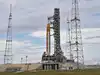
NASA begins practice countdown for its first moonshot with astronauts in more than 50 years
NASA is conducting a practice countdown for its new moon rocket. This test is crucial for the upcoming lunar flyby mission. Four astronauts will be the first to travel to the moon since 1972. The mission will see them orbit the moon and return to Earth. The earliest launch date is now February 8.

Newly discovered asteroid to fly extremely close to Earth, closer than the moon on October 15
Asteroid 2025 TP5, discovered just two days before its approach, will fly past Earth on October 15 at a dangerously close distance of about 60,328 miles—roughly a quarter of the lunar distance. Measuring 54 feet wide, it poses no threat but highlights ongoing challenges in tracking near-Earth objects. The asteroid will also closely pass the moon on October 16

SpaceX Launches Two Private Lunar Landers: A Milestone for Lunar Exploration and NASA’s Long-Term Lunar Ambitions
SpaceX has achieved another remarkable milestone with the launch of two private lunar landers, Blue Ghost and Resilience, setting the stage for groundbreaking advancements in lunar exploration.

A Celestial Odyssey: Unveiling 2023's galactic epics
In 2023's cosmic saga, SpaceX's Starship faced turbulent tests while eyeing Mars. India's Chandrayaan-3 triumphed on the moon's south pole, joining lunar exploration. Astronaut Rubio's extended ISS stay and NASA's Artemis II lunar flyby herald new cosmic chapters. UFO investigations and asteroid encounters unveiled celestial mysteries. Space tourism ascended with Axiom-2, as 2023 wove a tapestry of cosmic triumphs, showcasing humanity's dedication to deciphering the cosmos' enigmas.
62 of 111 lunar missions in last seven decades were successful: NASA database
India's Chandrayaan-3 has been launched on a mission to soft land on the Moon, joining the US, China and the Soviet Union in achieving the feat. According to the Indian Space Research Organisation (ISRO), the technically challenging soft landing has been scheduled for August 23. Of the 111 lunar missions launched since 1958, 62 were successful, 41 failed and eight achieved partial success, according to NASA's database.

NASA names woman, Black astronauts to Artemis II crew in lunar first
Christina Koch, 44, an engineer who already holds the record for longest continuous spaceflight by a woman and was part of NASA's first three all-female spacewalks, was named as a mission specialist for the Artemis II lunar flyby expected as early as next year.

NASA's Orion capsule makes its closest approach to moon
The capsule's lunar flyby, on the return leg of its debut voyage, came a week after Orion reached its farthest point in space, nearly 270,000 miles from Earth while midway through its 25-day mission, the U.S. space agency said on its website.
Load More

