
LIVESTOCK

US tariff threat clouds India’s export outlook; MSMEs seek relief amid uncertainty over orders
The proposed US tariffs are putting India's export competitiveness under scrutiny, with businesses seeking clarity on the final duty structure and relief for existing orders. From textiles and engineering to seafood, pharmaceuticals and MSMEs, industry stakeholders explain the risks, opportunities and policy steps needed to navigate the uncertainty.

Baldota steel plant row: Karnataka CM seeks feasibility report on lake
Chief Minister DK Shivakumar is exploring the idea of building a new lake in Koppal district in response to mounting local protests against the Baldota Group's steel plant. Farmers are anxious about losing public access to Basapur Lake, insisting it should not be enclosed by industrial operations. Even with environmental compliance secured, the project encounters persistent opposition from the community.

In 2000, Quito began protecting its damaged mountain wetlands; 25 years later, native plants had returned, and pumas, deer, and condors were seen across the recovering landscape
Since 2000, Quito has restored its watersheds, leading to the return of native vegetation and wildlife. The Nature Conservancy and local authorities collaborated to create FONAG, a water fund collecting contributions for conservation. This initiative has employed community members as park rangers and promoted eco-tourism to benefit local residents. Over three thousand students have participated in environmental education programs associated with the project.

Iowa blast: What to do if it ‘rains lead’? From baby wipes to keeping dogs indoors, here's how to stay safe
Residents in Iowa are worried about the potential spread of lead dust from an upcoming explosion. Health authorities recommend staying indoors and taking precautions to avoid contamination. Pets and livestock should also be kept indoors to prevent exposure during this period. The International Society for Environmentally Acquired Illness advises residents to consider lead testing before and after the detonation.

What time is Iowa detonation? US Army to blast 68 barrels of volatile explosive material a day before Thanksgiving as FEMA issues emergency alert, urges residents to evacuate
The Iowa detonation of 68 barrels of unstable lead azide is scheduled for Wednesday, raising health and environmental concerns. Here's why the Iowa lead detonation has sparked controversy, what the US Army says about the lead detonation in Iowa, and what residents should know about potential lead in Iowa and evacuation precautions.

India, Nepal seek a new beginning: What it means for Indian businesses
Coming amid steadily rising trade and other engagements, Shah's visit is expected to give India-Nepal ties a new direction, opening new opportunities for both sides. Indian businesses could be looking at a new beginning in Nepal as the two sides go about deepening trade ties further.
- Go To Page 1

How Areete’s smart collar is helping dairy farmers boost productivity
Pune-based agritech firm Areete says its technology helps dairy farmers detect heat, identify early signs of illness, and improve productivity. With its solutions already deployed by more than 1,000 small dairy farmers, the agritech firm is now looking to build a wider livestock technology platform.

Egg prices decline 20% as bird flu in Tamil Nadu stalls exports
Ex-farm prices, which had risen after Chhath Puja, have reversed course, dashing poultry farmers' hopes of better winter realisations. Demand in southern states has also softened during the Hindu month of Karthik, adding to the supply glut. The price decline comes even as production costs remain elevated, with maize and soybean prices, key poultry feed ingredients, rising 30%-50% from a year earlier, squeezing farmers' margins.

Punjab’s canal colonies and the tomato legacy of Partition
Tomatoes, once newcomers to Indian cooking, have swiftly woven themselves into the rich tapestry of Punjabi cuisine. With the establishment of British canal colonies, the cultivation of tomatoes flourished alongside other vegetables. Post-Partition, the burgeoning restaurant scene saw displaced Punjabis embracing tomato dishes, showcasing the British legacy in agricultural practices. Today, these vibrant fruits remain staples in both Indian and Pakistani kitchens, highlighting their lasting culinary importance.

Food Fables – Punjab’s canal colonies and the tomato legacy of Partition
The culinary landscape of Punjab has been transformed by the rise of tomatoes, which have largely supplanted conventional sour ingredients. This shift can be traced back to the British agricultural endeavors in canal colonies, where new families influenced local cooking cultures. As a result, the region has witnessed the development of a robust market for tomatoes, positioning Pakistan as a key consumer and highlighting the evolution of its agricultural practices.

Hormuz roiled, but oil didn't boil: What crude's plot twist means for India
If Iran decides to test the American blockade, the world's and India's oil math could change overnight. India needs to use the current low prices to boost its position, rather than assume that the worst of the Hormuz crisis is behind it.

PM Modi announces $1.62 billion development package for Nepal to strengthen bilateral relations
Prime Minister Narendra Modi announced a development package of Rs 15,000 crore for Nepal during a joint statement. He emphasized the close relationship between India and Nepal, describing it as one of kinship. Both leaders held discussions to strengthen bilateral cooperation across key sectors. Additionally, several projects were inaugurated alongside the foundation stones laid for future initiatives. They also flagged off the Saryu-Kamala Express connecting Ayodhya and Janakpur.

US Army gears up to detonate tons of bomb-making chemicals in Iowa, cites fears of uncontrolled explosion in cold weather. Check impact of blast
Environmental groups criticized the government's move, decrying it as a maneuver to get around a court order and avoid public demands for safety and transparency.

A lake in Ireland kept a record of medieval life; Scientists found crops, livestock and clues hidden in its mud
Scientists studying two early medieval artificial islands in Northern Ireland used ancient DNA, chemical markers and lake sediment to reconstruct centuries of human activity. Their findings revealed evidence of crops, livestock, woodland clearance and animal activity, showing how the remains of an ancient settlement can survive in the mud surrounding it.

A Texas ranch once used for rice farming and cattle spent nearly 10 years restoring wetlands; by 2025, thousands of ducks and three bald eagle pairs were reported on the land
Lavaca Rio Ranch, located in Texas, has transitioned from farmland to a managed wetland habitat. The collaboration with the U.S. Fish and Wildlife Service has aided habitat restoration over nearly a decade. Thousands of ducks and nesting bald eagles now thrive in the area, highlighting the successful impact of wetlands. Cattle grazing continues alongside wetland management, providing benefits for livestock and wildlife alike.

Govt won't let fund shortage hamper drought mitigation work: Sunetra Pawar
Maharashtra's Deputy Chief Minister Sunetra Ajit Pawar reviewed the drought situation in Nanded district recently. She assured that funding issues will not delay vital drought-related work for affected citizens. Pawar emphasized the need for immediate water tankers and appointed nodal officers for effective administration. Officials were directed to facilitate fodder crop seed distribution and encourage farmer participation.

MS Dhoni's business empire: From Kadaknath chicken, selling organic vegetables to dairy farming, 5 ventures beyond cricket CSK's new mentor loves to do
In an unexpected venture, MS Dhoni has turned his attention to poultry farming at his Ranchi farmhouse. In 2022, he placed an order for 2,000 Kadaknath chicks, a breed celebrated for its unique traits and culinary value. This initiative has sparked discussion about whether Dhoni’s foray into poultry will yield lucrative returns, given his prior business experience.

Since 2017, over 20,000 volunteers have classified hidden-camera photos from Kenya; more than 4,000 showed giraffes, including 175 calves
In a remarkable showcase of citizen science, over 20,000 volunteers rallied together to classify images captured by motion-activated cameras across Kenya. Their collective efforts identified more than 4,000 giraffe photos along with various other species. This vital data aids researchers in analyzing the interactions between wildlife and livestock, highlighting the crucial role of public involvement in wildlife conservation initiatives.

Milk & money: What’s making India’s daily dose of doodh more expensive?
Amul and Mother Dairy have recently raised milk prices by Rs 2-4 per litre to address higher production costs. Karnataka's Nandini also increased prices in early November to enhance farmer earnings. Rising expenditures for fodder, cattle feed, and operational costs have pressured dairy companies. Although India remains the largest milk producer, growth rates have slowed, affecting supply dynamics.

Arunachal Pradesh inaugurates geothermal-powered drying unit to boost farmers' incomes
Arunachal Pradesh Science and Technology Minister Dasanglu Pul inaugurated a geothermal-powered drying unit in Dirang, West Kameng district, to promote renewable energy, reduce post-harvest losses and improve farmers' incomes. Developed with support from India, Norway and Iceland, the facility will use natural geothermal heat to preserve local agricultural and livestock products. Pul also urged the Centre to expedite the Seismic Microzonation Project to strengthen earthquake preparedness in the state.

Pakistan farmers in long fight to make German firms pay for flood damage
Farmers from Pakistan's Sindh province are pursuing legal action against German firms RWE and Heidelberg Materials. They claim these companies' emissions contributed to severe flooding that devastated their livelihoods in 2022. This case marks a significant attempt to hold major polluters accountable for climate change impacts.

NCP merger decision rests with Sharad Pawar, Sunetra; neither has told us anything yet: CM Fadnavis
Maharashtra Chief Minister Devendra Fadnavis stated that only Sharad Pawar and Sunetra Pawar could clarify any merger plans. He noted that neither had informed the BJP about a potential merger of the two NCP factions. Fadnavis compared Sunetra Pawar’s leadership to that of her late husband, Ajit Pawar, declaring it unfair. He expressed confidence in river-linking projects helping eliminate drought in Maharashtra over time.

India’s oilmeal exports fall 28.5% as cheaper Brazilian, Argentine soymeal squeezes shipments
India's oilmeal exports fell 28.51% year-on-year to 12.82 lakh tonnes in April-August FY27, dragged by a 73% plunge in soybean meal shipments. Higher domestic demand, Red Sea shipping disruptions and elevated freight costs added pressure, while cheaper supplies from Brazil and Argentina eroded India's competitiveness in global markets.

In 2022, North Carolina farmer Lance Tabor used a 40-acre solar site for sheep grazing; he brought 41 animals onto the property to expand his operation
Lance Tabor has pioneered an innovative sheep farming method by integrating his operation with solar panel installations in North Carolina. This dual-use approach not only enhances renewable energy production but also allows the sheep to effectively control vegetation, minimizing maintenance for the solar company. Ongoing research aims to optimize grazing methods within this unique intersection of agriculture and renewable energy, with rising interest in the promising field of agrivoltaics.

Centre identifies 22 works to boost fodder security, livestock infrastructure under VB-G RAM G Act
The Centre has asked states and Union Territories to strengthen fodder security, pasture development and livestock infrastructure under the VB-G RAM G Act, identifying 22 permissible works. These include fodder banks, silage units, grazing lands and livestock shelters, aimed at addressing shortages and supporting rural households dependent on animal husbandry.

In 1830, chinaberry was introduced to the US as an ornamental tree; it later spread into forests across the South
Chinaberry trees, initially brought to the Southern U.S. in the 1830s for their beauty, have proliferated extensively. These invasive species create dense thickets that block sunlight, hindering the growth of native plants in ecosystems across Georgia and South Carolina. This situation underscores the urgency of managing ornamental plants wisely, emphasizing the need for vigilant monitoring and prompt removal to protect the health of our forests.

Centre issues advisory to states to boost fodder production, livestock infra under VB-G RAM G
The Centre has issued an advisory to states and Union territories to improve fodder security and livestock infrastructure. This advisory promotes convergence under the Viksit Bharat-Guarantee for Rozgar and Ajeevika Mission Act, 2025. It identifies 22 permissible works supporting fodder cultivation, livestock shelters, and veterinary health facilities. States are encouraged to increase expenditure on these works while aligning with local development priorities.

In California, researchers tracked desert tortoises in a protected area for 34 years; numbers fell from 589 to 47 by 2002, then rose to 73 by 2012
In California, desert tortoises have suffered an alarming 92% population decline, even within designated protected areas. Research attributes this drastic fall to diseases, predation, and environmental stressors, rendering protective measures inadequate. Although a slight recovery was noted by 2012, the overall trend indicates persistent decline, underscoring the urgent need for holistic conservation strategies to safeguard wildlife.
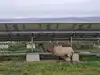
In 2019, Cornell began testing sheep grazing beneath New York solar panels; the project examined vegetation control, shade, and forage for the animals
Cornell University researchers have launched an innovative solar grazing initiative aimed at optimizing vegetation management in solar farms. Their experiment evaluates the potential of using sheep to graze beneath solar panels, fostering a dual benefit for energy production and farming. This sustainable method enhances biodiversity and diminishes reliance on traditional vegetation management practices, presenting a promising opportunity for harmonizing agriculture with renewable energy advancements.
Load More

