
LABORATORY TESTING

With most drug candidates failing in humans, India’s draft rules bet on the wrong science in animal lab testing
Recent draft rules in India threaten advancements in non-animal testing for drug development and safety. The new regulations may prioritize animal testing over innovative human-based methods, despite their proven reliability. Efforts to incorporate non-animal methodologies into national standards have gained support from various government initiatives. Significant funding has been allocated to promote alternative testing methods throughout the country.

India leads on non-animal testing and its draft lab animal rules threaten to undo that
India's draft Prevention of Cruelty to Animals Rules 2026 proposes significant changes to animal research regulations and oversight. It allows for harsher experimental practices that could cause severe suffering to animals. Local committees would gain power to approve experiments without thorough central review, raising concerns about ethical standards. This shift contradicts the existing legal framework established by the Prevention of Cruelty to Animals Act 1960.
From lab to farm: How Proximal Soilsens is developing a ‘glucometer’ for soil testing
Developed over nearly a decade of research at IIT Bombay, Proximal Soilsens’s patented NutriSense X aims to make laboratory-grade soil testing portable, faster and accessible. The device tests multiple soil parameters in seconds, without requiring electricity or elaborate laboratory infrastructure.

Stocks in news: NSE, BSE, SBI, Happiest Minds, MCX, IEX and Minda Corp
The Indian stock market continues its upward momentum, with the Nifty 50 showing a robust rally and hitting significant resistance levels. Major players like NSE and SBI have posted remarkable quarterly results, illustrating their strong profitability and revenue growth. Firms such as Happiest Minds Technologies and the Multi Commodity Exchange of India contributed positively to the market's performance.

FDA collects samples of Patanjali cow ghee for laboratory testing
Patanjali Foods Ltd has reported that food safety officials collected samples of its Cow Ghee for testing. The company emphasizes that no authenticated report has confirmed any quality standard violations. Patanjali Foods stated that it is cooperating with the authorities regarding this issue. Additionally, the company remains committed to product quality and consumer safety. Further disclosures will be made as material developments arise in accordance with regulations.

Engineers replaced 20% of cement with powdered waste glass in a field project; 3 years later, the concrete showed no deterioration or material failure
Recent studies suggest that incorporating 20% crushed waste glass into concrete can significantly improve its properties. This method not only boosts compressive strength but also lowers water absorption and abrasion weight loss. Given that the cement industry is a major contributor to carbon emissions, the search for eco-friendly solutions is crucial. However, challenges like cost and supply must be addressed for broader implementation in construction.
- Go To Page 1

‘Earth-shattering update’: Nancy Guthrie case sparks fury as sheriff says investigators discussed ‘a number of ideas’ with lab scientists
Nancy Guthrie update: Investigators are actively conducting DNA testing to find Nancy Guthrie, who has been missing since February. This month, they met with lab scientists in Florida to discuss progress on the investigation. Sheriff Chris Nanos announced that many ideas were exchanged during the meeting, although specific details were not provided. Social media reactions to the updates have been overwhelmingly critical, questioning the effectiveness of the investigation.

In Hong Kong, engineers turned waste glass into concrete blocks; 15 years later, field checks found no cracking from the reaction that can damage glass concrete
For over 15 years, engineers in Hong Kong have pioneered the use of recycled glass in concrete pavers, meticulously studying their performance to prevent cracking. The research addressed earlier concerns regarding the reaction between glass and concrete, revealing no internal cracking due to alkali-silica interactions. This groundbreaking approach not only supports waste management but also advances sustainable construction practices in urban environments.

India aims to be globally competitive semiconductor powerhouse by 2047: MoD
India is working towards becoming a globally competitive semiconductor powerhouse by 2047 and focuses on next-generation technologies. The Defence Research and Development Organisation participated in the Emerging Science, Technology and Innovation Conclave 2026 themed 'Creative Minds, Catalysing Science, Empowering Society'.

DRDO showcases indigenous chips for advanced radar, electronic warfare and missile systems
At the Emerging Science, Technology and Innovation Conclave (ESTIC) 2026, held at Bharat Mandapam in New Delhi from October 27 to 29, DRDO displayed Monolithic Microwave Integrated Circuits (MMICs) and Infrared Focal Plane Arrays (IRFPAs), developed by its Solid State Physics Laboratory (SSPL), Delhi.

AI is no longer just coding or generating images. It has now designed a virus that was used on a human being. Did the patient survive?
A California startup has used artificial intelligence to design a virus that was administered to a human patient for the first time. The experimental treatment uses bacteriophages to target antibiotic-resistant bacteria, potentially opening a new way to fight infections that conventional medicines cannot control. However, the patient's recovery has not been disclosed.

In Burgos, Spain, engineers turned steelmaking waste into full-size pavement slabs; five years outdoors caused no major damage, and skid resistance stayed road-safe
In an innovative endeavor, engineers from Burgos, Spain, developed sustainable pavement utilizing waste from steel production, significantly cutting down on industrial refuse. Their five-year study, monitoring large-scale pavement slabs in real environments, revealed that the pavement exhibited no major structural issues or safety risks related to skid resistance. This breakthrough paves the way for eco-friendly infrastructure methods in construction, promoting the recyclability of industrial byproducts.

Chinese AI model carries out complex cyberattacks in controlled tests, researchers say
Chinese firm Z.AI's flagship AI model carried out complex cyberattacks in controlled simulations and repeatedly ignored instructions in separate tests, according to a report by AI security research firm Irregular.

Nancy Guthrie update: What did former reporter Andrew Christiansen observe about Nancy Guthrie's health before her disappearance?
Nancy Guthrie has been missing since February 1, 2025, causing immense concern. With investigations still active and no suspects in sight, Andrew Christiansen, a former Tucson reporter, recalls their meeting in October 2025. He described her as vibrant and full of life. As investigators sift through DNA evidence and ransom letters received by her family, Christiansen shares his heartbreak for someone he once knew personally.

QClairvoyance's quantum chemistry bet: Transitioning from research to pharma partnerships
QClairvoyance Quantum Labs has performed chemically precise simulations of eight small molecules on an actual quantum computer, marking progress towards drug discovery applications.

UP Cabinet approves robotics, AI park in Greater Noida
The Uttar Pradesh Cabinet has approved the establishment of a robotics and AI park in Greater Noida. This park is expected to generate over one lakh jobs and significantly contribute to the state's economy. It will be developed in two zones, focusing on indigenous manufacturing and AI technology advancement. The first zone will operate under a public-private partnership model, aiming for commercial operations within 36 to 48 months.

AI halves drug discovery times, but =trial bottleneck remains a costly reality
Novo Nordisk, Sanofi and Dr Reddy’s Laboratories are among the companies exploring applications ranging from drug discovery to laboratory automation and research.

Florida researchers develop AI-powered trap to catch dengue-carrying mosquitoes with over 98% accuracy
Florida dengue outbreak: Researchers at the University of Florida developed an AI-powered trap aimed at identifying dengue-carrying mosquitoes. This technology achieves over 98% accuracy in lab settings, significantly improving disease surveillance. The traps utilize a combination of light and a fan to attract and capture mosquitoes for analysis. Additionally, the startup Digitomy plans to educate the public on mosquito species identification through a cloud-based platform.

India hosts CIML meet for first time; Khare pushes for globally harmonised measurement norms
India is hosting the 61st meeting of the International Committee of Legal Metrology, which focuses on global measurement standards. Consumer Affairs Secretary Nidhi Khare highlighted the importance of accurate measurements for fair trade and consumer confidence.

922 kg of adulterated sweets including 265 kg of rasgullas, spoiled khoya destroyed in Delhi ahead of festive season
During festive inspections, Delhi's Food Safety Department took decisive action by destroying 922 kg of tainted food items. Inspectors focused on sweet-making facilities and khoya markets, uncovering violations that led to the disposal of 402 kg of goods in Nihal Vihar and 520 kg at Mori Gate. Food samples were collected for lab analysis, and further regulatory measures will be shaped by laboratory results.

In 1913, a Corning physicist baked a cake in a cut-down railway-lantern glass jar; the experiment helped lead to heat-resistant cookware
In the early 1900s, the invention of heat-resistant glass marked a significant advancement, initially intended to safeguard railway lanterns from damage due to thermal shock. This remarkable creation serendipitously led to the formulation of PYREX cookware after a 1913 baking trial. Scientists at Corning fine-tuned this glass and launched a pie plate in 1915, which quickly became a staple in American kitchens.

BITS Pilani revamps UG curriculum to prepare students for AI era: Vice Chancellor
BITS Pilani has revamped its undergraduate curriculum to prepare students for a future dominated by artificial intelligence. This innovative approach prioritizes academic flexibility while integrating research and real-world industry applications. Students will engage in various activities that promote both physical and mental well-being, earning a total of 30 Points of Experience. The curriculum now also highlights crucial areas like AI and data science, enhancing practical learning and encouraging interdisciplinary collaborations.

Navy's underwater capabilities set for push after indigenous AIP system achieves crucial milestone
The Indian Navy marked a key development in enhancing its underwater capabilities with the AIP system. The inauguration of the 'Setting to Work Phase-2' activity took place in Hazira, Gujarat. This advancement will significantly improve the endurance of diesel-electric submarines during underwater operations. The AIP energy module will undergo rigorous testing before integration into Kalvari-class submarines by 2027.

Can dogs smell cancer in humans? Bengaluru founders says with AI, dogs can detect seven cancer symptoms with 90% accuracy
Startup Dognosis, based in Bengaluru, is creating an AI-driven, dog-assisted breath analysis to detect seven forms of cancer. Co-founded by Akash Kulgod and Itamar Bitan, the startup intends to introduce an at-home multicancer prescreening test in India by 2027.

One Science Nutrition: Building a science-led approach to sports nutrition
One Science Nutrition was co-founded by Aman and Aniket Vachher to create credible sports nutrition products. The brand aims to cater to evolving consumer expectations around product quality and transparency. Their product range includes various supplements that support diverse fitness goals and health benefits. Future strategies involve leveraging artificial intelligence to enhance consumer experiences and product discovery. The founders emphasize maintaining core values while pursuing growth in the nutrition industry.

Indian Railways wants zero alcohol in loco pilots' blood, but what if tests detect traces without drinking? The rule under review
The Railway Board is yet to decide whether loco pilots should face disciplinary action when blood tests detect very low alcohol levels despite negative breathalyser results. The issue came under scrutiny after the 2025 Bilaspur train collision, in which 12 people died. Railway medical officials and the Commissioner of Railway Safety have called for a review of the zero-alcohol rule, citing limitations in laboratory testing.
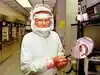
In 1962, Willis Whitfield built a room that continuously swept dust away with filtered air; the idea became essential for computer chips, NASA and modern electronics
Willis Whitfield's innovative cleanroom concept emerged at Sandia National Laboratories to combat contamination issues in engineering. By introducing a system of filtered air that flowed continually, he created cleaner workspaces, profoundly impacting semiconductor manufacturing, pharmaceuticals, and space endeavors. His approach dramatically lowered airborne particle concentrations, establishing a new standard for contamination management that influences practices today.

These mid-caps have ‘strong buy’ & ‘buy’ recos and an upside potential of over 25%, according to analysts
The last few weeks have made one thing clear. Oil prices, US bond yields, corporate earnings, and the state of the world – all point the same way. So, the market is more likely to stay in this jumpy and uncertain mood for quite some time. But then there is something called history, and it provides some interesting lessons.

13-year-old Kaia Minn uses orange peels to develop biodegradable seed pods that could help restore forests
A 13-year-old teen girl from Massachusetts, Kaia Minn, has developed biodegradable seed pods using discarded citrus peels and other plant-based materials after being inspired by wildfire reports from California and Canada. The pods are designed to protect seeds during early growth before decomposing naturally, with potential applications in forest restoration, agriculture and gardening. Further outdoor testing is needed to establish their effectiveness.
Load More

