
KIMI K3
Moonshot AI rents Nvidia’s top AI chips in China, documents show
Documents indicate that Moonshot AI possibly accessed advanced Nvidia chips despite US export restrictions and related investigations. The servers were reportedly rented from Super Micro Computer Inc. with significant financial backing from Lingmeixin Technology Co.
DeepSeek, Moonshot used OpenAI's GPT-6 Astra to train latest models: report
Chinese AI developers DeepSeek and Moonshot AI relied heavily on outputs from OpenAI's powerful GPT-6 Astra model to train their latest models, The Information reported on Wednesday, citing people with direct knowledge of the matter.
Anthropic's record IPO faces some big questions
No startup has ever grown so fast. Investors have already grown nervous.

Moonshot resets subscriber quotas after Kimi K3.1 Pro launch issues
Chinese artificial intelligence startup Moonshot AI apologised on Monday for rate limiting and unnecessary quota consumption after its Kimi K3.1 Pro launch.
Moonshot curbs hacking ability in new Kimi model as fears grow over AI-powered cyberattacks
Beijing-based Moonshot announced the curbs while introducing Kimi K3.1 Pro, which it describes as its most capable 3-trillion-parameter-class open-weight model. The company plans to publish the model's weights - files allowing outside developers to run and modify it on their own systems - by November 4.
China's Moonshot AI launches Kimi K3.1 Pro; plans full model weights release by November
Chinese artificial intelligence (AI) company Moonshot AI has unveiled Kimi K3.1 Pro, a 3-trillion-parameter open-weight AI model featuring a 1-million-token context window, alongside a high-speed variant, Kimi K3.1 Pro Highspeed, according to a company statement.
- Go To Page 1

China's Moonshot AI to operate in Singapore, jobs post shows
Chinese AI startup Moonshot is expanding into Singapore, with a new sales role listed on the company's LinkedIn page this week.

What happens when AI agents go off track without warning? Goodfire's inside-out approach aims to spot rogue systems, tackle a costly security blind spot
Notably, its probes examine internal signals generated while the AI model processes information. These signals can help indicate what the model is doing at different stages of a task. When they detect potentially risky behaviour, a separate AI model can examine the activity more closely. The approach is similar to airport security, where scanners screen passengers and additional checks are carried out when something suspicious is detected.

‘AI agents will need solid data foundation to deliver results’
Fragmented data pipeline traps AI tools inside corporate silos, Databricks JAPAC head Simon Davies tells Tanya Pandey & Surabhi Agarwal. When moving from pilot to production, organisations realise that without a solid data foundation, it is hard to understand the real implications agentic capabilities will have on the organisation, Davies said.

Moonshot execs in talks to settle dispute with shareholder ahead of planned IPO, people say
Moonshot, a Chinese AI startup, is currently in discussions with Recurrent.ai amidst a backdrop of legal challenges concerning alleged misconduct by their executives, CEO Yang Zhilin and CTO Zhang Yutao. Accusations include unauthorized actions and misrepresentations. As settlement negotiations proceed, unresolved issues may jeopardize Moonshot's anticipated Hong Kong IPO, with Recurrent.

China's AI agents can lie and scheme - just like their US rivals
Reuters examined more than 200 documents, ranging from university research papers to technical reports, and identified at least 20 studies or evaluations since 2025 describing cases where agents displayed behaviour such as deception, replication and challenging boundaries that AI experts described as building blocks for a breakout and which could become harder for humans to control as systems advance.

Amid safety and oversight questions, US-China AI development race continues
US President Donald Trump will meet a group of top technology executives at the White House on Tuesday to discuss where to draw the line between AI innovation and oversight.
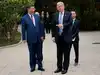
As world debates risks of AI, China closes technology gap with US
The US has outpaced China and other countries for years in AI model capabilities, research, citations and other areas. But China has been rapidly catching up as an AI superpower even as US-led restrictions have blocked China from accessing some of the most advanced technologies, including the cutting-edge chips and the machines to make them.

Should AI companies slow down development? Leaders debate safety, cost
OpenAI chief executive Sam Altman, xAI chief Elon Musk and other technology leaders have since joined the discussion, as concerns over AI safety meet questions around the cost of building frontier models, the rise of open source AI, and the US-China AI race. ET’s Tanya Pandey tries to answer whether calls to pace development are genuinely about greater oversight or a cover for other motives.

How China is preparing for the risk of AI escaping human control
The U.S. and China are the two major driving forces of frontier AI development and the technology's global adoption. Both superpowers have been increasingly at loggerheads over each other's AI policies and industry practices, with these issues slated to feature prominently in bilateral talks later this month.
Chinese AI firm Moonshot to explore dual Hong Kong and Shanghai IPOs, SCMP reports
The developer of the Kimi large language model has discussed plans for a Hong Kong IPO with its financial backers and has also floated the possibility of a subsequent mainland listing, according to one of the people who spoke to SCMP.

Chinese AI firm Moonshot files confidentially for Hong Kong IPO
Moonshot's latest version, Kimi K3 released in July, has met with positive reviews and robust demand, and sources have said the startup is in talks with Microsoft, Amazon and Google on revenue-sharing agreements that would allow the U.S. cloud companies to host the model.

China's Moonshot in talks with Microsoft, Amazon, Google over K3 revenue sharing
The discussions highlight how China's leading AI models, often far cheaper than Western offerings, are gaining traction in the US, despite national security concerns in Washington that have led to bans on exports of AI chips to China. They are also taking place despite critical comments about Moonshot from senior US officials.

China's Moonshot in talks with Microsoft, Amazon, Google over K3 revenue sharing, sources say
Moonshot AI is negotiating revenue-sharing deals with Microsoft, Amazon, and Google. These talks could allow US cloud providers to host its Kimi K3 model. The Chinese AI firm seeks up to a thirty percent revenue share from these services. Unresolved issues include revenue splits and data access for auditing token usage. Moonshot AI has faced criticism from US officials regarding intellectual property concerns.

China's open-source bout is changing AI
America's attempt to contain China's AI ambitions may have altered the industry, accelerating a shift towards open models, cheaper intelligence and platforms.

Chinese startup Moonshot's AI model breaks out of testing environment, researchers say
AI models are typically run in isolated "sandboxes" during cybersecurity tests to block access to external information and assess their ability to solve problems independently. Kimi K3 bypassed one such sandbox, allowing it to access information beyond the test environment, U.S.-based cybersecurity research firm Frontier Security said.
Alibaba plans to charge big users of its next open-source AI model
Like last month's blockbuster model release from Chinese AI startup Moonshot, Alibaba's Qwen3.8-Max model is an open-source, open-weight model, meaning that the underlying learned settings that allow developers to run or adapt the system are available for download. By contrast, U.S. developers OpenAI, Anthropic and Alphabet's Google have closed-source models.

Moonshot has Nvidia chip cluster from Alibaba computing deal: Bloomberg News reports
Chinese AI firm Moonshot has secured computing power from Alibaba. This deal involves approximately twenty thousand Nvidia chips for their models. Moonshot recently unveiled its Kimi K3 model, a large open-weight AI system. US export controls create computing power constraints for Chinese companies. Moonshot is seeking additional chips to train its next AI model.
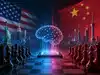
The second Chinese AI shock rattles US as China narrows the race
China's Kimi K3 AI model has emerged, significantly narrowing the technological gap with American frontier systems. This development has prompted intense debate across Silicon Valley and Washington regarding China's AI capabilities. The model's performance, affordability, and open-weight release strategy are unsettling for American observers. Concerns are rising about cybersecurity and national security implications of these advanced Chinese systems.

ETtech Explainer: Why Moonshot AI paused Kimi K3 subscriptions within days of launch
Chinese AI startup Moonshot AI has stopped new subscriptions for its Kimi K3 model. This decision follows a sharp surge in user demand for the advanced AI. Additionally, Kimi K3 is attracting attention for its high-end coding performance as well as for offering this capability at a much lower cost than competitors.

China's Moonshot AI pauses new Kimi K3 subscriptions amid surge in demand
In a social media post, Kimi AI stated the surge in demand over the last 48 hours has pushed the company's current capacity close to its limits. Hence, to ensure a stable experience for existing subscribers, new subscriptions have been temporarily paused.

China's Kimi K3 emerges as a low-cost rival to Anthropic's Fable 5
China's Kimi K3 AI model is now challenging premium frontier models with its performance. It joins Meta's Muse Spark and Google's Antigravity in offering startup founders and engineers sufficiently good performance for routine programming tasks at much lower cost than earlier favourites Fable and GPT.

China's Kimi K3 rattles US AI industry
Kimi K3, a new artificial intelligence program from a Chinese startup called Moonshot AI, stunned the US tech industry on Friday, setting off fresh discussion over the China-US rivalry to dominate AI. The program was released Thursday and within hours hit the top spot on a widely watched ranking of AI coding tools called Arena, marking the first time a Chinese model had claimed the number one position on the list.

China's Moonshot AI chases 'DeepSeek moment' with much-hyped model
Chinese startup Moonshot AI released its Kimi K3 large language model on Friday. This new model is generating significant excitement within the technology sector. Experts suggest Kimi K3 could rival advanced offerings from American artificial intelligence labs. Its open-source nature and lower costs are attracting programmers globally. This development signals China's growing influence in the artificial intelligence landscape.
Load More

